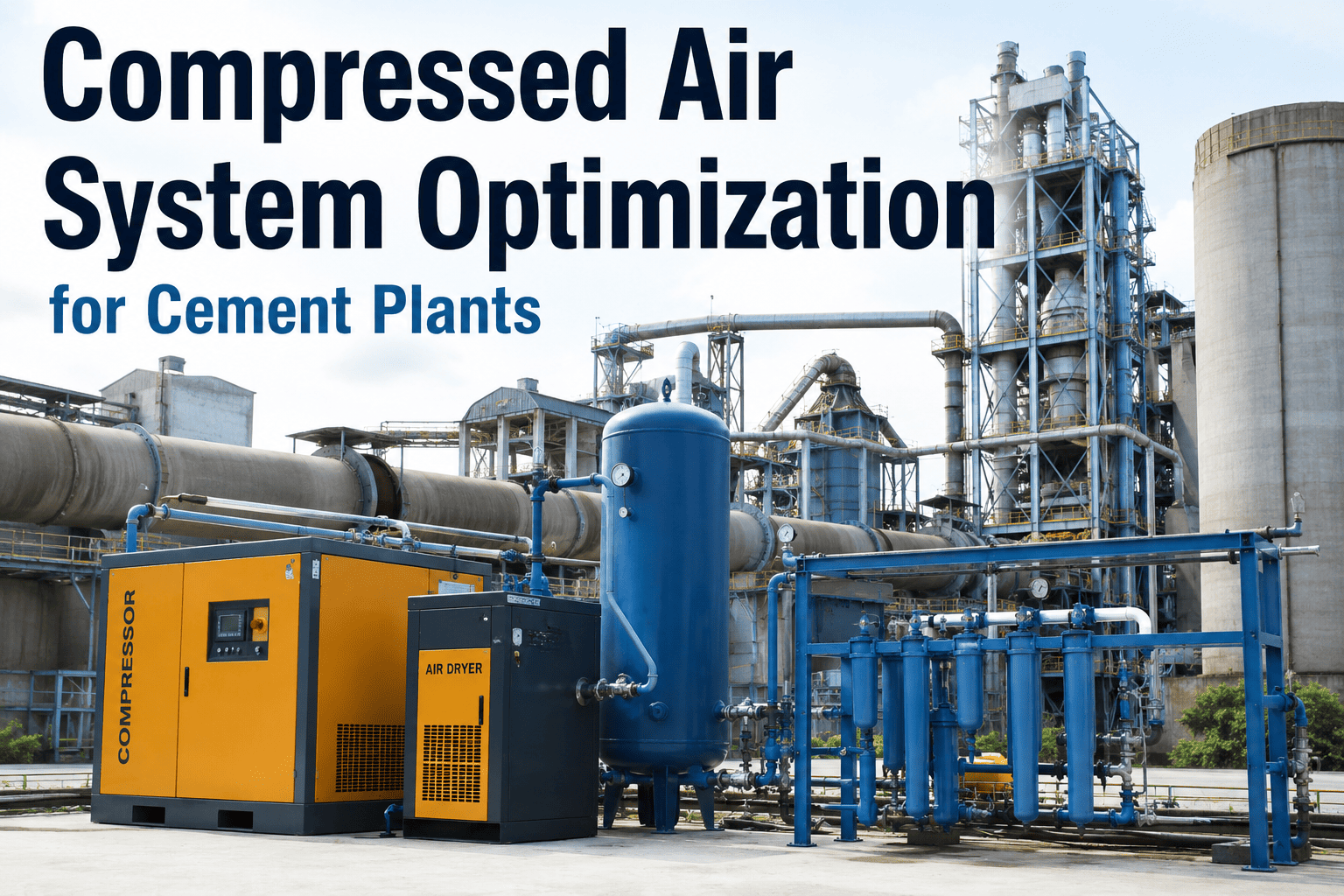
Compressed air is often called the fourth utility in a cement plant, and it is also the most expensive one per unit of useful energy delivered, since converting electricity into compressed air and back into mechanical work loses the majority of the original energy at every stage of that conversion. Despite this, compressed air systems are frequently the least monitored utility on site — leaks go unrepaired for months, compressors run at pressures higher than any downstream equipment actually needs, and nobody owns the system's efficiency the way someone owns kiln fuel consumption or mill power draw. Plants that put even basic structure around leak detection, pressure optimization, and compressor management routinely find 20-30% of their air system cost was avoidable. If your last formal compressed air audit was more than a year ago, book a demo and we will show you what continuous air system monitoring surfaces on a live audit.
Why Compressed Air Is So Easy to Overspend On
A typical industrial air compressor converts roughly 10-15% of the electrical energy it consumes into usable compressed air energy at the point of use, with the rest lost as heat during compression. That inherent inefficiency is unavoidable with current compressor technology, which is exactly why every unit of compressed air wasted through a leak, an oversized pressure setpoint, or an inefficient end use represents a disproportionately large amount of wasted electricity compared to almost any other utility on the plant. A single quarter-inch leak running continuously can waste enough compressed air over a year to represent a meaningful chunk of a mid-sized compressor's total output, and most plants have dozens of leaks of varying sizes accumulating across the piping network at any given time.
The reason these losses persist is structural rather than technical. Compressed air leaks are usually silent or masked by ambient plant noise, they rarely trigger any alarm because the compressors simply run more to compensate, and the resulting cost shows up as a diffuse increase in overall electrical consumption rather than a specific line item anyone is accountable for. Unlike a kiln fuel overrun or a mill power spike, a leaking air system degrades gradually and invisibly, which means it tends to only get attention during a dedicated audit rather than through routine operational oversight.
Compressed air also tends to be treated as a free, unlimited resource by the people actually using it downstream, since end users rarely see a bill tied to their consumption the way they would for a metered electrical circuit. Instrument air used for pneumatic actuators, bag house pulse cleaning, and general workshop tools is provided on demand without any feedback loop telling the user how much that demand costs the plant, which removes the natural incentive to conserve that exists for more visibly metered utilities. This dynamic makes leak repair and pressure discipline a facilities and reliability responsibility rather than something that self-corrects through user behavior, reinforcing why dedicated ownership of the system matters as much as the technical fixes themselves.
Leak Detection: Finding the Losses You Cannot Hear
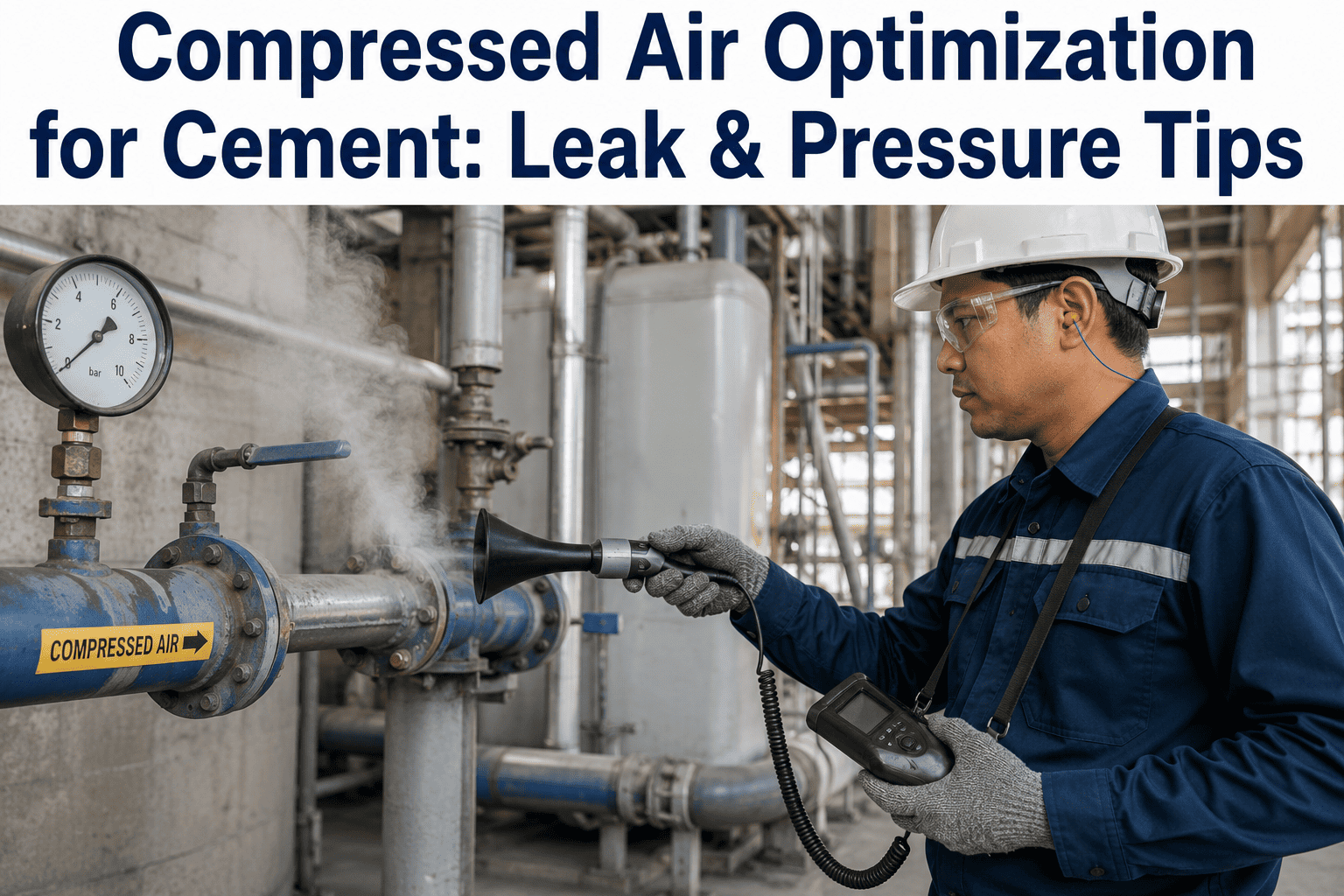
Compressed air leaks generate ultrasonic frequencies well above the range of human hearing, particularly in the noisy environment of a cement plant where ambient sound easily masks the audible portion of a leak's signature. This is why walking the plant listening for leaks, while better than nothing, consistently misses a large share of the leaks actually present, especially smaller ones and leaks located in elevated or hard-to-access piping runs that rarely get close visual or auditory inspection during routine rounds.
Systematic leak detection programs rely on ultrasonic detection equipment specifically because it isolates the frequency signature unique to a pressurized leak from background plant noise, allowing a technician to identify and tag leaks even during full production when the area is too loud for audible detection to work reliably. Once tagged, leaks need to be sized, prioritized by estimated air loss, and scheduled for repair against a tracked backlog, since an untracked leak list tends to result in the same handful of easy-to-reach leaks getting fixed repeatedly while harder-to-access leaks persist indefinitely.
The most common locations for chronic leaks in a cement plant tend to cluster around a predictable set of points: quick-disconnect couplings that see frequent connection and disconnection cycles, flexible hose connections subject to vibration from nearby rotating equipment, pipe threads that were never properly sealed during installation or a past repair, and valve packing on equipment that sees infrequent actuation and therefore infrequent inspection. Focusing a first-pass survey on these known high-probability locations, rather than attempting to walk every foot of piping in the plant at once, delivers a faster return and builds momentum for a broader systematic survey afterward.
| Leak Size (Orifice) | Approx. Air Loss | Typical Annual Cost Impact |
|---|---|---|
| 1/16 inch | Small, continuous loss | Low but compounds across many leaks |
| 1/8 inch | Moderate, noticeable on flow meter | Meaningful at typical industrial air rates |
| 1/4 inch | Significant, comparable to a small end use | Substantial — priority repair candidate |
| 3/8 inch and larger | Major loss, often audible even in plant noise | High — should trigger immediate repair |
Pressure Optimization: Running at What Equipment Actually Needs
System pressure creep is one of the most common and most preventable sources of compressed air waste. Over time, as new equipment is added or as leaks and pressure drop across aging piping increase, it becomes common practice to simply raise the compressor discharge pressure to compensate, rather than diagnosing and fixing the underlying pressure drop. Each PSI increase in system pressure raises compressor energy consumption by roughly one percent, and because pressure creep happens gradually over years, most plants are running meaningfully higher pressure than their actual end-use equipment requires without anyone having made a deliberate decision to do so.
The fix starts with identifying the actual minimum pressure requirement of the most pressure-sensitive end use on the system, since that single piece of equipment typically dictates the floor for the entire system's operating pressure. Once that floor is established, the gap between current operating pressure and that true minimum requirement represents pure waste that can often be recovered simply by lowering the compressor setpoint, provided pressure drop across the distribution piping to the sensitive end use has also been addressed so the reduction does not starve that equipment of the pressure it actually needs.
Pressure drop across the distribution network deserves its own attention separate from the compressor setpoint discussion, because undersized piping, excessive elbows and fittings, clogged filters, and aging flexible connections all contribute to the gap between what pressure the compressor produces and what pressure actually reaches the point of use. A plant chasing pressure complaints at a specific piece of equipment by repeatedly raising overall system pressure, rather than diagnosing and correcting the localized pressure drop causing the complaint, ends up paying a compounding energy penalty across the entire system to solve what was really a localized piping problem. Mapping pressure at multiple points along the distribution network, rather than relying solely on the reading at the compressor discharge, is what reveals where these localized drops are actually occurring.
Compressor Management: Matching Supply to Actual Demand
Many cement plants run multiple compressors with an operating strategy that was set once, years ago, and never revisited as production patterns or plant loads changed. The most common inefficiency in multi-compressor systems is running more machines than the current demand requires, with each additional compressor operating well below its efficient loading point, or running compressors in a fixed sequence that does not account for which units are most efficient at partial load versus full load.
This fixed-sequence pattern is often a legacy of how compressors were added to the system over time rather than a deliberate strategy. A plant that added its second and third compressors as production grew, without revisiting how the original units should now be sequenced relative to the newer ones, frequently ends up running an inefficient mix simply because nobody has gone back to reassess the optimal loading order since the fleet composition changed. A periodic review of compressor sequencing logic, particularly after any change to the compressor fleet or a significant shift in plant production pattern, catches this kind of drift before it becomes a permanent and invisible source of waste.
Building an Air System Optimization Program That Lasts
A one-time leak survey delivers a burst of savings that erodes steadily afterward as new leaks develop and pressure creep resumes, unless the plant builds ongoing structure around air system management rather than treating optimization as a single project. The elements below reflect what a durable program includes.
Measuring Results and Protecting the Gains
Every compressed air optimization effort should establish a clear before-and-after measurement so the plant can quantify what was actually achieved rather than relying on a general sense that things improved. This typically means capturing baseline compressor run hours, power draw, and system pressure over a representative production period before any leak repair or pressure adjustment work begins, then repeating the same measurement after the work is complete and comparing the two under similar production conditions. Without this baseline, it becomes difficult to justify continued investment in air system management to plant leadership, since the savings, while real, are otherwise invisible in the broader electrical bill.
Protecting the gains afterward is arguably harder than achieving them in the first place, since leaks redevelop continuously and pressure creep tends to resume the moment ongoing attention lapses. Plants that see optimization gains erode within a year of a one-time audit almost universally lack the continuous monitoring and standing leak backlog described in the program elements above. Treating the initial optimization project as the starting point of an ongoing management discipline, rather than a completed task to check off, is what separates plants that sustain 20-30% air system savings for years from plants that see the number creep back toward baseline within twelve to eighteen months.
Air system optimization is one of the fastest-payback energy projects available in a cement plant, provided the gains are protected with ongoing monitoring instead of eroding back to baseline within a year. Book a demo to see continuous air system tracking in action.