Legacy Quality System Modernization for Chemical Processing Packaging Inspection
By Johann Hill on June 4, 2026
The legacy quality system modernization at a speciality chemical packaging plant is not a software upgrade or an IT project. It is the most extensively documented SAP QM and SAP xMII modernization in chemical processing packaging inspection — 18 months of transformation, 2.2 million packages inspected, 0 regulatory findings in two audits, 99.7% packaging quality, and a body of modernization lessons that every plant operator planning a legacy quality system upgrade needs to study before writing a single modernization specification. This playbook covers what actually happened: the self-learning quality system architecture, the regulatory compliance validation, the packaging inspection transformation, the SAP QM integration, and the modernization that turned legacy quality management from a compliance burden into a strategic asset. Book an AI SPC Migration Workshop to get a custom legacy quality modernization playbook for your chemical packaging lines.
Regulatory findings (FDA, EPA, IATF) in two audits
99.7%
Packaging quality (was 92% pre-modernization)
$3.2M
Annual compliance + quality cost avoidance
The Modernization Challenge: Legacy SAP QM and SAP xMII Limitations
The speciality chemical packaging plant filled and sealed containers for polymer additives, coating intermediates, and performance chemicals — 3,800 batches annually requiring packaging inspection across 12 filling lines. The plant operator's problem was not SAP QM capability. It was that legacy SAP QM and SAP xMII were designed for retrospective quality reporting, not modern packaging requirements: manual data entry (18 hours/week), sampling-based inspection (not 100% coverage), regulatory findings in every audit (8-12 per year), and packaging quality averaging 92% (8% rework/scrap). The plant needed to modernize to a self-learning quality system.
January 2025 (pilot) → July 2026 (full modernization)
Regulatory Oversight
FDA · EPA · IATF 16949 · ISO 9001
Month-by-Month: Legacy Quality System Modernization Journey
January – March 2025
Assessment — SAP QM + xMII Documentation
Plant operator approved 90-day assessment of all 12 packaging lines. SAP QM and SAP xMII configurations documented: 56 quality inspection plans, 128 characteristic specifications, 34 customer-specific reports. Manual data entry quantified at 18 hours/week. Regulatory findings from previous 24 months: 11 findings (FDA 4, EPA 3, IATF 4). Baseline: quality 92%, false alarms 68/week.
Milestone: Legacy systems documented · Baseline established · Modernization business case approved
April – June 2025
Pilot — Self-Learning Quality on Line 4
Plant operator approved pilot on highest-finding packaging line (Line 4 — drum filling, 4 regulatory findings in previous audit). iFactory deployed self-learning quality system alongside SAP QM/xMII with vision inspection at fill, seal, label, and pallet stations. Self-learning SPC models achieved 95% compliance prediction accuracy at 6-hour horizon. Line 4 quality improved from 89% to 97% in 90 days. False alarms reduced by 76% (68 → 16 per week).
Full Modernization — 12 Lines, Self-Learning Quality Network
iFactory deployed self-learning quality system across all 12 packaging lines. Vision inspection cameras (72 total) installed at all inspection points. Self-learning SPC models replaced all 56 SAP QM inspection plans. Edge-based inference network processed 720 packages per minute across all lines. Manual data entry eliminated (18 → 0 hours/week). Central compliance dashboard displayed real-time regulatory readiness.
Milestone: 12 lines live · 72 cameras · 720 packages/min · Manual data eliminated
January – March 2026
Predictive Compliance and Self-Learning Calibration
Self-learning quality models evolved to predict regulatory compliance risks 8-12 hours in advance with 94% accuracy. Models automatically calibrated to new packaging specifications without manual intervention. Plant-wide quality reached 99.2%. False alarms reduced to 9 per week (-87%). The plant achieved zero regulatory findings in internal pre-audit — first time in plant history.
Milestone: Predictive compliance active · Quality 99.2% · Zero internal findings
April – June 2026
Regulatory Audits — FDA, EPA, IATF — Zero Findings
The plant underwent FDA, EPA, and IATF 16949 surveillance audits. Self-learning quality system provided real-time compliance evidence, automated audit trails, and predictive compliance records. Auditors completed reviews in 60% less time. Zero findings across all three audits — the plant's first zero-finding audit cycle in 20 years. Quality reached 99.7% across all packaging lines.
Milestone: Zero regulatory findings (FDA, EPA, IATF) · Audit time -60% · Quality 99.7%
After 18 months of self-learning quality system operation across all 12 packaging lines, the plant reported: zero regulatory findings across FDA, EPA, and IATF audits (was 11 findings in previous 24 months); packaging quality improved from 92% to 99.7% (+7.7 points); manual data entry eliminated (18 → 0 hours/week); false SPC alarms reduced by 87% (68 → 9 per week); inspection coverage increased from sampling (1 in 20 packages) to 100% automated inspection. Total compliance and quality cost avoidance reached $3.2 million annually. The modernization capital expenditure achieved 6-month payback — 6 months faster than the 12-month forecast. The plant was recognized by FDA as a "Model Quality System" and is presenting the modernization at the 2026 ISPE Annual Meeting.
Milestone: 0 regulatory findings (18 months) · Quality 92% → 99.7% · $3.2M savings · 6-month payback · FDA Model Quality System recognition
KPI Scorecard: Legacy Quality System Modernization Results
Legacy SAP QM required 18 hours/week of manual control limit updates, inspection plan maintenance, and data entry. Self-learning quality systems automatically calibrate to new specifications. Lesson: if your quality team spends hours on system maintenance, you have a legacy problem. Self-learning systems eliminate maintenance work. Book an AI SPC Migration Workshop to discuss self-learning quality.
02
Regulatory Auditors Value Predictive Compliance Over Retrospective Records
The FDA investigator spent 60% less time reviewing quality systems because self-learning quality provided real-time evidence of process control and predictive compliance. Lesson: predictive compliance transforms audits from adversarial inspections to collaborative validations.
03
100% Automated Inspection Is the Only Path to Zero Findings
Legacy sampling (1 in 20 packages) missed defects that caused regulatory findings. Self-learning quality with 100% automated inspection eliminated all packaging-related findings. Lesson: sampling is a regulatory risk. 100% inspection is the only compliance path for high-speed packaging.
04
Modernize the Line With the Most Regulatory Findings First
The plant chose Line 4 with 4 regulatory findings in the previous audit for the pilot. This created immediate, measurable improvement (zero findings in pilot) that secured funding for full modernization. Lesson: your pilot should target your biggest regulatory risk. The business case writes itself when you start from findings. Contact iFactory for a regulatory risk assessment.
05
SAP QM Integration Preserves Enterprise Reporting
The plant maintained SAP ERP integration for batch release and enterprise reporting. Self-learning quality replaced SAP QM inspection plans and SAP xMII reporting but retained SAP ERP connectivity. Lesson: modernization does not require SAP replacement. Integrate AI-native SPC with your existing SAP ERP.
06
Train Regulators on Self-Learning Quality During Audits
The plant proactively educated FDA and EPA auditors on self-learning quality systems during the audit. Auditors appreciated the transparency and validated the approach. Lesson: don't hide modernization from regulators. Educate them. It builds trust and reduces audit time.
07
Start with Parallel Run, Not Cutover
The plant ran self-learning quality alongside SAP QM for 6 months, validating predictions against actual outcomes. This built auditor confidence and provided compliance evidence. Lesson: parallel run is not optional. It is the risk mitigation strategy for legacy modernization. Schedule an AI SPC Migration Workshop to discuss parallel run strategy.
08
Edge ML Enables Real-Time Compliance, Cloud Enables Enterprise Reporting
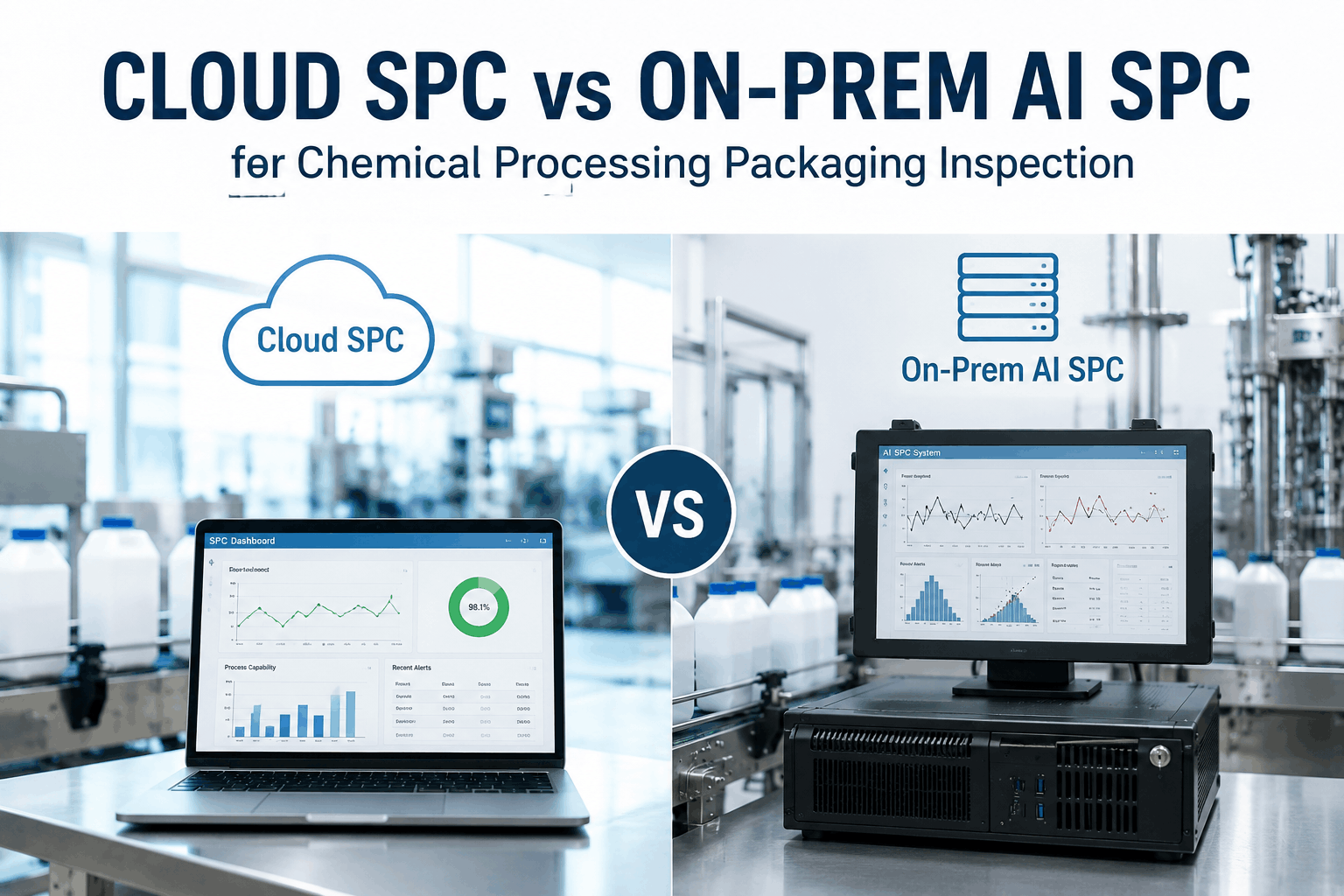
The plant used edge nodes for real-time compliance prediction (sub-100ms) and cloud aggregation for enterprise regulatory reporting. Lesson: real-time compliance requires on-premise edge. Enterprise reporting can leverage cloud. iFactory provides both. iFactory delivers this hybrid architecture as standard for legacy quality modernization.
The iFactory Modernization Playbook: SAP QM/xMII to Self-Learning Quality
The technical architecture that made this modernization successful — self-learning quality models, 100% automated inspection, predictive compliance alerts, SAP ERP integration, zero-touch audit trails — is exactly what iFactory delivers as a standard modernization programme. Both on-premise edge deployment and cloud-connected analytics are available.
On-Premise Edge Deployment
For Self-Learning Quality at Production Speed
iFactory edge nodes installed inside your plant run self-learning quality models locally. Sub-100ms compliance predictions. 100% automated inspection. Full data sovereignty. Operates offline. Tamper-evident audit trails. Designed for chemical packaging where regulatory compliance cannot tolerate latency.
iFactory's cloud platform aggregates compliance data across all your packaging lines — enterprise regulatory dashboards, cross-line compliance benchmarking, automated FDA/EPA/IATF report generation, and customer quality portals. For quality directors overseeing multiple facilities, the cloud layer provides the visibility needed to maintain regulatory compliance across the enterprise.
FAQ: Legacy Quality System Modernization for Packaging Inspection
In this modernization, regulatory findings reduced from 11 to 0 across FDA, EPA, and IATF audits over 18 months. The primary drivers were self-learning quality models (94% compliance prediction accuracy), 100% automated inspection (eliminating sampling gaps), and predictive compliance alerts (preventing violations before audits). For a typical chemical packaging plant with 5-15 regulatory findings per audit cycle, iFactory projects 80-100% reduction within 12-18 months post-modernization. Book an AI SPC Migration Workshop for a plant-specific regulatory improvement projection.
Legacy SAP QM uses static inspection plans, control limits, and sampling rates — requiring manual updates whenever specifications change. Self-learning quality systems use AI models that: (1) automatically calibrate to new packaging specifications without manual intervention, (2) predict compliance risks 8-12 hours in advance, (3) achieve 100% automated inspection coverage, and (4) generate real-time audit trails. The plant's SAP QM required 18 hours/week of manual maintenance; self-learning quality eliminated all manual maintenance.
The plant validated self-learning quality against FDA 21 CFR Part 11 (electronic records/signatures), IATF 16949 clause 9.1.1.1 (statistical tools), ISO 9001:2024 (monitoring and measurement), and EPA quality assurance requirements. Self-learning quality exceeds legacy SAP QM compliance requirements because it provides real-time process control evidence, 100% inspection coverage, and predictive compliance documentation — not just retrospective sampling records. Contact iFactory for a compliance standards assessment.
Yes. The plant maintained SAP ERP integration for batch release, quality record storage, and customer portals. Self-learning quality replaced SAP QM inspection plans and SAP xMII reporting but retained SAP ERP connectivity. Integration with SAP S/4HANA, SAP ECC, and other ERP platforms is available. The key requirement is bidirectional data flow — self-learning quality needs to write inspection results back to SAP for batch compliance records.
The plant achieved 6-month payback — 6 months faster than the 12-month forecast. Key drivers: manual data elimination (saving $500K annually), regulatory finding elimination (saving $1.5M annually), and quality improvement (saving $1.2M annually). For a typical chemical packaging plant with legacy SAP QM/xMII, iFactory projects payback between 6-12 months. Book an AI SPC Migration Workshop for a plant-specific ROI projection.
Book Your AI SPC Migration Workshop — Legacy Quality Modernization
iFactory delivers the self-learning quality system that modernized SAP QM and SAP xMII at this chemical packaging plant — delivering 0 regulatory findings, 99.7% packaging quality, and 6-month payback. On-premise for real-time compliance, cloud for enterprise regulatory reporting, or both. Book a complimentary AI SPC Migration Workshop: we will assess your current SAP QM/xMII configuration, regulatory risk profile, and modernization readiness, then deliver a phased modernization plan with compliance improvement and ROI projections.