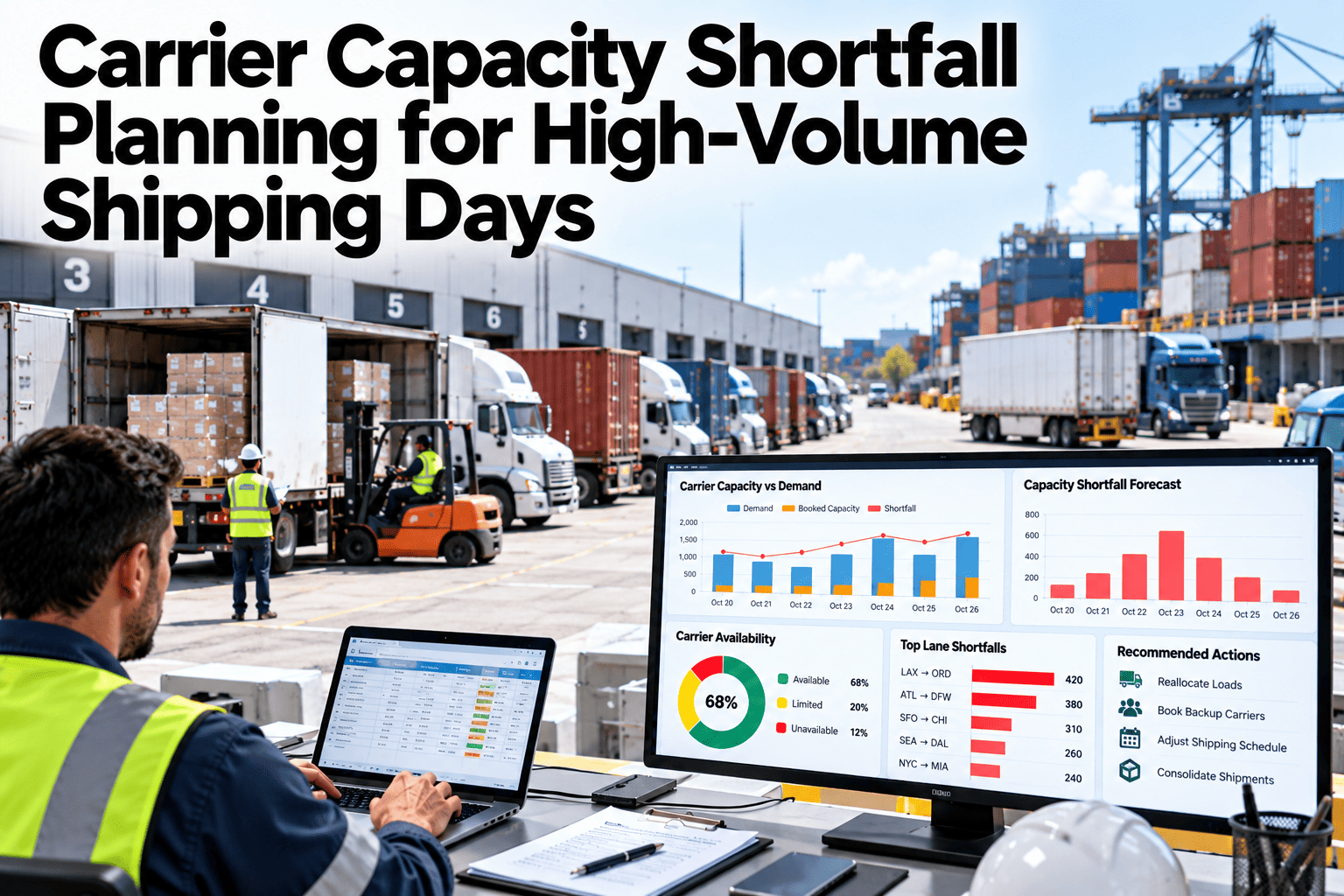
The week before a major shipping peak is the worst possible time to discover a primary carrier is short on trucks. By then tender deadlines have passed, fallback services are already booked by someone else's forecast, and the only options left are expensive or slow. Capacity shortfalls on high-volume days are rarely a surprise in hindsight, they are a forecast nobody acted on early enough. See a capacity plan built from your own peak forecast.
Plan the Shortfall Before the Peak, Not During It
iFactory AI compares forecasted volume against confirmed carrier capacity, flagging gaps early enough to secure fallback service before tender deadlines close.
The Gap Between Forecast and Confirmed Capacity
A volume forecast is only useful if it is checked against what carriers have actually confirmed, not what was tendered and assumed to be covered.
Most shortfalls are visible weeks in advance once forecast and confirmed capacity are compared side by side. The problem is rarely a lack of warning, it is that the comparison usually happens too close to the ship date to do anything but scramble.
Check Your Own Peak-Day Gap
Book a 30-minute session and compare your forecasted volume against confirmed carrier capacity.
A Sample Carrier Allocation Plan
Splitting volume across a ranked carrier tier reduces how much any single shortfall can disrupt a peak day.
| Carrier Tier | Allocated Volume | Tender Deadline |
|---|---|---|
| Primary Carrier | 70% of forecast volume | 4 weeks out |
| Secondary Carrier | 20% of forecast volume | 3 weeks out |
| Regional Fallback | 8% of forecast volume | 2 weeks out |
| Spot Market Reserve | 2% held as buffer | Ongoing |
Building the Forecast That Drives Allocation
A peak-day volume forecast pulls from more than last year's numbers alone.
Historical Peak Patterns
Prior peak-day volumes by lane, adjusted for year-over-year growth trends.
Promotional Calendar
Planned promotions or launches factored in as volume multipliers on specific dates.
Lane-Level Detail
Forecast broken down by lane, since a national average can hide a regional shortfall.
Confirmed Capacity Feed
Carrier-confirmed capacity tracked continuously against the forecast, not just at tender time.
If a Backlog Still Happens
Even a well-planned peak day can see a backlog form. How fast it clears depends on the recovery plan behind it.
Getting It Running on Your Network
iFactory AI connects to your order history, carrier contracts, and tender system to build a continuously updated capacity plan.
Frequently Asked Questions
How far in advance does this flag a capacity gap?
Gaps are flagged as soon as forecasted volume and confirmed capacity diverge, typically weeks ahead of the peak date, giving time to act before fallback tender deadlines close.
Does this replace our carrier negotiation process?
No, the system identifies the gap and recommends an allocation split, but carrier negotiation and contracting remain with your procurement team.
Can forecasts account for a one-time promotional event?
Yes, planned promotions or launches can be factored into the forecast as volume adjustments on specific dates rather than relying only on historical averages.
What happens if a confirmed carrier cancels close to the peak date?
A late cancellation is treated as a new gap and re-flagged immediately, surfacing fallback options from the next tier. Support can walk through a late-cancellation scenario.
Does this work for networks with highly seasonal volume?
Yes, the forecast model is calibrated to your own seasonal pattern rather than a generic industry curve. Ask how this fits your peak calendar in a walkthrough.
Secure Capacity Before the Deadline Closes
iFactory AI flags carrier capacity gaps early enough to act on them. Book a walkthrough ahead of your next high-volume shipping day.