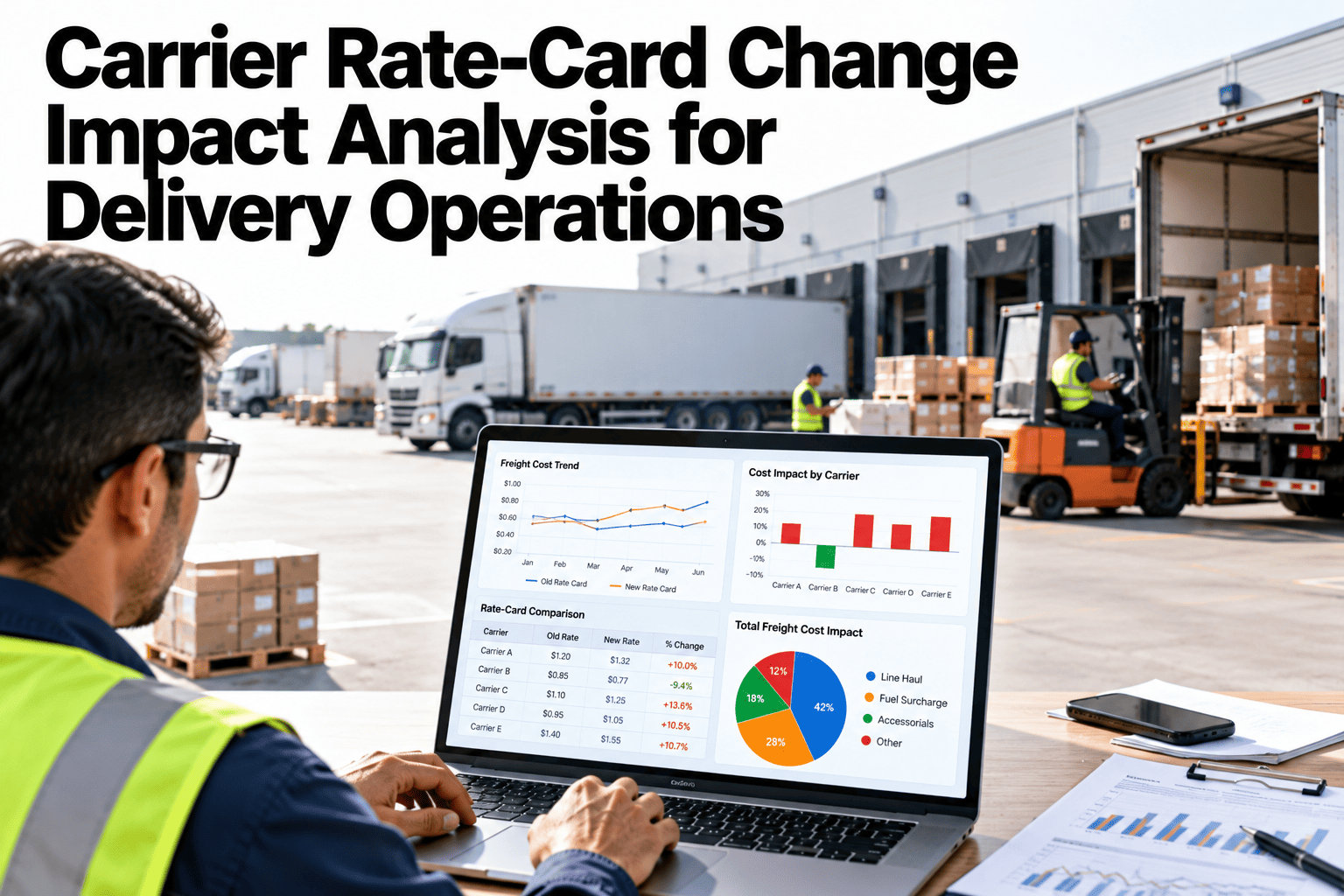
A carrier rate-card update arrives as a PDF or a portal notification, a few months before it takes effect, listing new base rates, revised surcharge thresholds, and updated zone pricing across hundreds of lane and service combinations. Reading it tells you what changed. It doesn't tell you what that change actually costs against your specific shipment mix, since the same rate-card update can barely touch one shipper's budget while significantly increasing another's, depending entirely on which lanes, services, and package profiles each one actually ships. Running that comparison before the new rates take effect is what a rate-card impact analysis looks like against your own shipment history.
The Same Rate Change Costs Every Shipper Something Different
iFactory AI applies a new carrier rate card against your actual historical shipment mix, showing the real cost impact before the new rates take effect.
Why Reading the Rate Card Isn't Enough
A rate-card document describes a pricing structure. Only your actual shipment history, run against that structure, describes what you're actually going to pay.
Changes Aren't Evenly Distributed
A rate card can increase pricing heavily on certain zones or service levels while leaving others nearly flat, which means your exposure depends entirely on which ones you actually use.
Threshold Changes Hit Silently
A tightened oversize or dimensional weight threshold can push packages that were previously standard into a surcharge category, without any change to your own packaging.
The Full Impact Only Shows Up at Scale
A rate change that looks minor on a single shipment compounds into a meaningful budget shift once applied across months of actual volume.
What a Proper Impact Analysis Actually Compares
A real comparison applies both rate cards against the same historical shipment data, so the only variable changing is the pricing itself.
| Comparison Element | Current Rate Card | New Rate Card |
|---|---|---|
| Lane and service mapping | Rates applied as currently contracted | Rates applied as newly published |
| Package profile | Surcharges applied under current thresholds | Surcharges applied under new thresholds |
| Total cost, same volume | Baseline total against historical shipments | Projected total against the same shipments |
Running this comparison against actual historical shipments, rather than a hypothetical average shipment, is what turns a rate-card PDF into a real budget number.
See Your Real Exposure Before the New Rates Take Effect
Bring your current carrier contract and a sample of recent shipments to a 30-minute session and see the actual cost shift.
From Comparison to Scenario Planning
Once the direct cost impact is known, the real value is in modeling what, if anything, can offset it.
An Illustrative Scenario: Two Shippers, One Rate Change
The figures below are a labeled illustrative composite, not a reported customer result, showing how the same published rate-card change can affect two different shipment mixes, indexed to each shipper's own current spend.
Rate-card changes get the most budget scrutiny when they first arrive, and then the scrutiny fades once the new rates are simply absorbed into regular invoicing. The shippers who actually manage this well treat every rate-card update as a scheduled analysis, run well before the effective date, not a surprise to react to afterward, because mitigation options like a packaging adjustment or a service-level shift take real time to implement before the new pricing locks in.
Frequently Asked Questions
How far in advance do carriers typically announce rate-card changes?
Lead time varies by carrier and the scale of the change, but most major rate-card updates are published with enough advance notice to run a proper impact analysis and consider mitigation options before the effective date, provided the analysis starts as soon as the announcement arrives. Review the notice period for your specific carriers in a short session.
Can this analysis account for our negotiated contract discounts, not just published rates?
Yes, the comparison should apply your actual contracted terms, including any negotiated discounts off the published rate card, since the public rate card alone rarely reflects what a shipper with a negotiated agreement actually pays. Ask the iFactory AI team to confirm your contract terms are reflected.
What mitigation options actually help once a rate increase is confirmed?
Common options include packaging changes that shift packages out of a newly expensive surcharge category, redistributing volume across service levels, or diversifying carrier mix on the most heavily affected lanes, though which option makes sense depends on the specific cost drivers identified in the analysis. Model mitigation scenarios against your own data in a demo.
How do we compare multiple rate-card scenarios at once?
Running several proposed rate structures, such as a renewal offer against a competing carrier's rates, side by side against the same historical shipment set is the most direct way to compare total cost impact across options before committing to a contract. Compare multiple carrier scenarios on a call.
Does this connect to our existing contract or invoice data?
The analysis works from your existing shipment and invoice history, so the comparison reflects your real package profiles and volumes rather than a generic industry sample. Discuss your current contract and invoice data access with the support team.
Know the Real Number Before the New Rates Lock In
iFactory AI applies a new rate card against your own shipment history to show the real cost impact. Book a walkthrough before your next rate change takes effect.