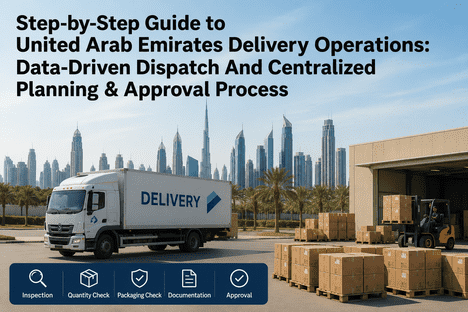
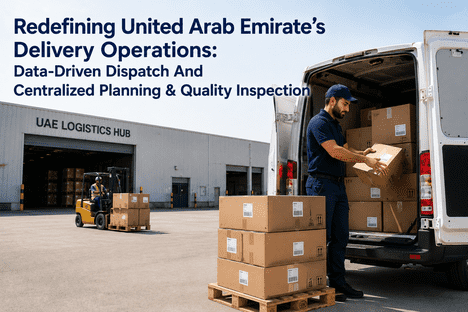
Step-by-Step Guide to United Arab Emirates Delivery Operations Data-Driven Dispatch And Centralized Planning & Approval Process
By Arel Dixon on June 13, 2026
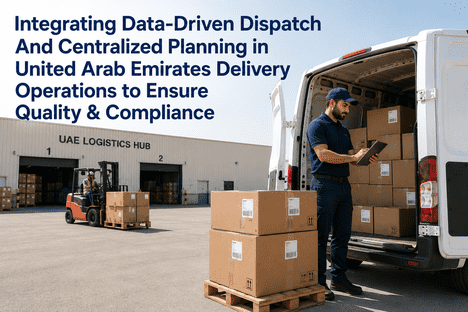
In the United Arab Emirates, where manufacturing and logistics contribute over 30% of non-oil GDP and the nation's industrial sector is projected to reach AED 300 billion by 2031 under Operation 300bn, delivery operations represent the critical final link between production output and customer satisfaction. Every shipment leaving a factory gate must pass through a rigorous five-point gatekeeping process — quality inspection, quantity verification, packaging integrity checks, documentation validation, and centralized dispatch approval — before it can be released for delivery. Yet many UAE manufacturers still rely on manual checklists, paper-based sign-offs, and fragmented communication between production, quality, warehouse, and logistics teams, resulting in shipment errors, damaged goods, incorrect documentation, and costly return logistics that erode margins. iFactory AI's Delivery Management module digitises the entire dispatch workflow with a data-driven checklist, real-time centralised approval routing, and AI-powered exception detection. Book a Demo to see how iFactory can transform your dispatch approval process.
Delivery Operations · UAE Manufacturing 2026
Data-Driven Dispatch & Centralized Approval Checklist for UAE Factories
Five-point gatekeeping checklist · AI-powered exception detection · Real-time centralized approval routing · All flowing into iFactory Delivery Management.
Why Manual Dispatch Processes Fail in UAE Manufacturing
UAE manufacturers operate in a fast-paced export hub where Jebel Ali Port, Dubai Airport Freezone, and Abu Dhabi's Khalifa Industrial Zone move billions of dirhams in goods daily. Every shipment that leaves a factory floor carries compliance, customs, and quality liability that extends beyond the factory gate. Manual dispatch processes introduce predictable failure points: quality inspectors sign off without recording specific measurements, warehouse teams estimate quantities instead of counting, packaging checks skip hidden damage inside sealed cartons, and documentation sets are verified at the last minute — causing shipment holds at customs or, worse, customer rejection at delivery. These failures cascade through the supply chain: returned goods must be re-inspected, re-packaged, and re-dispatched, doubling handling costs and delaying payment cycles. iFactory replaces paper checklists with a structured, data-driven dispatch workflow where every inspection step is recorded with digital evidence — photos, measurements, barcode scans, and time-stamped approvals — before a centralized planner issues the final clearance pass.
FIVE CRITICAL FAILURE POINTS IN MANUAL DISPATCH
1
Subjective quality inspection — no recorded measurements, photos, or traceability; same inspector may apply different standards shift-to-shift
2
Estimated quantities — picking lists reconciled by eye or tally sheet rather than barcode scan or weigh scale; short-shipments and over-shipments discovered at customer dock
3
Superficial packaging checks — outer carton inspected but hidden damage, incorrect labels, or pallet instability missed; transit damage blamed on carrier
4
Last-minute documentation scramble — certificates of origin, customs declarations, or commercial invoices discovered incomplete after truck is loaded; demurrage and detention charges accrue
The Five-Point Dispatch Verification Checklist
01
Quality Inspection — Visual, Dimensional and Functional Checks
Every item leaving the factory must be inspected against the approved quality standard. iFactory's Digital Checklist captures time-stamped photos, measurement readings, and pass/fail/fix decisions for each line item. Inspectors use a mobile device to scan the item or pallet barcode and work through a pre-configured inspection plan: surface finish, colour match, dimensional tolerance, functional test result, and cosmetic acceptance. Non-conforming items are flagged with a digital red tag and routed to rework or hold — they cannot proceed through the dispatch gate until the quality status is resolved. All inspection data flows into iFactory's Quality Control Management module for trend analysis and continuous improvement. Book a Demo to see how iFactory digitises quality inspection for dispatch.
Digital photo evidenceBarcode-driven workflowReal-time pass/fail routing
02
Quantity Verification — Count, Weigh and Reconcile
Quantity accuracy is the second gate in the dispatch checklist. iFactory integrates with barcode scanners, weigh scales, and dimensioning systems to verify that items picked match the dispatch order line by line. The platform automatically reconciles scanned quantities against the order — flagging under-shipments, over-shipments, and substitutions for centralized planner review. For bulk or loose-fill items, weight verification against calculated expected weight provides a secondary accuracy check. Every scan, weight reading, and dimension capture is time-stamped and linked to the dispatch order, creating an audit trail that satisfies ISO 9001, UAE SABER, and Gulf Standardization Organization traceability requirements.
Barcode scan verificationWeight reconciliationOrder-line match
03
Packaging Integrity — Seal, Label, Pallet and Damage Check
Packaging protects the product through the UAE's logistics chain — from factory floor to truck, possibly through Jebel Ali consolidation, and finally to the customer's receiving dock. iFactory's inspection checklist covers carton seal integrity, label accuracy (UPC, batch number, expiry date, destination), pallet condition and stability, and external damage assessment. Inspectors capture photos of suspect packaging and apply hold tags until the issue is resolved. The system cross-references packaging specifications stored in the product master against actual packaging — flagging instances where incorrect carton size, inadequate cushioning, or missing labels would lead to transit damage. This data feeds back into packaging design improvement.
Seal & label validationPallet stability checkPhoto-linked exception log
Incomplete or incorrect documentation is the leading cause of customs delays and demurrage charges across UAE ports. iFactory's Centralized Document Vault stores template versions of commercial invoices, packing lists, certificates of origin, HS code declarations, and destination-market-specific compliance documents. The dispatch checklist requires each required document to be uploaded, verified, and approved against the shipment profile before dispatch can proceed. The system runs automated validation — checking that invoice total matches order value, packing list line items match scanned quantities, and COO is signed and stamped. Missing or expired documents trigger alerts to the centralized planning team, who can assign corrective actions to the responsible department.
Centralized Approval — Routing, Authorization and Clearance Pass
The final gate is the centralized approval step. Once quality, quantity, packaging, and documentation checks are all passed, the system routes the dispatch order to the authorized planner or supervisor for final review and clearance pass issuance. iFactory's role-based approval engine supports multi-level routing: high-value or restricted-market shipments may require additional sign-off from quality assurance, compliance, or finance before clearance. The planner sees a consolidated dashboard showing all inspection results, exception flags, document statuses, and time-to-dispatch metrics for every order in the queue. One tap issues the digital clearance pass — a scannable QR code or digital token that the logistics team presents to the gate controller as authorisation to load and depart.
How iFactory Digitises the UAE Dispatch Gatekeeping Process
iFactory is the AI-powered software intelligence layer for delivery operations — not a hardware vendor or carrier. The platform integrates with barcode scanners, weigh scales, dimensioning systems, label printers, ERP (SAP, Oracle, Microsoft Dynamics), WMS, and customs declaration platforms already deployed in your UAE facility. The Shift Logbook captures inspector shift reports, daily dispatch counts, exception trends, and centralized planner notes alongside the real-time dispatch data stream, creating a unified data fabric for dispatch process improvement and audit readiness. Book a Demo to see how iFactory connects your dispatch floor to centralized planning intelligence.
Digital Dispatch ChecklistCentralized ApprovalQR Clearance PassShift LogbookERP Integration
Dispatch Operations Use Cases for UAE Manufacturers
Export & Re-Export
Jebel Ali Free Zone Dispatch Compliance
Daily
Manufacturers operating in Jebel Ali Free Zone (JAFZA) must comply with Dubai Customs documentation requirements and free zone rules for goods movement. iFactory's documentation checklist validates that each shipment includes the correct certificate of origin, invoice, packing list, and customs declaration before the centralized planner issues the clearance pass. The system integrates with Dubai Customs' electronic declaration portal to check document status and flag shipments missing required approvals. Every dispatch carries a complete digital audit trail — from quality inspection photos to QR clearance pass — satisfying free zone compliance and customs audit requirements.
FMCG manufacturers in UAE produce high-volume, low-margin goods where every pallet leaving the factory must be accurately counted and correctly labelled to avoid chargebacks from major retailers. iFactory's quantity verification gate uses pallet-level barcode scanning and weigh scale integration to confirm that each pallet contains the correct product, quantity, and batch before dispatch approval. Packaging integrity checks verify pallet wrap stability, label placement, and carton condition. The centralized planner's dashboard shows real-time dispatch throughput, exception rates by product line, and time-to-clearance metrics for continuous improvement of dock-to-gate cycle time.
Pharmaceutical and medical device manufacturers shipping from UAE facilities to GCC and African markets must maintain cold chain integrity and complete regulatory documentation for each market. iFactory's dispatch checklist includes temperature data logger review, cold chain packaging inspection, and market-specific documentation validation — batch release certificate, stability data, import permit — before the centralized planner can issue clearance. Temperature excursions during dispatch prep are automatically flagged, and the affected shipment is routed to quality hold pending investigation. The QR clearance pass includes cold chain compliance status visible to the logistics team and the receiving customer.
What iFactory Delivers for UAE Delivery Operations
100%
Digital dispatch audit trail coverage
Every gate step recorded · photo · scan · timestamp
90%
Reduction in documentation-related dispatch delays
Auto-validation before truck loading
< 5 min
Average clearance pass issuance time
From inspector check to planner approval
0
Customs demurrage charges from missing docs
Document vault + auto-validation rules
Frequently Asked Questions
iFactory is the AI software intelligence layer — not a hardware vendor. The platform integrates with barcode scanners, weigh scales, dimensioning systems, label printers, ERP (SAP, Oracle, Microsoft Dynamics), WMS, and customs declaration portals already deployed in your UAE facility. Your team selects the hardware; iFactory turns each scan, weight reading, and inspection photo into a structured data point that feeds the centralized dispatch dashboard, approval routing engine, and audit trail.
iFactory's role-based approval engine supports multi-level routing configurable by shipment value, destination market, product category, or customer. For a group with factories in Abu Dhabi, Dubai, and Sharjah, each site's dispatch team completes the five-point checklist locally. The centralized planning team — whether co-located or at a group HQ — sees a consolidated dispatch queue across all sites with exception flags, document statuses, and clearance readiness scores. Approval authority can be delegated by value threshold, market risk level, or supervisor availability, ensuring dispatches proceed without bottleneck while maintaining full control.
Yes. iFactory's Centralized Document Vault and integration layer connect with Dubai Customs e-Services, Abu Dhabi's Tamm platform, FASAH (Saudi Arabia's Fasah cross-border platform), and other GCC customs portals. The system validates required document types against shipment destination and commodity HS codes, checks document expiry and signature status, and flags incomplete sets before the dispatch reaches the centralized planner. This eliminates the last-minute document scramble that causes demurrage, detention, and missed vessel cut-offs — a common pain point for UAE manufacturers shipping through Jebel Ali and Khalifa Port.