Most delivery networks are built around the hours everyone wants: mid-morning to late afternoon, when customers are home and roads are busiest. That is exactly why those hours cost the most per stop. Shifting part of the route plan into early morning, evening or overnight windows is not just about dodging traffic, it changes driver shift patterns, curb access rules and the service promise given to customers. A workable off-peak plan treats the delivery-hour demand profile as data to design around, not a constraint to complain about. Operations teams building that plan can see how iFactory AI models delivery-hour demand against route density before shifting a single shift.
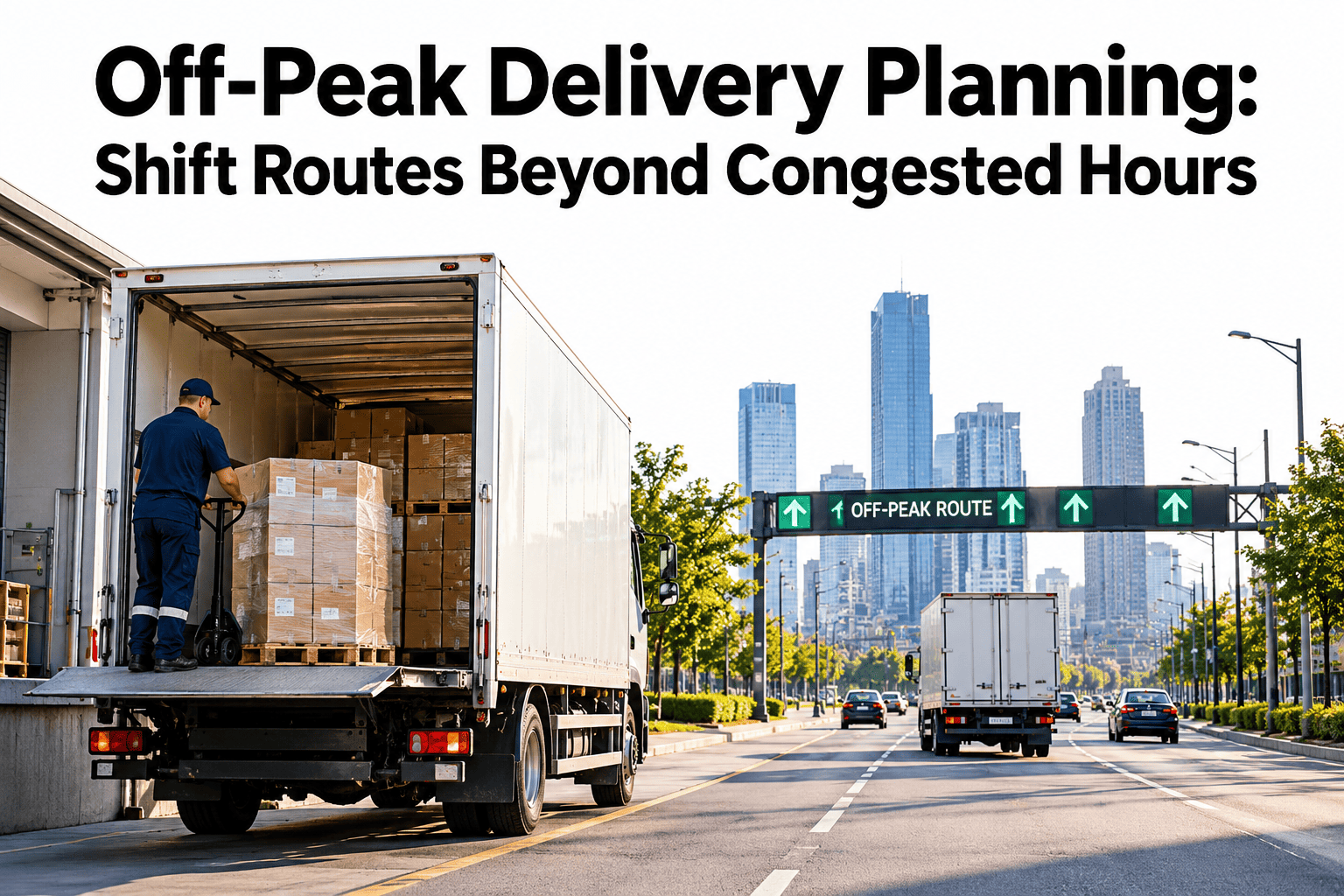
Off-Peak Delivery Planning: Shift Routes Beyond Congested Hours
See where your delivery demand actually clusters, then move what you safely can into the hours traffic has already left.
Building the Delivery-Hour Demand Profile
Before any route moves, plot where the demand actually sits. Three data points matter more than the rest.
How many stops fall in each window across a typical week, not just a single busy day.
How much congestion inflates travel time between stops during peak windows.
Which windows see the most missed or re-attempted deliveries, and why.
A profile built on one bad week overstates the case for change. Use enough weeks to separate a real pattern from a one-off event.
Customer Constraints Before Driver Constraints
Shifting hours only works if customers can receive at the new time. Screen constraints first, then fit the shift plan around them.
Find Out Which of Your Stops Can Move Off-Peak
Book a 30-minute session and iFactory AI will screen your stop list against customer constraints and show which routes are realistic to shift first.
Driver Shifts Around the New Windows
An off-peak plan lives or dies on whether drivers actually want the shift. Build the pattern around real preferences, not just the route map.
Starts before congestion builds, often suits commercial and depot-adjacent routes.
Covers the tail of the day, useful for recipients who are out during business hours.
Lowest congestion, but the narrowest set of eligible stops and strictest access rules.
Route Density Changes With the Clock
The same stop list produces a different efficient route depending on the hour, because travel time between stops is not constant.
| Window | Typical Effect on Route Density | Planning Response |
|---|---|---|
| Peak midday | Fewer stops per route due to slow travel between them | Tighter geographic clustering, shorter routes |
| Early morning | More stops fit per route with faster travel | Wider clustering, longer routes per driver |
| Evening | Moderate improvement, variable by area | Re-cluster around confirmed evening-eligible stops |
Service-Level Trade-Offs to Decide Upfront
Off-peak shifts rarely come free. Decide which trade-offs are acceptable before the plan goes live.
Off-peak slots are often shorter, since there is less slack to absorb delay.
Not every address or customer qualifies, which limits how much volume can shift.
Access and safety issues at night differ from the ones seen during the day.
Shifting delivery volume off-peak is a real efficiency lever, but it works only when it is built from a verified demand profile, not an assumption about when roads are quiet. The plants and fleets that get the most from it start small: move one eligible route segment, measure the service-level effect for several weeks, and expand only once the failure rate and customer response hold steady. Rushing a full network shift before the data backs it up is the most common way these programmes stall.
Where iFactory AI Fits
iFactory AI builds the delivery-hour demand profile from real stop and travel-time data, so an off-peak plan is sized to evidence, not guesswork.
Demand profile by hour
Stop density and travel time are shown by window, so congested hours and real opportunity are both visible.
Constraint screening
Stops are checked against customer and access constraints before being proposed for a shift.
Route re-clustering
Routes are rebuilt for the new window's travel conditions, not just copied from the daytime plan.
Ask in plain language
Ask which routes would benefit most from an off-peak shift and receive a ranked list with evidence.
Frequently Asked Questions
How do we know which routes are good off-peak candidates?
Start from a demand profile built across several weeks, then screen for customer and access constraints that would block the new window. Routes that pass both checks and show a clear travel-time gain are the safest first move. You can watch this screening run on sample route data in a live session.
Does off-peak delivery always mean overnight?
No. Early morning and evening windows often capture much of the congestion benefit with far fewer access and noise restrictions than true overnight delivery. Overnight is usually the last step, not the first. To map out your own windows, request a window planning session with the iFactory AI team, or ask support what data is needed to get started.
How do driver shifts need to change?
Off-peak routes usually need a shift pattern built around the new window rather than a simple start-time shift of the existing shift. Driver preference and labour rules both shape what is workable. A short product tour of shift pattern planning shows how this is modelled.
Will service levels suffer if we move delivery windows?
They can, if windows are narrowed too aggressively or if eligible stops are misjudged. Testing on a limited route set and watching failed-attempt rates closely protects service levels while the plan scales. See how service-level impact is tracked during a pilot in a guided walkthrough.
How long does it take to see a result from off-peak shifting?
A limited pilot on a handful of routes can show a travel-time effect within a few weeks, though a confident view of service-level impact usually needs a longer observation period. Schedule a walkthrough of a phased rollout plan to see a realistic timeline for your network.
Move the Routes That Are Actually Ready to Move
iFactory AI builds your delivery-hour demand profile and screens routes before any shift goes live. Book a walkthrough to see it built around your own network.