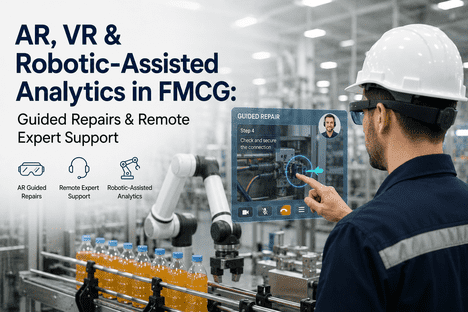
Every maintenance manager in FMCG knows the pattern: a critical line goes down on the overnight shift, the most experienced technician is three time zones away, and the operator on site is staring at an unfamiliar control panel with a phone pressed to one ear trying to describe what they see. The result is extended downtime, repeated troubleshooting cycles, and first-time fix rates that hover frustratingly below where they need to be. AR, VR, and robotic-assisted analytics close that distance — not by replacing the expert, but by putting their knowledge directly into the operator's field of view through guided visual overlays, remote expert annotations, and cobot-delivered tooling instructions. For FMCG plants running high-speed packaging, filling, and palletising lines, the combination of augmented reality diagnostics and integrated knowledge base access is reducing mean time to repair by 25% and pushing first-time fix rates above 85%.
AR GUIDED REPAIRS · VR TRAINING · COBOT ASSISTANCE · REMOTE EXPERT SUPPORT
When the Expert Can't Be There, Put Their Eyes and Hands on the Line — Remotely, Instantly, Visually.
iFactory's AR/VR and robotic-assisted analytics platform equips FMCG maintenance teams with step-by-step visual repair guides, live expert annotation over real-time video, and cobot-delivered tooling support — all integrated with the knowledge base so every fix builds institutional memory.
25%
Average MTTR reduction in FMCG lines using AR-guided repair workflows instead of traditional phone-based support
85%+
First-time fix rate achieved when operators follow AR overlay instructions synchronised with real-time expert annotation
60%
Reduction in repeat service visits for recurring line faults when AR troubleshooting and knowledge base are used together
3x
Faster technician upskilling when VR-based training simulations replace classroom-led sessions for new packaging line equipment
The Distance Problem in FMCG Maintenance — and How AR/VR Closes It
FMCG plants are distributed by nature. A single brand may operate lines across multiple sites, each running similar but not identical equipment configurations, and the expert engineer who knows the filler valve calibration or the wrapper tension settings cannot be on every floor at once. When a line stops and the on-site technician is less experienced with that particular machine, the default response is a sequence of phone calls, partial descriptions, and trial-and-error diagnostics that can stretch a 20-minute repair into a two-hour downtime event. AR changes the interaction model entirely: the operator wears a headset or uses a tablet camera, the remote expert sees exactly what they see, and the expert can draw directly onto the live video feed — highlighting the valve to adjust, the sensor to reset, or the guard to remove — while the AR system overlays the relevant schematic, torque spec, or procedure from the knowledge base alongside the video. The operator no longer has to interpret verbal instructions; they simply follow the visual guide in their field of view.
Four Pillars of AR/VR and Robotic-Assisted Maintenance Analytics
How iFactory Delivers Visual, Remote, and Robotic Repair Intelligence
01
AR Guided Repair Workflows
Step-by-step visual repair sequences projected as overlays on the actual equipment via tablet or AR headset. Each step pulls torque specs, part numbers, and safety notes from the integrated knowledge base so the operator sees procedure and reference data in a single view.
MTTR reduction: 25% average across packaging, filling, and palletising lines
02
Remote Expert Support with Live Annotation
When the local team needs guidance, the remote expert connects via the same AR interface, sees the live camera feed, and can draw, highlight, or place virtual markers on the equipment view. The session is recorded and indexed to the knowledge base for future reference.
First-time fix rate improvement: from 65% to 85%+ after deploying remote AR support
03
Cobot Repair Assistance
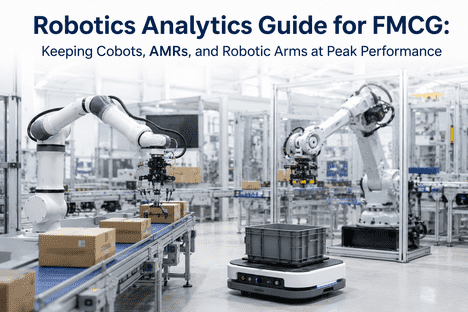
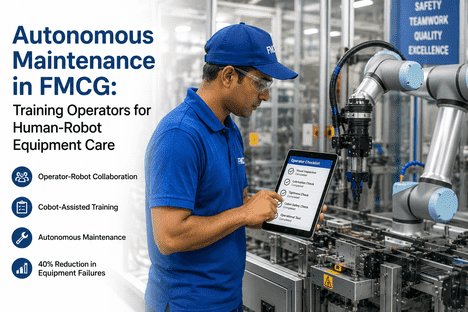
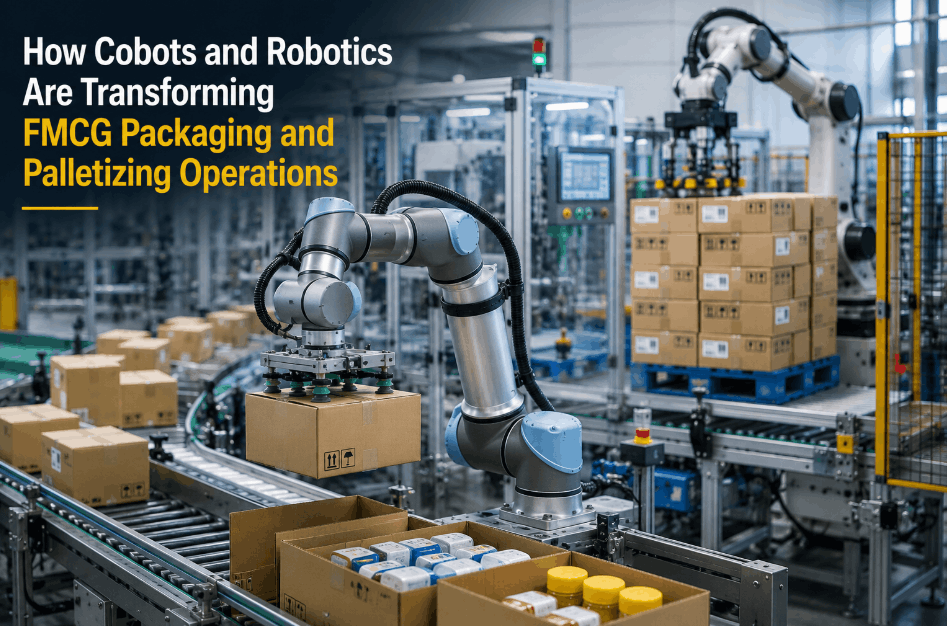
Collaborative robots on the line deliver tools, present replacement parts, or hold components in position while the technician performs the repair. The cobot receives its tasking directly from the AR-guided workflow, so tooling and parts arrive exactly when and where the procedure specifies.
Repair time saved: 18-30% on complex multi-step changeovers with cobot tool delivery
04
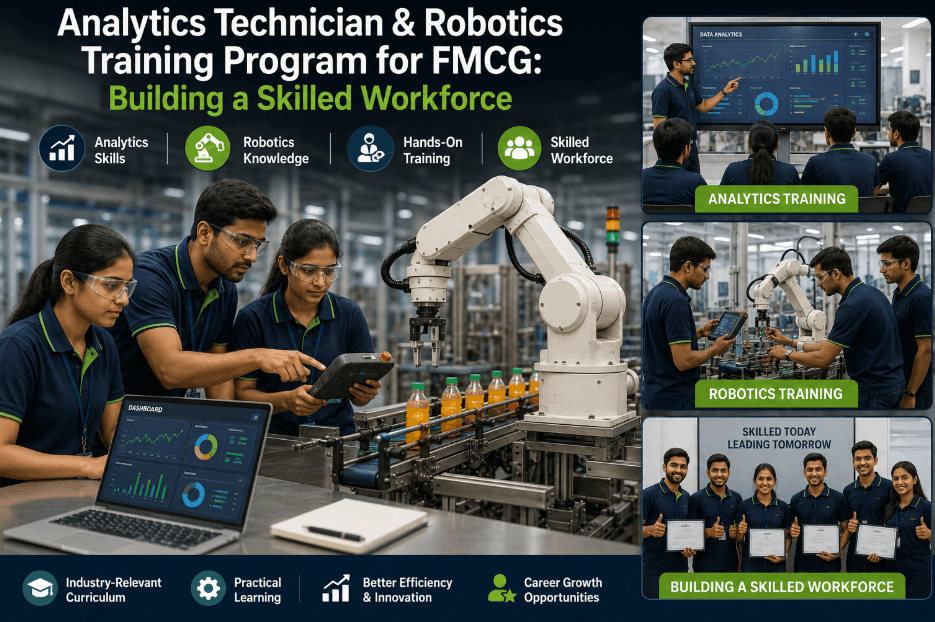
VR-Based Training and Knowledge Retention
Virtual reality training environments simulate the full line and its most common failure modes, allowing technicians to practice repairs in a zero-risk setting. Completion data feeds back into the knowledge base so training content is updated based on real-world repair patterns.
Upskilling acceleration: 3x faster than traditional classroom training for new line equipment
How the AR Analytics Layer Improves Every Repair Cycle
What makes AR/VR-assisted maintenance genuinely different from a video call is the analytics layer that sits beneath every visual interaction. Every AR-guided repair captures data — which steps took longest, which components are most frequently replaced, which failure modes generate the most remote expert calls — and that data feeds back into the knowledge base to continuously improve the guided procedures. When a technician on a filling line in one plant completes an AR-guided seal replacement, the time, tooling, and notes from that repair are available to the next technician facing the same seal type on a different line. The knowledge base stops being a static document repository and becomes a live, analytics-driven repair intelligence system that learns from every event.
KNOWLEDGE BASE · LIVE CAPTURE · REPAIR ANALYTICS · CONTINUOUS IMPROVEMENT
Every Visual Repair Becomes a Recorded Asset — the Next Technician Inherits the Knowledge of Every One Before Them.
iFactory's AR/VR analytics platform records every guided session, indexes repair data to the knowledge base, and surfaces the most effective procedures automatically based on real-world repair outcomes across your entire FMCG operation.
Real-World Application: High-Speed Packaging Line Changeover
Consider a typical FMCG packaging line producing 200 units per minute. When the line switches from a 500ml to a 1-litre format, the changeover involves adjusting infeed guides, replacing fitment applicators, recalibrating fill heads, and updating label applicator settings — a sequence that can take 45 minutes under ideal conditions and over 90 minutes when even one step is performed out of order or requires a tool that is not immediately available. With AR-guided changeover workflows, the operator sees each step overlaid on the actual machine, the required tool and torques displayed alongside, and a timer showing whether the step is running at the expected pace. The cobot delivers the next tool or applicator part while the operator completes the current adjustment. Over successive changeovers, the system records which steps consistently take longer than their procedure time and flags them for process improvement review.
Impact 01
Changeover Time Reduced by 32%
AR-guided visual step sequencing with parallel cobot tool delivery reduces the average format change from 47 minutes to 32 minutes across a four-line packaging hall.
Impact 02
Zero-Step-Omission Rate
The AR system prevents the operator from proceeding to the next step before the current step is confirmed complete, eliminating skipped calibration or missed fastener torque events that cause post-changeover defects.
Impact 03
First-Pass Quality After Changeover
First-pass quality rate after changeover rises from 72% to 94% when every step is visually confirmed and the calibration values are automatically checked against the target range in the knowledge base.
"
Before we deployed AR-guided repairs, every overnight line stoppage meant a phone call to the senior technician, who would try to talk the operator through the fix based on a description alone. The average resolution time for a filler valve jam was 38 minutes. With the AR headset, the operator sees the valve disassembly sequence overlaid directly on the machine, and if they get stuck, the remote expert marks the exact screw to loosen on the live feed. That same repair now averages 11 minutes. The analytics from those sessions also showed us that one particular valve seal was failing three times more often than any other, so we changed the preventive schedule for that seal family across all lines. The knowledge loop is what makes this more than just a video call.
— Maintenance Manager, Multinational FMCG Beverage and Snack Food Manufacturer
Building the Knowledge Base Through Every AR Session
In most FMCG plants, maintenance knowledge lives in the heads of the most experienced technicians. When they retire, promote, or move sites, that knowledge leaves with them. iFactory's AR/VR analytics platform solves this by making every guided repair, every remote expert annotation, and every VR training completion a permanent part of the knowledge base. A technician performing a complex bearing replacement on a palletiser follows the AR overlay, records a note if a step differs from the standard procedure, and that note is reviewed and can be used to update the procedure for the next repair. Over time, the knowledge base shifts from a manually maintained collection of PDFs to an automatically curated, usage-weighted library of the most effective repair sequences — ranked by actual completion time, success rate, and technician feedback from every site in the network.
Capability 01
AR Overlay Generation from Knowledge Base
Visual repair steps pulled and projected onto live equipment view
When a technician scans the equipment QR code or selects a fault code, the system retrieves the relevant procedure from the knowledge base and generates a step-by-step AR overlay. Each step shows the component location, required tool, torque or calibration value, and a photo or video of the correct technique if available. The overlay is anchored to the physical equipment so the instructions stay in position as the technician moves around the machine.
Capability 02
Remote Expert Annotation Recording
Every remote session is captured and indexed to the knowledge base
When a remote expert connects to guide a repair, the entire session — including all annotations, drawings, voice notes, and the final resolution — is recorded and linked to the specific equipment and fault code. If the same fault appears on another line, the recorded session is surfaced as a reference or can be converted into a new AR-guided procedure if it describes a repair path not yet documented in the knowledge base.
Capability 03
VR Training with Performance Analytics
Simulated repairs with recorded completion metrics and feedback loops
Technicians practise high-complexity repairs in a fully immersive VR environment that replicates the actual line layout and machine behaviour. The system records completion time, step accuracy, and any repeated errors per session. These metrics identify which technicians need additional support on which procedures and which procedures need better documentation — closing the loop between training performance and knowledge base quality.
The Maintenance Analytics Dashboard
For maintenance managers and plant leadership, the value of AR/VR deployment is visible through the analytics dashboard that aggregates every repair event across all connected lines and sites. The dashboard surfaces repair frequency by equipment type, average resolution time by procedure, the most commonly accessed knowledge base entries, technician skill progression through VR training completion rates, and the direct impact on line OEE from faster changeovers and reduced downtime.
Analytics View 01
Repair Frequency & MTTR by Equipment Type
See which assets generate the most AR-guided sessions, the average resolution time, and the trend over weeks and months as the knowledge base matures for each equipment family.
Management action: Direct training and knowledge base investment to the highest-frequency, highest-MTTR equipment
Analytics View 02
Knowledge Base Usage & Effectiveness
Track which procedures are most frequently accessed via AR overlay, the average completion time per procedure, and how often the remote expert escalation path is used for each documented repair.
Management action: Identify and update low-effectiveness procedures where remote escalation is still frequently needed
Analytics View 03
Technician Skill Progression & VR Training
Monitor VR training completion rates, average score per procedure, and the correlation between training completion and real-world repair MTTR improvement per technician.
Management action: Target individual coaching to technicians with lower VR scores on the most critical repair procedures
Analytics View 04
Changeover Performance by Line and Format
Compare changeover times across lines running similar format switches, identify which lines perform fastest, and surface the AR-guided procedures and technician assignments that deliver the best results.
Management action: Standardise best-performing changeover procedures across all lines
Analytics View 05
OEE Impact from AR/VR Deployment
A direct correlation view showing the OEE improvement trend plotted against the adoption rate of AR-guided repairs and VR training completion across the site or network.
Management action: Use OEE correlation data to build the business case for expanding AR/VR deployment to additional lines
Analytics View 06
Cobot Utilisation & Task Distribution
Monitor how frequently cobots are deployed for tool delivery, part positioning, and inspection support during AR-guided repairs, and identify opportunities to expand cobot tasking to additional procedures.
Management action: Expand cobot-assisted repair coverage to the highest-volume procedures
Conclusion
The distance between an expert technician and a line stoppage has always been measured in time zones, shift schedules, and the limits of a phone call. AR, VR, and robotic-assisted analytics eliminate those distances by putting the expert's knowledge directly into the operator's visual field, recording every repair as a reusable knowledge asset, and equipping cobots to support the physical work of maintenance. For FMCG plants, where line speed and changeover frequency leave no margin for extended troubleshooting, the combination of guided visual repairs and a live knowledge base delivers the highest-impact maintenance improvement available without replacing equipment.
The 25% MTTR reduction, 85%+ first-time fix rate, and 3x faster upskilling documented across packaging, filling, and palletising operations are not theoretical targets — they are the result of replacing verbal handover with visual guidance, static documentation with live knowledge capture, and solo troubleshooting with remote expert collaboration. Plants that deploy AR/VR analytics see the improvement in every shift's downtime report, and the knowledge base compounds that improvement with every repair event recorded.
iFactory's AR Integration and Knowledge Base platform is purpose-built for FMCG maintenance teams ready to close the distance between their experts and their lines. Book a Demo to see AR-guided repair workflows modelled against your most frequent line stoppage, or talk to an expert to discuss connecting your existing knowledge base to AR overlay generation.
Frequently Asked Questions
Put Your Best Technician on Every Line, Every Shift. See AR/VR Analytics in Action.
iFactory's AR Integration and Knowledge Base platform for FMCG maintenance — AR-guided repair overlays, remote expert support with live annotation, cobot repair assistance, VR-based training simulations, and a live knowledge base that compounds with every repair event across your entire operation.