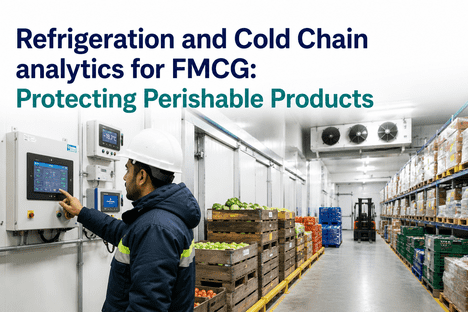
Cold chain integrity is the single most critical quality and safety parameter in food, beverage, pharmaceutical, and biological storage operations. The Global Cold Chain Alliance estimates that up to 40 percent of temperature-sensitive products are lost or degraded annually due to refrigeration system failures, temperature excursions, and inadequate maintenance of cold storage infrastructure. A systematic cold chain and refrigeration system analytics checklist covering compressor health, refrigerant charge, condenser efficiency, evaporator performance, temperature monitoring, door cycle management, and compliance documentation provides the audit framework that quality assurance teams, maintenance engineers, and cold storage operators use to verify cold chain integrity at every point in the storage and distribution network. Every cold storage facility that implements this checklist and acts on the findings eliminates 80 to 90 percent of temperature excursion events, reduces refrigeration energy consumption by 12 to 25 percent, and extends compressor and system service life by 3 to 5 years.
Why Cold Chain Analytics Matter for Refrigeration Systems
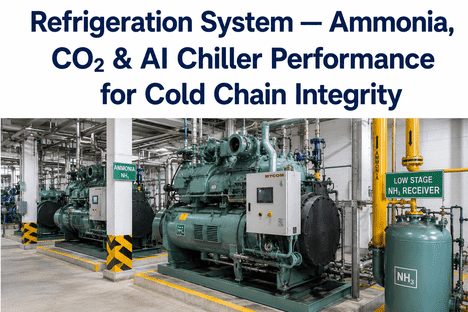
Refrigeration systems in cold storage and food processing facilities operate under continuous thermal and mechanical stress. Compressors run 6,000 to 8,000 hours per year in most food manufacturing and cold storage applications, and the refrigeration system is typically the second-largest energy consumer in the facility after the production process itself. A 200-horsepower ammonia screw compressor system operating at 0.65 kW per ton of refrigeration at design conditions will consume approximately 1.2 million kWh per year. A 10 percent degradation in system efficiency caused by fouled condenser coils, low refrigerant charge, or worn compressor valves adds $9,000 to $15,000 to the annual electricity bill for that single compressor — and most cold storage facilities operate multiple compressors in a sequenced rack configuration. The analytics checklist identifies every efficiency degradation before it becomes a failure, quantifies the energy and reliability impact of each finding, and prioritizes corrective actions by return on investment.
Beyond energy cost, cold chain analytics directly impacts product quality and food safety. The FDA Food Safety Modernization Act and FDA 21 CFR Part 117 mandate that preventive controls — including temperature monitoring and refrigeration system maintenance — be documented and verifiable in facilities that process, store, or distribute refrigerated and frozen foods. A temperature excursion caused by a refrigeration system malfunction that goes undetected for more than 4 hours can result in the loss of an entire cold storage inventory worth hundreds of thousands of dollars. The cold chain analytics checklist provides the documentation framework that satisfies regulatory requirements while delivering the operational intelligence needed to prevent excursions before they occur.
The Refrigeration Analytics Checklist: Seven Audit Domains
The complete cold chain refrigeration analytics checklist covers seven domains. Each domain contains specific checklist items with measurement criteria, acceptance thresholds, and corrective action guidelines. The checklist is designed to be executed by maintenance technicians during monthly inspections, with data logged into a CMMS or analytics platform for trend analysis and automated alerting.
We implemented the full cold chain analytics checklist across six cold storage facilities totaling 2.2 million square feet of refrigerated and frozen storage space. In the first 12 months, we reduced temperature excursion events by 87 percent, from an average of 18 per month across the network to fewer than 3 per month. Our refrigeration energy consumption dropped 19 percent year-over-year, saving $1.4 million. The IoT sensor network detected a failing compressor bearing on a 300-horsepower ammonia screw compressor 6 weeks before the bearing would have catastrophically failed — the predictive maintenance intervention cost $12,000 and avoided a $480,000 emergency compressor replacement and an estimated $2.3 million in product loss from a 24-hour temperature excursion in a -10 F freezer.
— Vice President of Engineering, National Cold Storage and Logistics Provider — 6-Facility Cold Chain Analytics Program ResultsIoT Sensor Integration: The Foundation of Cold Chain Analytics
Traditional cold storage temperature monitoring relies on a small number of hardwired sensors connected to a building management system, with data logged at 15- to 60-minute intervals. This approach creates blind spots in the cold chain because it cannot detect temperature stratification within a room, temperature rise during door cycles, or the thermal impact of defrost cycles on adjacent storage zones. IoT-based wireless temperature and humidity monitoring solves these blind spots by deploying a dense network of low-cost sensors that communicate through a mesh network to a cloud-based analytics platform. Modern cold chain analytics platforms collect data at 1- to 5-minute intervals from hundreds of sensors across multiple cold rooms, freezers, chillers, and refrigerated transport units, providing real-time visibility into every cubic meter of cold storage space.
The iFactory IoT sensor integration platform provides the edge AI analytics layer that processes sensor data in real time, detecting temperature trends, predicting excursion risks, and generating automated work orders for refrigeration system maintenance before a failure occurs. Edge AI processors running at the sensor gateway level analyze temperature, humidity, door cycle, compressor vibration, refrigerant pressure, and energy consumption data using machine learning models trained on the facility's historical operating data. When the model detects a pattern that precedes a temperature excursion — for example, a gradual rise in defrost termination temperature combined with increasing suction pressure — the system generates an alert and a corrective work order within the CMMS before the excursion threshold is reached. Book a demo to see how iFactory's IoT sensor platform and edge AI analytics transform cold chain monitoring from passive temperature logging to active excursion prevention.
Common Refrigeration System Problems Identified by Analytics
The refrigeration analytics checklist routinely identifies four categories of problems that, when corrected, deliver the highest return on cold chain analytics investment. Each category has a characteristic signature in the analytics data that the checklist is designed to detect.
Condenser approach temperature rises 5-10 F above baseline as coil fouling restricts air flow and reduces heat transfer. Compressor discharge pressure increases, forcing the compressor to work against a higher pressure ratio. Energy consumption increases 8-15% for every 10 F rise in condensing temperature. Corrective action: scheduled condenser coil cleaning based on differential pressure or approach temperature measurement rather than calendar intervals. iFactory's analytics platform tracks approach temperature trends and generates cleaning work orders when the threshold is exceeded.
Low refrigerant charge reduces system capacity and efficiency. Suction pressure drops, superheat rises, and the system runs longer cycles to maintain space temperature. In severe cases, the compressor short-cycles or fails to pull down after defrost. Electronic leak detection survey identifies the source. Corrective action: repair leak, recover remaining charge, evacuate, recharge to nameplate weight, and verify subcooling and superheat. iFactory tracks charge indicators and alerts the maintenance team when the signature matches an undercharge condition.
Defrost cycle that fails to terminate within the programmed time wastes energy and heats the cold room. Defrost that terminates too early leaves residual frost on the coil, reducing air flow and heat transfer over successive cycles. Analytics detects defrost issues by monitoring defrost termination temperature, cycle duration, and the rate of temperature rise in the cold room during defrost. Corrective action: inspect defrost termination thermostat, defrost heater contactors, and defrost timer or demand controller. iFactory generates alerts when defrost energy exceeds 15% of total refrigeration energy.
Worn or damaged door seals allow warm, moist air to enter the cold room, increasing the latent heat load on the evaporator and causing excessive frost accumulation. IoT door cycle sensors combined with temperature and humidity monitoring detect the impact of door seal failures by correlating door opening events with temperature recovery time and humidity spikes. Corrective action: replace door seals, repair auto-closers, and train operators on proper dock door discipline. iFactory's door cycle analytics quantify the energy impact of each door and prioritize seal replacement by ROI.
Implementing Cold Chain Analytics with iFactory
iFactory's IoT sensor integration and edge AI platform provides the complete technology stack for cold chain refrigeration system analytics. The platform integrates wireless temperature, humidity, door contact, vibration, pressure, and current sensors into a single dashboard that displays real-time cold chain status, trend analytics, and predictive alerts. The edge AI engine runs machine learning models that detect the early warning signatures of compressor failure, refrigerant loss, condenser fouling, and defrost system degradation, generating automated work orders in the CMMS before the condition escalates to a temperature excursion or equipment failure.
The platform's compliance documentation module automatically captures temperature records, alarm acknowledgments, excursion reports, and corrective action documentation in a format that satisfies FSMA, FDA 21 CFR Part 117, and HACCP audit requirements. Cold storage operators can generate compliance reports for regulatory inspection with a single click, eliminating the manual data gathering and report preparation that consumes hundreds of hours per year in most facilities. The shift logbook feature enables operators to document refrigeration system observations, defrost cycle checks, and door seal inspections during their rounds, creating a permanent record of cold chain integrity verification that is directly accessible from the compliance dashboard. Talk to an expert to see how iFactory's cold chain analytics platform integrates IoT sensors, edge AI, and compliance documentation into a single unified system for your cold storage or food processing facility.
Frequently Asked Questions
Conclusion
Cold chain integrity is not negotiable in food, beverage, pharmaceutical, and biological storage operations. The financial impact of a single temperature excursion — measured in destroyed product value, regulatory penalties, and brand reputation damage — far exceeds the investment required to implement a comprehensive cold chain and refrigeration system analytics program. The seven-domain analytics checklist described in this guide provides the audit framework that cold storage operators, quality assurance teams, and maintenance engineers need to verify cold chain integrity, detect refrigeration system degradation before it causes an excursion, optimize energy consumption, and maintain regulatory compliance documentation.
The facilities that implement this checklist with IoT sensor integration, edge AI analytics, and automated compliance documentation consistently achieve 80 to 90 percent reduction in temperature excursions, 12 to 25 percent reduction in refrigeration energy consumption, and 3 to 5 years of additional service life from their refrigeration assets. These facilities pass regulatory audits with minimal preparation time because their compliance documentation is automatically captured, organized, and available on demand.
iFactory provides the integrated cold chain analytics platform that turns the checklist from a manual inspection form into a continuously monitoring, predictive, and automated cold chain integrity system. From IoT sensor deployment and edge AI analytics to compressor health monitoring and FSMA compliance documentation, iFactory ensures that every degree of cold chain integrity is measured, verified, and documented. Book a demo to see how iFactory can help your facility implement cold chain and refrigeration system analytics, or talk to an expert about starting your cold chain analytics program today.