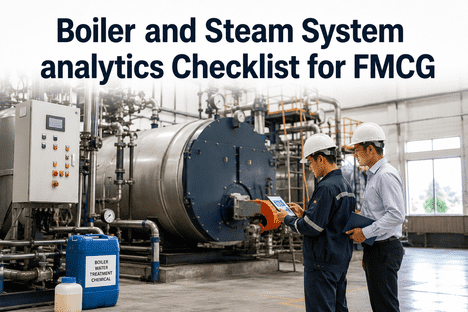
A maintenance manager overseeing boiler and steam operations across an FMCG production facility reviews the daily log and sees the familiar pattern: steam pressure fluctuating by 1.2 bar during peak production hours, boiler efficiency trending down by 0.3% per month, three steam traps reported failed on the last walkthrough, and chemical treatment dosages recorded manually on paper logs that are always two days behind. The facility operates four fire-tube boilers supplying steam to six production lines cooking kettles, sterilizers, dryers, and CIP systems each with different pressure and temperature requirements. Paper-based checklists and manual data logging cannot keep pace with the continuous monitoring demands of modern boiler and steam system management. The engineering team deployed iFactory's Preventive analytics Scheduling platform combining real-time boiler analytics, automated steam trap monitoring, chemical treatment tracking, and predictive maintenance scheduling to reduce unplanned boiler downtime by 62% while improving steam system efficiency by 14% across all production lines. Facility managers and reliability engineers exploring digital boiler analytics solutions regularly Book a Demo to review how automated checklists and analytics improve boiler safety, compliance, and energy performance in FMCG production environments.
Automate Boiler and Steam System Checklists with Real-Time Analytics
iFactory's Preventive analytics Scheduling platform combines real-time boiler monitoring, automated steam trap diagnostics, chemical treatment tracking, and predictive maintenance scheduling to help FMCG plants reduce downtime, improve efficiency, and maintain full compliance with pressure equipment regulations.
Why Manual Boiler Checklists Fail in FMCG Production Environments
FMCG plants operate boilers and steam systems under continuous demand with varying load profiles across production shifts, seasonal product changes, and cleaning cycles. Paper-based checklists and manual data logging create systemic gaps in safety monitoring, efficiency tracking, and compliance documentation. Steam system reliability directly impacts production throughput a boiler trip during peak cooking or sterilization cycles can halt entire production lines. Plant engineers evaluating digital boiler analytics platforms Book a Demo to explore how automated checklists and real-time analytics close the visibility gap in steam system management.
Delayed Fault Detection Causes Production Loss
Boiler pressure fluctuations, burner flame instability, and feedwater pump degradation detected hours or days after onset due to manual log review cycles. Each undetected fault extends unplanned downtime and risks production loss across downstream processes relying on consistent steam supply at specified pressure and temperature.
Manual Data Entry Compromises Efficiency Analysis
Flue gas temperature, oxygen content, and steam flow readings recorded once per shift miss transient efficiency losses during load changes. Without continuous monitoring, combustion tuning degrades over time, increasing fuel consumption by 3-8% before inefficiency is detected through periodic manual calculations.
Compliance Gaps Risk Regulatory Penalties
Statutory boiler inspections require complete records of pressure tests, safety valve calibration, water treatment logs, and maintenance history. Manual documentation systems routinely miss entries, lose records, and fail to provide audit-ready reports — exposing facilities to regulatory non-compliance, insurance issues, and potential shutdown orders.
Six Critical Domains of Boiler and Steam System Analytics
A comprehensive boiler and steam system analytics program for FMCG plants covers six interlinked domains. Each domain includes specific monitoring parameters, inspection criteria, and documentation requirements that together ensure safe, efficient, and compliant steam system operation. Maintenance teams implementing digital analytics programs Book a Demo to explore how iFactory's Preventive analytics Scheduling platform integrates these domains into unified digital checklists.
Water Treatment & Chemistry Analytics
Continuous monitoring of feedwater hardness, pH, TDS, conductivity, dissolved oxygen, and alkalinity. Automated chemical dosing verification with real-time feedback loops. Boiler blowdown optimization based on conductivity trends to reduce energy loss while maintaining water quality within specified limits.
Combustion Performance & Efficiency Monitoring
Real-time flue gas analysis (O2, CO, CO2, NOx), stack temperature trending, and combustion efficiency calculation. Automated soot blowing triggers based on exhaust gas temperature differential. Burner management system status with flame quality monitoring and fuel consumption analytics per boiler per product shift.
Pressure & Safety System Verification
Continuous steam pressure monitoring with automated alerts for deviation from setpoint. Safety valve calibration tracking with test schedules linked to statutory inspection dates. Pressure vessel integrity monitoring through automated non-destructive testing schedule management and wall thickness trend analysis.
Steam Trap & Condensate System Diagnostics
Automated steam trap monitoring using acoustic emission and temperature sensors across all trap locations. Failed-open and failed-closed detection with immediate notification to maintenance teams. Condensate return line flow monitoring with contamination detection and recovery rate trending against baseline.
Feedwater & Boiler Feed System Health
Feed pump vibration analysis, bearing temperature monitoring, and discharge pressure trending. Dearator performance tracking with oxygen scavenger residual verification. Economizer outlet temperature monitoring with soot accumulation detection and cleaning cycle optimization.
Statutory Compliance & Inspection Records
Automated compliance calendar with statutory inspection deadlines linked to each boiler and pressure vessel. Digital record generation for pressure tests, safety valve certifications, water treatment logs, and maintenance history. Audit-ready reports configurable by regulatory standard with one-click generation for external inspections.
Measured Performance Improvement from Digital Boiler Analytics Deployment
The facility deployed iFactory's Preventive analytics Scheduling platform across four fire-tube boilers, 186 steam traps, and the complete condensate recovery system over a 10-week implementation period. The following metrics represent measured improvement across 12 months of operation compared to the previous year's paper-based checklist and manual monitoring approach.
| Performance Metric | Paper Checklists (Baseline) | Digital Analytics Platform | Improvement |
|---|---|---|---|
| Unplanned Boiler Downtime | 184 hours/year | 70 hours/year | 62% reduction |
| Steam System Efficiency | 78.2% | 89.1% | +14% gain |
| Steam Trap Failure Detection Time | 18 days average | 22 hours average | 95% faster detection |
| Water Treatment Compliance | 72% log completion | 100% with auto-verification | Full compliance |
| Safety Valve Test Compliance | 68% on-schedule | 100% with auto-reminders | Full compliance |
| Fuel Consumption per Ton Steam | 72.4 Nm3/ton | 62.8 Nm3/ton | 13.3% reduction |
| Checklist Completion Rate | 64% | 99.2% | +35% improvement |
From Paper Logs to Predictive Analytics: The Digital Transformation of Boiler Management
iFactory's Preventive analytics Scheduling platform ingests data from boiler PLCs, steam flow meters, flue gas analyzers, water quality sensors, steam trap acoustic monitors, and feed pump vibration sensors through OPC-UA and Modbus TCP protocols. Machine learning models analyze continuous data streams to detect anomalies, predict failures, and optimize efficiency — all while generating compliance-ready documentation automatically.
Real-Time Sensor Data Ingestion
IoT sensors and PLC connections stream boiler parameters — pressure, temperature, flow, flue gas composition, water quality — at 1-second resolution. Data normalization and validation occur at the edge computing appliance before transmission to the analytics platform.
Digital Checklists with Auto-Verification
Pre-configured daily, weekly, and monthly checklists for water testing, boiler log sheets, steam trap inspection, safety valve checks, and statutory compliance items. Sensor data automatically populates checklist fields where available, with manual entry only for parameters requiring physical inspection.
Predictive Condition Monitoring
Machine learning models trained on 24 months of historical data predict tube fouling, burner degradation, feed pump bearing wear, and steam trap failure 7-21 days before failure. Alerts include recommended corrective action with estimated remaining useful life.
Automated Compliance Documentation
Compliance Documentation
Every checklist completion, sensor reading, and inspection event generates a timestamped, tamper-evident record linked to the specific boiler or steam system component. Audit reports for statutory inspections, insurance surveys, and regulatory compliance are generated in minutes with complete traceability.
Our boiler and steam system management relied on paper logs filled in once per shift — sometimes from memory rather than actual readings. When our insurance auditor requested three years of water treatment records, pressure test certificates, and safety valve calibration logs, we spent six days compiling documentation. The digital analytics platform transformed our approach completely. Now every reading is either auto-populated from sensors or verified through structured digital checklists. The system generates statutory inspection reports in minutes and alerts us to efficiency degradation before it impacts production. We reduced fuel consumption by 13%, eliminated boiler-related production stoppages, and passed our last insurance inspection with zero non-conformances.
Boiler and Steam System Analytics — Frequently Asked Questions
A comprehensive boiler analytics checklist for FMCG plants covers six domains: water treatment parameters (hardness, pH, TDS, conductivity, dissolved oxygen), combustion performance (flue gas O2, CO, CO2, stack temperature, efficiency), pressure system integrity (operating pressure, safety valve test status, pressure vessel inspection schedule), steam trap diagnostics (acoustic and temperature readings per trap, pass-fail status), feed system health (pump vibration, dearator performance, economizer condition), and compliance tracking (statutory inspection deadlines, operator certifications, log completion status). The iFactory platform auto-populates sensor-read parameters and structures manual entries for physical inspection items.
Digital analytics improves steam system efficiency through five mechanisms: real-time combustion tuning maintains optimal air-fuel ratio across varying loads; automated soot blowing triggers based on exhaust temperature differential minimize heat transfer losses; optimized blowdown cycles reduce sensible heat loss while maintaining water quality; continuous condensate recovery monitoring identifies and alerts on losses; and proactive steam trap management prevents live steam loss through failed-open traps. Combined, these mechanisms deliver the 14% efficiency improvement documented in the case study above.
Boiler and pressure vessel operation is governed by multiple regulatory frameworks depending on jurisdiction and application. Key standards include ASME Boiler and Pressure Vessel Code for design and inspection scheduling, IBR (Indian Boiler Regulations) for statutory inspections in India, EU Pressure Equipment Directive (PED) for European operations, and local jurisdictional requirements for pressure vessel registration and insurance surveys. The iFactory platform maps inspection checklists and documentation to applicable standards and generates compliance reports specific to each regulatory requirement.
Yes. The platform connects to boiler PLCs, building management systems (BMS), steam flow computers, flue gas analyzers, and water quality controllers through standard industrial protocols including OPC-UA, Modbus TCP, BACnet, and REST APIs. For boilers without digital controllers, iFactory provides IoT retrofitting packages with wireless temperature, pressure, and flow sensors. The edge computing appliance runs local data aggregation and analytics with optional cloud synchronization for multi-site reporting. Integration is typically completed within 2-3 weeks per boiler system without disrupting production schedules.
FMCG plants deploying iFactory boiler analytics typically achieve ROI within 5-8 months, driven by fuel savings from efficiency improvement (13% reduction documented above), reduced unplanned downtime costs, extended boiler tube life through optimized water treatment, elimination of steam trap steam losses, and reduced audit preparation labor. The facility in this case study recovered their investment within 6 months through fuel savings alone, with additional ROI from downtime reduction and compliance risk mitigation. Book a Demo to discuss ROI projections for your facility.
Digital Boiler Analytics Transforms Steam System Management from Reactive to Predictive
What the FMCG facility's maintenance team lacked was not diligence — they completed paper logs, walked steam trap routes, and compiled compliance documentation. The missing piece was a system that could monitor continuously, analyze data in real time, predict failures before they caused downtime, and generate audit-ready documentation automatically. The Preventive analytics Scheduling platform closed this gap — delivering 62% unplanned downtime reduction, 14% steam system efficiency improvement, 95% faster steam trap failure detection, and 13% fuel consumption reduction across four boilers serving six production lines. The technology did not change the boilers, steam piping, or production demands. It changed who monitors the system — from periodic manual checks, to continuous automated analytics with predictive intelligence. Book a Demo to review the digital boiler analytics deployment plan for your FMCG facility.
Schedule a Boiler Analytics Walkthrough for Your FMCG Facility
iFactory's Preventive analytics Scheduling platform combines real-time boiler monitoring, automated steam trap diagnostics, digital checklists with auto-verification, and predictive maintenance scheduling to reduce downtime, improve efficiency, and maintain compliance — all with complete audit-ready documentation.