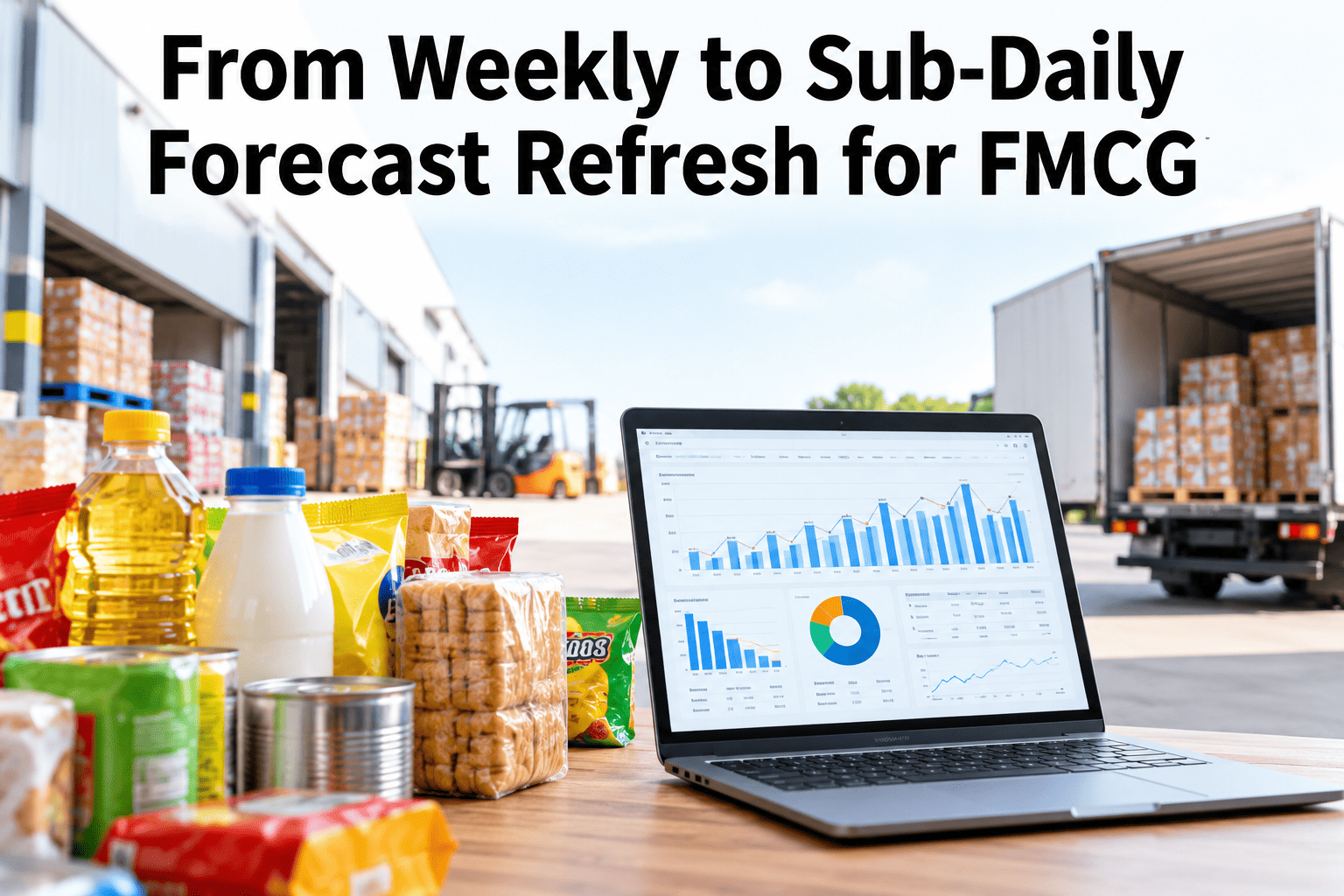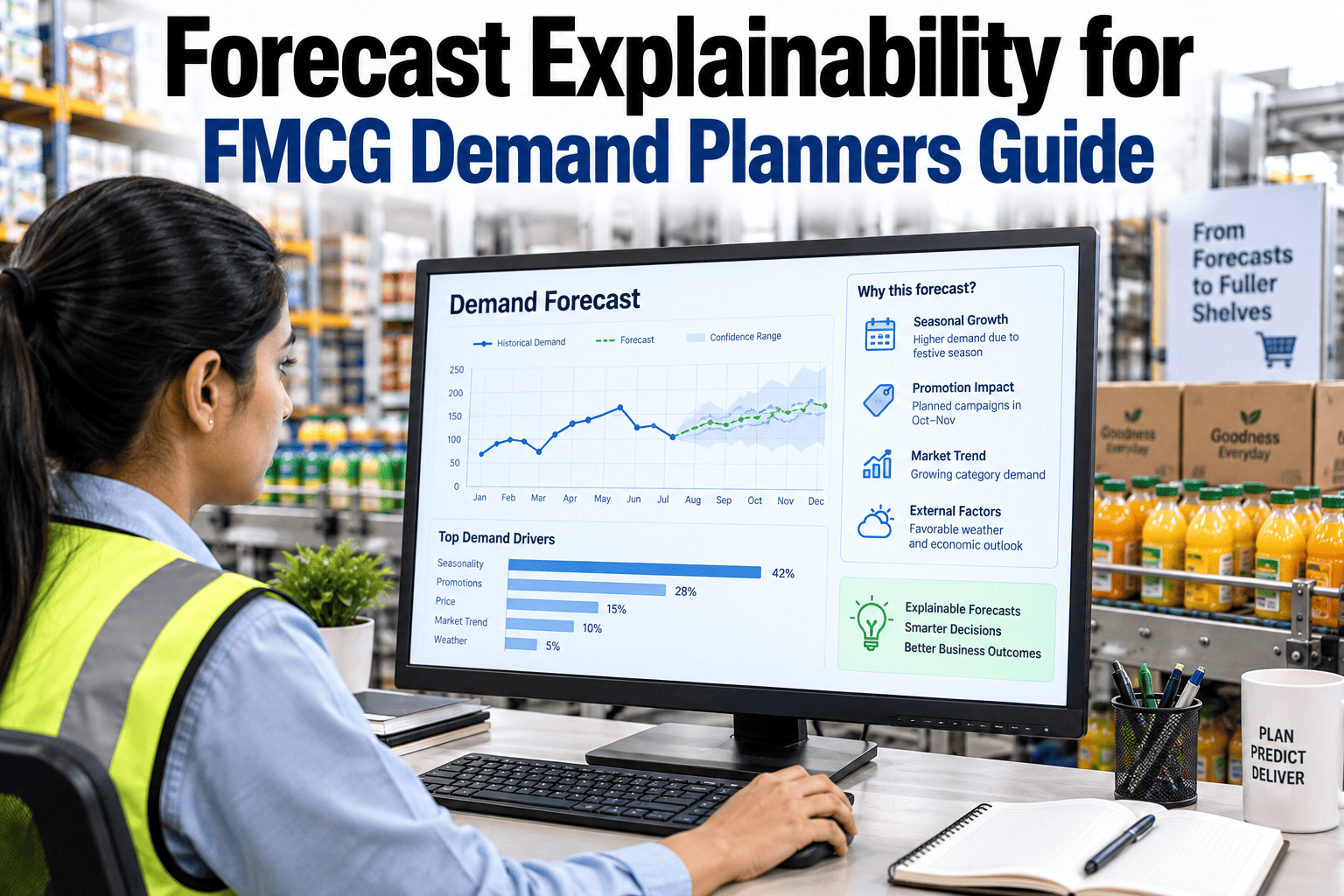
Moving from a weekly to a daily replan sounds like an obvious upgrade until the planning team actually tries it and discovers that running the same manual process five times more often doesn't produce five times the insight, it produces five times the exhaustion, with no clearer decision rights about who actually acts on a daily signal versus who just watches it go by. Daily replanning only works as an operating model, not as the old weekly process compressed into a shorter cycle, which means it needs its own data flow, its own decision rights, and its own definition of what actually triggers a replan versus what gets absorbed into the next cycle. Building that structure is what a working daily replan cadence actually looks like for an FMCG demand planning team.
Daily Replanning Isn't the Weekly Process, Sped Up
iFactory AI's Adaptive Forecasting and Daily Replan platform is built around a daily operating rhythm, not a compressed version of a weekly cycle.
Why Daily Replanning Burns Out Teams Without Structure
The instinct to simply run the weekly process more often is understandable and it's also exactly what makes daily replanning unsustainable without a redesigned operating model.
Every Signal Gets Treated as Urgent
Without a defined threshold for what actually warrants a replan, every daily data fluctuation looks like it demands a decision, which exhausts the team reviewing it.
Decision Rights Aren't Redefined for the New Cadence
A weekly process often has one clear decision point, but a daily rhythm needs explicit rules for which decisions require review and which can execute automatically.
Data Flow Lags Don't Match the New Rhythm
If the underlying data feeding the replan still refreshes on something close to a weekly schedule, a daily cadence just reruns the same stale numbers more often.
Decision Rights at a Daily Cadence
A sustainable daily replan requires explicit rules about who decides what, and under which conditions a decision needs human review at all.
| Trigger | Decision Rights | Review Requirement |
|---|---|---|
| Demand shift within normal range | System executes automatically | Logged, reviewed in weekly summary only |
| Demand shift beyond defined threshold | Planner reviews and confirms | Daily review required before execution |
| Supply constraint conflict | Cross-functional escalation | Immediate review by planning and operations |
Most daily signals should fall into the first category, executing without requiring a planner's active attention, which is exactly what keeps a daily cadence sustainable instead of a daily fire drill.
Design Decision Rights for Your Own Team
Bring your current weekly process to a 30-minute session and map which decisions could move to automatic execution under a daily cadence.
The Data Flow a Daily Cadence Actually Needs
Moving the planning cycle to daily is meaningless if the underlying demand, inventory, and supply data behind it hasn't moved to the same rhythm.
Designing a Cadence That Sticks
These checks separate a daily replan model built to last from one that will quietly erode back to weekly within a few months.
An Illustrative Comparison: Weekly vs Structured Daily Cadence
The figures below are a labeled illustrative composite, not a reported customer result, showing how planner review load and forecast responsiveness can shift under a structured daily model versus a naive daily replan of the old weekly process.
The daily replan programs that actually survive their first year are the ones that treat the threshold design as seriously as the forecasting model itself. A team that reviews every single daily fluctuation burns out within months regardless of how good the underlying forecast is, while a team with clear rules for what executes automatically versus what needs eyes on it can sustain a genuinely responsive daily rhythm indefinitely.
Frequently Asked Questions
How do we set the right threshold for what triggers planner review?
The threshold should be calibrated against your own historical demand variability, since a threshold set too tight generates the same alert fatigue a naive daily cadence produces, while one set too loose can let a genuine shift go unreviewed, so it usually takes a few weeks of tuning against real data to land in the right range. Calibrate a threshold against your own demand data in a short session.
Does every SKU need a daily replan, or just the high-velocity ones?
High-velocity, high-variability SKUs typically benefit most from a daily cadence, while slower-moving items may see diminishing returns from daily review and can often stay on a less frequent cycle without losing meaningful responsiveness. Ask the iFactory AI team which SKUs to prioritize for daily cadence.
How do we know if our underlying data actually refreshes fast enough for daily replanning?
Checking the actual latency between when a real-world event happens, such as a sale or a shipment, and when it's reflected in the planning system's data is the most direct way to confirm whether the data flow genuinely supports daily decisions or just looks daily on the surface. Audit your current data refresh latency in a demo.
What happens to the weekly planning meeting once we move to daily?
A weekly summary review still has real value under a daily cadence, since it's where patterns across several days of automatic decisions get examined together, catching a drift or a recurring exception that no single day's review would reveal on its own. Design a weekly summary alongside your daily cadence on a call.
Can this integrate with our existing ERP or planning system?
Daily replan is built to pull demand, inventory, and supply data from the ERP and planning systems you already run, feeding a faster cadence on top of that existing infrastructure rather than requiring a separate parallel data environment. Discuss integration with your current systems with the support team.
Build a Daily Rhythm That Doesn't Burn Out the Team
iFactory AI's Adaptive Forecasting platform runs a structured daily replan with clear decision rights built in. Book a walkthrough built around your own planning cycle.