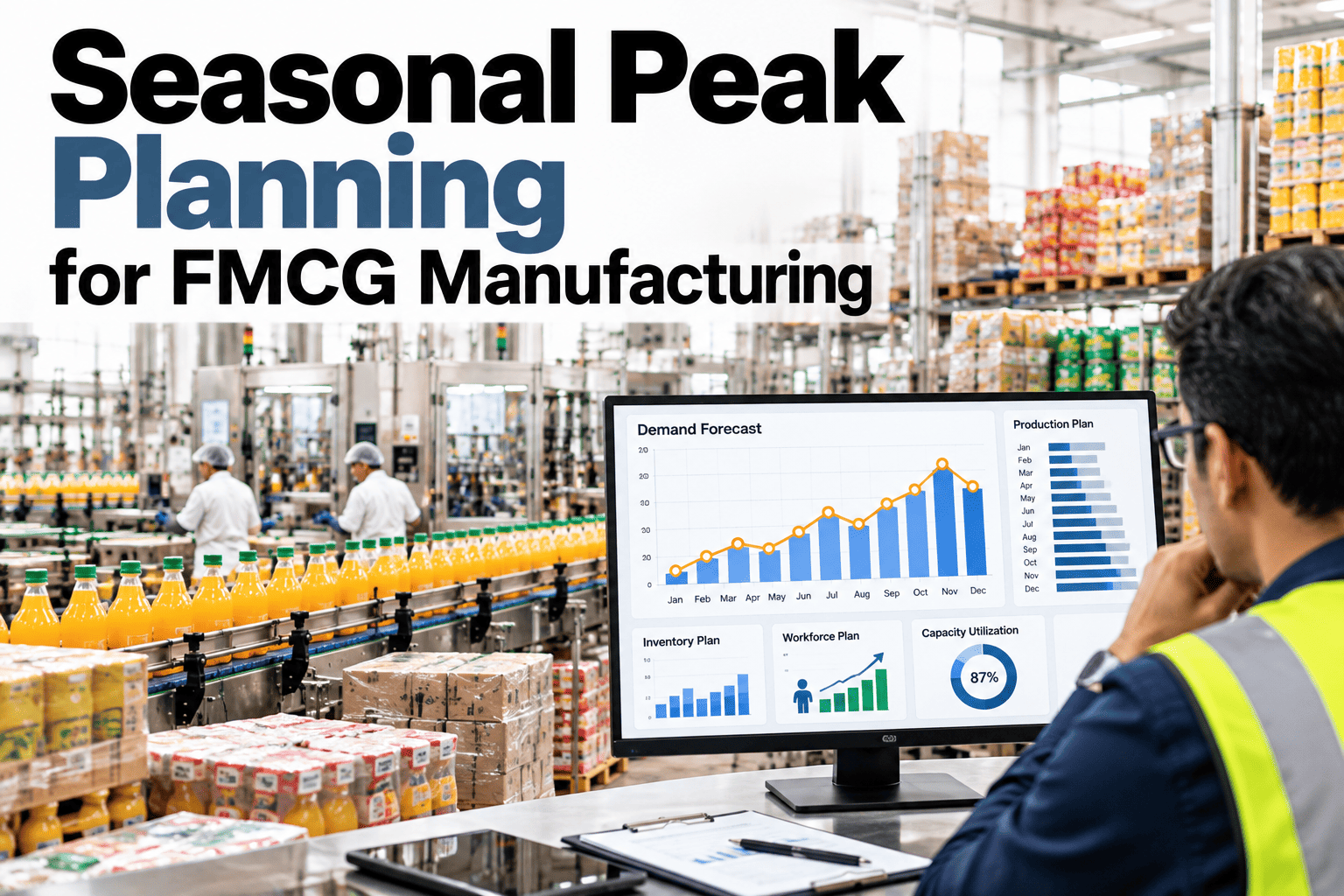
Every FMCG planner knows the pattern: demand climbs in the final quarter, lines run hot, and one missed week of production becomes a missed delivery window you cannot recover. Peak season is rarely lost on the day it arrives. It is lost months earlier, in decisions about what to pre-build, when to bring in temporary staff and which lines to repurpose. Planning those moves against real finite capacity is what keeps shipments on time. Plant teams can test a peak build plan against their own line capacity and see where Q4 will actually tighten.
Plan the Peak Before the Peak Plans You
iFactory Dynamic Scheduler tests pre-build volumes, temporary labor timing and line swaps against finite capacity, so Q4 demand fits the plant you actually have.
Reactive Peak vs Planned Peak
The same demand lands very differently on a plant that prepared and one that did not.
The cheapest capacity is the capacity you reserve before demand arrives.
Where Pre-Build Fills the Valley
Pre-building shifts production into earlier weeks with spare capacity, so the peak weeks carry less of the load.
Conceptual curve. Actual demand, capacity and timing come from your own plan.
Not Every SKU Is Safe to Pre-Build
Shelf life and storage decide how early a product can be made. Rank products before committing the plan.
Illustrative pre-build suitability. Your own shelf-life and warehouse rules decide the real ranking.
Sequencing Temporary Labor to the Work
Temporary staff are only useful when the right tasks are ready for them. Sequence the hires, not just the headcount.
See Your Q4 Capacity Gap Before It Opens
Bring your peak forecast and line list. We will show where capacity falls short and which levers close the gap first.
Line-Swap Patterns That Hold Up Under Pressure
When one line is overloaded and another is idle, swaps can free capacity. Each pattern has a cost.
| Pattern | When It Works | Watch Out For |
|---|---|---|
| Shift a SKU to a sister line | Similar formats and pack sizes | Slower speed or extra changeover |
| Convert a line to seasonal packs | Peak SKUs share a filler | Lost output for regular items |
| Pair long and short runs | Setup time dominates | More handling and staging |
| Run weekend blocks on one line | Labor is available | Fatigue and maintenance windows |
What Experienced Planners Check First
Frequently Asked Questions
How early should pre-build start?
It depends on shelf life and storage space more than on the calendar. Start where spare capacity first appears and stop where stock would age out. Model your own pre-build window with our team using real shelf-life limits.
How do we avoid overbuilding stock?
Cap pre-build by product, using forecast ranges rather than one number. Review weekly against actual sell-through. Excess stock is cheaper to prevent than to clear after the season ends.
Can temporary labor really fill skilled roles?
Rarely at first. Plans work better when temporary staff take simple tasks and permanent staff move to the skilled work they free up. Check how a skill-aware schedule would split your tasks before hiring.
What if peak demand is higher than forecast?
Keep scenarios ready for a high case, with the levers ordered by cost. Overtime, extra swaps and outsourcing each have different lead times. The plan should show which to pull first.
How often should the peak plan be reviewed?
Weekly during the build and daily in the peak itself. Each review compares output, stock and labor with plan. See how a continuously updated peak plan looks in practice on a short call.
Walk Into Q4 With a Plan You Have Already Tested
Bring your forecast, line capacities and staffing assumptions. We will build a peak scenario with you and show where it holds and where it bends.