A loose cap that ships to a retail shelf costs a bottler far more than the bottle it sits on, because a single leaking case can trigger a retailer chargeback, a social media complaint, and a line audit that pulls a shift supervisor off the floor for a full day. Most FMCG bottling lines already run a cap presence sensor of some kind, yet closure defects still make it through at rates that surprise plant managers once they measure the escape rate properly instead of trusting a spot-check tally sheet from the last quality meeting.
Cap and Closure AI Inspection Built for the Speed of a Real Bottling Line
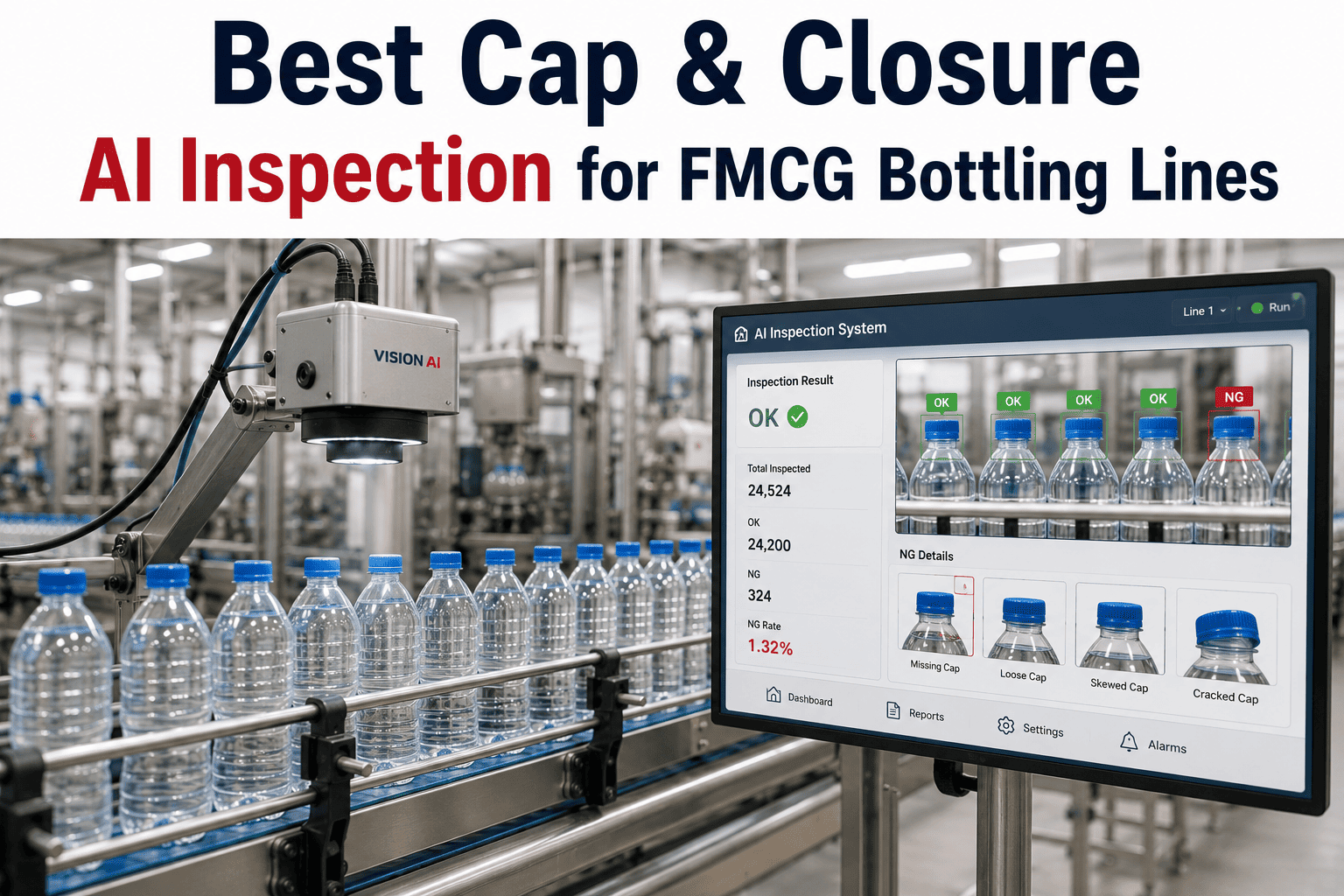
Presence, torque proxy, tamper band position, and seal integrity checked on every single cap, at full line speed, without adding a new bottleneck to a line that already runs tight on changeover time.
The Closure Defect Categories a Weight Check or a Human Glance Cannot Catch
Most bottling lines already have some layer of closure verification, usually a checkweigher tuned to catch missing caps by mass difference, paired with periodic human spot checks during changeovers and shift starts. The gap is not that these methods do nothing, it is that they were never designed to catch the specific defect categories that actually drive customer complaints and retailer chargebacks.
A checkweigher cannot see a tamper band that is partially cut but still attached, because the mass difference is too small to register against normal fill variance. A human inspector glancing at bottles moving past at hundreds of units per minute can reliably catch a completely missing cap, but consistently misses a cap that is present yet under-torqued by a margin that will loosen in transit. Both gaps show up downstream as customer complaints rather than as line rejects, which means the cost of the defect has already multiplied by the time anyone finds out about it.
Vision-based closure inspection closes this gap by evaluating the same visual cues a trained quality auditor would look for, applied consistently to every unit at line speed instead of a sampled few. The model does not get tired after four hours the way a human inspector does, and it does not need the line to slow down to make a judgment call the way a manual torque spot-check does.
From Capper Exit to Reject Lane in Under a Second
Manual Closure Checks Compared With Continuous AI Vision
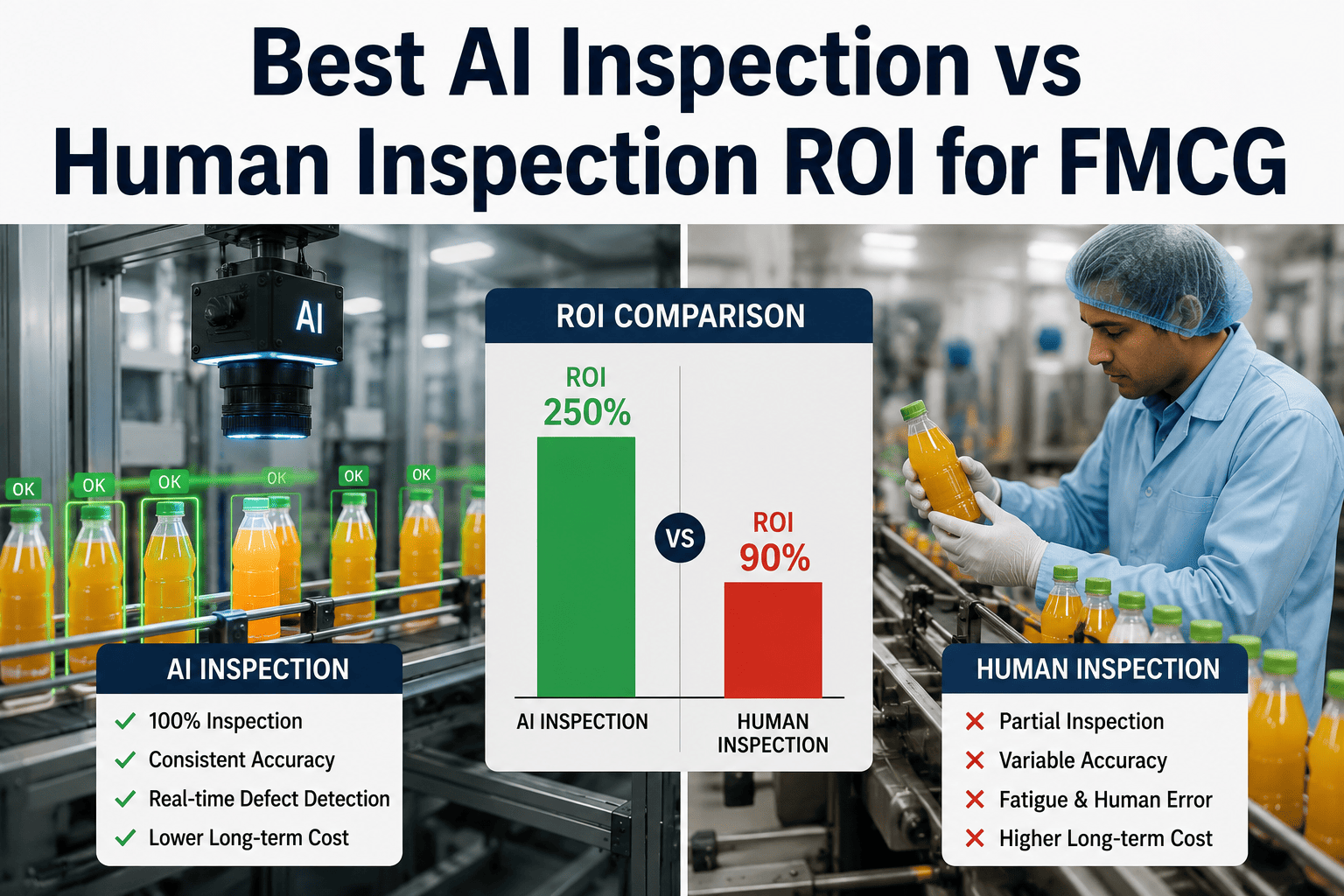
| Inspection Factor | Manual / Checkweigher Only | AI Vision Inspection |
|---|---|---|
| Coverage per shift | Sampled, plus mass-based presence only | Every unit, every closure attribute |
| Tamper band partial breaks | Rarely caught before shipment | Flagged at the capper exit |
| Under-torque detection | Requires a separate contact test | Estimated visually in real time |
| Fatigue effect across a shift | Catch rate declines over hours | Consistent across the full shift |
| Defect traceability | Limited to reject counts | Logged by category, time, and position |
See closure inspection running on a line like yours
iFactory configures the detection model around your specific cap type, bottle geometry, and tamper band design before a single frame is judged in production.
The Operational Impact of Catching Closure Defects at the Source
The most immediate change plant teams report is a shift in where quality problems get discovered. Instead of a customer complaint or a retailer return surfacing a closure defect weeks after a batch shipped, the reject lane at the capper station accumulates the same units in real time, with a defect category attached to each one. That single change turns closure quality from a lagging indicator into a live production metric a shift supervisor can act on immediately.
A secondary effect shows up in root cause investigation time. When every closure defect is timestamped and categorized as it happens, a capping head that has drifted out of alignment produces a visible cluster of under-torque rejects tied to a specific lane, rather than a vague uptick in overall complaint volume that could be traced to any of a dozen possible causes. Maintenance teams can address the specific head instead of auditing the entire capper.
The recall-risk angle deserves separate attention. A seal integrity failure that reaches a retail shelf in a food or beverage product carries a materially different risk profile than a cosmetic defect, because a compromised induction seal can allow contamination or spoilage before the use-by date. Catching that category of defect inline, before the case is palletized, removes a specific and disproportionately costly failure mode from the shipment stream entirely.
What a Cap and Closure Pilot Typically Looks Like
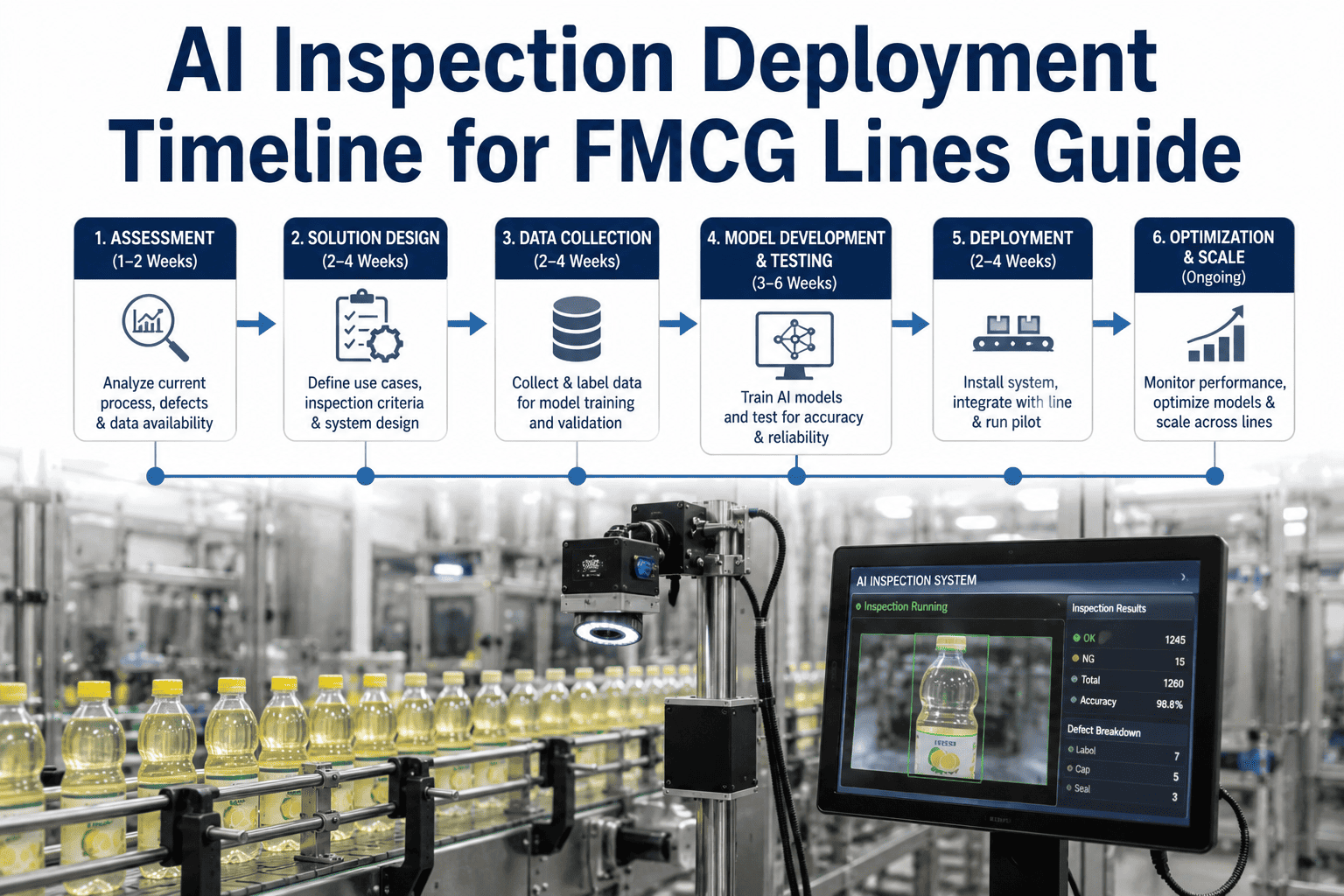
A pilot usually begins on a single capping line rather than the full plant, both to limit integration scope and to produce a clean before-and-after comparison against the line's existing checkweigher and spot-check data. The first two to three weeks focus on collecting a labeled sample of passing and defective closures across the specific cap type and bottle geometry in use, since a model trained on a generic cap style will underperform against the mill's actual packaging.
Once the model is validated against that labeled sample at an accuracy the plant's quality team accepts, the system runs in shadow mode alongside the existing process for a short window, logging what it would have rejected without actually diverting product. This step lets the quality team compare AI-flagged defects against what the existing process would have caught, building confidence before the reject gate goes live. Only after that comparison clears an agreed threshold does the system move into active rejection with full logging.
Common Questions on Cap and Closure AI Inspection
Catch Closure Defects Before the Case Leaves the Plant
iFactory configures cap and closure inspection around your specific bottle geometry, cap type, and line speed, starting with a pilot on a single line before any plant-wide commitment is made.