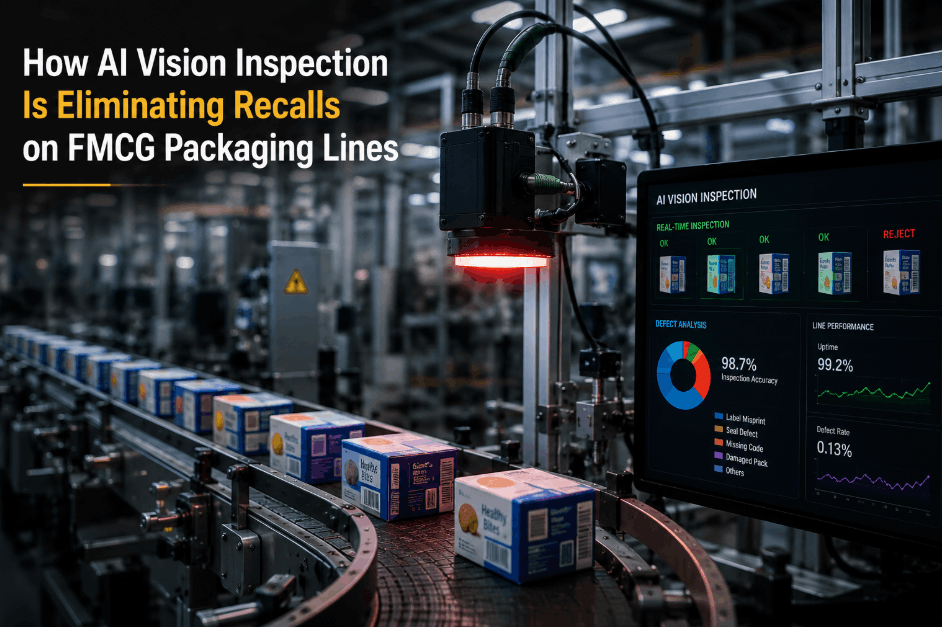
A dented can, a torn pouch corner, or a warped carton flap rarely stops a production line on its own, which is exactly the problem. Each of these defects looks minor enough in isolation that a line operator waves it through, yet a pallet full of them arriving at a distribution center generates rejected loads, expedited replacement shipments, and a retailer relationship conversation nobody on the floor wanted to have this quarter.
FMCG QUALITY VISION · PACKAGE INTEGRITY
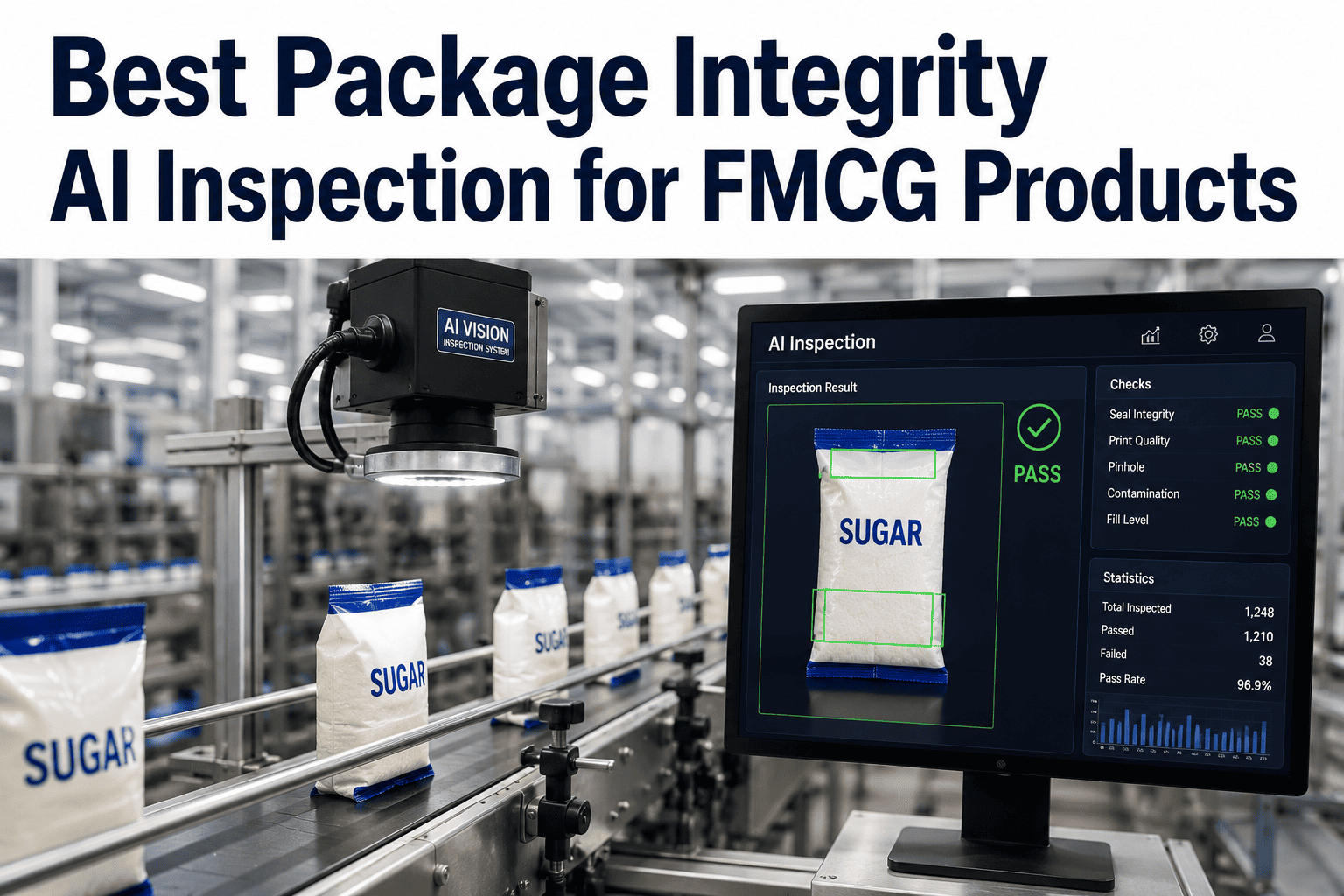
Package Integrity AI Inspection Tuned to Every Pack Format on Your Line
Dent, tear, seal, and warp detection across cans, cartons, pouches, and bottles, with a separate tuned model for each material and geometry instead of one generic check applied to everything.
METAL CANS
Dents, Dome Deformation, Seam Damage
Vision reads can body geometry for panel dents and dome deformation, and checks the double seam region for the visual signatures of a compromised seal that pressure testing alone would catch too late in the process.
CARTONS
Crush, Flap Warp, Corner Damage
Corrugate and folding carton surfaces are checked for crush marks, warped closure flaps, and corner damage that occurs during erecting, filling, or case packing, before the case is palletized and the damage becomes harder to trace.
POUCHES
Seal Gaps, Wrinkle Defects, Tears
Flexible pouch material is inspected along the seal line for gaps, channel defects, and wrinkle-related weak points, along with tears near fitments or corners that a fixed-position camera can miss without the right lighting angle.
BOTTLES
Warp, Panel Collapse, Stress Marks
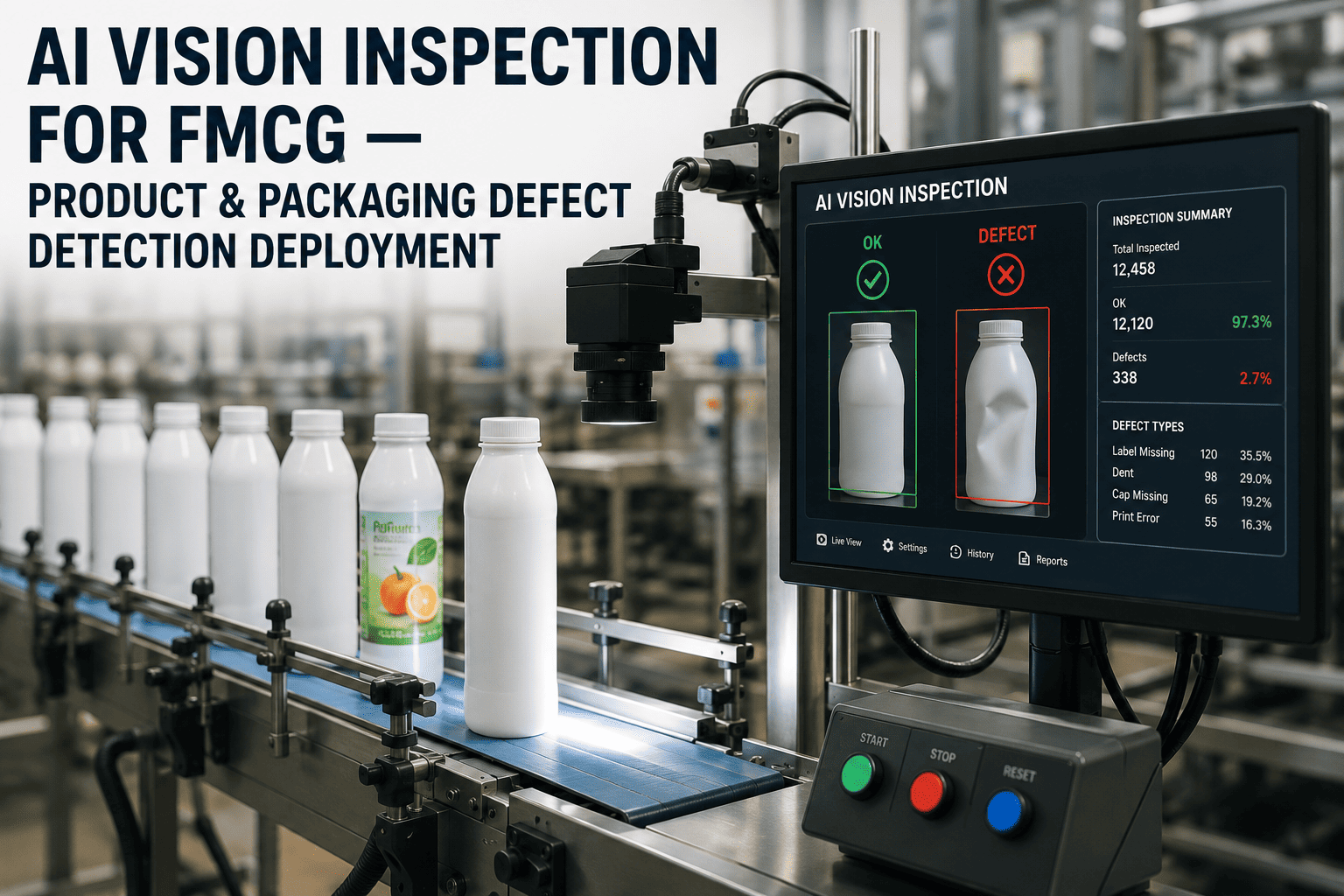
Rigid and semi-rigid bottle formats are checked for warp, panel collapse from thermal stress, and surface stress marks that indicate a molding or handling defect separate from the cap and closure inspection point.
WHY ONE MODEL DOES NOT COVER EVERY PACK TYPE
Package Materials Behave Differently Under a Camera, Not Just Differently by Eye
A metal can and a flexible pouch do not just look different to a human inspector, they respond to light in fundamentally different ways that a vision model has to account for individually. A can's reflective metal surface requires a lighting setup engineered to reveal dents through specular highlight distortion, while a matte corrugated carton needs a different lighting approach entirely to make crush damage visible against the printed graphics on its surface.
This is the reason a single generic defect model trained on one pack format typically underperforms when applied across a plant's full product mix. A model tuned for rigid can geometry has no useful reference for what a normal versus defective wrinkle pattern looks like on a flexible pouch, because the two materials deform in entirely different ways under identical stress. Treating package integrity inspection as a single problem rather than a family of related but distinct problems is one of the most common reasons early deployments underperform their pilot results once rolled out across a full product line.
The practical implication for a plant running a mixed pack format portfolio is that each format deserves its own validated model and its own lighting configuration, assembled during the pilot phase rather than assumed to transfer automatically from whichever format was tested first.
DETECTION APPROACH BY DEFECT CATEGORY
How Each Defect Type Is Actually Identified
Dent and Panel Deformation
Structured lighting reveals surface curvature deviation from the expected geometry profile, catching dents that a flat visual check under standard lighting would miss on a reflective can surface.
Tear and Puncture Detection
Edge and surface continuity is checked against the expected pack silhouette, flagging breaks in material continuity that indicate a tear, puncture, or incomplete seal along a pouch or carton edge.
Seal Line Integrity
The seal region is inspected specifically for gaps, channeling, and contamination trapped in the seal area, which are the visual precursors to a seal failure that would otherwise only be discovered through a destructive burst test on a sampled unit.
Warp and Dimensional Deviation
Pack silhouette is compared against a reference dimensional profile to catch warp from thermal stress or molding inconsistency, a defect category that often shows up first as difficulty in downstream case packing before anyone identifies the root cause.
Let's map your specific pack format mix
iFactory reviews your actual product portfolio, cans, cartons, pouches, bottles, or a mix, and scopes a validated model per format before any pilot begins.
WHERE INSPECTION HAPPENS ON THE LINE
Placing the Inspection Point Where Damage Is Still Traceable
The value of catching a package integrity defect drops sharply the further downstream it is discovered. A dented can caught immediately after filling and seaming can be traced to a specific seamer head or handling point on the line, while the same dent discovered at the distribution center after a multi-day transit window offers no useful information about where or why it happened, only that it did.
For this reason, inspection points are typically placed at two locations rather than one: immediately after the primary packaging step, where the pack first takes its final form, and again after secondary packaging or case packing, where a different category of damage, crush and corner damage in particular, tends to originate. Running both checks means a plant catches primary package defects at the source and case-level damage before pallets are built, rather than discovering either only after a shipment has already left the building.
Dual Point
Inspection at both primary pack and case-pack stages catches distinct defect categories
Per Format
Each pack material gets its own validated model rather than one generic check
Traceable
Defects logged at the point of origin instead of discovered after shipment
FREQUENTLY ASKED QUESTIONS
Common Questions on Package Integrity AI Inspection
Do we need a separate camera setup for every pack format we run?
Each pack format needs its own validated detection model and, in many cases, its own lighting configuration, but this does not always require entirely separate hardware if formats share a common inspection point on the line. During pilot scoping, iFactory reviews your specific pack format mix and line layout to determine whether a shared camera setup with format-specific model switching is viable, or whether separate stations make more sense for your production sequence.
Book a demo to review your specific line layout and format mix.
How does this differ from a standard metal detector or checkweigher already on our line?
A metal detector and checkweigher check for foreign material and net content, which are entirely different defect categories from surface and structural package integrity. A dented can, a warped carton flap, or a pouch seal gap will typically pass both of those existing checks without issue, since neither is designed to evaluate pack surface condition or seal quality. Package integrity inspection is a complementary layer, not a replacement for either existing system.
Contact our support team to see how it fits alongside your current inspection stack.
Can this catch seal defects without a destructive burst test?
Vision-based seal inspection identifies the visual precursors to seal failure, gaps, channeling, contamination in the seal area, and incomplete seal width, which correlate strongly with seal strength without requiring a destructive test on every unit. Most plants retain periodic destructive burst testing as a calibration and validation method, using the vision system as the continuous one hundred percent screening layer and the burst test as a periodic confirmation of that correlation.
What happens with printed or labeled packaging that varies visually between SKUs?
Printed graphics and label variation between SKUs is specifically accounted for during model training, since the defect model needs to distinguish an actual dent or tear from normal print variation, color changes between SKU variants, or label placement differences. This is addressed by training against a labeled sample set that spans your actual SKU portfolio rather than a single reference product, which is why the pilot phase includes sample collection across your real product mix rather than a single representative unit.
Contact our support team to discuss your SKU and label variation.
How quickly can a package integrity pilot show results across our pack formats?
A pilot scoped to one or two representative pack formats, rather than the full portfolio at once, typically produces validated accuracy results within a few weeks of sample collection and model tuning. Expanding to additional formats after the initial pilot is generally faster than the first format, since the lighting and integration groundwork from the first format often carries over partially to the next.
Book a demo to scope a pilot sequence across your specific formats.
CATCH DAMAGE WHILE IT IS STILL TRACEABLE
Inspect Every Pack Format Before It Leaves Your Plant
iFactory builds a validated detection model for each pack material in your portfolio, cans, cartons, pouches, and bottles, starting with a pilot on your most damage-prone format.