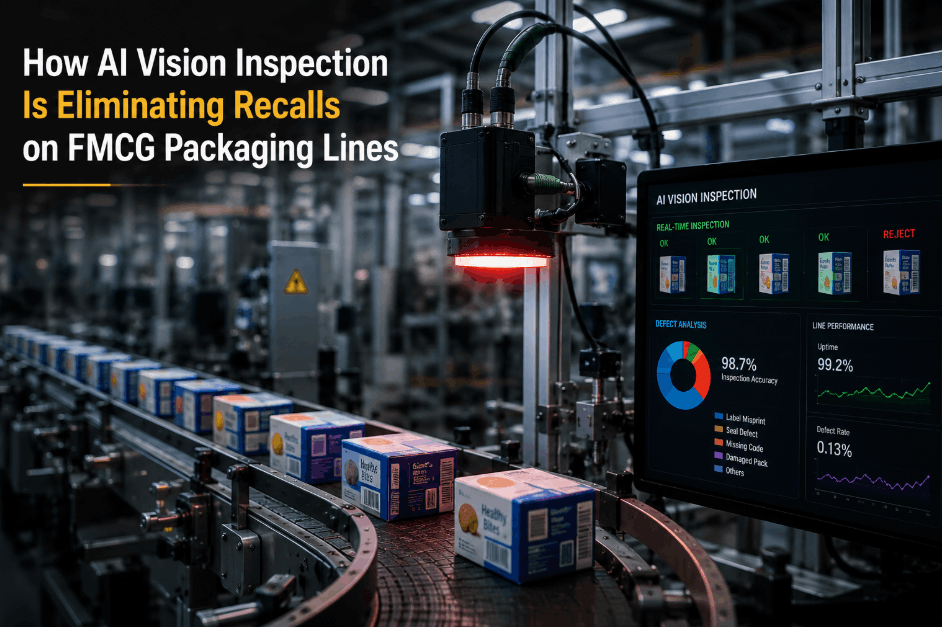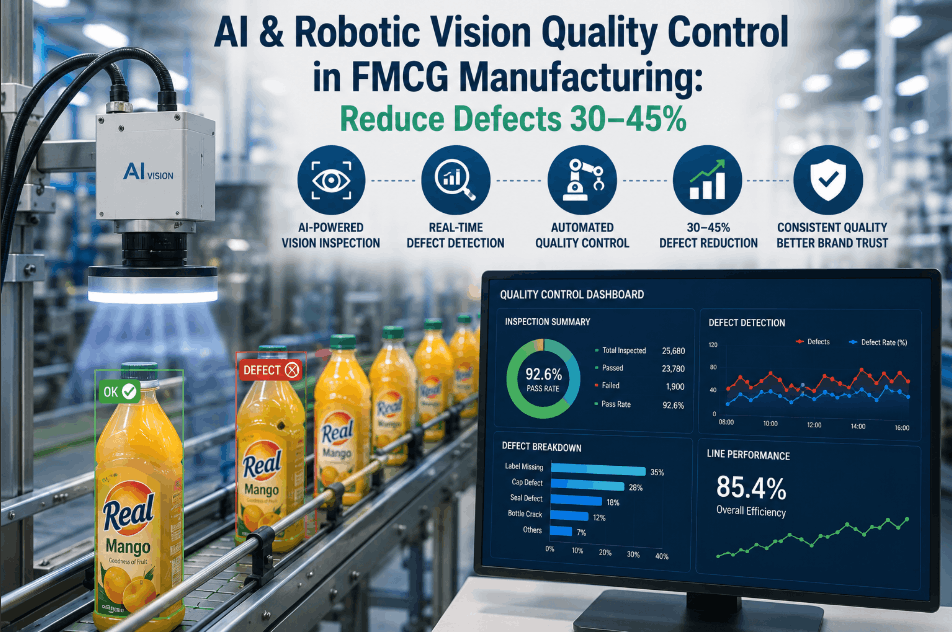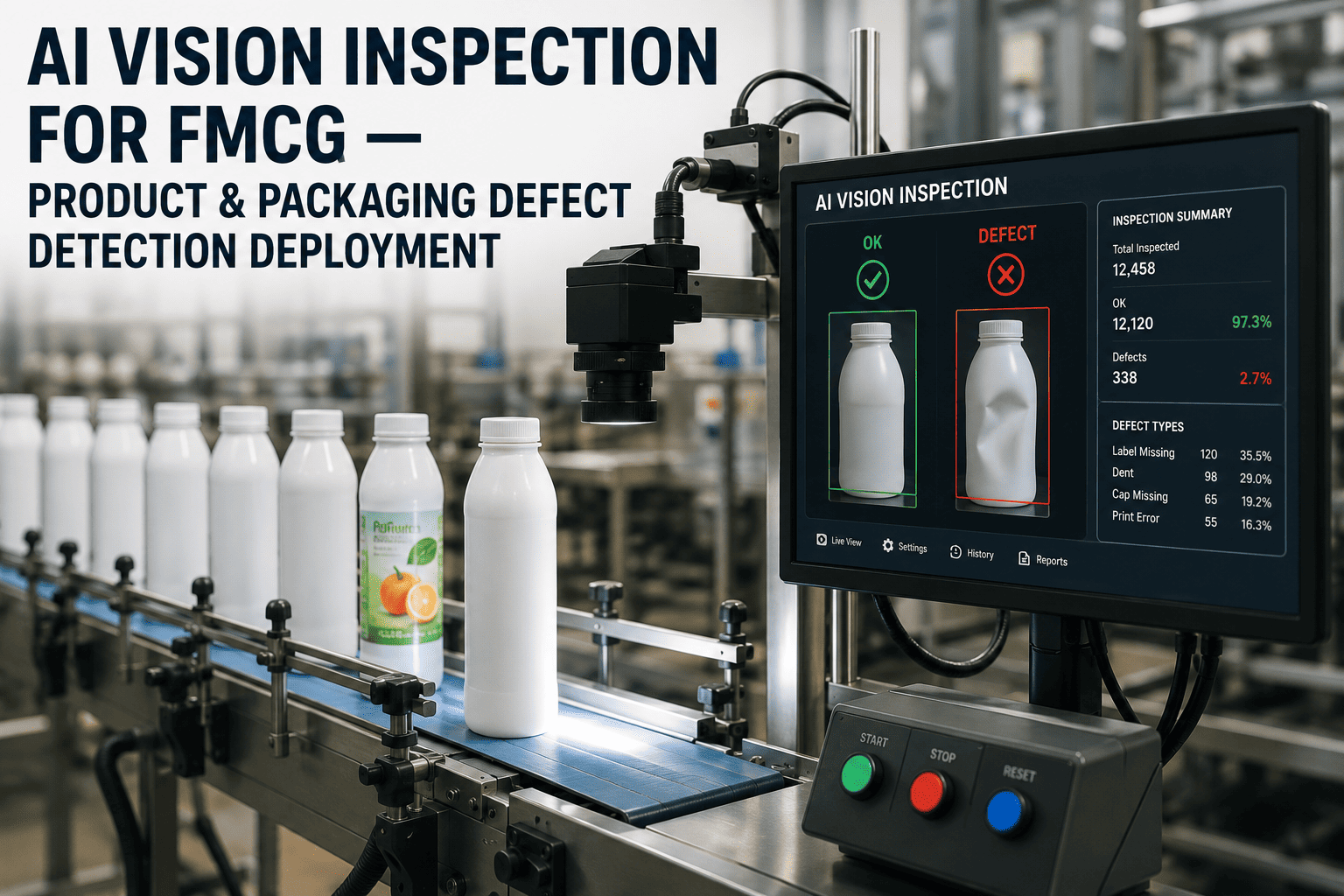
Human inspectors on a packaging line are asked to do something genuinely difficult: catch a mislabeled unit, a low fill level, or a compromised seal at line speeds that can exceed hundreds of units per minute, for an entire shift, without fatigue affecting their attention. It's not a knock on any individual inspector — it's simply a mismatch between the task and human visual attention span, and it's why manual inspection sampling rates on most FMCG lines catch only a fraction of the units actually produced. A single missed seal defect that reaches a retail shelf can trigger a customer complaint, a recall, or worse, and the gap between what manual sampling catches and what actually needs catching is where AI vision inspection earns its place on the line. iFactoryapp.com deploys AI vision inspection across product and packaging defect categories that matter most in FMCG production, and the detail below explains what deployment actually looks like and why detection sensitivity is the number that matters most before you Book a Demo for a walkthrough.
The Gap Between Manual Sampling and Full-Line Coverage
Manual inspection on most packaging lines operates on a sampling basis — a percentage of units get pulled and checked, not every unit that rolls off the line. This isn't a training or diligence problem; it's a mathematical reality of line speed versus human visual processing capacity. A line running at several hundred units per minute simply cannot have every unit meaningfully inspected by a person without slowing production to a crawl, which means defects that occur between sampled units pass through undetected by design, not by accident.
AI vision inspection changes the coverage model entirely. Rather than sampling a percentage of production, a properly deployed vision system inspects every unit at full line speed, catching defects with a consistency that doesn't degrade over the course of a shift the way human attention naturally does after hours of repetitive visual monitoring.
Confirms correct label placement, print quality, and that the label matches the intended product and batch, catching mismatches before they leave the line.
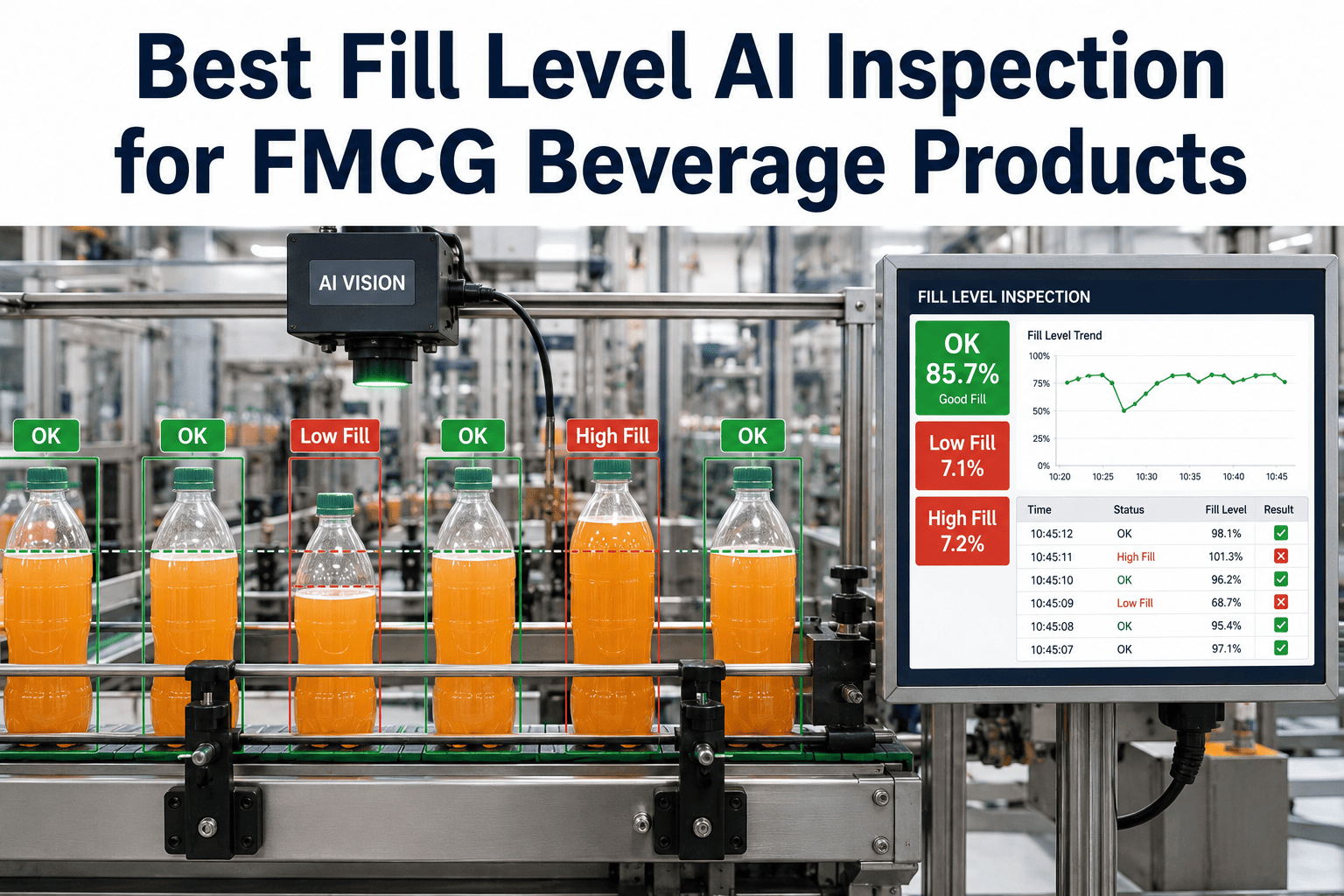
Verifies fill volume falls within acceptable tolerance, flagging both underfill and overfill conditions in real time as units pass the inspection point.
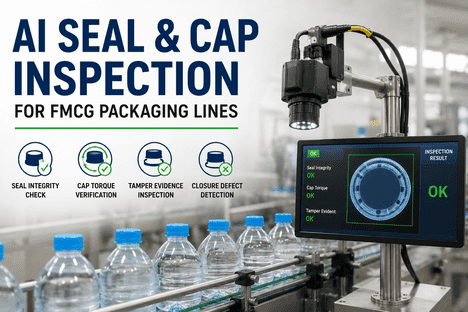
Detects incomplete seals, contamination at the seal line, or seal misalignment that could compromise product shelf life or safety.
Why Detection Sensitivity Is the Metric That Matters
Vendors in this space often lead with throughput numbers or camera specifications, but the metric that actually determines whether a vision inspection deployment protects your brand is detection sensitivity — the percentage of true defects the system actually catches, measured against a validated defect set rather than a marketing claim. A system with impressive throughput but mediocre sensitivity gives a false sense of security, since it's inspecting every unit but still missing meaningful defects at a rate not much better than sampling. iFactoryapp.com's deployments are validated against 99.8% detection sensitivity, meaning the system is tested against a documented defect library and its actual catch rate is measured and reported, not assumed.
Manual Sampling Versus Full-Line AI Vision Coverage
| Inspection Dimension | Manual Sampling | AI Vision Inspection |
|---|---|---|
| Units inspected | Sample percentage, varies by shift | 100% of units at full line speed |
| Consistency over a shift | Degrades with inspector fatigue | Consistent detection rate throughout production |
| Defect documentation | Manual logging, often delayed | Automatic, timestamped defect record per unit |
| Typical detection sensitivity | Varies widely by inspector and defect type | Up to 99.8% against validated defect library |
A Quality Director's View on Full-Line Coverage
We knew our manual sampling was leaving gaps, but we didn't fully appreciate how large those gaps were until we ran AI vision inspection alongside our existing process for a validation period. The system caught seal defects that our sampling simply never had a chance to see because they occurred on units that weren't part of the sample pull that hour. Moving to full-line coverage didn't just improve our numbers on paper, it genuinely changed our confidence in what's leaving the facility.