An Operations Director overseeing a multi-plant FMCG portfolio faces a specific version of the AI adoption problem that a single-site operation doesn't: building in-house data science and IT infrastructure capability at every plant is neither realistic nor cost-effective, yet each individual site still needs the predictive intelligence that AI monitoring provides. Hiring a data science team per plant doesn't scale, and a centralized team without the tooling to actually monitor and optimize across a distributed footprint ends up spread too thin to be useful anywhere. iFactoryapp.com's managed service model resolves this by delivering 24/7 remote monitoring and continuous optimization across your entire plant portfolio as an ongoing service, not a capability you have to build and staff yourself. The sections below walk through what that managed relationship actually looks like day to day, and Book Demo is the fastest way to see it mapped against your specific plant footprint.
Turnkey AI Solutions · Managed Service & Fleet Monitoring
AI Managed Service for FMCG: Multi-Plant Remote Monitoring and Fleet Optimization
Predictive intelligence delivered as a 24/7 managed service across your plant portfolio, without building in-house data science or IT infrastructure at every site.
Why Building In-House AI Capability Per Plant Doesn't Scale
Standing up a genuinely capable data science and AI operations function requires specialized hiring, ongoing model maintenance, infrastructure investment, and 24/7 monitoring coverage — a level of investment that's difficult to justify at a single plant and nearly impossible to replicate consistently across a multi-site portfolio. Operations Directors who have tried building this in-house at scale typically run into the same pattern: the flagship plant gets a reasonably capable setup, and every other site gets a thinner, less maintained version, or nothing at all, because the specialized talent required is scarce and expensive to duplicate site by site.
A managed service model inverts this problem. Instead of replicating a data science function at every plant, one team and one platform monitor the entire portfolio, applying consistent standards, consistent alerting, and consistent optimization logic across every site regardless of that plant's individual size or budget for a dedicated technical team.
Building In-House Per Plant
Inconsistent capability across sites
Specialized hiring at every location
24/7 coverage difficult to sustain
Slower to scale to new sites
Managed Service Across Portfolio
Consistent standards at every plant
One team monitors the full fleet
Genuine 24/7 coverage built in
New sites onboard onto existing platform
See What 24/7 Coverage Looks Like Across Your Portfolio
iFactoryapp.com's managed service applies consistent monitoring and optimization standards across every plant, without requiring you to staff a data science team at each site.
What the Managed Service Actually Covers
A managed service relationship goes beyond simply hosting dashboards and waiting for someone at the plant to notice an alert. It includes active monitoring, investigation of flagged anomalies before they're escalated to your team, and continuous refinement of the models and optimization logic as your plants' operating conditions evolve over time.
| Service Component | What It Includes | Who's Responsible |
| 24/7 Monitoring |
Continuous review of alerts and anomalies across all connected assets |
iFactoryapp.com managed team |
| Alert Triage |
Investigation and prioritization before escalation to plant teams |
iFactoryapp.com managed team |
| Model Optimization |
Ongoing refinement as operating conditions and product mix evolve |
iFactoryapp.com data science team |
| Response & Action |
On-the-ground decisions and physical corrective action |
Your plant operations team |
Fleet-Level Optimization Beyond Single-Plant Monitoring
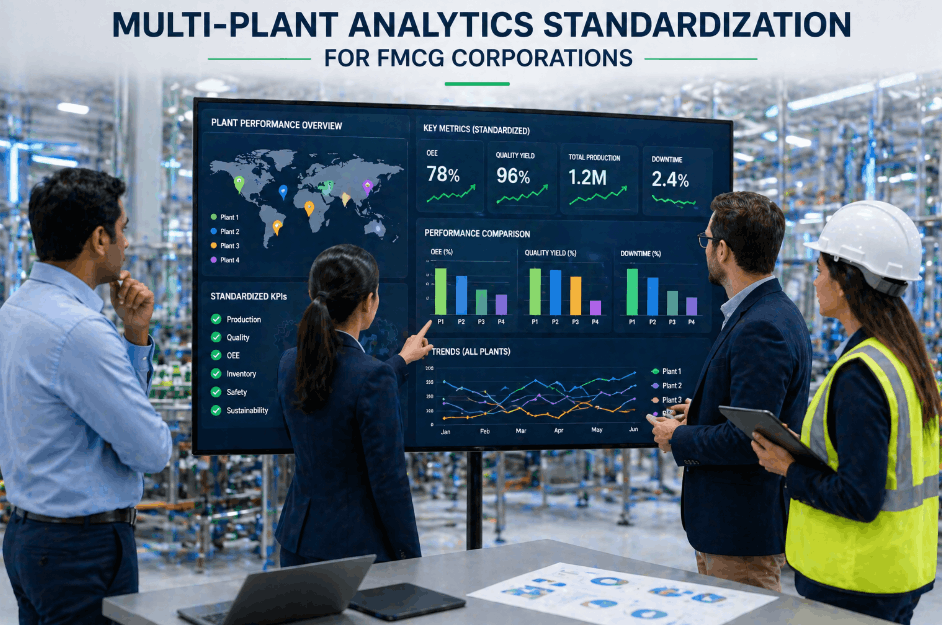
One advantage a single-plant deployment can't replicate is fleet-level pattern recognition — when the same asset type is deployed across multiple plants in your portfolio, a managed service can compare performance across sites and surface insights that wouldn't be visible from any single plant's data alone. A failure mode that appears gradually at one plant might already have a known signature and solution from an identical asset at another site in your fleet, and a genuinely fleet-aware managed service applies that cross-site learning automatically rather than leaving each plant to rediscover the same problem independently.
An Operations Director's View on Fleet-Wide Coverage
Before this, our AI monitoring capability was genuinely inconsistent across the portfolio — our newest, largest plant had a reasonably solid setup, and three of our smaller regional plants had essentially nothing because we couldn't justify dedicated technical headcount at each site. Moving to a managed service across the entire fleet meant every plant, regardless of size, now gets the same quality of monitoring and the same speed of response. It's also the first time we've actually been able to compare performance patterns across sites in a meaningful way.
— Operations Director, Multi-Plant Consumer Packaged Goods Group
Frequently Asked Questions
How does 24/7 monitoring actually work without our own team staffing it around the clock?
The managed service team monitors your connected plants continuously, reviewing alerts and anomalies as they occur across all time zones and shifts, so your plant teams aren't required to maintain their own around-the-clock monitoring capability. When something requires plant-level action, the managed team escalates with enough context and investigation already completed that your team can respond efficiently rather than starting an investigation from scratch at an inconvenient hour.
Book a Demo to see how escalation and response workflows are structured for your portfolio.
Can plants of very different sizes and technical maturity be onboarded onto the same managed service?
Yes, this is one of the core advantages of a managed service model over building capability plant by plant — since the monitoring platform and team are centralized, a smaller regional plant can be onboarded onto the same infrastructure and standards as your flagship facility without needing to independently build up technical maturity first. Onboarding sequencing and asset prioritization can still be tailored to each plant's specific needs and readiness, but the underlying service quality doesn't depend on each site's individual technical capability.
What level of visibility do we retain into what the managed team is monitoring?
You retain full visibility into monitoring dashboards, alert history, and optimization recommendations across your entire portfolio at all times — the managed service model changes who's actively watching and triaging on a continuous basis, not what visibility your own team has into the underlying data and decisions. This transparency is important for maintaining trust in the relationship and for your team's own reporting and planning purposes.
Contact Support to review the specific dashboard and reporting access included in a managed service engagement.
How does fleet-level optimization actually surface insights a single plant wouldn't see on its own?
When the same asset type — a specific filler model or a common utility system, for example — is deployed across multiple plants in your portfolio, the managed service can compare operating patterns and failure signatures across all instances of that asset type rather than analyzing each plant in isolation. This means a subtle early-warning pattern identified at one plant, even if it hasn't yet caused a failure there, can be proactively checked against the same asset type at your other plants, potentially catching an issue before it manifests anywhere else in the fleet.
How quickly can new plants be added to an existing managed service relationship?
New plants generally onboard faster than the initial deployment because the managed service infrastructure, monitoring team, and standard processes are already established — the onboarding work focuses on connecting that specific plant's assets and calibrating models to its equipment and product mix rather than building the underlying service capability from scratch. Most new plant additions to an existing managed service relationship follow a compressed version of the standard deployment timeline.
Give Every Plant in Your Portfolio the Same Quality of Coverage
See how iFactoryapp.com's managed service delivers 24/7 monitoring and fleet-wide optimization across your plants.