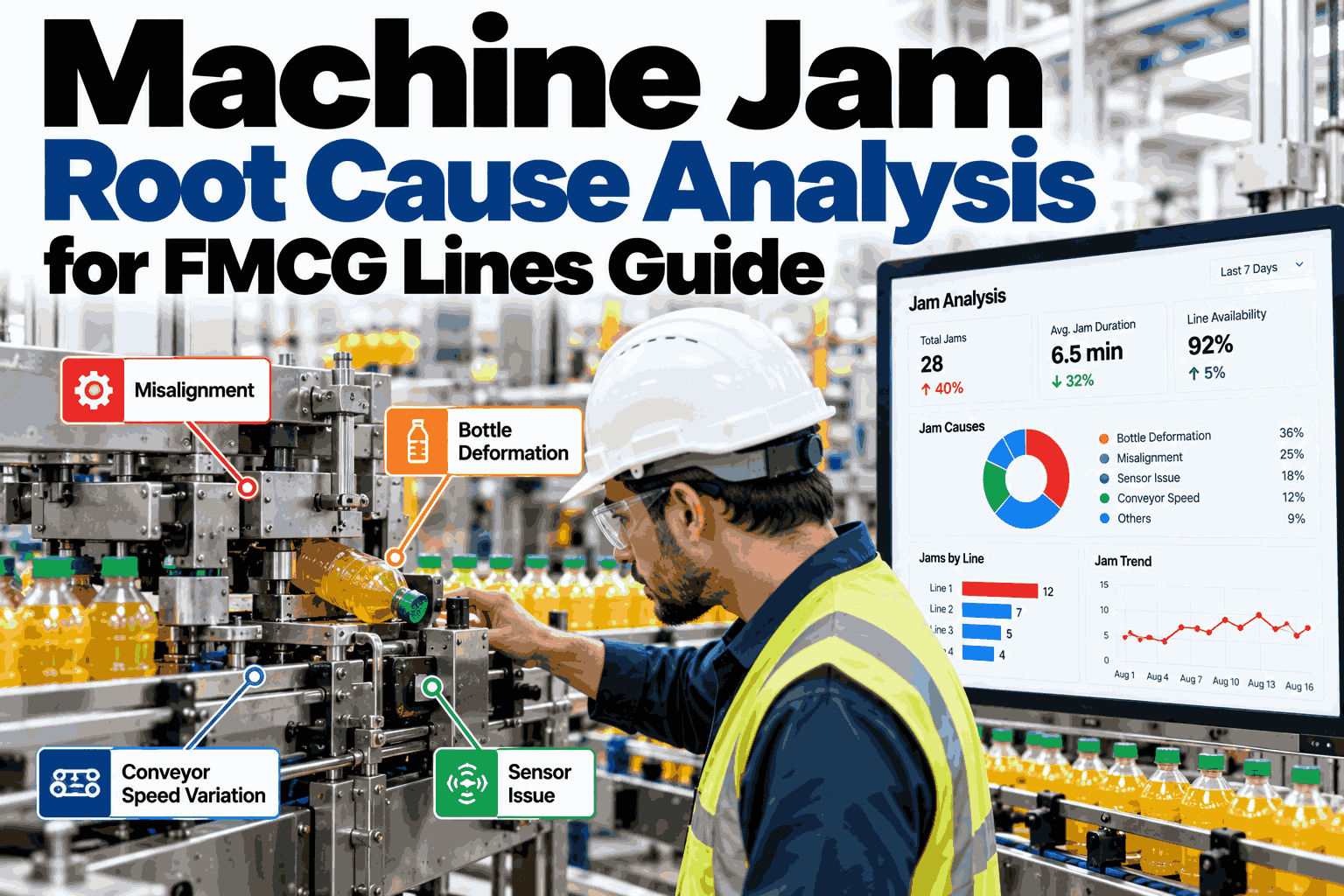
Write "jam" in a stop log often enough and it stops meaning anything useful. A bottle jam at the filler, a label jam at the labeler, a carton jam at the case packer, and a flap jam further downstream are four different problems with four different root causes, but they frequently get logged under the same single word. Separating them by type is usually the fastest way to turn a vague stop log into a real prevention plan, and you can walk through your own jam log by type with our team to see what it actually reveals.
Jam root cause guide
Stop Logging Every Stoppage as "Jam" and Start Fixing the Real Cause
Bottle, label, carton, and case jams each have a distinct signature and a distinct prevention tactic, once they stop being grouped under one generic stop code.
Bottle jam
Filler and conveyor
The cost of one word
Why "It's Just a Jam" Is the Most Expensive Assumption on the Line
A generic jam code feels efficient to log in the moment, but it quietly erases the information a plant needs most when the same stop keeps happening.
It hides which station actually drives downtime. Four jam types logged as one code make every station look equally responsible for stops.
It blocks type-specific prevention. A fix for bottle jams does nothing for carton jams, but a blended log cannot tell you which tactic to apply where.
It makes recurring jams look like one-off events. Twelve label jams this week read as twelve separate incidents instead of one pattern worth investigating.
It wastes maintenance time on the wrong fix. Without a type-specific signature, troubleshooting often starts from scratch every single time.
The four signatures
Four Jam Types and What Actually Causes Each One
Each jam type tends to follow its own pattern closely enough that recognizing the signature is usually enough to guess the cause before anyone opens the machine.
Bottle jam
Typical triggerBottle misalignment entering the filler or a speed mismatch with the conveyor
Where it shows upFiller infeed, conveyor guide rails, and star wheel transfer points
Quick read for operatorsBottles tipping or backing up at the same guide rail repeatedly is rarely random
Label jam
Typical triggerLabel stock tension inconsistency or adhesive buildup on the applicator roller
Where it shows upLabel dispenser, applicator roller, and the web path feeding the labeler
Quick read for operatorsLabels folding or wrinkling before application usually points to tension, not the bottle
Carton jam
Typical triggerCarton blank defects or an erector mechanism out of calibration
Where it shows upCarton erector, blank magazine, and the fold and glue section
Quick read for operatorsCartons folding unevenly before loading usually traces back to the blank supply, not the erector itself
Case jam
Typical triggerCase packer flap timing drift or product overhang disrupting the packing cycle
Where it shows upCase packer flap folders, product infeed, and the sealing section
Quick read for operatorsFlaps folding out of sequence is a timing issue more often than a mechanical failure
Where the time goes
How Jam Types Typically Compare Across an FMCG Line
No two lines break down identically, but most FMCG packaging lines show a recognizable pattern in which jam type accounts for the most frequent stops.
| Jam type | Typical share of jam stops | Most common root cause |
| Bottle jam |
Highest, often a third or more of total jam stops |
Guide rail misalignment or speed mismatch |
| Label jam |
Second most common |
Adhesive buildup or web tension drift |
| Carton jam |
Moderate, varies by carton stock quality |
Blank supply defects |
| Case jam |
Lowest, but often the longest to clear |
Flap timing drift |
Bottle jams usually dominate the count, but case jams, while less frequent, often take the longest to clear, which is why both frequency and duration matter in prioritizing a fix.
Break Down Your Own Jam Log by Type
Share your recent stop data and we will show you which jam type is actually driving the most downtime on your line.
What actually works
Prevention Tactics That Hold Up, by Jam Type
A prevention tactic that works for one jam type usually does nothing for another, which is why type-specific fixes outperform general maintenance sweeps.
1
Bottle jams: realign guide rails on a set schedule and match conveyor speed to filler output rather than running a fixed default.
2
Label jams: clean the applicator roller on a run-hour schedule and monitor web tension rather than waiting for a visible wrinkle.
3
Carton jams: inspect incoming blank stock quality before it reaches the erector, since many carton jams start upstream of the machine.
4
Case jams: recalibrate flap timing on a fixed interval instead of only after a jam has already occurred.
Jam or sensor fault
How to Tell a Real Jam From a False Sensor Trip
Not every jam alarm means product is actually stuck. A few quick signals usually separate a genuine jam from a sensor misreading it as one.
A genuine jam leaves visible product or material stuck at the alarm location.
A false trip from the same sensor repeats even after the area is visibly clear.
A real jam usually correlates with a speed or timing change just before the alarm.
A sensor fault tends to repeat on a pattern unrelated to product flow, often tied to vibration or temperature.
Frequently asked questions
What Plants Ask About Jam Categorization
How granular should jam categorization actually be?
Four to six categories tied to specific stations, like the bottle, label, carton, and case types here, usually gives enough detail to act on without creating so many categories that logging becomes a burden for operators.
Ask support about your station list before deciding on categories.
Can jam type data be captured without slowing operators down during a stop?
Yes, a short, pre-set list of jam types selected at the point of clearing takes little extra time compared to a free-text note, and it produces far more usable data for pattern analysis afterward.
See a fast capture flow on a short call.
Does jam type vary significantly between different product formats?
It often does, since a lighter or taller bottle format can shift which jam type dominates, which is one more reason to track jam type by product run rather than assuming one pattern applies across the whole line.
Discuss your product mix with our team.
How long does it take to see a measurable drop in jams after applying type-specific fixes?
Many plants see a noticeable drop in the targeted jam type within a few weeks of applying a specific fix, though the full picture usually takes a full production cycle to confirm across different products and shifts.
Set expectations for your line with our specialists.
Should jam root cause data connect with sensor fault and intervention data?
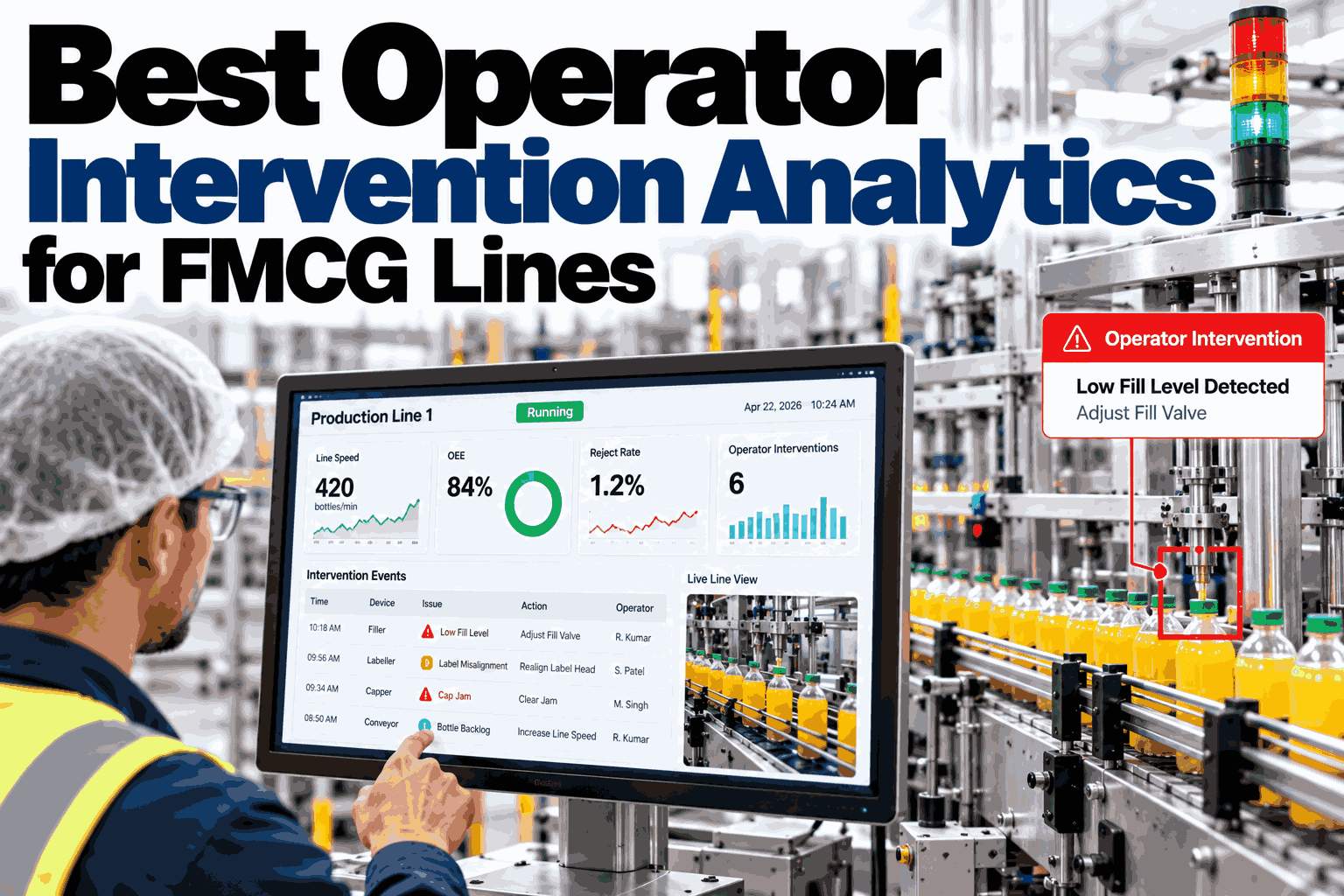
Yes, cross-referencing jam type against sensor history and operator intervention patterns usually confirms whether a jam is mechanical, sensor-driven, or a combination of both, rather than guessing from the jam alarm alone.
Connect your existing data sources with our team.
Know the type, fix the cause
Turn Your Jam Log Into a Type-Specific Prevention Plan
Book a session with iFactory AI to see how jam root cause analysis categorizes your stops by type and points to the fix that actually holds.




-in-fmcg-a-step-by-step-guide-to-eliminating-recurring-failures.png)