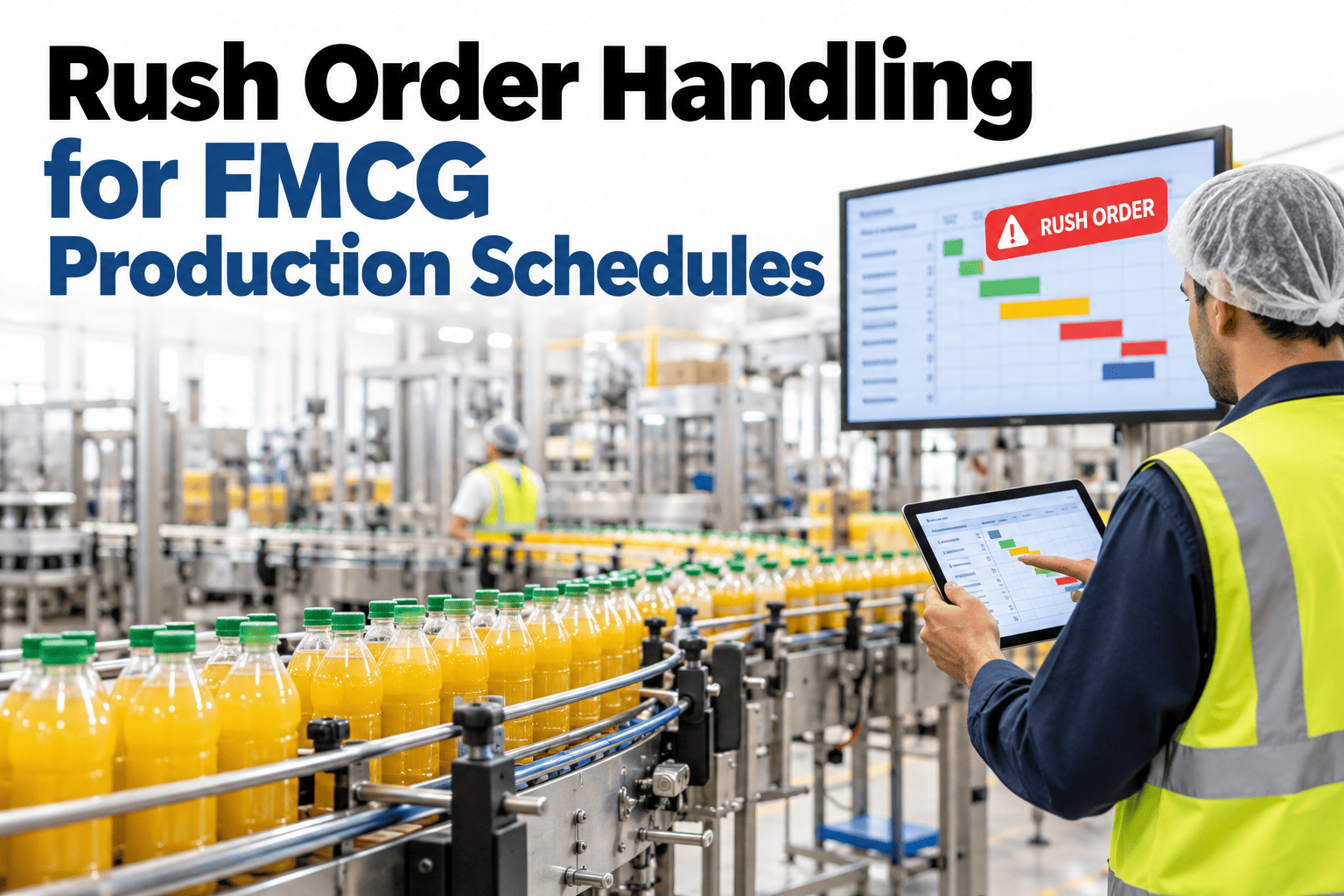
A rush order feels like good news until you see the schedule it lands on. Squeezing one urgent run into a full plant displaces something else, adds a changeover and often pushes a smaller customer's delivery. Saying yes without checking costs more than it earns, and saying no without checking loses a valuable account. The answer lies in knowing what a rush really costs in capacity before you quote. Sales and planning can price a rush order against live capacity and see the displaced orders before they reply.
Accept the Rush, Price the Ripple
iFactory Dynamic Scheduler shows the capacity impact of a rush order, the orders it displaces and a price that covers the disruption.
A Three-Way Decision, Not a Yes or No
Every rush order lands in one of three zones. The schedule should tell you which one in minutes.
What a Rush Order Actually Displaces
The visible cost is the rush run itself. The hidden cost is everything pushed back to make room.
Illustrative relative impact. Your own line and customer mix decide the real ranking.
Quote the Next Rush Order With Confidence
Bring a recent rush order and the week it hit. We will replay it and show what it displaced and what a fair premium would have been.
A Fifteen-Minute Rush Assessment
Speed matters, because the customer is waiting. A standard flow keeps the answer consistent.
What Goes Into a Rush Premium
A premium is not a penalty. It is the recovered cost of disruption.
| Cost Element | How It Arises | Where to Find It |
|---|---|---|
| Added changeover | Extra cleaning and setup | Changeover matrix |
| Displacement cost | Delayed orders and penalties | Revised schedule |
| Premium labor | Overtime or weekend work | Labor plan |
| Expedited material | Air freight or rush supply | Purchasing records |
Containing the Ripple Downstream
A rush run changes packaging, warehouse and transport plans too. Alert each team early.
Conceptual ripple. Actual downstream effects depend on your network.
What Experienced Planners Look For Before Saying Yes
Frequently Asked Questions
Who should decide whether to accept a rush order?
Set rules by impact: planners accept small ones, managers approve larger displacements. Draft your approval tiers with our team based on real order history.
How do we avoid rush orders becoming routine?
Track who rushes and how often, and share the cost with those accounts. A visible premium changes behavior more than a policy memo.
Can we protect our top customers from displacement?
Yes, by giving priority classes to commitments. The scheduler then displaces lower classes first. Check how priority classes would work on your schedule in a short session.
What if the rush order needs new material?
The assessment should include material lead time, not just line time. If material is the constraint, the quote date should reflect that, not an optimistic line slot.
How do we measure the rush process?
Measure response time, share of rush orders accepted and cost recovered. See which rush metrics reveal the most about your plant on a call.
Say Yes to the Right Rush Orders and No to the Rest
Bring your order rules and one tough rush example. We will show how impact, price and priority come together in one view.