Warehouse Drones for Inventory Audits in FMCG

By Seren on June 4, 2026

warehouse-drone-inventory-audit-fmcg-url.png_optimized_300

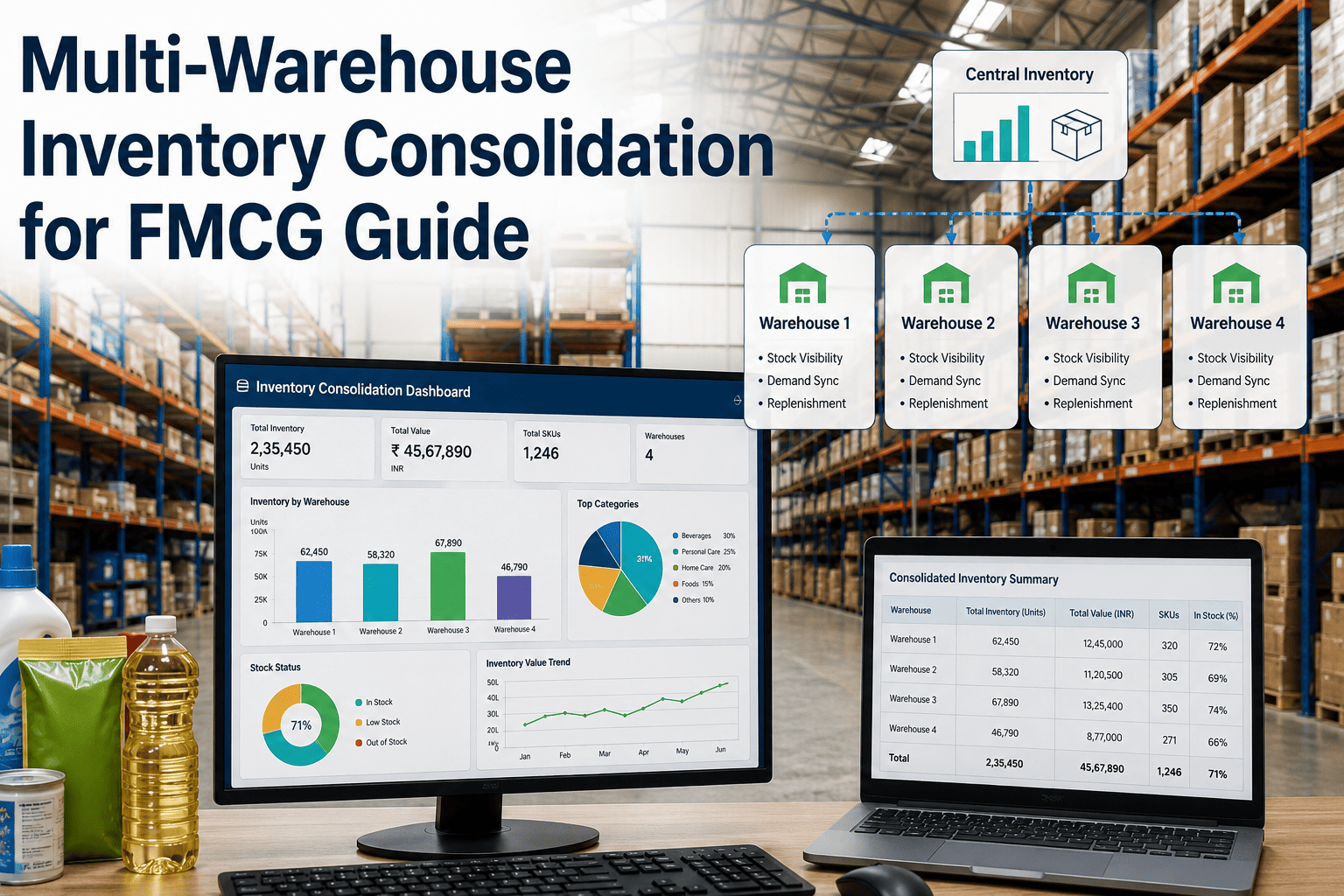
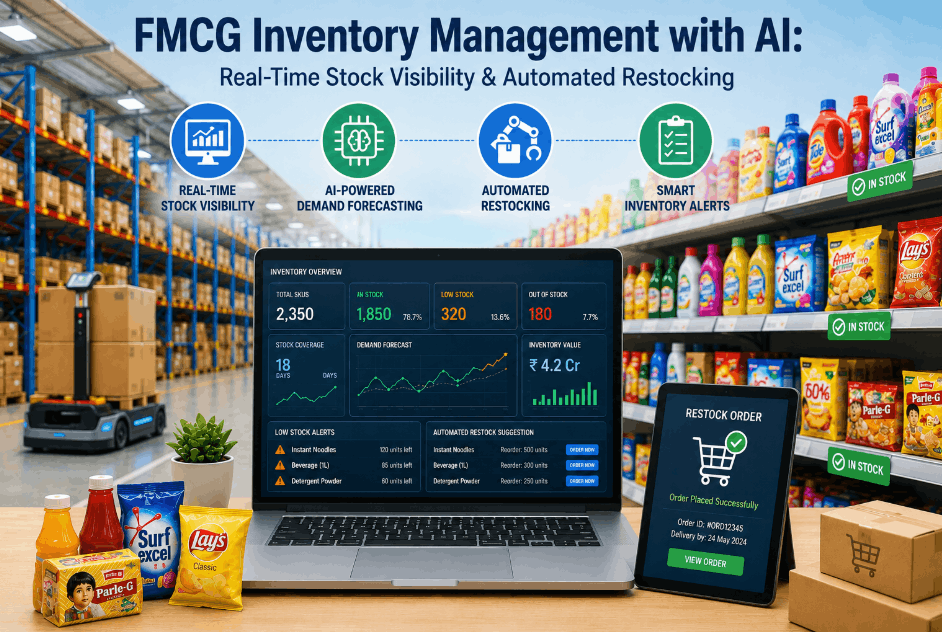
Warehouse drones for inventory audits have become a transformative technology for FMCG distribution operations facing the persistent challenge of accurate stock visibility. Manual counting methods require shutting down receiving bays, pulling staff from productive work, and accepting that 4-6% of high-bay locations will be miscounted or skipped entirely. Autonomous drones equipped with barcode scanners, RFID readers, and computer vision systems navigate warehouse aisles at heights up to 12 metres, scan pallet labels and SKU barcodes, validate counts against WMS records in real time, and flag discrepancies immediately for human verification — completing full facility audits in 16-22 hours that would take manual teams 9-14 days. For operations seeking to evaluate drone-based inventory automation, iFactory AI's industrial software platform integrates drone scan data with work order management, asset tracking, and WMS reconciliation. Book a Demo to see how iFactory connects drone inventory data to maintenance and warehouse operations.

Warehouse Automation · Inventory · 2026
Warehouse Drones for Inventory Audits in FMCG

Autonomous barcode scanning, RFID stock counting, and real-time location verification using drone technology for FMCG distribution operations — powered by iFactory AI integration for work order generation, discrepancy routing, and audit compliance tracking.

01
99.4%
Inventory accuracy with autonomous drone cycle counts
02
16-22 hr
Full facility audit vs 9-14 days with manual methods
03
87%
Reduction in labour hours for inventory counting
04
Zero
Elevated work safety incidents — no ladders or lifts

Why Manual Inventory Counting Is Hitting Its Ceiling in FMCG Warehouses

Manual stock counts in FMCG distribution centres require shutting down receiving and dispatch operations, pulling 12-20 workers from productive roles, and deploying them across high-bay racking with scissor lifts and forklifts for 9-14 days every quarter. The operational cost of a single full-facility manual audit includes $18,000-$34,000 in labour, lost throughput from halted operations, overtime premiums, and the compounding errors that occur when counters work fatigued on day nine. Inventory accuracy hovers at 88-94% for high-bay locations due to visual obstructions, inaccessible slots, and human error — a gap that directly impacts service levels, working capital, and regulatory compliance. Drone-based inventory audits eliminate these trade-offs by completing counts during off-peak hours with zero operational disruption and consistently higher accuracy.

Drone Inventory Audit Technologies for FMCG Warehouses
Real-time
Barcode & QR Scanning
High-res cameras read 1D/2D barcodes from 6m, capture 200-400 pallet positions per 20-min flight
99.2-99.7%
Real-time
RFID Tag Reading
RFID antennas capture tag data from entire pallet loads simultaneously at heights up to 12m
99.5-99.9%
Off-peak
Autonomous Navigation
LiDAR and obstacle avoidance enable lights-out operation in aisles as narrow as 50 inches
Zero infra
LIVE
Real-Time Reconciliation
Scan data validates against WMS records mid-flight — discrepancies flagged before drone lands
Same-shift
APl
CMMS Integration
iFactory receives scan data via REST API, auto-generates exception work orders with photo evidence
6.2x faster

Three Critical Areas Where Drone Audits Transform FMCG Warehouse Operations

01
Eliminating the Operational Cost of Manual Counts
A 750,000 square-foot FMCG distribution centre spends $127,000 per quarterly audit in labour, halts 23% of picking operations during the count window, and loses additional throughput from receiving shutdowns. Drone-based audits complete the same scope in 16-22 hours of autonomous off-peak operation with zero throughput disruption. The labour requirement drops from 14 workers on lifts to 1-2 staff handling exception verification — reducing audit labour cost by 87% while compressing the count cycle from 11 days to a single overnight shift. Facilities using iFactory integration for drone audit workflows report discrepancies resolved 6.2x faster because scan data routes directly to warehouse staff with location photos and evidence attached.
87% labour reductionZero throughput impact6.2x faster resolution
02
Closing the Accuracy Gap at High-Bay Locations
High-bay pallet locations above 15 feet represent 40%+ of storage in typical FMCG distribution centres — and are the primary source of inventory inaccuracy. Manual counters on scissor lifts struggle with label visibility, obstructed barcodes, and fatigue-driven errors that produce 88-94% accuracy rates at height. Autonomous drones with multi-angle scanning and onboard AI read barcodes in any orientation, under low-light conditions, with degraded or partially obscured labels. Facilities deploying drone systems consistently achieve 98.5-99.4% inventory accuracy — closing a 5-10% accuracy gap that represents millions in potential shrinkage exposure for large-scale FMCG operations.
88-94% → 99.4% accuracyMulti-angle scanningZero elevation risk
03
Transitioning from Quarterly to Continuous Audit Cycles
Facilities counting inventory only 2-4 times per year operate blind for months at a time — locations get muddled, pallets misplaced, and shrinkage compounds undetected until the next audit. Drone systems enable weekly or even daily cycle counts across the entire facility without incremental labour cost. GNC, operating four Corvus One drones across two distribution centres, increased audit frequency from 2 full counts per year to 10-12 — a 5-6x improvement in inventory visibility — while reducing the inventory control team by 35%. Dermalogica achieved 52 annual warehouse scans (600% increase) with Corvus One, repurposing 120 labour hours per month to higher-value operational work.
2x → 10-12x counts/year35% fewer staff120 hrs/month saved

How iFactory Integrates with Drone Inventory Systems for FMCG Operations

iFactory is the AI software integration layer — not a drone manufacturer or hardware vendor. The platform connects to drone inventory systems via REST API, receiving scan data, discrepancy alerts, and location photos in real time. When a drone's scanned count does not match WMS records, iFactory auto-generates exception work orders with photo evidence attached, routes them to warehouse staff via the Shift Logbook, and closes the audit cycle when all variances are verified. The platform also tracks drone asset maintenance, cycle count schedules, and compliance documentation — creating a unified view of inventory audit operations across the FMCG distribution network.

Capability
Manual Audit
Drone Audit + iFactory AI
Full facility duration
9-14 days with full team
16-22 hours autonomous
Throughput impact
Receiving and dispatch halted
Zero — off-peak operation
High-bay accuracy
88-94% — visual obstructions
98.5-99.4% — multi-angle scan
Labour cost per audit
$18,000-$34,000
$2,400-$4,800 exception only
Safety incidents
Fall risks at height
Zero elevated work
Discrepancy resolution
3-7 days post-count
Real-time — same-shift with iFactory
Cycle count frequency
Quarterly typical
Weekly or daily automated

Drone Inventory Use Cases for FMCG Distribution

FMCG DC
Full-Facility Quarterly Audit Replacement
Quarterly

Replace 11-day manual shutdown counts with overnight autonomous drone audits. Drones scan 100,000+ pallet positions across all temperature zones, validate against WMS in real time, and generate exception reports with photo evidence — all without halting receiving or dispatch. iFactory routes discrepancy work orders to warehouse teams with location data and scan evidence attached for same-shift resolution.

Duration11 days → 18 hours
Accuracy94.3% → 99.4%
Book a Demo
Cold Chain
Temperature-Zone Cycle Counting
Weekly

Automated weekly cycle counts across ambient, chilled, and frozen zones without exposing staff to cold environments or disrupting temperature-controlled operations. Drones operate in sub-zero temperatures for full zone scans, with autonomous return-to-base for battery charging. iFactory tracks drone flight logs, battery cycles, and maintenance schedules alongside inventory data for complete cold-chain compliance.

ZonesAmbient · chilled · frozen
FrequencyWeekly autonomous
Talk to an Expert
3PL
Multi-Tenant Warehouse Audits
Per client

Third-party logistics operators managing multi-tenant warehouses need customer-specific audit schedules and accuracy SLAs. Drones enable per-zone cycle counting on different cadences for different clients — weekly for high-value FMCG inventories, monthly for slower-moving stock. iFactory's Shift Logbook and work order management separate audit data per tenant while maintaining a unified operations platform for the facility manager.

SLAsPer-customer audit schedules
DataTenant-separated
High-Value
Shrinkage Detection & Recovery
Continuous

High-value FMCG inventory — electronics, spirits, personal care, premium foods — requires tighter control than standard cycle counting provides. Daily drone sweeps of high-value zones detect misplaced pallets, location discrepancies, and quantity variances within hours rather than months. iFactory auto-creates investigation work orders with drone photo evidence, routes them to security and operations teams, and tracks resolution to closure with full audit trail for insurance and compliance.

DetectionSame-day discrepancy alert
TrackingFull audit trail in iFactory

ROI Metrics — What Drone Inventory Audits Deliver for FMCG

99.4%
Inventory accuracy with autonomous drone cycle counts
vs 88-94% manual high-bay accuracy
87%
Reduction in inventory audit labour hours
Full team -> 1-2 exception handlers
5-6x
Increase in inventory visibility frequency
Quarterly -> weekly or daily counts
11-16 mo
Typical payback period for 100K+ SKU facilities
Eliminated downtime + labour savings + shrinkage reduction

Frequently Asked Questions

No. Modern autonomous drone systems like Corvus One and UVL operate without GPS, Wi-Fi, beacons, floor markings, or infrastructure modifications. Onboard AI and computer vision navigate using the facility's existing rack layout and visual features. Drones fly in aisles as narrow as 50 inches (127 cm), use LiDAR for obstacle detection, and operate in lights-out environments. Deployment typically takes 1-3 weeks after site survey, with the first drone airborne within days. No wiring, ceiling mounting, or facility downtime is required for installation.
iFactory connects to drone platforms via REST API — receiving scan data, discrepancy alerts, and location photos in real time from systems like Corvus, UVL, and ZenaDrone. The platform auto-generates exception work orders when scanned counts do not match WMS records, routes them to warehouse staff with photo evidence attached, and closes audit cycles when all variances are verified. iFactory also tracks drone asset maintenance, flight logs, and battery cycles — creating a unified platform for both inventory audit data and drone fleet management.
Facilities using autonomous drones with barcode and RFID scanning consistently achieve 98.5-99.4% inventory accuracy — compared to 88-94% with manual high-bay counts. The improvement comes from eliminating visual obstructions, human fatigue errors, and inaccessible location skips that plague manual methods. Multi-angle scanning reads labels even when partially obscured, and RFID-tagged inventory eliminates optical scanning challenges entirely. Facilities combining drone scans with iFactory's discrepancy routing and same-shift resolution achieve the highest sustained accuracy levels.
Yes. Drone inventory systems are designed for off-peak operation — typically second shift, third shift, or overnight windows when aisles are clear of forklift traffic and manual picking activity. LiDAR and proximity sensors provide active obstacle detection during flight, and pre-programmed routes keep drones within designated audit zones. The drones operate at walking speed with active anti-collision sensors, producing minimal noise. Facilities typically schedule full drone audits during low-activity periods and incremental cycle counts during shift changeovers, eliminating any interaction with active warehouse operations.
FMCG warehouses with 100,000+ SKUs conducting quarterly full-facility counts see payback periods of 11-16 months. ROI drivers include eliminated audit downtime, reduced labour costs (87% fewer hours), improved shrinkage detection (5%+ accuracy gains), and zero elevated work safety incidents. Facilities switching from quarterly manual counts to weekly drone cycle counts accelerate payback through continuous accuracy maintenance rather than periodic correction. Smaller facilities under 200,000 square feet may still achieve positive ROI within 18-24 months if current annual audit costs exceed $60,000.
Deploy Drone Inventory Audits for Your FMCG Warehouse

Autonomous drone inventory system connecting barcode scanning, RFID stock counting, and real-time location verification with iFactory AI's work order management, discrepancy routing, and audit compliance platform. Pre-built integration templates deploy in weeks with zero facility modifications and zero operational downtime.

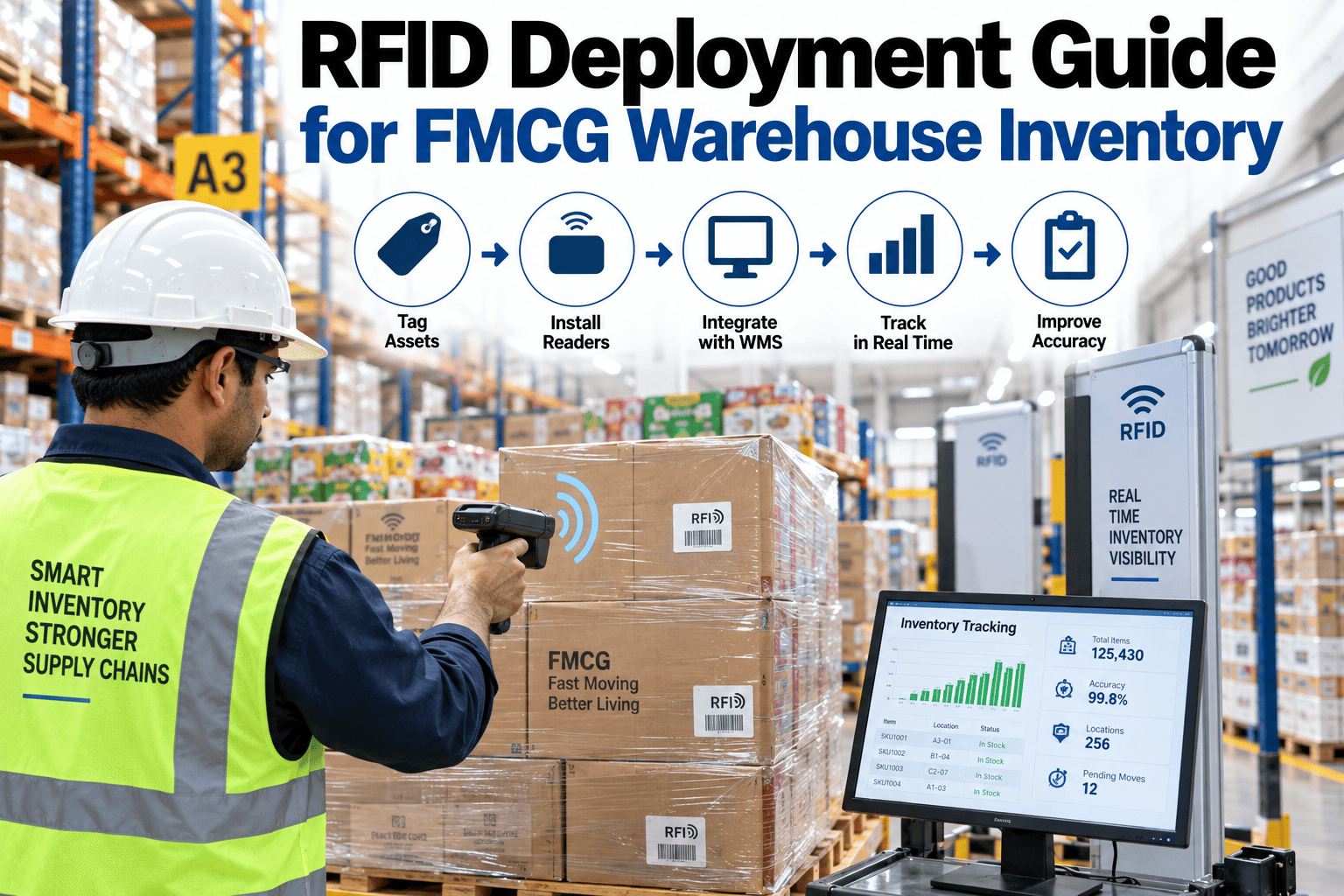
Barcode Scanning RFID Counting Autonomous Flight Real-Time WMS Sync Shift Logbook

Share This Story, Choose Your Platform!