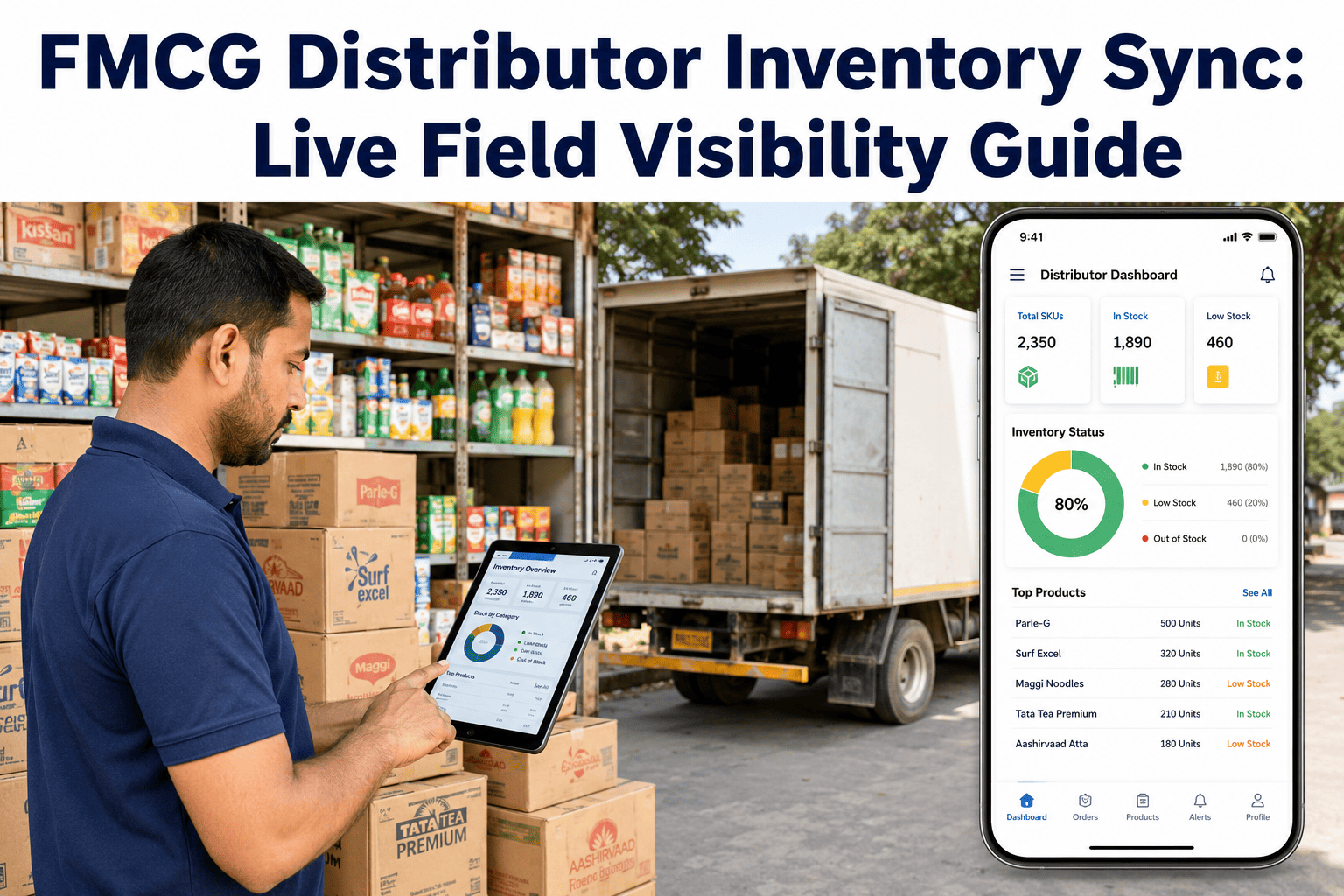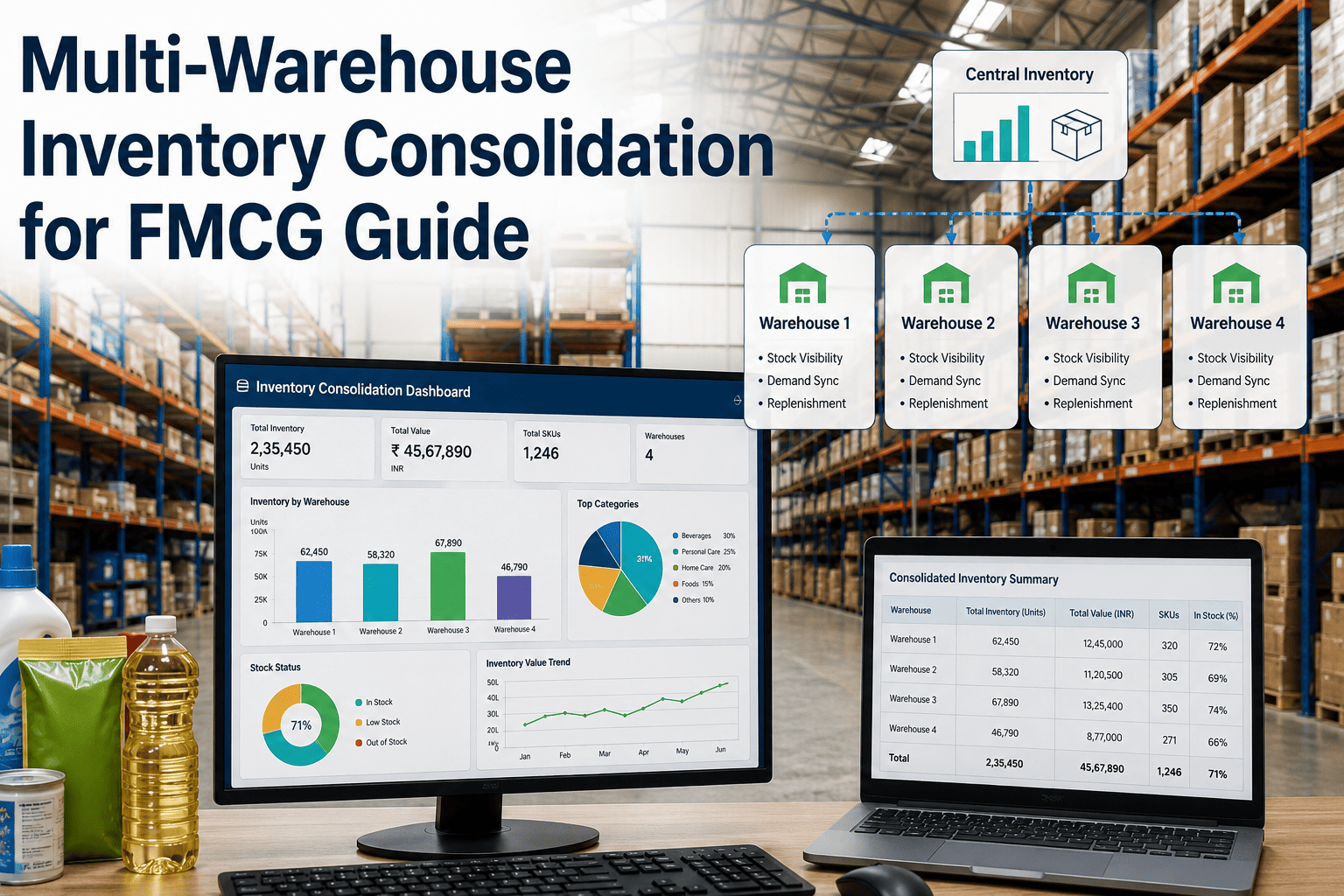
Ask five people at an FMCG brand how much stock the company actually has right now, and there is a good chance you get five different numbers, each one technically correct for the warehouse, plant, or distributor system it came from. Growth is usually what causes this. A brand adds a regional distribution center, then a third-party warehouse for overflow, then a distributor-managed stock arrangement in a new territory, and each addition solves an immediate problem while quietly making the overall network harder to see as one whole. Multi-warehouse inventory consolidation is the process of pulling all of that scattered stock data back into a single, reliable view, and it is one of the highest-leverage projects an operations team can take on as networks keep expanding into 2026. Brands ready to map their own network can start with a walkthrough from iFactory support.
One Network. Five Different Stock Numbers. Zero Confidence in Any of Them.
iFactory consolidates every plant, regional DC, third-party warehouse, and distributor-held stock position into one reconciled number your planning and sales teams can actually trust, updated continuously instead of reconstructed manually every reporting cycle.
Signs Your Warehouse Network Has Outgrown Manual Consolidation
Most brands don't decide one day that they need consolidation, they just notice a slow accumulation of small frustrations that eventually add up to a real operational cost. These are the signals worth paying attention to.
A "true total" report takes more than an hour to build
If someone is still copying numbers between spreadsheets from different warehouse systems, the network has already outgrown a manual process.
Two teams quote different stock figures in the same meeting
Sales working from a distributor's report and operations working from the ERP arriving at different numbers is a direct symptom of unconsolidated data.
Overstock in one DC and stockouts in another, at the same time
Without a consolidated view, there's no way to see that one warehouse could have covered another's shortfall until it's already too late.
Every new warehouse adds a new manual reconciliation step
If onboarding a new location means building another spreadsheet macro, the process is not going to scale with the next five locations either.
Consolidation Approaches Compared
Brands generally reach for one of three approaches when their warehouse network outgrows spreadsheets, and each one comes with real trade-offs worth understanding before committing time to a rollout.
| Approach | Setup Effort | Update Frequency | Scales Past 10 Locations |
|---|---|---|---|
| Manual Spreadsheet Rollup | Low upfront | Daily to weekly | Breaks down quickly |
| Single-ERP Central Model | High, requires migration | Real-time internally only | Struggles with 3PL and distributor data |
| Unified Consolidation Layer | Moderate, connects existing systems | Continuous, sub-minute | Built for expanding networks |
Four Warehouse Network Types iFactory Consolidates
Owned Regional DCs
Company-operated distribution centers spread across territories, each running its own local warehouse management system.
Third-Party Logistics Storage
Outsourced overflow or seasonal storage where visibility depends entirely on how well the 3PL's system integrates back to the brand.
Distributor-Held Stock
Inventory that has technically left the brand's control but still needs to be counted toward true network-wide availability.
Plant-Adjacent Storage
Finished goods held near production before allocation, often the fastest-moving and least visible part of the entire network.
Reconcile Your Entire Network Without the Spreadsheet Marathon
iFactory connects every warehouse, 3PL, and distributor system your brand already uses into one continuously reconciled inventory view.
The Consolidation Process, Step by Step
Bringing a scattered warehouse network into one reconciled view follows a fairly consistent sequence, regardless of how many locations or systems are involved.
Inventory the Systems, Not Just the Stock
Every warehouse management system, 3PL portal, and distributor data feed currently in use gets mapped before any integration work begins.
Standardize SKUs and Locations
The same product often carries different codes across systems, so a shared identifier gets established before any numbers can be reconciled.
Connect Each Source Continuously
Rather than scheduled exports, each system feeds updates as they happen, keeping the consolidated total close to real time.
Build the Reconciled Dashboard
All connected sources roll up into one view showing total network stock, broken down by location, SKU, and status on demand.
Add Cross-Location Rebalancing Alerts
Once the whole network is visible together, the system can flag opportunities to shift stock between locations before either a stockout or a markdown becomes necessary.
Mistakes That Slow Down a Consolidation Project
Consolidating Data Before Cleaning It
Merging inconsistent SKU codes and location names just moves the reconciliation problem into the new system instead of solving it.
Leaving Distributor Stock Out of Scope
A consolidation project that stops at the warehouse door still leaves the network's most volatile inventory position invisible.
Trying to Consolidate Everything at Once
Attempting a full network rollout in one phase tends to stall momentum; starting with the highest-value locations proves the model faster.
Building a Dashboard Nobody Acts On
A consolidated view only changes outcomes when it's connected to actual replenishment and rebalancing decisions, not just viewed and closed.
A Composite Scenario: Turning Six Warehouses Into One Number
A personal care brand operating three owned regional DCs, two 3PL overflow sites, and a growing distributor-managed stock program in a new territory had spent over a year building a monthly "true total" report by hand, a process that took a planning analyst roughly three full working days each cycle and was already stale by the time leadership reviewed it. After connecting all six sources into a unified consolidation layer, that same report became a live dashboard, and the planning team redirected the analyst's time toward the cross-location rebalancing the new visibility made possible in the first place.
Within the first full quarter on the unified view, the team identified and rebalanced stock between two regional DCs three separate times, each time preventing what would have otherwise become a stockout in one location alongside unnecessary markdown pressure in another. The brand's finance team later cited the freed-up working capital from reduced overstock as one of the clearer, faster wins of the entire consolidation project.
Frequently Asked Questions
How is inventory consolidation different from just building a bigger central warehouse?
Consolidation is about unifying the data across your existing network, not physically moving stock into fewer locations. Many brands need distributed warehouses for delivery speed and regional coverage, and a consolidated view lets you keep that physical footprint while still seeing and managing it as one connected system rather than several disconnected ones.
Can this work if our warehouses use completely different management systems?
Yes, this is actually the most common starting point for most brands, since growth through acquisitions, new regions, or 3PL partnerships almost always leaves a network running several different systems. The consolidation layer is built to connect to each source system through its existing integration points rather than requiring every warehouse to standardize on the same software first. Reach out to support to talk through your specific mix of systems.
What happens to stock that's already been sold to a distributor?
Distributor-held stock is tracked as its own status within the consolidated view rather than being excluded once ownership technically transfers, since it still represents inventory that affects true network-wide availability and replenishment planning. Most brands find this is exactly the visibility gap that caused the most confusion before consolidation.
How long does a typical multi-warehouse consolidation project take?
Timelines depend heavily on how many distinct systems need to be connected and how clean the underlying SKU and location data already is, but most brands see their first connected locations live and reconciled within the initial weeks of a project rather than waiting for a single big-bang rollout. Book a demo to get a realistic timeline based on your own network.
Give Every Team the Same Trusted Inventory Number
iFactory consolidates your entire warehouse, 3PL, and distributor network into one continuously reconciled view, so planning, sales, and operations finally stop arguing over whose number is right.