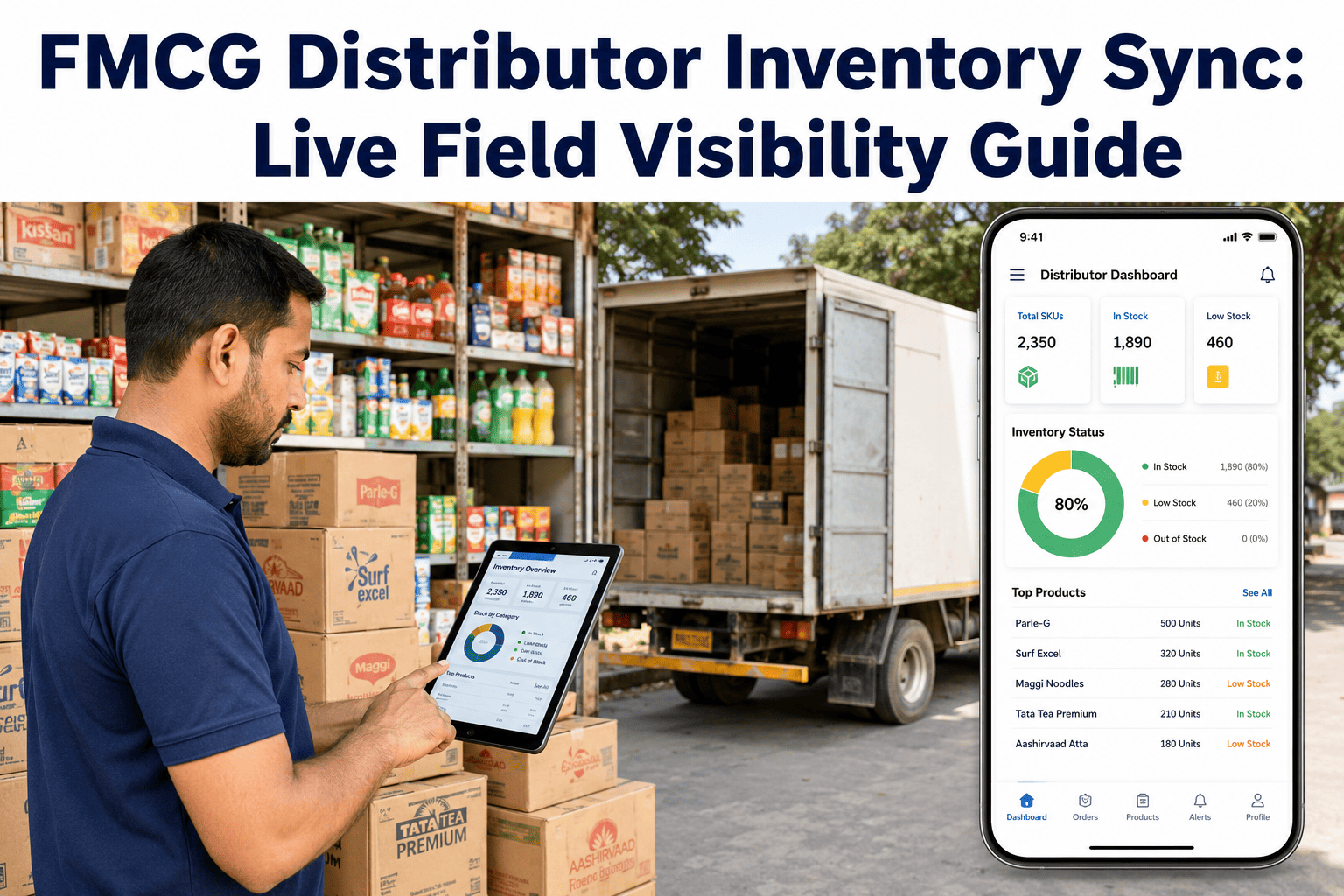
Once a pallet leaves your dock and lands in a distributor's warehouse, most FMCG brands lose the thread entirely, and that gap is exactly where a surprising amount of lost revenue quietly hides. A distributor might be sitting on three weeks of unsold stock in one territory while running dry in another, and the brand won't know either fact until the next order cycle rolls around, by which point the damage to shelf availability has already been done. Distributor inventory sync closes that gap by pulling live stock data straight from distributor systems into a brand's own dashboards, turning a relationship that used to run on trust and lagging order history into one built on an actual shared, current number. Brands ready to see what that connection looks like for their own distributor network can start with a conversation with iFactory support.
Your Distributor Knows What's on Their Shelf. You Find Out at the Next Order Cycle.
iFactory pulls live stock data directly out of distributor systems into your own brand dashboards, so demand sensing, replenishment triggers, and promotional lift analysis run on what's actually happening in the field right now.
What Actually Goes Wrong at the Distributor Handoff
The moment inventory ownership transfers to a distributor, the brand's own systems stop being the source of truth, and that transition point is where most FMCG supply chains develop their biggest blind spot. Distributors run their own systems, on their own update schedules, often shared with a brand only in the form of a periodic order rather than an actual live stock position.
The Brand Sees Orders, Not Stock
A distributor's next order tells you what they want to buy, not what they actually still have sitting unsold on their shelves right now.
Delivery Windows Slip Without Notice
Outlets receiving deliveries outside their preferred windows damage the retailer relationship in ways the brand often only hears about after the fact.
Promotions Distort the Whole Signal
A promotional spike moves through the channel faster than a static reorder cycle can track, amplifying into stockouts in some zones and pile-ups in others.
Overstocked Distributors Stay Invisible
Distributors sitting on excess stock against cautious forecasts tie up working capital and raise spoilage risk long before a brand notices the pattern.
How Live Distributor Sync Actually Works
Connecting distributor stock data into a brand's own systems follows a fairly consistent path, whether a brand is working with five distributor partners or five hundred.
Map Existing Data Channels
Most distributors already generate stock and sales data through EDI feeds, portals, or point-of-sale exports, which become the starting connection point.
Establish a Continuous Feed
Rather than waiting for the next formal order, stock and sell-through data streams in as it's generated, keeping the brand's view current.
Normalize Across Distributors
Different distributors report data differently, so everything is standardized into one consistent format before it reaches the dashboard.
Layer in Demand Sensing
Live sell-through patterns feed directly into replenishment logic, catching demand shifts well before the next scheduled order would reveal them.
Trigger Replenishment Automatically
When a distributor's stock crosses a set threshold, a replenishment trigger fires directly rather than waiting for someone to notice manually.
Distributor Integration Methods Compared
| Integration Method | Typical Data Freshness | Setup Complexity | Best Fit |
|---|---|---|---|
| EDI Feed | Daily to near real-time | Moderate, standardized | Larger, established distributor partners |
| Direct API Connection | Real-time to sub-minute | Low once configured | Distributors on modern platforms |
| Portal Data Export | Hourly to daily | Low, but manual-adjacent | Smaller regional distributors |
| Point-of-Sale Pull | Near real-time | Moderate, depends on POS vendor | High-velocity retail-facing SKUs |
Turn Your Distributor Network Into a Live Data Channel, Not a Quarterly Guess
iFactory connects to your distributors' existing systems and streams stock, sell-through, and delivery data straight into your own dashboards.
A Composite Scenario: Catching an Overstocked Territory Before It Became a Write-Off
A beverage brand working with a regional distributor network noticed, after connecting live sync, that one territory's distributor was carrying nearly three times the normal weeks-of-supply on a seasonal SKU, a pattern that would previously have gone unnoticed until the distributor's next order came in dramatically smaller than forecast. With live visibility into the actual stock position, the brand's trade team worked with the distributor to redirect a portion of the upcoming production allocation to two under-supplied neighboring territories instead, avoiding both a near-term overstock write-off risk and a stockout in the territories that actually needed the volume.
The same live view later flagged an unusually fast sell-through rate during a regional promotion, letting the brand's demand planning team confirm the lift was real rather than a one-time spike, and adjust the following quarter's allocation to that distributor accordingly. What had previously been a reactive, order-driven relationship became one where both sides were making decisions off the same current number.
Distributor Relationship Types This Applies To
Exclusive Regional Distributors
Single-partner territories where sync visibility directly shapes how much of that partner's performance the brand can actually see.
Multi-Distributor Overlap Markets
Markets served by several distributor partners at once, where consolidated sync prevents one partner's stockout from being masked by another's surplus.
Distributor-Managed Inventory Programs
Arrangements where the distributor manages replenishment on the brand's behalf, requiring especially tight live sync to avoid double-guessing decisions.
Emerging Market Field Distribution
Networks with less mature systems infrastructure, where even lightweight portal or point-of-sale sync represents a major visibility upgrade.
Mistakes Brands Make Syncing Distributor Data
Syncing Orders Instead of Actual Stock
Order history reflects what a distributor wants to buy, not what they currently hold, and treating the two as equivalent hides the real signal.
Ignoring Smaller Regional Partners
Skipping sync for distributors without modern systems leaves exactly the territories most prone to visibility gaps still completely dark.
Not Standardizing Data Across Partners
Comparing unreconciled formats between distributors leads to decisions based on numbers that were never actually comparable in the first place.
Treating Sync as a One-Time Integration
Distributor systems change over time, and a sync that isn't monitored can quietly go stale without anyone noticing until the data stops matching reality.
Frequently Asked Questions
Will our distributors need to change their own systems to support this?
In most cases, no. Distributor sync is built to pull from the systems and data channels a distributor is already using, whether that's an EDI feed, a portal, or point-of-sale exports, rather than requiring them to adopt new software. Where a partner's system is more limited, a lighter-weight integration path still surfaces meaningful stock visibility. The iFactory support team can walk through what your specific distributor mix would require.
How current is the distributor stock data once it's synced?
Freshness depends on the integration method available for each distributor, ranging from near real-time for API and point-of-sale connections down to daily for portal-based exports. Even the slower end of that range represents a substantial improvement over waiting for the next formal order cycle, which is often the only visibility a brand had previously.
Can this help with promotional lift analysis, not just replenishment?
Yes, live sell-through data from synced distributors is one of the clearest signals for understanding whether a promotion actually drove incremental sales or simply pulled forward demand from the following weeks. That distinction matters directly for how future promotional spend and production allocation get planned. Book a demo to see how promotional lift tracking works on live distributor data.
What if some of our distributors have very limited or outdated systems?
A tiered approach works well here, applying full API or EDI sync to distributors on modern systems while using lighter portal or manual-adjacent exports for smaller or less digitized partners. Even partial visibility into a previously dark distributor relationship still meaningfully improves demand sensing across the network as a whole.
Stop Guessing What Your Distributors Actually Have in Stock
iFactory pulls live inventory and sell-through data straight from your distributor network into your own dashboards, closing the visibility gap that starts the moment stock leaves your warehouse.