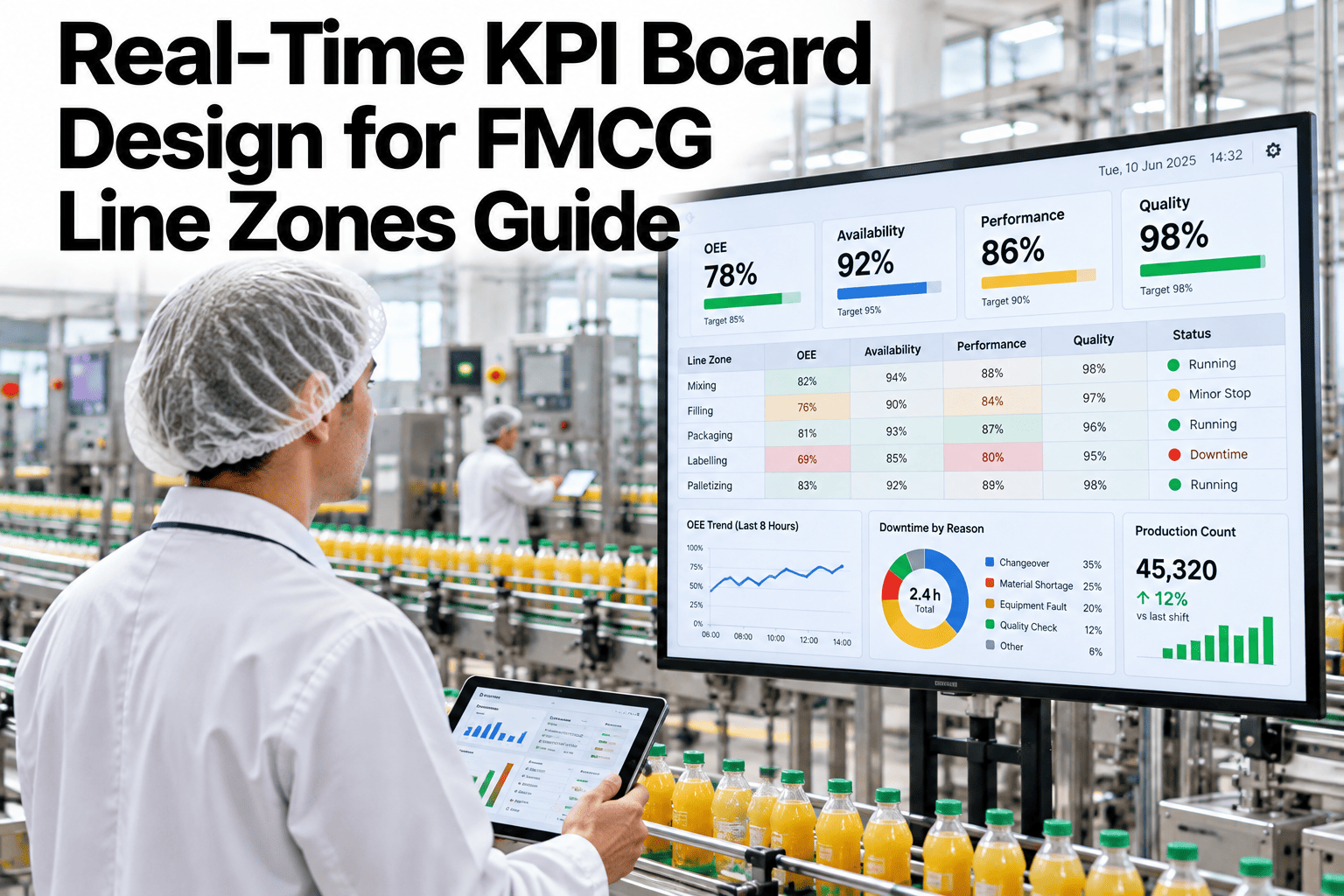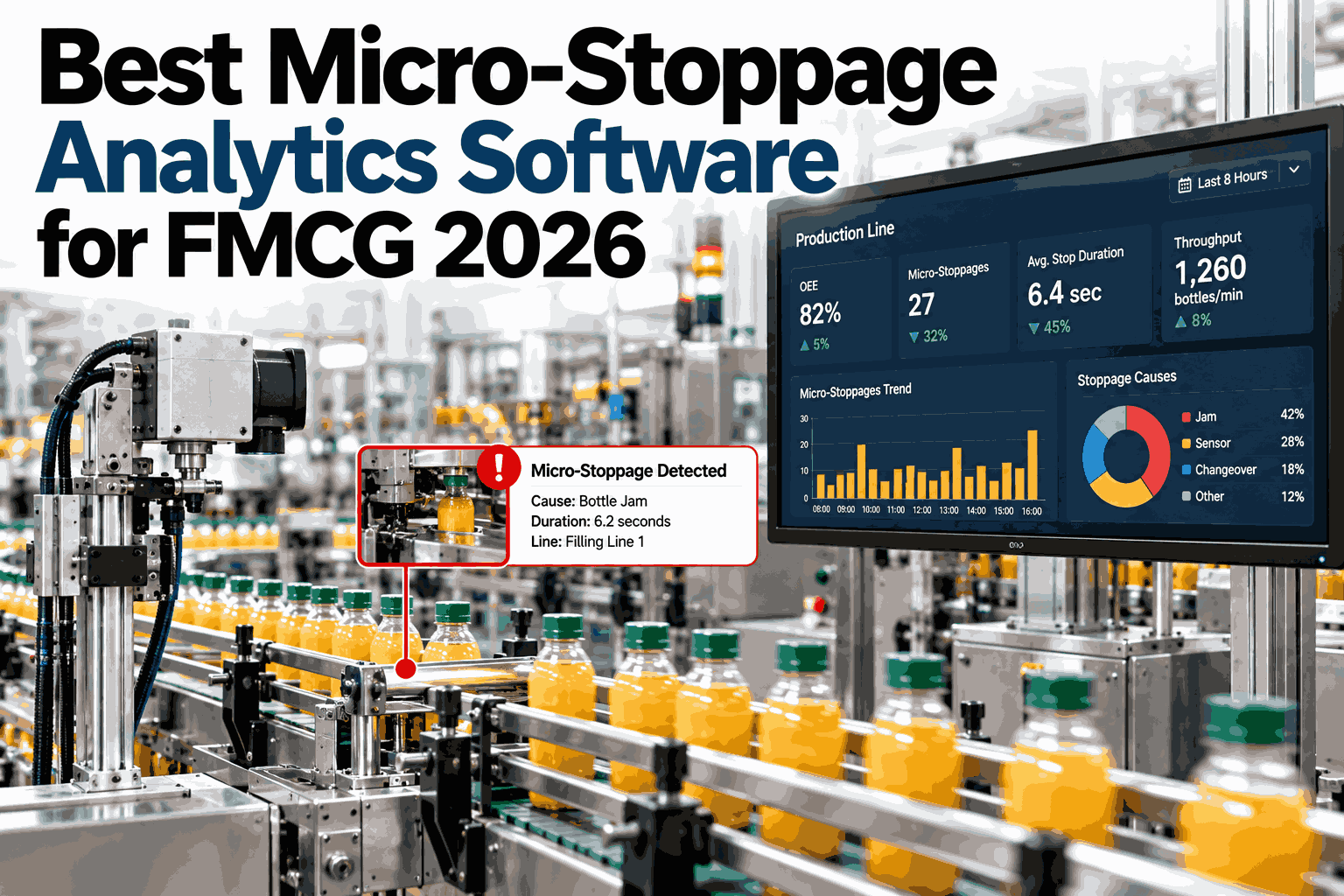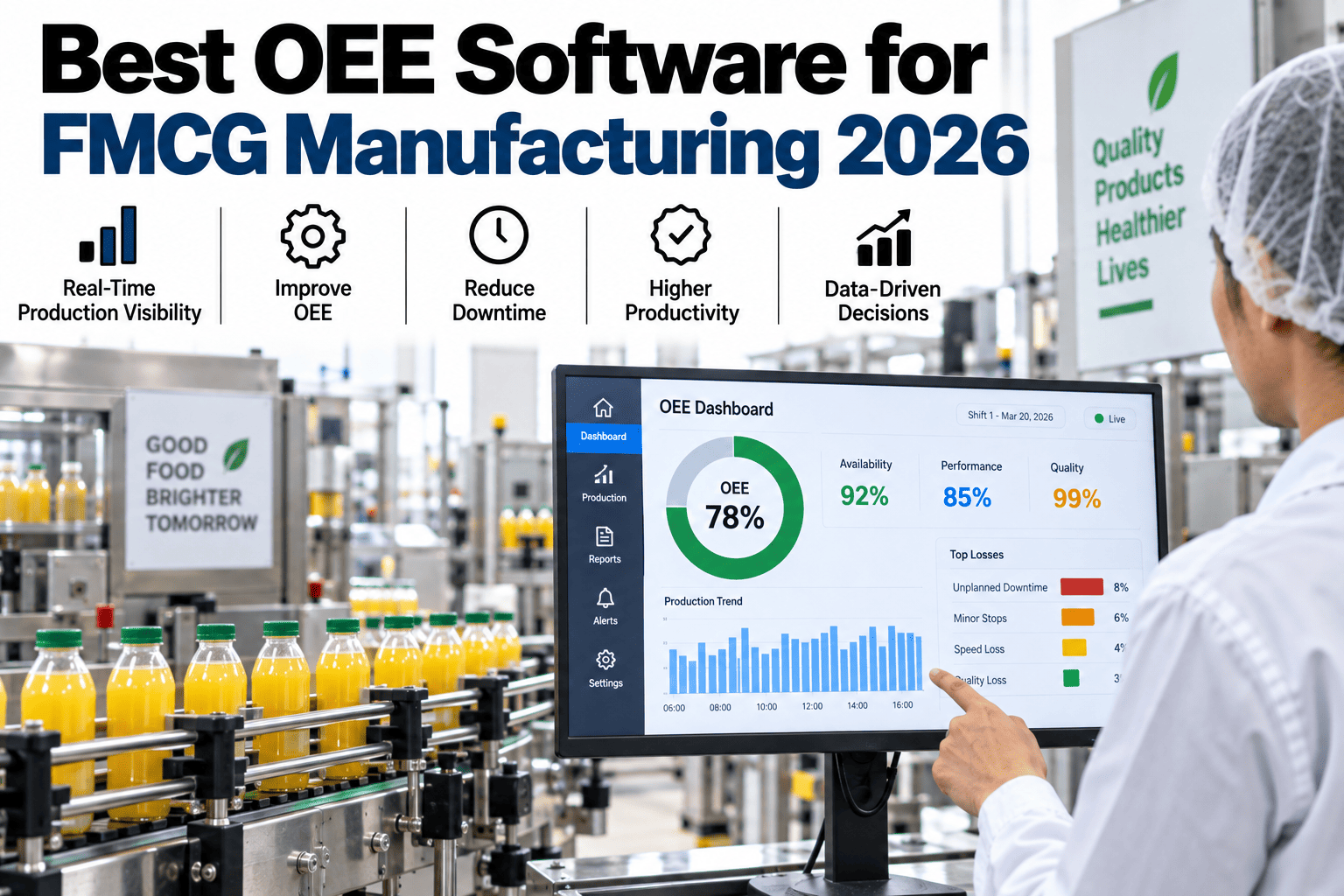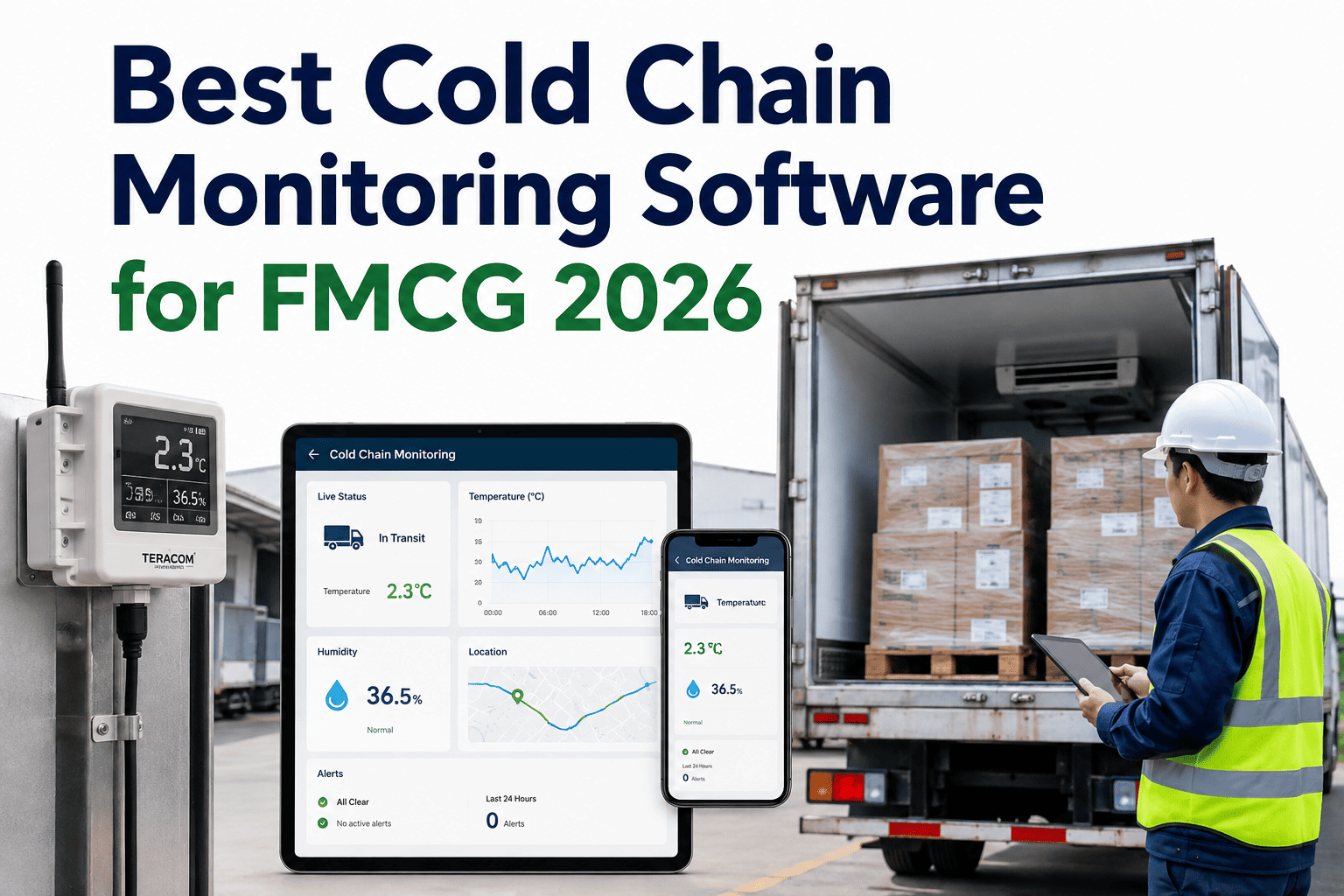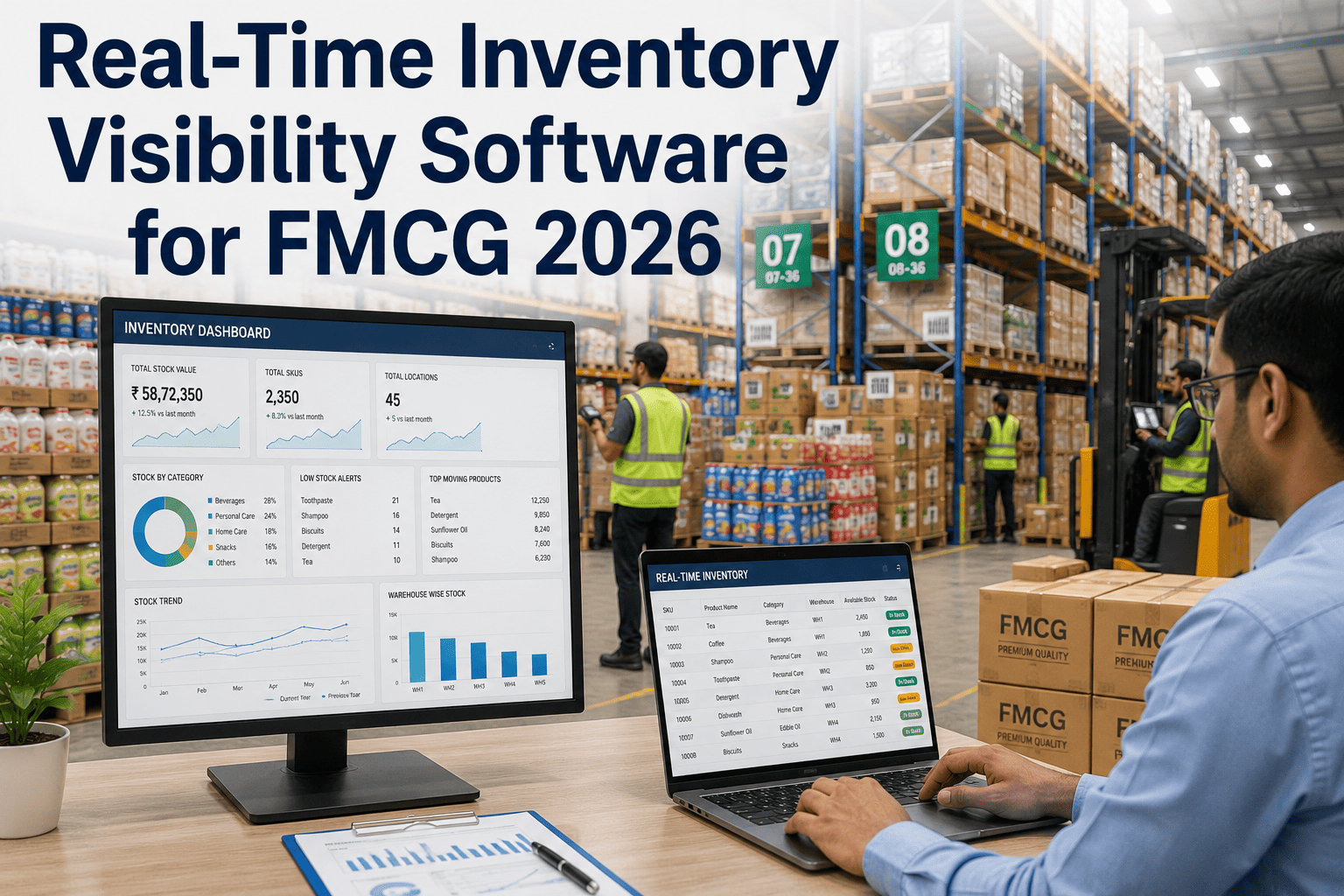
Somewhere between your plant floor and the retail shelf, your stock numbers stop telling the truth. A pallet leaves the factory and the ERP shows it as available, a distributor sells half of it within a day, and a regional planner is still looking at yesterday's batch report while a key account manager promises inventory that quietly ran out that morning. This is the normal operating condition for most FMCG supply chains today, and it is exactly why real-time inventory visibility software has moved from a nice-to-have to a genuine competitive requirement heading into 2026. Brands that can see plant, warehouse, distributor, and in-transit stock in one continuously updated view are catching problems while there is still time to act, and teams evaluating what that shift actually looks like in practice can start with a conversation with the iFactory support team.
Your ERP Tells You What Happened Yesterday. Your Shelf Needs to Know What's True Right Now.
iFactory unifies plant, warehouse, third-party storage, and distributor stock into a single sub-minute view, so your planning, sales, and operations teams are finally working from the same live number instead of three different reports that all disagree with each other.
Why FMCG Inventory Data Breaks Down Between the Plant and the Shelf
Most FMCG brands do not lack inventory data, they lack inventory data that agrees with itself. A plant's MES knows exact production output down to the minute. A warehouse management system knows what physically sits on a rack. A distributor's own system knows what left their dock this morning. None of those systems were built to talk to each other continuously, so every handoff between them introduces a small lag, and small lags compound across a network of dozens of warehouses and hundreds of distributor relationships into a genuinely distorted picture of what is actually available to sell.
Batch Syncs Create Blind Windows
Nightly or twice-daily uploads mean your planning team is always working with a number that is already hours out of date by the time anyone looks at it.
Every System Has Its Own Version of Truth
ERP, WMS, and distributor portals rarely reconcile automatically, so someone ends up manually cross-checking spreadsheets before any real decision gets made.
Distributors Are a Data Black Box
Once stock leaves your warehouse, most brands lose visibility entirely until a distributor places their next order, by which point a stockout may already be underway.
Promotions Break Every Static Forecast
A promotional spike moves faster than a batch-updated system can react, amplifying into the kind of upstream distortion known across the industry as the bullwhip effect.
Batch Reporting vs. Real-Time Visibility, Side by Side
The difference between a batch-synced inventory system and a real-time one is not just speed, it changes what decisions are even possible. A batch system tells a planner what to do about a problem that already happened. A real-time system gives that same planner the chance to prevent the problem from happening at all.
| Capability | Traditional Batch Reporting | iFactory Real-Time Visibility |
|---|---|---|
| Update Frequency | Once or twice daily | Sub-minute continuous sync |
| Distributor Stock Visibility | Only visible at next order cycle | Live pull from distributor systems |
| Stockout Detection | After the shelf is already empty | Before threshold is crossed |
| Cross-Location Reconciliation | Manual, spreadsheet-driven | Automated, single source of truth |
| Promotional Demand Response | Reactive after order variance appears | Adjustable as demand signal shifts |
The Four Stages of FMCG Inventory Maturity
Most FMCG operations teams recognize themselves somewhere on this curve, and understanding which stage a brand currently sits in is the fastest way to identify the specific gap that real-time visibility closes next.
Spreadsheet Era
Inventory tracked manually across disconnected files, with numbers that are outdated the moment they are exported.
Single-System ERP
A central ERP tracks internal stock accurately but has no live connection to distributor or third-party warehouse data.
Batch-Synced Network
Multiple systems feed a central dashboard on a fixed schedule, reducing manual work but still operating hours behind reality.
Real-Time Unified View
Every node updates continuously into one dashboard, turning inventory data into a live operational signal instead of a historical record.
See Your Entire Network on One Screen, Updated Right Now
iFactory connects plant, warehouse, 3PL, and distributor systems into a single live dashboard built specifically for FMCG replenishment cycles and promotional demand swings.
How Plant-to-Shelf Data Actually Becomes One Number
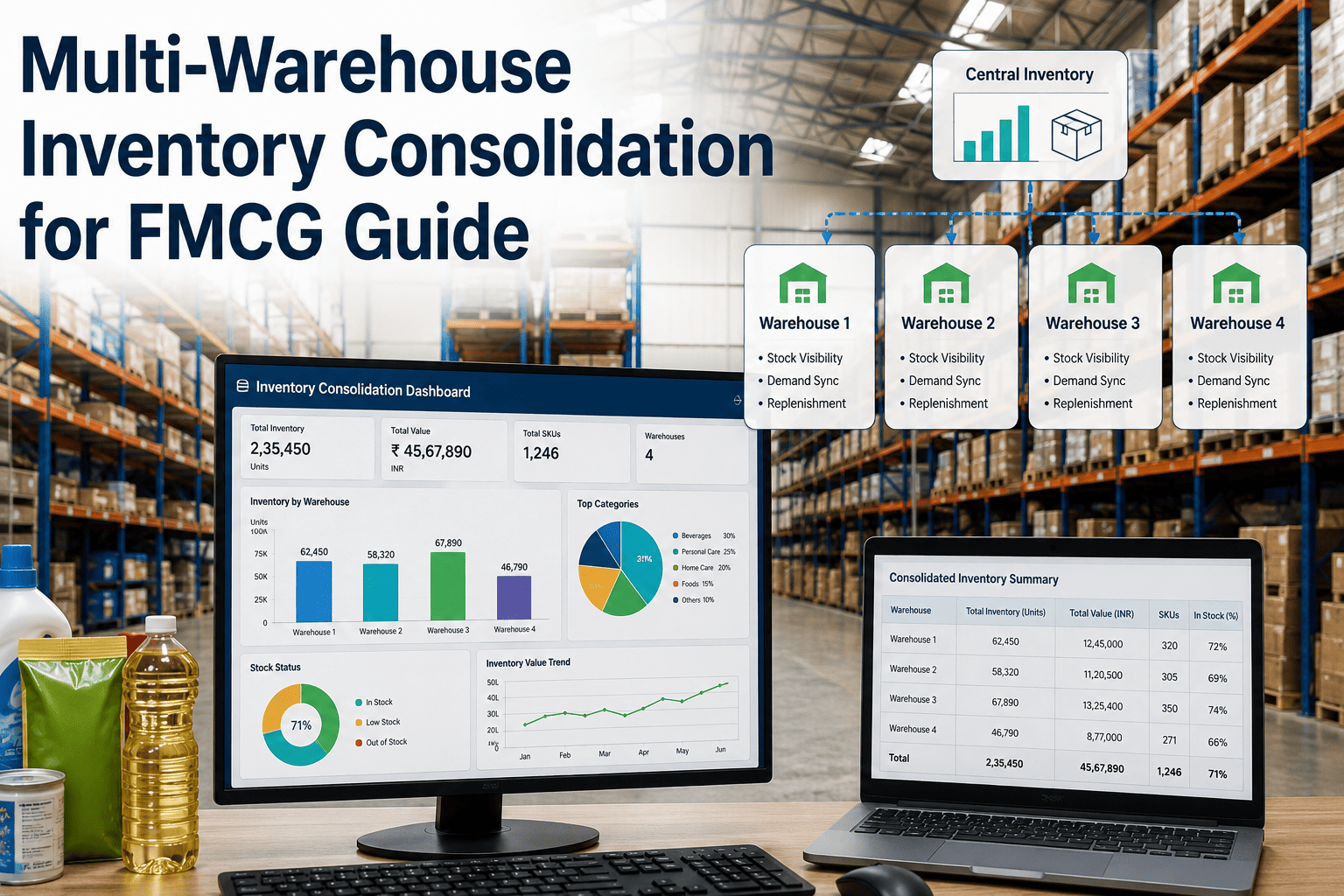
Unifying inventory across a fragmented FMCG network is less about ripping out existing systems and more about building a live connective layer across the ones already in place. The process generally follows the same sequence regardless of how many warehouses or distributor relationships a brand is managing.
Connect Every Data Source
Plant MES, warehouse management systems, 3PL portals, and distributor order platforms are connected through existing APIs or EDI feeds wherever possible.
Normalize the Data Model
SKU codes, units of measure, and location identifiers are reconciled across systems so every source is describing the same inventory in the same language.
Establish Continuous Sync
Instead of scheduled batch uploads, each connected system pushes updates as they happen, keeping the unified dashboard within seconds of ground truth.
Layer in Threshold Alerts
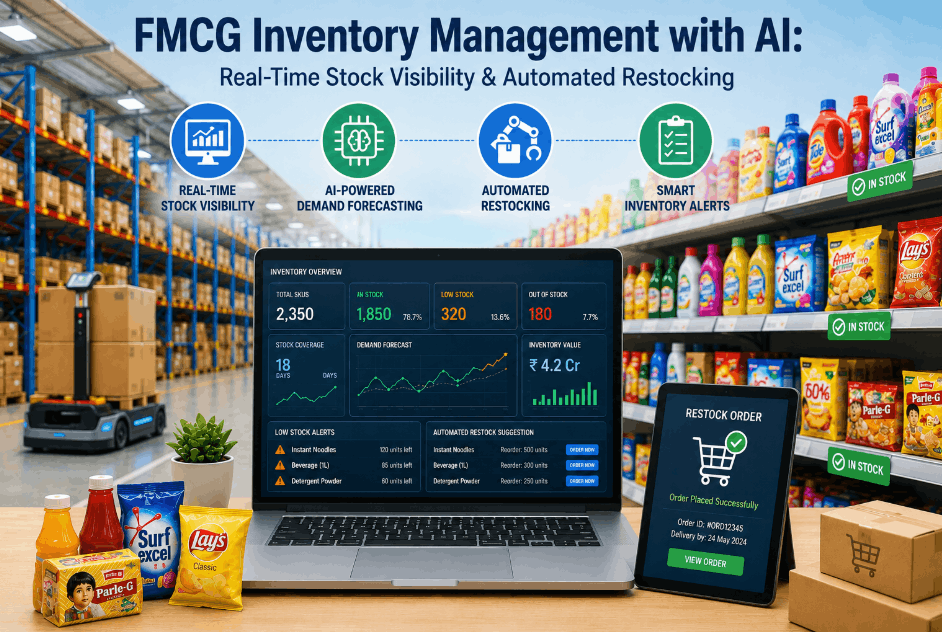
Reorder points and stockout risk thresholds are set per SKU and per location, so the system flags problems before a human would ever notice them.
Push Signals Into Action
Alerts route directly into replenishment workflows and planning tools, turning visibility into a triggered action rather than a dashboard someone has to remember to check.
A Composite Scenario: Catching a Regional Stockout Before It Ever Happened
A mid-size snack brand distributing across a regional grocery network had a recurring pattern every quarter: a handful of high-velocity SKUs would sell through faster than the batch-synced replenishment system could react, leading to a two-to-three day stockout window at retail before the next distributor order cycle caught up. After connecting distributor point-of-sale and warehouse data into a real-time unified view, the brand's planning team began seeing sell-through velocity as it happened rather than three days later.
During the following seasonal promotion, the system flagged one SKU crossing its reorder threshold nineteen hours after the promotion launched, well before the distributor's own reorder cycle would have triggered a resupply. The planning team pushed an emergency replenishment order the same afternoon, and the SKU never dropped below shelf-ready stock for the remainder of the promotional window, a result the brand had not achieved in the three prior comparable campaigns.
Common Mistakes Brands Make Chasing Inventory Visibility
Treating Visibility as a Reporting Project
A dashboard that only gets checked weekly does not change outcomes, no matter how accurate the underlying data becomes.
Stopping at the Warehouse Door
Visibility that ends where the distributor relationship begins still leaves the highest-risk part of the network completely dark.
Setting One Threshold for Every SKU
High-velocity and slow-moving products need different reorder logic, and a single blanket rule under-serves one group or the other.
Ignoring In-Transit Stock Entirely
Product sitting on a truck between locations is real inventory, and excluding it from the picture leads to unnecessary emergency reorders.
Frequently Asked Questions
What counts as "real-time" in inventory visibility software?
Real-time generally means updates measured in seconds to low minutes rather than the hours or full days typical of batch-synced systems. iFactory's platform pulls continuously from connected plant, warehouse, and distributor systems, keeping the unified view within roughly sixty seconds of ground truth across most connected locations. The exact latency depends on how each source system exposes its data, which is something the iFactory support team maps out during onboarding.
Do we need to replace our existing ERP or WMS to get real-time visibility?
No, real-time visibility software is designed to sit on top of the systems already in place rather than replace them. It connects to your existing ERP, warehouse management system, and distributor platforms through APIs or EDI, pulling their data into one continuously updated layer without requiring a disruptive system migration first.
How does this work when distributors use their own separate systems?
Most distributor relationships already generate order and shipment data through EDI feeds or portal exports, and real-time visibility platforms are built to pull from those existing channels rather than requiring a distributor to adopt new software. Where a distributor's system is more limited, a lighter integration path can still surface directional stock signals well ahead of the next formal order cycle.
Is this only useful for large FMCG brands with big distribution networks?
Smaller networks actually see faster payback in many cases, since a single missed reorder point has a proportionally larger impact when there are fewer SKUs and locations to spread the risk across. A brand running even a handful of regional warehouses and distributor relationships can benefit meaningfully from closing the same visibility gap. Book a demo to see how the platform scales to your specific network size.
What does a typical rollout timeline look like?
Most deployments start with the highest-priority locations and SKUs, connecting core data sources within the first few weeks and expanding coverage from there. Full network coverage timelines vary based on how many distinct systems need to be integrated, but brands typically see their first meaningful visibility gains well before the entire rollout is complete, since each connected node adds value immediately rather than only once everything is finished.
Stop Making Replenishment Decisions on Yesterday's Numbers
iFactory gives your team one continuously updated view across plant, warehouse, 3PL, and distributor inventory, so every decision is based on what is true right now instead of what was true this morning.