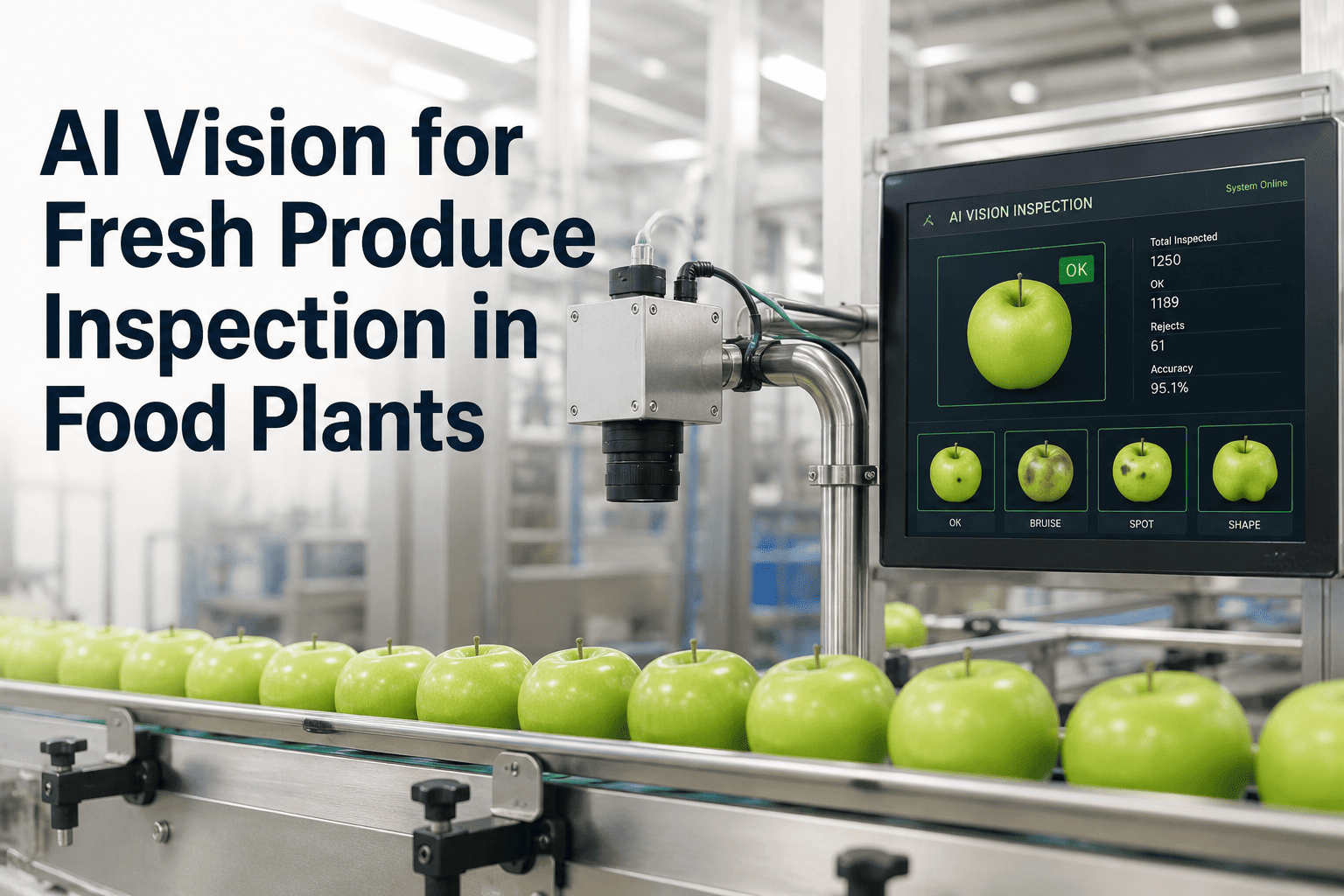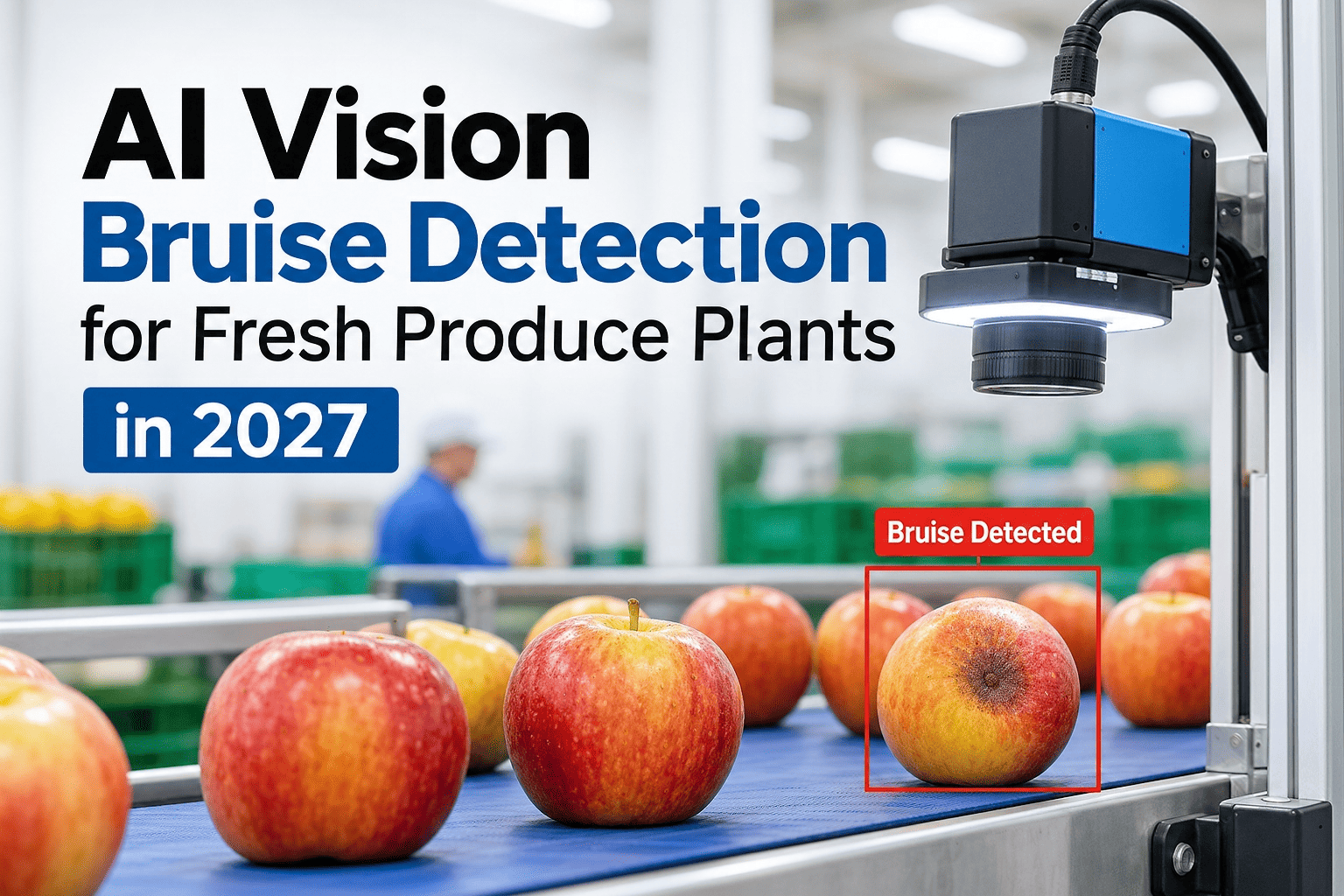
The worst bruises on fresh produce are often the ones nobody can see, because the impact happened under the skin and the surface hasn't discolored yet, which means the fruit passes every visual check a human or a standard camera can perform and only shows the damage days later on a retailer's shelf. Hyperspectral AI vision reads wavelengths beyond what the human eye or a normal camera can see, catching the early tissue changes that precede visible bruising long before the surface gives anything away. iFactory AI, an on-premise AI platform for manufacturing, deploys this hyperspectral detection as a turnkey line addition, and produce plant quality teams can see their own fruit scanned for sub-surface bruising invisible to the eye with our team.
Catch the Bruise Before the Skin Ever Shows It
AI vision bruise detection for fresh produce plants uses hyperspectral imaging to catch sub-surface bruising invisible to the human eye, deployed as a turnkey line addition.
Why a Bruise That Passes Inspection Still Shows Up Later
A fresh impact bruise doesn't always discolor the surface immediately, the cellular damage happens first and the visible browning follows over the next day or two as the tissue breaks down. A human inspector or a standard camera checking for visible marks will pass fruit that is already damaged underneath, and by the time the bruise becomes visible, the product has usually already left the plant.
What Hyperspectral Imaging Sees That a Normal Camera Can't
A standard camera captures light in roughly the same red, green and blue bands the human eye perceives. Hyperspectral imaging captures dozens of narrow wavelength bands across a much wider spectrum, some of which respond to the chemical and structural changes inside damaged plant tissue well before those changes become visible as surface discoloration. That difference is what lets the system flag a bruise that is, to every other inspection method available, completely invisible.
The Apple Shipment That Looked Perfect at the Dock
Picture a pallet of apples that passed every visual check at packing, loaded onto a truck looking flawless, and arrived at a distribution center three days later with a noticeable share of the fruit showing soft, discolored spots that hadn't been visible at all when the pallet left the plant. The impacts that caused those spots had happened during harvest handling, well before packing, but the damage only became visible to the eye after days of continued cellular breakdown during transit.
A hyperspectral scan at packing would have caught that same tissue damage while it was still invisible to every other check, sorting the affected apples into a shorter-shelf-life channel instead of the same premium pallet as undamaged fruit, avoiding both the distribution center complaint and the cost of the returned shipment.
How a Piece of Fruit Gets Checked and Sorted
See Hyperspectral Scanning on Your Own Produce
Share which fruit or vegetable your plant handles, and iFactory AI will show how hyperspectral bruise detection applies to it.
What Changes Once Sub-Surface Damage Is Visible
Why This Is Built to Deploy as a Complete Line Addition
Hyperspectral cameras and the processing behind them are specialized equipment, which is why this capability is delivered as a turnkey addition rather than a software layer bolted onto whatever camera already exists on a line. The camera, lighting, processing hardware and sorting integration arrive configured together, so a produce plant isn't left trying to source and integrate hyperspectral components separately from several different vendors.
The Same Scan, Useful to Different Roles
Mistakes That Weaken a Bruise Detection Rollout
Why Bruise Data Often Points Back to Harvest, Not Packing
It's tempting to assume bruising originates somewhere inside the plant, but a surprising share of impact damage actually happens during harvest and transport to the facility, long before the fruit reaches a sorting line. Once bruise detection is running consistently, tracking the rate back by incoming lot, harvest crew or transport route often reveals that the real intervention point sits upstream of the plant entirely, which is a different and sometimes more valuable finding than anything the packing process itself could fix.
What a Produce Quality Manager Would Check First
What Produce Plants Ask About Bruise Detection
Catch Bruising Before the Retailer Does
Book a session with iFactory AI to see hyperspectral bruise detection deployed on your own produce line.