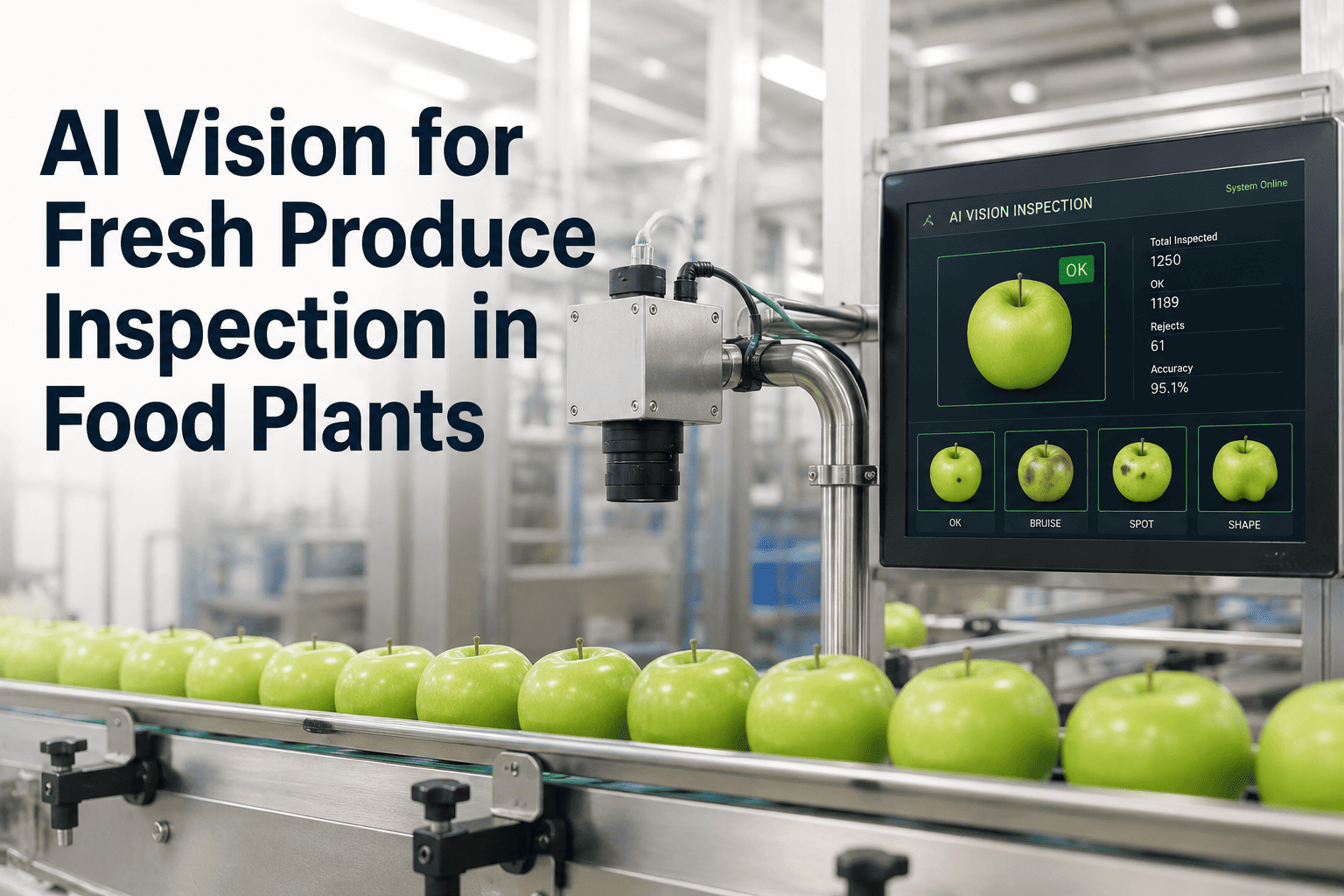
No two tomatoes look alike, and that's exactly the problem a produce inspection system has to solve without rejecting half the harvest as defective. A metal part either matches a tolerance or it doesn't, but fresh produce carries natural variation in color, shape, and size that a rigid inspection rule can't tell apart from an actual defect like bruising, wilt, or a foreign material contaminant. Vision systems built for packaged goods routinely fail on fresh produce lines for exactly this reason, flagging perfectly good product as defective until someone retrains the whole system by hand. iFactory's vision team builds inspection models specifically trained to separate natural variation from genuine defects.
Catch Bruising, Wilt, and Contamination Without Flagging Natural Variation as a Defect
AI vision trained on the natural range of color, shape, and size within a single produce type, so the system tells the difference between an odd-looking but perfectly good item and one that actually needs to be pulled.
Why Fresh Produce Breaks Standard Vision Models
A vision model trained on packaged goods learns to spot deviation from a fixed template — the label is in the wrong place, the seal isn't straight, the fill line is off. Fresh produce has no fixed template. A batch of apples from the same orchard on the same day can vary meaningfully in color saturation, size, and surface texture, all of it entirely normal. A model that hasn't been trained specifically on that range either rejects too aggressively, throwing away sellable product, or gets its thresholds loosened so far to avoid false rejects that it stops catching real defects at all. Getting this balance right requires training data that spans the actual natural variation of the specific produce type running on the line.
The Defect Categories That Matter Most
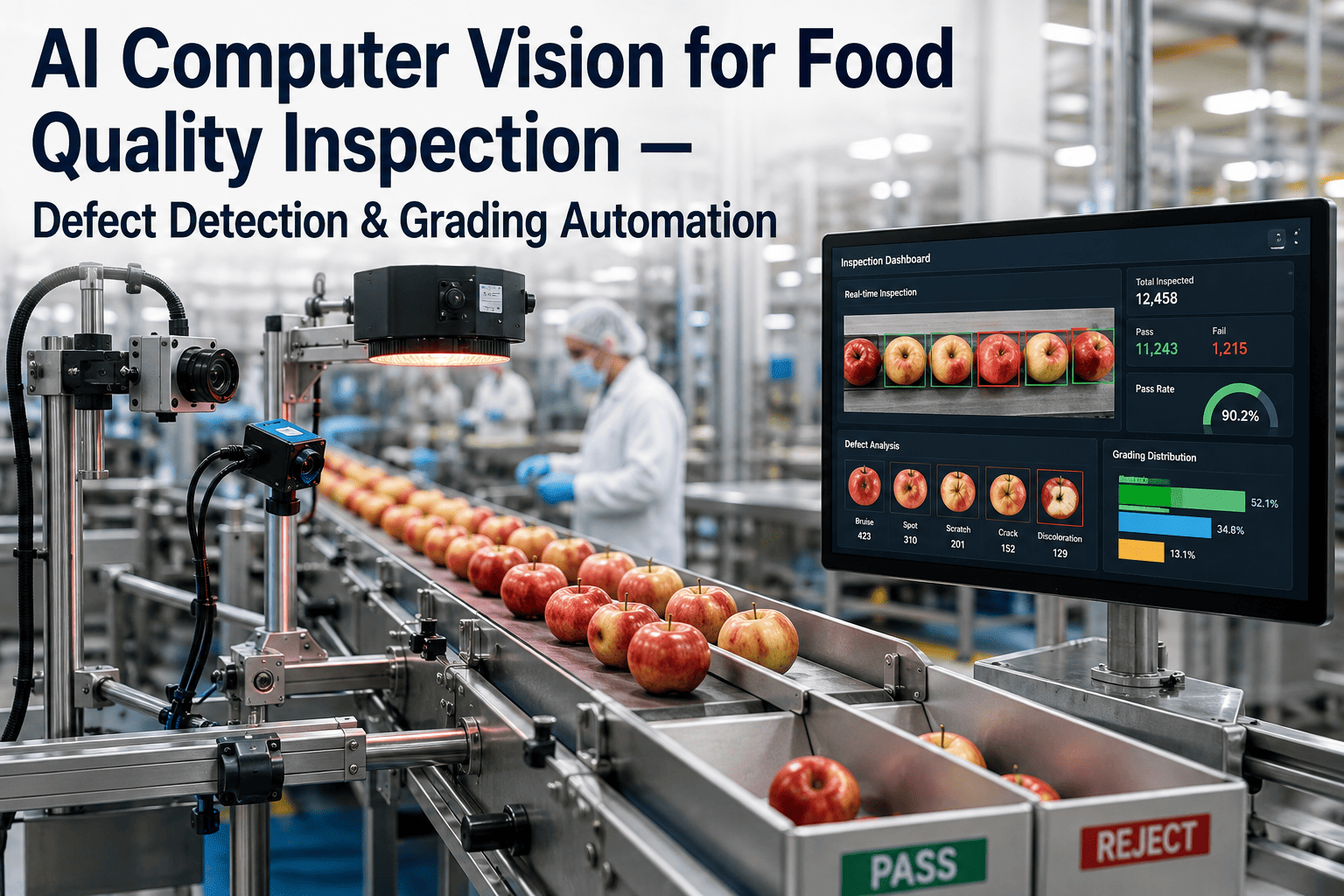
Not every defect matters equally, and not every one is visible the same way. A well-trained model has to combine several inspection modes to catch the full range of what actually affects food safety and shelf life.
Run Your Specific Produce Type Through a Trained Model
Send sample images from your line, including the naturally varied product you currently accept. We'll show you how the model separates that variation from genuine defects.
How the Model Gets Trained on Your Specific Product
Generic produce models trained on public datasets rarely perform well out of the box, because the specific variety, growing region, and even the season all shift what "normal" looks like. Training on your own accepted and rejected product from recent runs builds a model that reflects the actual range your line produces, rather than an average drawn from produce grown somewhere else entirely.
| Defect Type | Best Detection Method | Why Standard RGB Alone Falls Short |
|---|---|---|
| Subsurface bruising | Near-infrared imaging | Damage often invisible on the surface under normal light |
| Surface wilt | Texture analysis | Color may look normal while texture has already changed |
| Color-based discoloration | Trained RGB classification | Requires learned natural range, not a fixed threshold |
| Foreign material | Shape and edge detection | Objects can closely match produce color under poor lighting |
Getting the System Running on a Live Line
Deploying vision inspection on a fresh produce line is as much about camera placement and lighting consistency as it is about the model itself, since inconsistent lighting between shifts or seasons can shift what the model sees even when the actual product hasn't changed.
Not sure whether your current lighting setup will support reliable vision inspection? Send us photos of your line and we'll assess it before a pilot begins.
What Plants Report After Deploying Trained Produce Vision
The most consistent result plants describe isn't a single accuracy number, it's the reduction in both types of error at once — fewer good products thrown away for looking slightly unusual, and fewer genuine defects that slip through because the thresholds had been loosened to avoid over-rejecting in the first place.
Where These Deployments Commonly Go Wrong
The most frequent mistake is training the model once at launch and never revisiting it, even as the season changes what normal produce looks like. A model trained on early-season fruit can start misclassifying late-season product as defective simply because the natural baseline shifted underneath it. A second common mistake is inconsistent lighting between the training data collection and the live line, which introduces a systematic bias the model has no way to correct for on its own.
Frequently Asked Questions
Catch Real Defects Without Rejecting Perfectly Good Produce
Send us sample images from your line and we'll show you what a model trained on your own product's natural range actually catches.