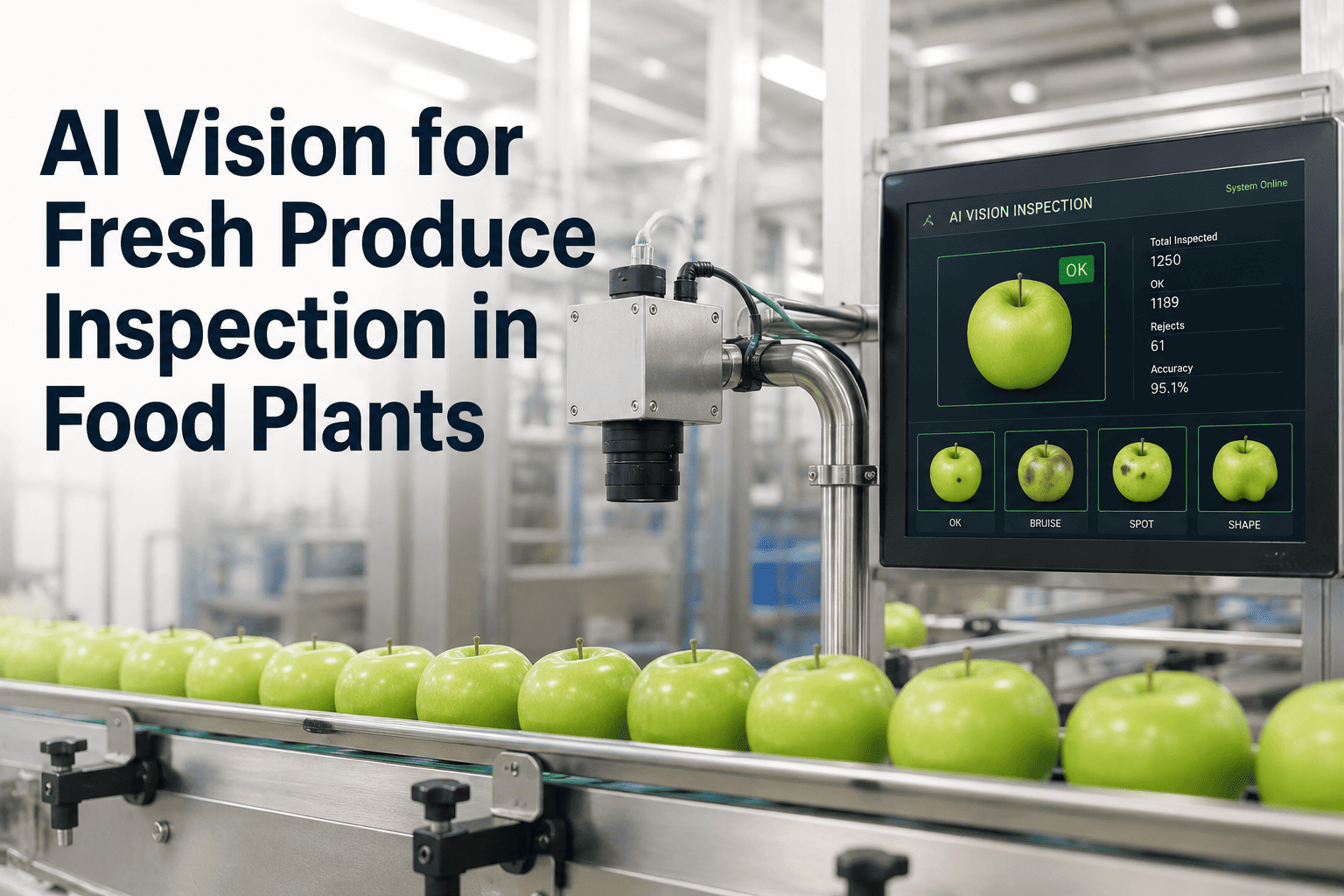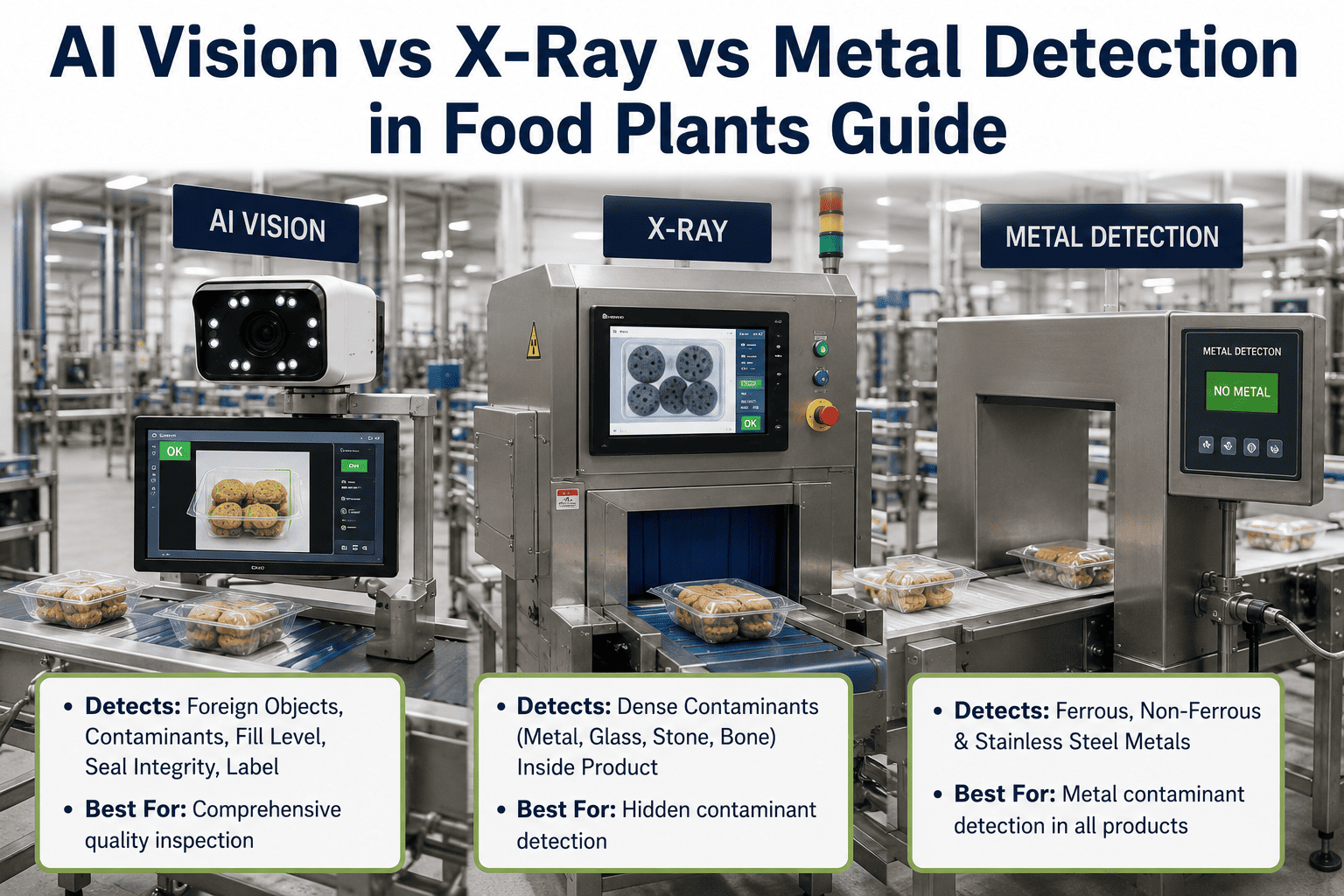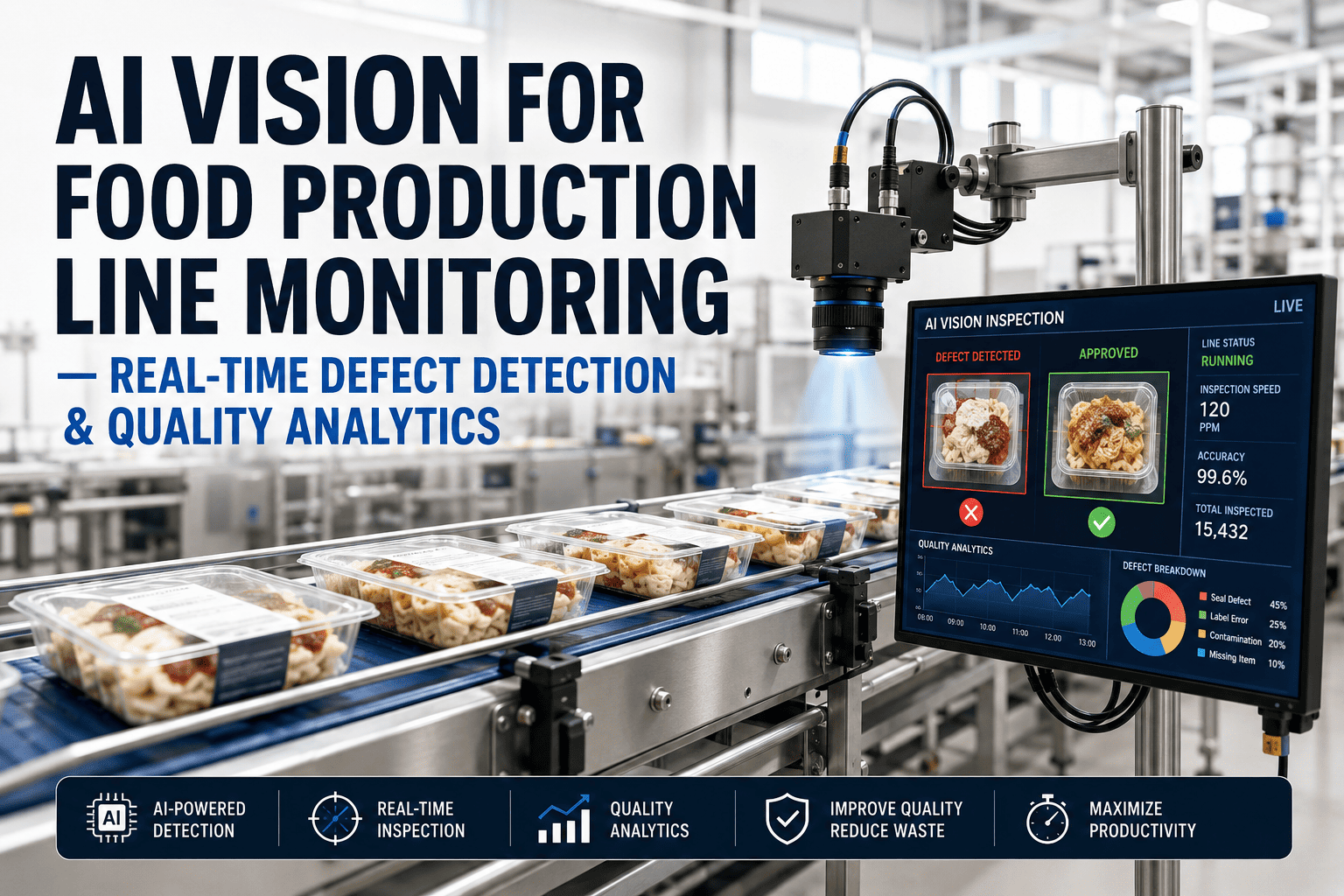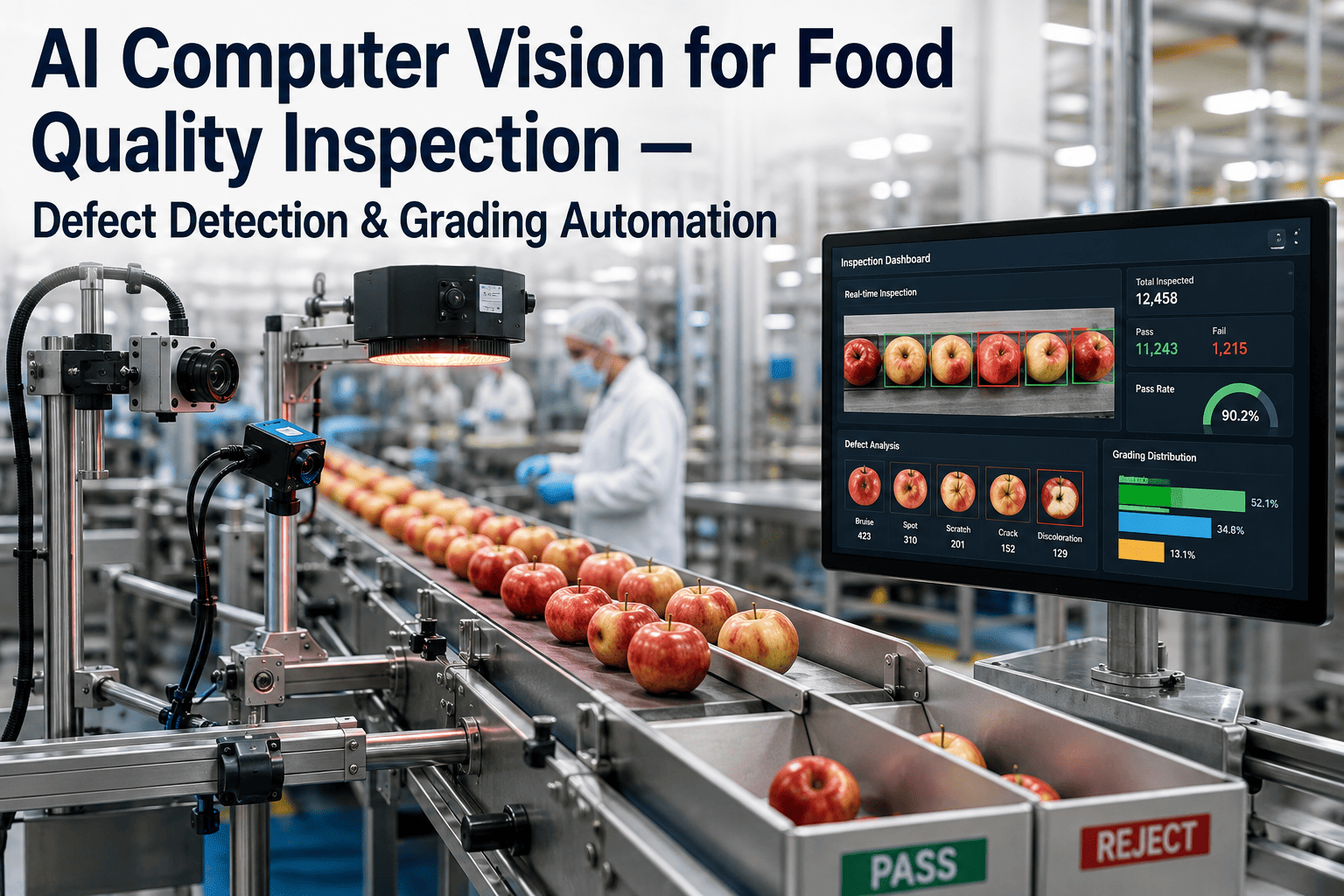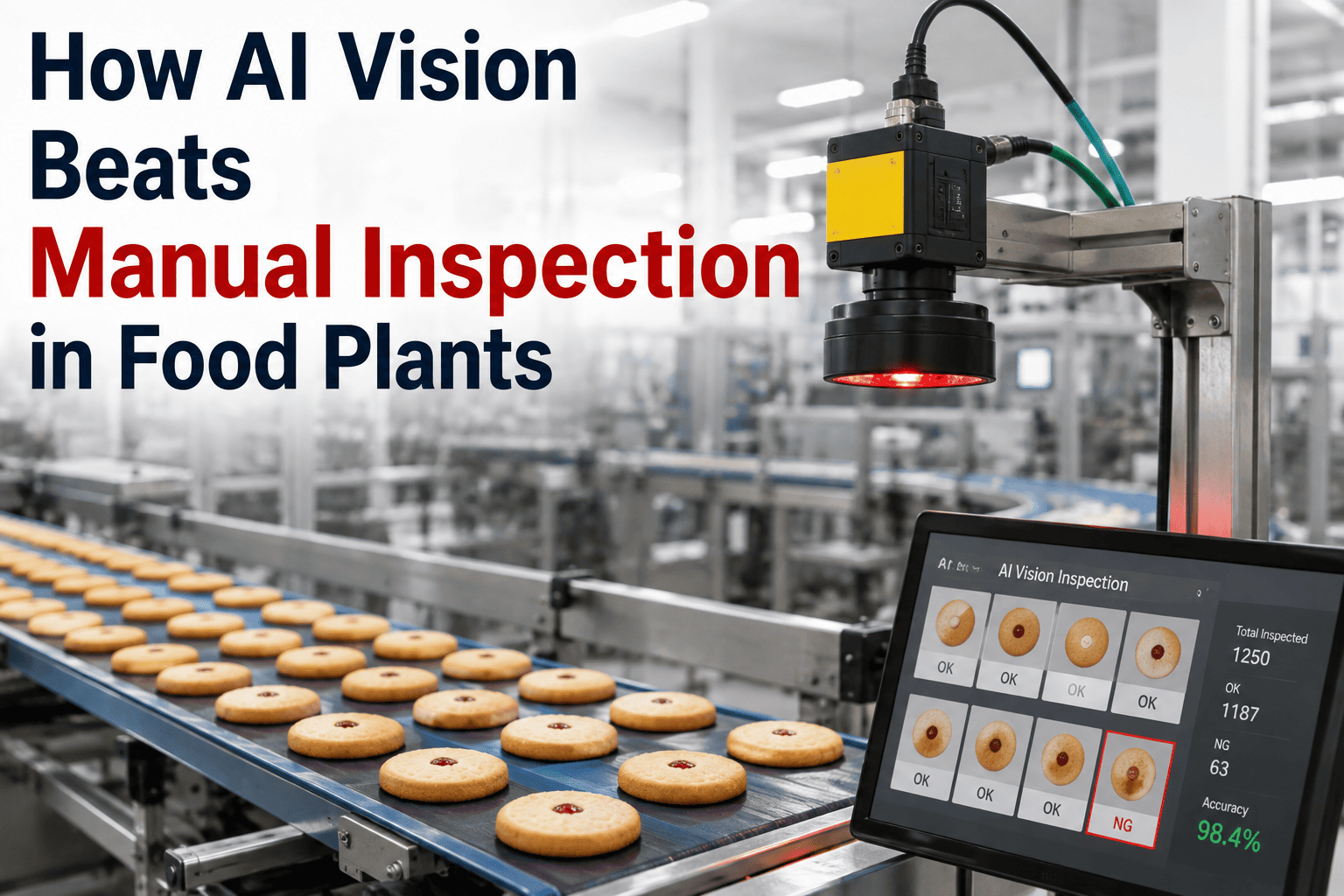
A human inspector on a high-speed food line is being asked to do something genuinely difficult — catch a defect that might appear for a fraction of a second, on a product moving past at a pace that leaves almost no time to register what was just seen, for hours at a stretch without a lapse in attention. It's not a fair task, and the data on how often defects slip through confirms it. Manual inspectors on fast lines miss roughly one in seven defects that pass in front of them, not because they're careless, but because the job itself exceeds what sustained human attention can reliably deliver. See how AI vision inspection delivers 99.7% accuracy at full line speed, with the data behind that gap across food and beverage production.
A Human Inspector Misses 1 in 7 Defects. That's Not a Training Problem.
AI vision inspection delivers 99.7% accuracy at full line speed on food production lines — data on where manual inspection genuinely falls short, and what changes when detection stops depending on sustained human attention.
What Sustained Visual Attention Actually Requires
Vigilance decrement is a well-documented phenomenon in human factors research — the tendency for detection accuracy to decline the longer a person performs a sustained, repetitive visual monitoring task. It's not a character flaw or a training gap; it's a well-established limit of how human attention functions over time, and it applies just as much to an experienced quality inspector as to anyone else performing the same kind of task. On a high-speed food line, a defect might be visible for a fraction of a second before the product moves past, which means the inspector has to be at peak attention at exactly the right instant, over and over, for an entire shift. The one-in-seven miss rate isn't evidence of inadequate inspectors — it's evidence that the task, as designed around continuous human visual monitoring, was never going to consistently deliver better than that.
Manual Inspection vs. AI Vision, By the Numbers
| Factor | Manual Inspection | AI Vision Inspection |
|---|---|---|
| Typical detection rate on high-speed lines | Roughly 6 in 7 defects caught | 99.7% detection accuracy |
| Performance over a full shift | Declines with vigilance decrement | Consistent regardless of shift length |
| Standard consistency | Varies by inspector and fatigue level | Applies the same criteria every time |
| Documentation of each inspection decision | Rarely captured in detail | Every decision logged with image reference |
Catch the Defects a Sustained Shift Was Always Going to Miss
iFactory's AI vision inspection runs at full line speed with 99.7% accuracy, hour one and hour ten of a shift alike.
What Changes When Detection Isn't Bound by Human Attention
AI vision systems don't get tired, don't have an attention curve that dips in the final hours of a shift, and don't apply a subtly different defect threshold depending on how the day has gone. A camera captures every unit passing the inspection point at full line speed, and a trained model evaluates each image against learned defect patterns in the time it takes the product to move to the next station — no slower during hour ten than hour one, and no more inconsistent between one unit and the next. This isn't a claim that the system never misses anything; it's that the failure mode is different and far more measurable than human vigilance decrement, since a model's detection accuracy can be continuously tested and reported rather than inferred after the fact from a customer complaint.
Just as important as the detection rate itself is what the system does with a flagged defect. Every inspection decision is logged with the corresponding image, which means a quality manager reviewing a flagged batch has actual visual evidence to evaluate rather than a inspector's secondhand description from memory. That documentation also becomes the training data that improves the model over time, refining accuracy on defect types specific to that plant's products rather than relying on a generic detection model that was never tuned to the plant's actual production.
Defect Types Most Affected by the Speed-Attention Gap
AI Vision Doesn't Remove the Quality Team, It Changes Their Job
The strongest implementations of AI vision inspection don't eliminate human involvement in quality — they shift what humans spend their attention on. Instead of scanning every unit on a fast-moving line for hours at a stretch, quality staff review the flagged exceptions the system surfaces, apply judgment to edge cases the model isn't confident about, and make the final disposition call on flagged batches. This is a better use of human judgment than continuous visual monitoring, since it applies people's actual strength — contextual decision-making — to the cases that need it, rather than asking them to be a consistent, fatigue-proof detector for every unit on the line, a role the technology is simply better suited to.
Frequently Asked Questions
Give Your Line 99.7% Accuracy at Full Speed, Every Hour
iFactory's AI vision inspection catches what sustained human attention structurally can't, with every decision logged and reviewable.