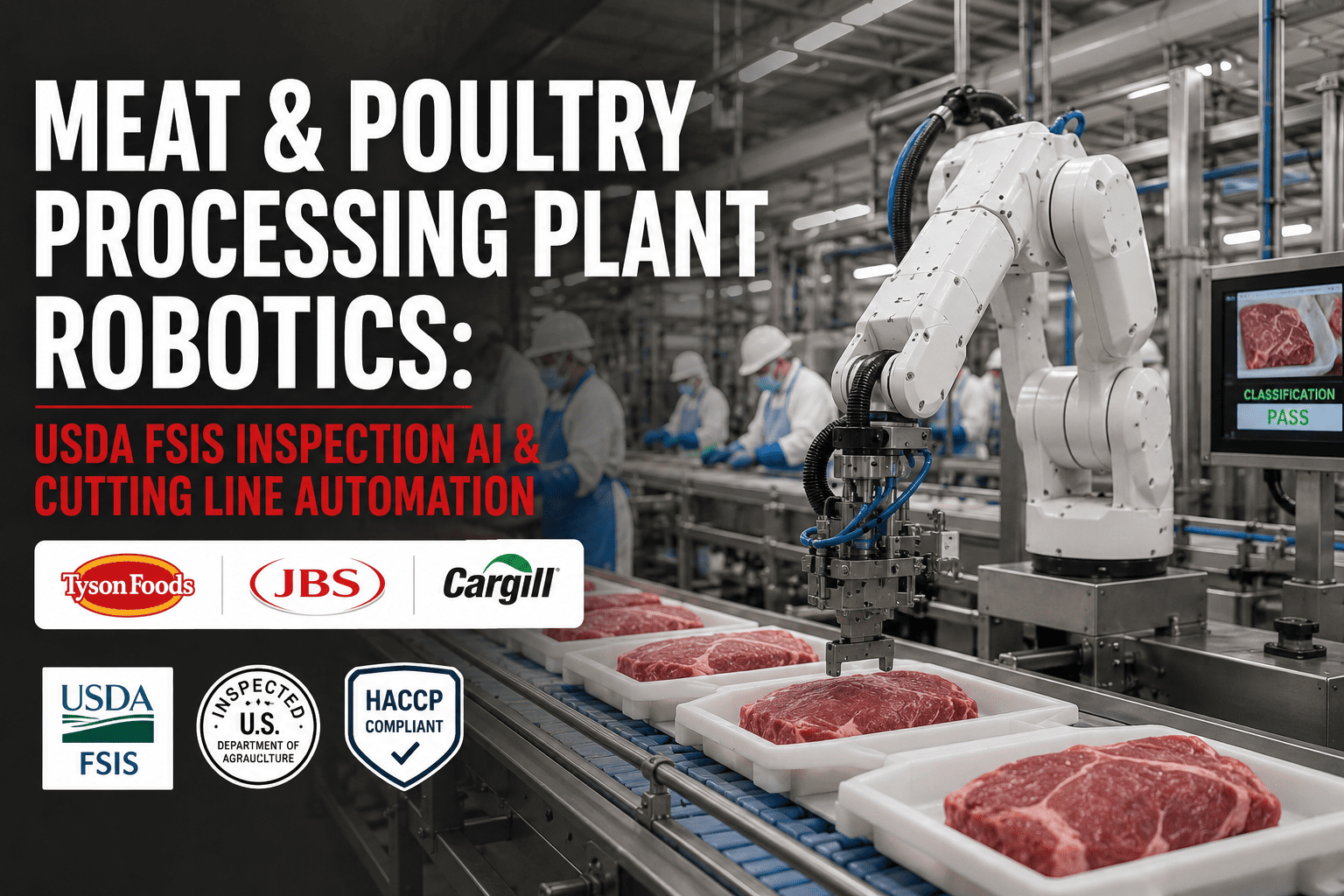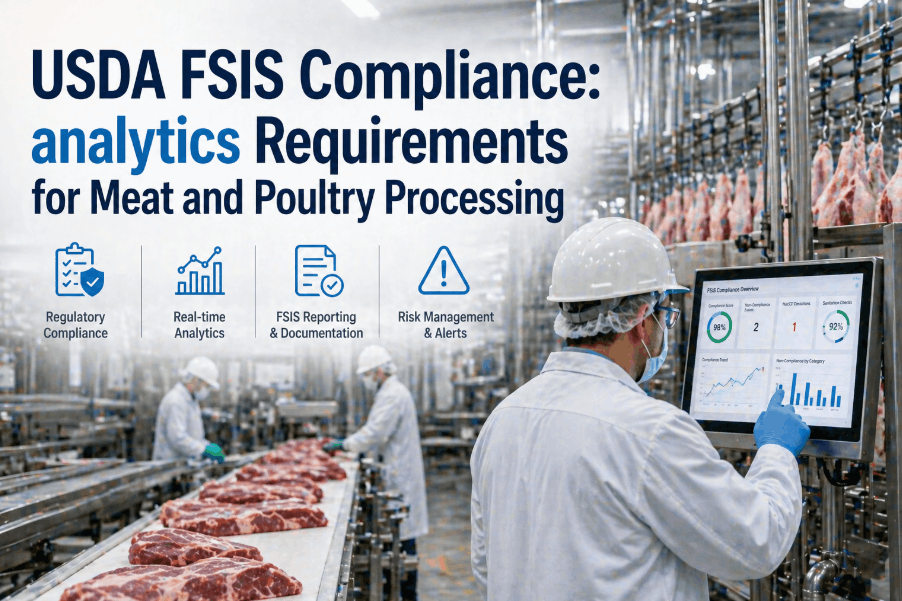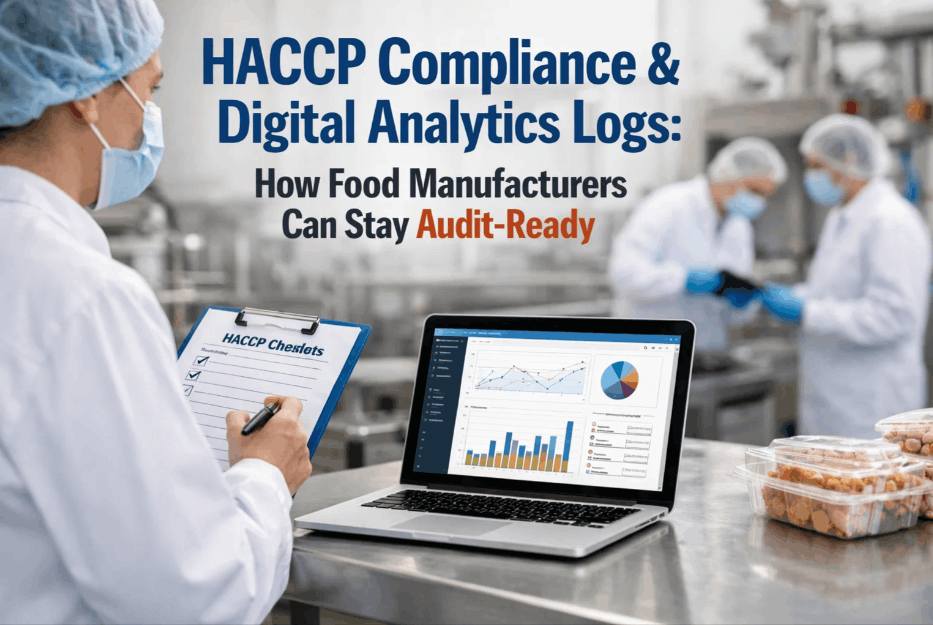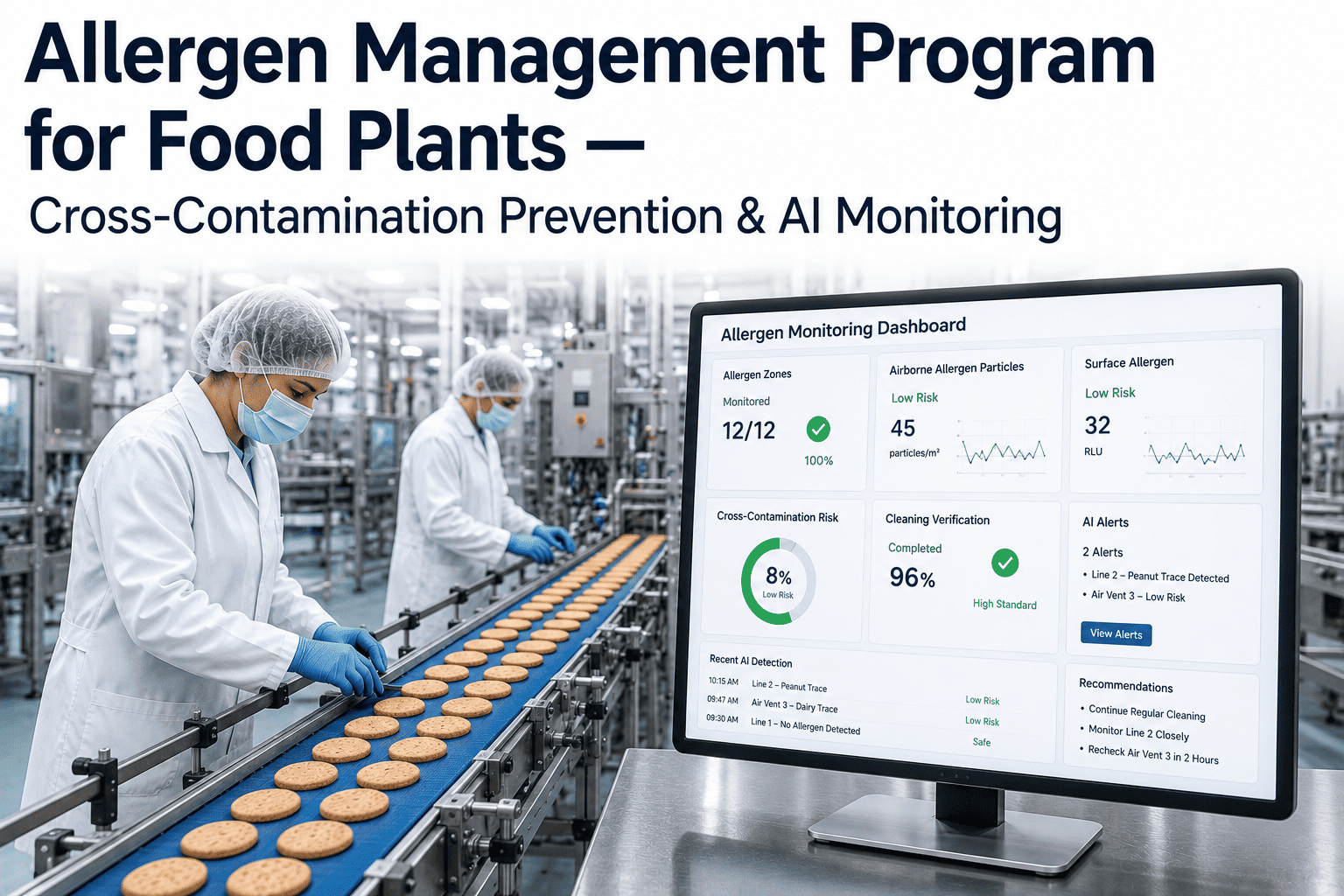
For compliance officers in the meat and poultry industry, navigating the intricate landscape of USDA FSIS regulations is a daily imperative that directly impacts operational viability, market access, and public health. The USDA Food Safety and Inspection Service (FSIS) mandates rigorous sanitation and maintenance protocols under 9 CFR 416, requiring every establishment to develop, implement, and document Sanitation Standard Operating Procedures (SSOPs) that are verified through pre-operational and operational inspections. Noncompliance records, often issued as FSIS form 5400-1, can trigger escalated enforcement actions including suspension of inspection, product detention, or even withdrawal of grant of inspection. The stakes are exceptionally high: a single lapse in maintenance of equipment, drainage, or refrigeration systems can lead to pathogen harborage, cross-contamination, and costly recalls. To meet these challenges, forward-thinking compliance teams are now integrating AI-driven predictive maintenance and real-time monitoring solutions to automate documentation, reduce human error, and ensure continuous adherence to FSIS standards. Book a Demo to learn how iFactory digitizes your compliance workflows.
Transform Your FSIS Compliance Workflow
Automate SSOPs, pre-operational checks, and maintenance logs with AI-driven precision. Ensure zero noncompliance records in 2026.
Understanding 9 CFR 416: The Foundation of FSIS Sanitation Compliance
The 9 CFR 416 regulation is the cornerstone of sanitation requirements for all official meat and poultry establishments. Subpart A mandates that each establishment shall develop, implement, and maintain written SSOPs that address the specific conditions of the facility, including equipment, utensils, and physical plant. These procedures must specify the frequency of cleaning and the responsible personnel. Subpart B details the pre-operational and operational sanitation procedures: pre-operational inspections must verify that all food-contact surfaces are clean and sanitized before production begins, while operational sanitation requires continuous monitoring during production to prevent contamination. Maintenance of facilities, including floors, walls, ceilings, ventilation, and drainage systems, falls under the general sanitation requirements and must be documented. Noncompliance with 9 CFR 416 can result in immediate regulatory action, including the issuance of a Notice of Intended Enforcement (NOIE) by FSIS. Compliance officers must ensure that every piece of equipment—from grinders and mixers to conveyors and packaging machines—is maintained in a sanitary condition, with documented cleaning schedules and corrective actions for any deviations. The integration of digital maintenance logs with AI-driven anomaly detection allows for real-time tracking of sanitation tasks, ensuring that no step is missed and that all records are audit-ready.
Pre-Operational Inspection Checklist
- Verify all food-contact surfaces are clean and sanitized
- Inspect drains for blockages and cleanliness
- Check refrigeration units for proper temperature and condensation control
- Ensure handwashing stations are fully stocked and functional
- Review SSOP documentation for previous day's completion
Operational Monitoring Requirements
- Continuous monitoring of product temperatures
- Visual inspection of equipment during breaks
- Swab testing for pathogen presence (e.g., Salmonella, Listeria)
- Documentation of any corrective actions taken
- Review of maintenance logs for equipment performance
Post-Operational Sanitation
- Complete disassembly and cleaning of all equipment
- Application of approved sanitizers with proper contact time
- Rinse and air-dry all surfaces
- Inspect for any remaining organic matter
- Record cleaning times, chemicals used, and personnel
Step-by-Step FSIS Audit Preparation Timeline
Conduct a gap analysis of current SSOPs against 9 CFR 416 requirements. Identify missing procedures or outdated frequencies.
Update all written SSOPs with specific cleaning protocols for each piece of equipment, including approved chemicals and contact times.
Implement a digital tracking system for pre-operational and operational inspections. Ensure every inspection is time-stamped and signed.
Train all personnel on updated procedures and document training records. Conduct mock audits to identify weaknesses.
Integrate maintenance logs with AI predictive analytics to flag equipment that may require sanitation attention before failure.
Review all noncompliance records from the past 12 months and ensure corrective actions are fully documented and verified.
Common FSIS Noncompliance Categories and Corrective Actions
| Category | Typical Violation | Corrective Action | Documentation Required |
|---|---|---|---|
| Sanitation | Improper cleaning of equipment | Re-clean and sanitize; retrain personnel | SSOP log, training record |
| Maintenance | Leaking pipes or damaged surfaces | Repair within 24 hours; verify sanitation post-repair | Maintenance work order, sanitation verification |
| Temperature Control | Product held above 40°F for more than 2 hours | Evaluate product safety; segregate if needed | Temperature log, corrective action report |
| Pest Control | Evidence of rodents or insects | Engage pest control service; seal entry points | Pest control report, maintenance log |
| Documentation | Missing or incomplete SSOP records | Reconstruct records from memory; implement digital system | Corrective action form, digital log |
AI-Driven Predictive Maintenance for FSIS Compliance
Traditional maintenance approaches—reactive and calendar-based—often fail to prevent sanitation failures that lead to FSIS noncompliance records. For example, a refrigeration unit that slowly loses efficiency may allow product temperatures to drift above 40°F, triggering a potential food safety hazard. AI-driven predictive maintenance uses sensor data (vibration, temperature, humidity, energy consumption) to forecast equipment degradation before it impacts sanitation. In a poultry processing plant, AI models can analyze historical data to predict when a conveyor belt will need cleaning or replacement, scheduling it during off-shift hours to avoid production disruptions. The system automatically generates maintenance work orders and updates the SSOP log with the completed task, time, and personnel. This level of automation ensures that every maintenance action is documented and traceable, satisfying FSIS requirements for continuous compliance. Furthermore, AI can correlate maintenance events with noncompliance records, identifying root causes and suggesting process improvements. By implementing such a system, compliance officers can reduce noncompliance records by up to 62%, as demonstrated in early adopters of iFactory's platform. Book a Demo to see how AI transforms your compliance.
Real-Time Monitoring Dashboards
Centralized dashboards display live status of all sanitation tasks, equipment conditions, and compliance metrics. Alerts are triggered for any deviation from SSOP parameters, allowing immediate corrective action. Dashboards are customizable for compliance officers, plant managers, and FSIS inspectors.
Automated SSOP Documentation
Every cleaning task, inspection, and maintenance action is automatically logged with timestamps, photos (via integrated cameras), and electronic signatures. The system generates daily SSOP reports that are ready for FSIS review, eliminating manual paperwork and reducing errors.
Predictive Analytics for Equipment Sanitation
Machine learning models analyze historical cleaning data and equipment performance to predict when a surface is likely to become contaminated. The system schedules preemptive cleaning, reducing the risk of pathogen harborage and ensuring continuous compliance with 9 CFR 416.
Next-Level Compliance Starts Here
Integrate AI predictive maintenance with your FSIS compliance program. Reduce noncompliance records and ensure audit readiness.
SSOP Best Practices for Meat and Poultry Plants
Sanitation Standard Operating Procedures (SSOPs) must be specific to each establishment's layout, equipment, and product types. Best practices include: (1) Developing SSOPs for each piece of equipment, with step-by-step instructions including disassembly, cleaning, rinsing, sanitizing, and air-drying. (2) Establishing cleaning frequencies based on risk assessment—high-risk areas (e.g., grinding rooms) may require cleaning every 4 hours, while lower-risk areas (e.g., dry storage) may be cleaned daily. (3) Using color-coded cleaning tools to prevent cross-contamination between raw and cooked product areas. (4) Implementing a verification program that includes visual inspections, ATP swabbing, and microbial testing. (5) Maintaining a master sanitation schedule that covers all areas of the plant, including hard-to-reach places like overhead pipes and ventilation ducts. (6) Training all sanitation personnel on proper chemical handling, contact times, and safety procedures. (7) Documenting every step with digital logs that include before-and-after photos. (8) Reviewing SSOPs annually and after any significant change in equipment or process. (9) Conducting internal audits to identify gaps before FSIS inspectors do. (10) Using AI to analyze SSOP completion rates and identify trends in missed tasks or recurring issues.
Chemical Sanitizer Selection
Choose EPA-approved sanitizers for food-contact surfaces. Common options include quaternary ammonium compounds (200 ppm), chlorine (50-100 ppm), and peracetic acid (200-300 ppm). Ensure contact time as specified by manufacturer.
ATP Monitoring Program
Use ATP swabs to verify cleanliness of surfaces after cleaning and before sanitizing. Set pass/fail limits (e.g., <10 RLU for food-contact surfaces). Document results and take corrective action for failures.
Allergen Cleanout Procedures
For plants handling multiple allergens (e.g., milk, soy, wheat), implement dedicated cleanout procedures between runs. Use validated cleaning methods and test for residual allergen proteins.
FSIS Enforcement Trends 2026: What Compliance Officers Must Know
In 2026, FSIS is expected to increase focus on repeat noncompliance and systemic failures. The agency's data analytics unit now uses machine learning to identify plants with patterns of violations, leading to targeted inspections. Compliance officers must ensure that corrective actions for noncompliance records are not only documented but also verified through follow-up inspections. FSIS is also emphasizing the role of maintenance in food safety: equipment that is not properly maintained can harbor pathogens, leading to recalls. Recent enforcement actions have included suspension of inspection for plants with recurring maintenance-related violations, such as leaking roofs, damaged floors, and malfunctioning refrigeration units. To stay ahead, compliance teams should implement a continuous improvement program that uses root cause analysis for every noncompliance record. This involves identifying the underlying cause (e.g., inadequate training, insufficient staffing, poor equipment design) and implementing permanent corrective actions. Digital platforms like iFactory enable compliance officers to track the entire lifecycle of a noncompliance record, from issuance to closure, with automated reminders and escalation workflows. By proactively addressing maintenance issues, plants can reduce the risk of enforcement actions and maintain their grant of inspection.
Comparison of FSIS Inspection Types
| Inspection Type | Frequency | Focus Area | Documentation Reviewed |
|---|---|---|---|
| Pre-Operational | Daily before production | Sanitation of equipment and facility | SSOP logs, cleaning records |
| Operational | Continuous during production | Product handling, temperature, hygiene | HACCP records, temperature logs |
| Comprehensive | Annual or as needed | Full facility and system review | All records, maintenance logs, training files |
| Follow-Up | After noncompliance | Verification of corrective actions | Corrective action reports, re-inspection |
Frequently Asked Questions on FSIS Compliance
What is the difference between 9 CFR 416 and 9 CFR 417?
9 CFR 416 covers sanitation requirements for meat and poultry establishments, including SSOPs, pre-operational inspections, and facility maintenance. 9 CFR 417 covers HACCP (Hazard Analysis and Critical Control Points) plans, which are required for all establishments. While 9 CFR 416 focuses on the cleanliness of the environment and equipment, 9 CFR 417 focuses on controlling specific hazards in the production process. Both regulations are enforced by FSIS during inspections. Compliance officers must ensure that both sets of requirements are met, with documentation for each. For a deeper understanding, review the FSIS compliance guides available on our support page.
How often must SSOPs be reviewed and updated?
SSOPs must be reviewed at least annually and updated whenever there is a significant change in the facility, equipment, or process. Significant changes include installation of new equipment, renovation of the plant, introduction of a new product line, or after a noncompliance record that reveals a gap in the SSOP. Additionally, if an FSIS inspector identifies an issue during a comprehensive inspection, the establishment must update the SSOP to address the finding. The review should involve the compliance officer, sanitation supervisor, and maintenance manager. All updates must be documented and training provided to affected personnel. For automated tracking of SSOP updates, consider using iFactory's digital SSOP management system.
What are the consequences of a repeat noncompliance record?
Repeat noncompliance records can lead to escalated enforcement actions by FSIS. The agency may issue a Notice of Intended Enforcement (NOIE), which can result in suspension of inspection, product detention, or withdrawal of the grant of inspection. A suspension of inspection effectively shuts down the plant, as no meat or poultry products can be shipped without USDA inspection. To avoid repeat noncompliance, establishments must implement effective corrective actions that address root causes. FSIS also considers the severity of the violation and the plant's history. A digital compliance system that tracks all noncompliance records and automates corrective action workflows can help reduce recurrence. Learn more about AI-driven corrective action tracking.
How can AI improve FSIS compliance in meat plants?
AI can improve FSIS compliance by automating documentation, predicting equipment failures, and analyzing data for patterns. For example, AI-powered sensors can monitor refrigeration temperatures in real time and alert maintenance if a unit is trending toward failure. This prevents temperature abuse that could lead to a noncompliance record. AI can also analyze SSOP completion rates and identify areas where cleaning is frequently missed, allowing management to adjust schedules or provide additional training. Furthermore, AI can correlate maintenance events with noncompliance records to identify root causes, such as a specific piece of equipment that consistently causes sanitation issues. By integrating AI into the compliance program, plants can reduce human error, increase efficiency, and maintain continuous compliance. To explore AI solutions, Book a Demo with iFactory.
What documentation is required for a pre-operational inspection?
A pre-operational inspection must document that all food-contact surfaces are clean and sanitized before production begins. The documentation should include: date and time of inspection, name of inspector, list of equipment inspected, cleaning method used, sanitizer type and concentration, contact time, and results of any verification testing (e.g., ATP swabs). If any deficiencies are found, the corrective action taken must be recorded, including re-cleaning and re-inspection. The inspection log must be signed by the inspector and reviewed by management. FSIS inspectors will review these logs during the pre-operational inspection at the start of each shift. Digital logs that automatically timestamp and store data are preferred for accuracy and ease of retrieval. For a template and digital system, visit iFactory's support page.
Ready for Zero Noncompliance in 2026?
Implement AI-driven FSIS compliance and predictive maintenance today. Ensure audit readiness and protect your grant of inspection.