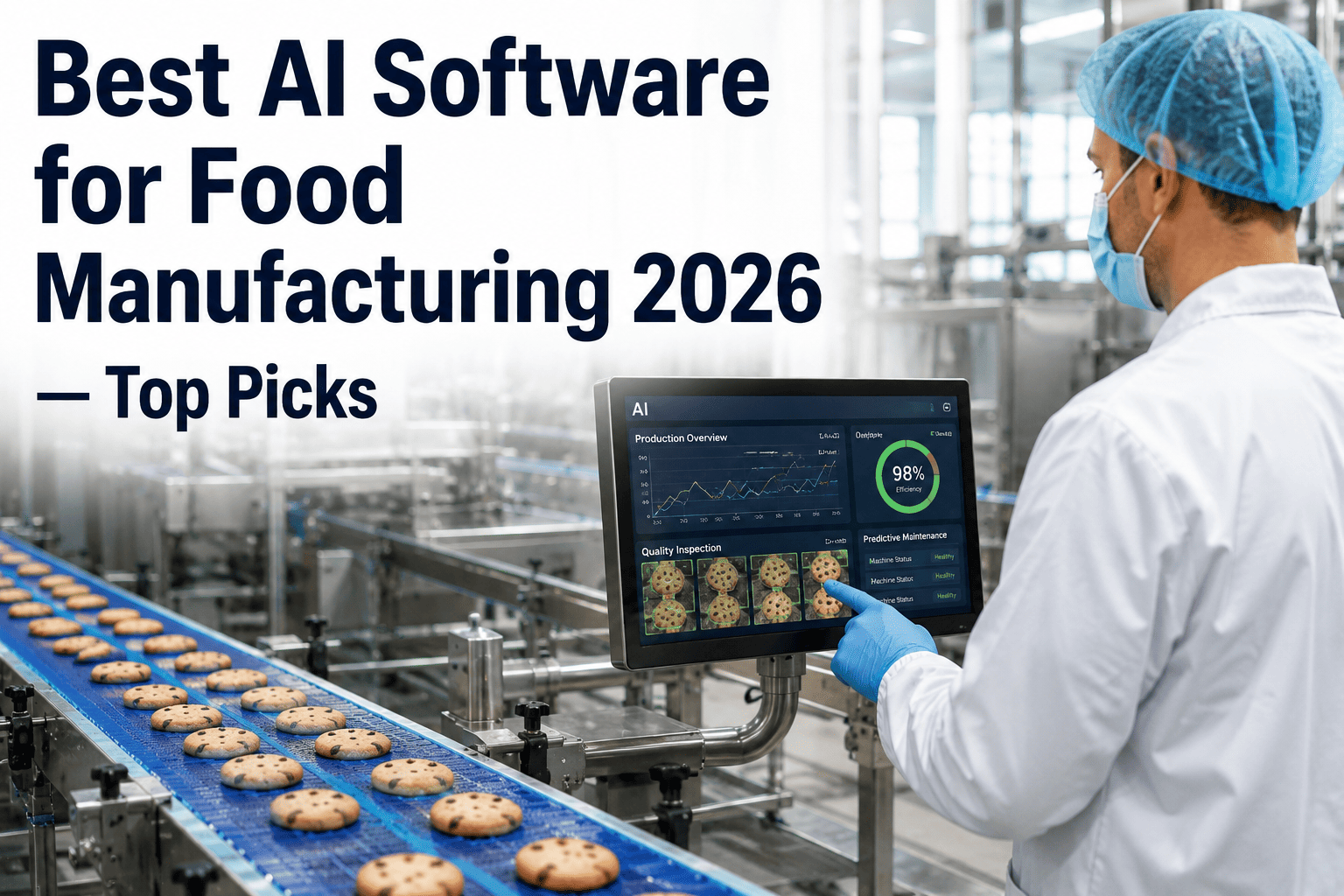
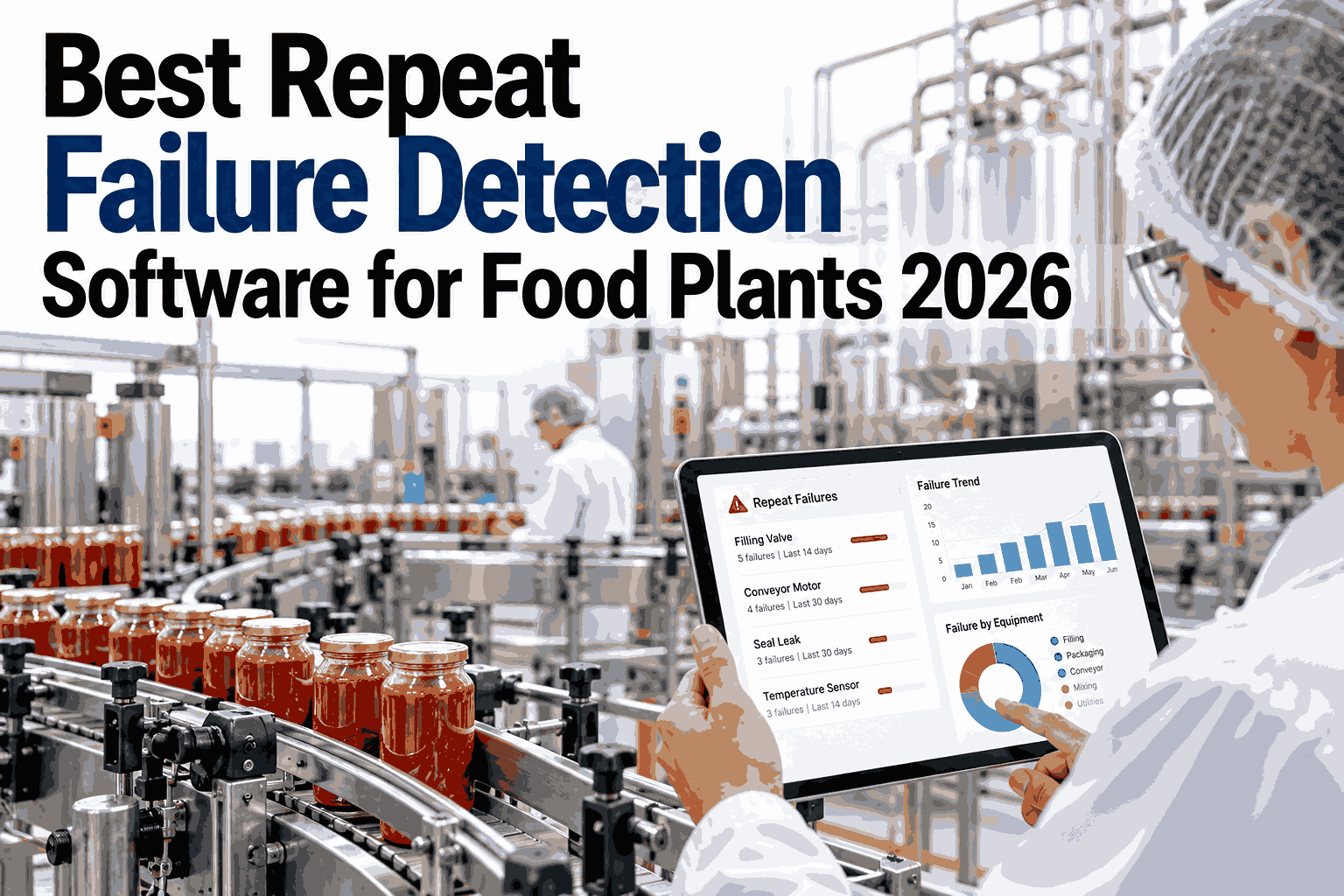
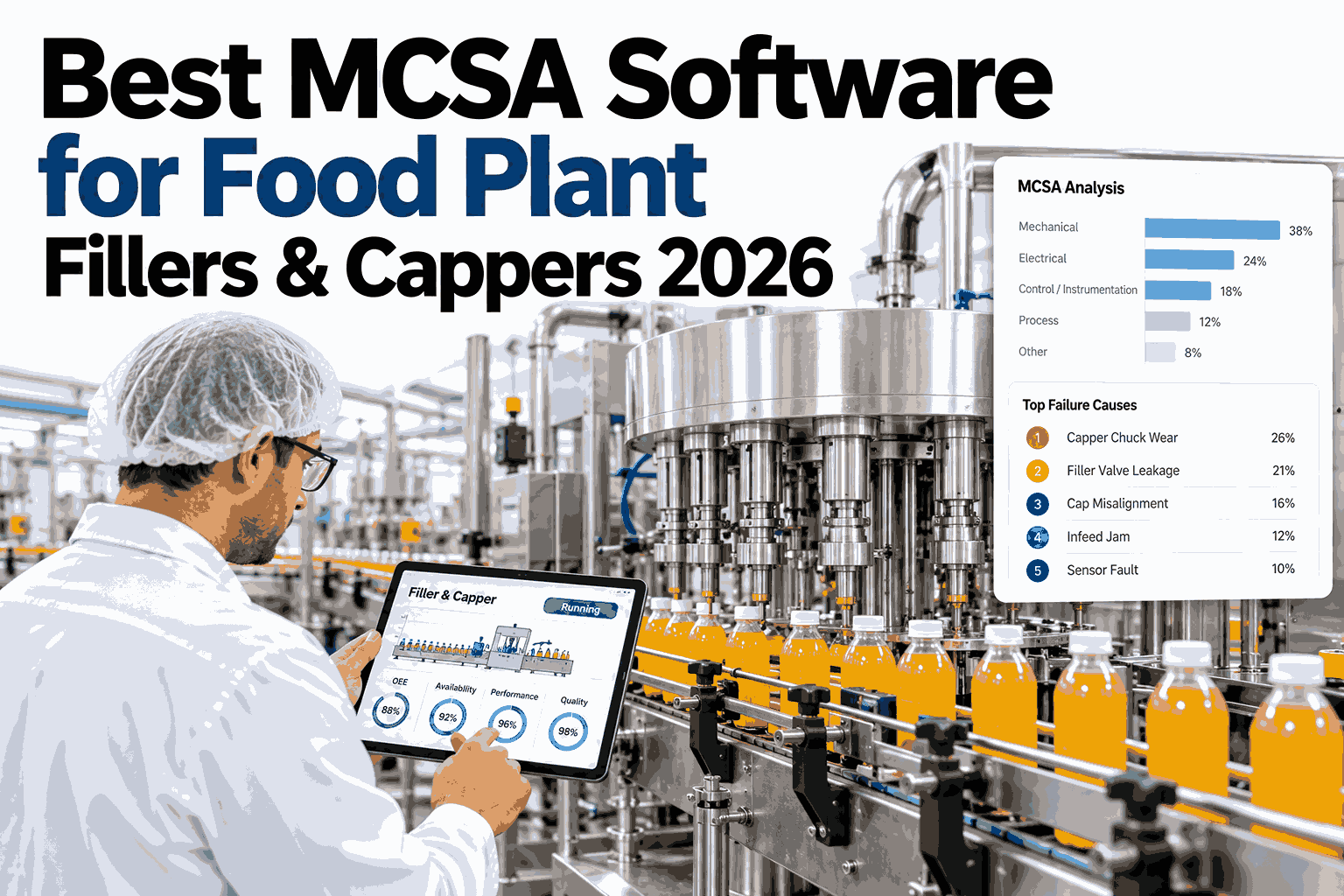
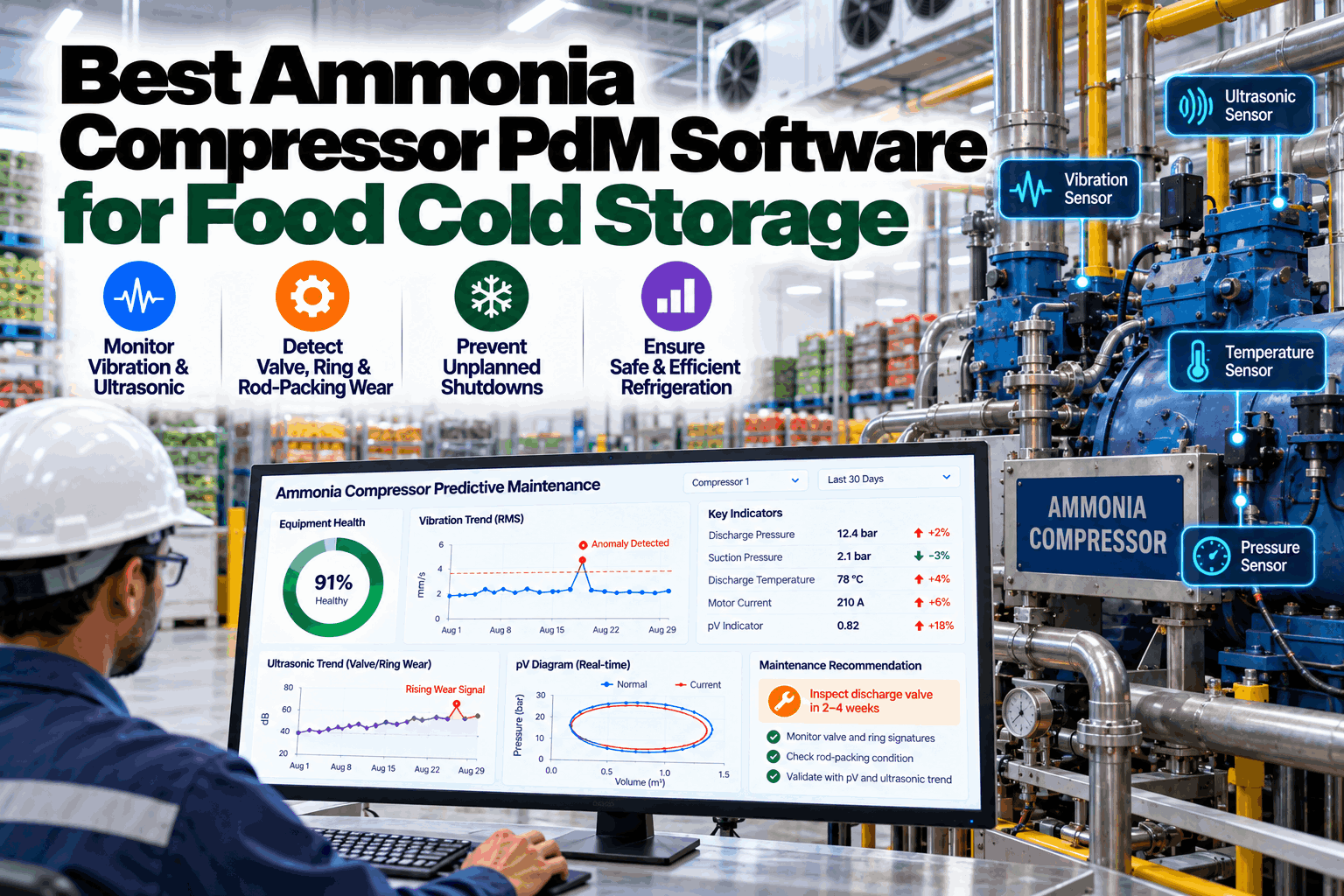
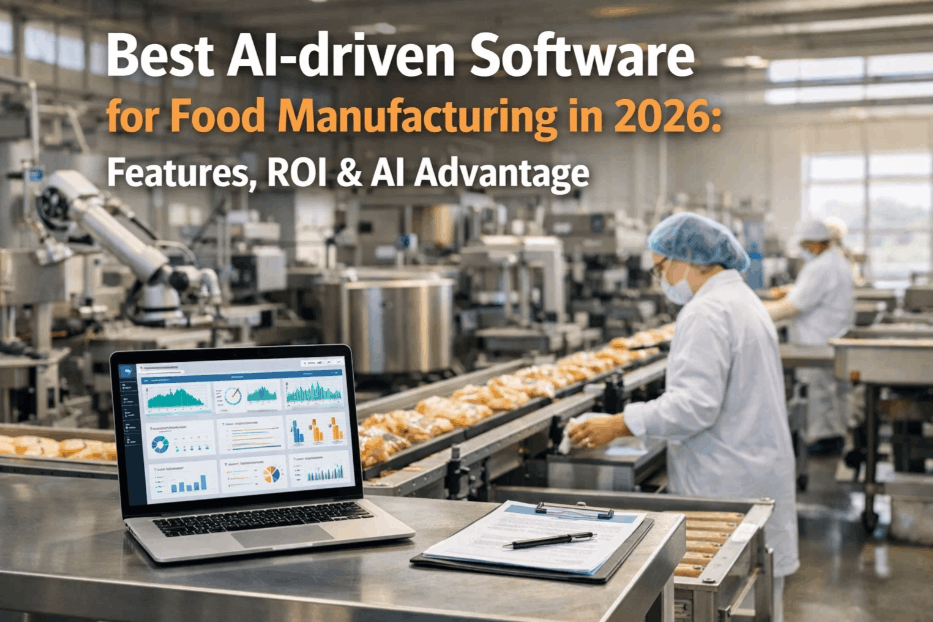
A plant manager evaluating AI software for the first time usually starts with a demo that looks impressive on a laptop and has almost nothing to do with what happens on a real production floor with real sensor noise, shift changes, and ingredient variability. The gap between a polished pitch and a system that actually holds up against three shifts of live throughput is where most food manufacturing AI purchases go wrong, and it is rarely obvious until months after the contract is signed. This guide breaks down what "AI software for food manufacturing" actually covers in 2026, the capability categories worth paying for, and a scoring framework you can use before you sit through another vendor call, including where a platform like iFactory's support team fits into that evaluation.
2026 BUYER'S GUIDE
AI Software for Food Manufacturing, Without the Marketing Fog
Forecasting, vision inspection, scheduling, and anomaly detection are being sold under one umbrella term. Here is how to tell which category actually solves your problem, and what to check before you sign anything.
WHY THIS IS ON EVERY PLANT'S AGENDA NOW
Food Manufacturers Are Not Buying AI for Its Own Sake
The pressure driving AI adoption in food and beverage plants in 2026 is not novelty, it is margin. Ingredient cost volatility has made every percentage point of yield matter more than it did five years ago, labor shortages on quality and inspection lines have made manual checks harder to staff consistently, and retailer and regulatory scrutiny on traceability has tightened enough that a slow paper trail is now a genuine commercial risk. AI software is being adopted specifically where it replaces a manual bottleneck that was already becoming unsustainable, not as a general modernization exercise.
62%
of food and beverage manufacturers report piloting at least one AI-driven quality or planning tool as of 2026
1 in 3
pilots stall before scale-up because the platform could not integrate cleanly with existing plant systems
90 Days
is the realistic window to see measurable results from a well-scoped AI pilot on a single production line
THE FIVE CAPABILITY CATEGORIES
What "AI Software" Actually Means on a Food Production Floor
Vendors use the same term to describe very different tools. Before comparing brands, sort the capability you actually need into one of these categories, because the evaluation criteria, integration requirements, and expected payback period are different for each one.
01
Quality and Vision Inspection
Camera and sensor-driven models that catch defects, contamination, or fill inconsistencies faster and more consistently than manual line checks.
02
Yield and Process Optimization
Models that tune recipe and process parameters within validated ranges to reduce give-away and improve batch consistency.
03
Demand-Driven Scheduling
Planning engines that replan production against live orders, line status, and inventory rather than a static weekly schedule.
04
Anomaly and Predictive Maintenance
Multivariate models watching sensor patterns across equipment to catch drift before it becomes unplanned downtime.
05
Traceability and Compliance
Systems that link ingredient, batch, and shipment data automatically, cutting the time it takes to answer an audit or recall request.
Not Sure Which Category Fits Your Bottleneck?
A short call is usually enough to figure out whether your problem is a quality, scheduling, or maintenance issue in disguise. Book a demo and walk through it against your actual line data.
BUYER SCORING FRAMEWORK
Score Every Vendor Against the Same Five Criteria
Most procurement teams compare AI vendors on price and feature lists, which tends to favor whoever built the best slide deck. A more reliable comparison scores each vendor against operational criteria that predict whether the tool will still be running a year after go-live.
A SHORTLIST CHECKLIST
Questions to Ask Before You Shortlist Anyone
Use this as a screening pass before a full evaluation. If a vendor cannot answer these clearly and specifically, they are not ready for a food manufacturing environment yet, regardless of how strong their platform looks in adjacent industries.
1Can you name two food or beverage plants running this in production today, not just in pilot?
2What happens to model accuracy when a raw material lot varies outside historical ranges?
3How does the system behave during a network outage or a sensor going offline mid-shift?
4Who owns the data once it leaves our historian, and can we export it at any time?
5What does a realistic 90-day pilot scope look like on a single line, in writing?
FREQUENTLY ASKED QUESTIONS
What Buyers Ask Before Committing to a Platform
Do we need to replace our existing MES or historian to adopt AI software?
No, most well-built AI platforms are designed to sit alongside existing MES, SCADA, and historian systems rather than replace them, pulling data through standard connectors instead of requiring a rip-and-replace project. Replacing core plant systems just to enable an AI pilot is usually a sign the vendor's integration layer is not mature enough for a real production environment.
Book a demo to see how iFactory connects to systems you already run.
How long before an AI pilot shows measurable results on the floor?
A properly scoped pilot on a single line, with a clearly defined metric like defect catch rate or schedule adherence, should produce measurable results within 60 to 90 days. Pilots that run longer than that without any usable output are usually stuck on a data integration problem rather than a modeling one, which is worth flagging early rather than waiting it out.
Contact our support team to discuss a realistic pilot timeline for your line.
What is the difference between generic industrial AI and food-specific AI software?
Generic industrial AI is typically trained and tuned around mechanical or electrical process variables common across manufacturing broadly, while food-specific platforms are built around variables like moisture content, viscosity, microbial risk windows, and shelf-life sensitivity that behave very differently from a metal stamping or assembly process. A platform without food-specific context tends to produce technically correct but operationally unhelpful recommendations.
Book a demo to see food-specific modeling in action.
Can smaller or mid-size food plants realistically afford this, or is it only for large manufacturers?
Pricing and deployment models have shifted enough by 2026 that mid-size plants can adopt a scoped single-line pilot without the enterprise-wide budget that used to be required, since most modern platforms price around specific use cases rather than a full-site license. The more important question is usually whether the plant's existing data infrastructure is ready, not whether the budget exists.
Contact our support team to assess your current data readiness.
What is the biggest reason food manufacturing AI pilots fail to scale past one line?
The most common reason is that the pilot was scoped around a demo-friendly use case rather than the plant's actual bottleneck, so the results look good but do not translate into a business case that justifies expansion. A close second is poor data integration that required manual workarounds during the pilot, workarounds that simply do not survive being applied across multiple lines.
Book a demo to scope a pilot around your real constraint instead of a generic use case.
See Where iFactory Fits Against Your Shortlist
Bring your current vendor comparison to the call. We will walk through where iFactory fits, and where it honestly does not, against your specific bottleneck.