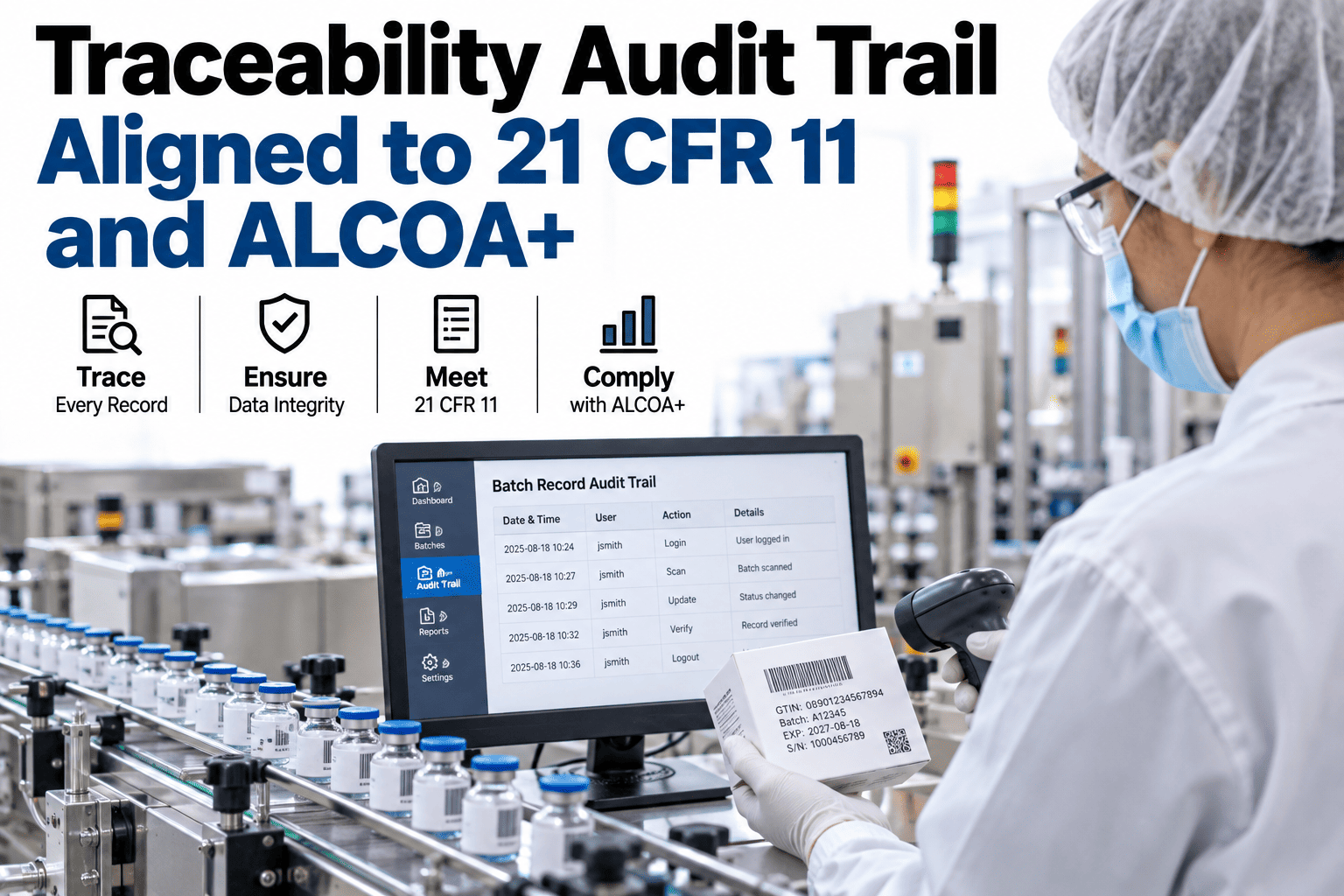
Searching for the best HACCP documentation software in 2026 turns up dozens of platforms all claiming audit-ready records, but the honest answer to which one actually deserves that claim depends on a small set of concrete, checkable criteria rather than marketing language. A genuinely audit-ready HACCP platform needs to capture critical control point monitoring in real time, flag deviations automatically rather than relying on someone noticing a missed check, and produce a complete, organized record set an auditor can review without a scramble to compile it first. Buyers who score platforms against these specific requirements, rather than a features list alone, consistently end up with software that actually holds up during a real certification audit instead of one that just looked impressive in a demo. Food plants ready to evaluate HACCP documentation software against real audit criteria can start that conversation with iFactory's support team.
The Best HACCP Software Isn't the One With the Most Features. It's the One That Passes Your Next Audit.
iFactory scores against the criteria that actually matter for audit-ready HACCP records: real-time CCP monitoring, automatic deviation alerts, and a complete record set an auditor can review without a scramble.
Why a Features List Doesn't Predict Audit Readiness
Most HACCP software platforms advertise a broad feature list, but the specific capabilities that actually determine whether records survive a real certification audit are narrower and more concrete than a general feature comparison usually captures.
Monitoring Delays Undermine the Whole Record
A platform that logs critical control point checks after the fact rather than at the actual moment of monitoring weakens the contemporaneous record an auditor expects to see.
Deviation Detection Relies on Someone Noticing Manually
Without automatic flagging when a critical limit is exceeded, a missed deviation can go unnoticed until it's too late to take corrective action in time.
Records Exist But Aren't Organized for Audit Review
A platform that stores data but can't compile it into a clean, organized package quickly turns an audit into a scramble regardless of how complete the underlying data is.
Corrective Actions Aren't Linked Back to the Original Deviation
An auditor expects to see a clear chain from deviation to corrective action to verification, and a platform that doesn't link these records automatically makes that chain harder to demonstrate.
Scoring Platforms Against What Actually Matters
A concrete scoring framework, applied consistently across every platform under consideration, replaces a vague sense of "this one seems more complete" with an actual, defensible comparison.
| Criteria | What to Verify | Why It's Load-Bearing |
|---|---|---|
| Real-Time CCP Monitoring | Data logged at the moment of the actual check | Supports a genuinely contemporaneous record |
| Automated Deviation Alerts | System flags out-of-limit readings without manual review | Catches deviations while corrective action is still possible |
| Linked Corrective Action Records | Deviation, correction, and verification connected automatically | Demonstrates the full chain an auditor expects to see |
| Fast, Organized Record Export | Complete record package compiled quickly on request | Prevents an audit from becoming a documentation scramble |
Running a Structured Evaluation Before You Commit
A disciplined evaluation process tests these specific criteria directly rather than relying on a vendor's general claim of audit readiness.
Request a Live Demonstration of Deviation Handling
Watching the system flag and route a simulated out-of-limit reading reveals far more than a slide describing the feature.
Ask for a Sample Audit Record Export
Reviewing an actual compiled record package shows whether the output is genuinely audit-ready or still needs significant manual assembly.
Confirm the Corrective Action Chain Is Actually Linked
Tracing a deviation through to its corrective action and verification record confirms the connection is automatic, not manually maintained.
Verify Real-Time Logging on Your Own Process
Testing the monitoring capability against your specific critical control points rather than a generic demo scenario.
Choose HACCP Software That Passes a Real Audit, Not Just a Demo
iFactory builds real-time CCP monitoring, automatic deviation alerts, and audit-ready record export into one connected HACCP documentation system.
A Composite Scenario: The Platform That Looked Complete Until Audit Day
A composite meat processing facility had selected a HACCP documentation platform primarily based on its extensive feature list and polished interface, only to discover during its first GFSI-aligned certification audit under the new system that compiling a complete, organized record set for the auditor took the quality team the better part of two full days, far longer than the audit window comfortably allowed.
A closer review after the audit revealed the platform stored all the necessary data but had never actually been designed around fast, organized export, requiring manual compilation across several separate report screens every time a complete record was needed. The facility switched to a platform specifically evaluated against real-time monitoring, automated deviation alerts, and fast record export, and their next audit's record compilation took under twenty minutes for the same scope of information.
Common Mistakes When Choosing HACCP Documentation Software
Choosing Based on Feature List Length Alone
A platform with many features can still fail the specific, concrete requirements that determine real audit readiness.
Never Testing an Actual Record Export During Evaluation
A sample export reveals whether records are genuinely audit-ready or will require manual compilation under audit-day pressure.
Assuming Deviation Alerts Are Automatic Without Confirming It
Some platforms market deviation tracking that still relies on a person manually reviewing data to catch an out-of-limit reading.
Overlooking Whether Corrective Actions Link Back to Deviations
A disconnected corrective action log makes it harder to demonstrate the full chain an auditor expects to review.
Is Your Plant Ready to Evaluate HACCP Software Against Real Audit Criteria
You've documented your specific critical control points
Knowing your actual CCPs lets you test real-time monitoring against your specific process rather than a generic demo.
You're prepared to request a live deviation-handling demonstration
Watching the system respond to a simulated deviation reveals far more than a feature description alone.
You can review a sample audit record export before committing
Seeing the actual compiled output confirms whether records are genuinely ready for an auditor or need manual assembly.
You know which certification standards your next audit will test against
Understanding your specific audit requirements keeps the evaluation focused on criteria that actually matter for your situation.
Frequently Asked Questions
What's the single most important feature to test before buying HACCP documentation software?
Requesting a sample audit record export is often the single most revealing test, since it shows directly whether the platform can compile a complete, organized record package quickly or whether that compilation still requires significant manual work across multiple screens. A platform that performs well on this specific test tends to also handle the other core requirements, like real-time monitoring and deviation alerts, competently, since these capabilities are usually designed together as part of a coherent audit-readiness approach. Plants wanting help structuring this kind of evaluation can talk to iFactory support.
How do we confirm deviation alerts are truly automatic and not just a manual review feature?
The clearest test is asking the vendor to simulate an out-of-limit reading during a live demonstration and observing whether the system flags it immediately without requiring someone to manually review the data first, since some platforms market deviation tracking that still depends on a person checking a report periodically. A genuinely automated system should generate an alert the moment the reading is logged, not sometime later when a report happens to be reviewed.
Does the best HACCP software for a large processor differ from what a smaller plant needs?
The core audit-readiness criteria, real-time monitoring, automated deviation alerts, and fast record export, matter equally regardless of plant size, but the complexity of the critical control points being monitored and the volume of daily records involved can influence which specific platform scales appropriately for a given operation. A smaller plant doesn't need less rigorous monitoring, just a system scoped appropriately to its actual production volume and complexity.
Can HACCP documentation software integrate with our existing traceability and quality systems?
Many modern platforms are designed to connect HACCP monitoring with broader traceability and quality management data, which is generally preferable to a standalone HACCP tool disconnected from lot tracking and other quality records, since auditors increasingly expect to see these systems referencing the same underlying production data. Book a demo to see how HACCP documentation connects with traceability records in one system.
How long should it realistically take to switch HACCP documentation platforms if our current one isn't audit-ready?
A well-scoped transition for a single facility typically takes a few weeks to a couple of months, depending on how many critical control points need to be configured and how much historical data needs to be migrated or archived from the previous system. Prioritizing the highest-risk critical control points first, rather than migrating everything simultaneously, tends to produce a smoother transition with less disruption to ongoing monitoring.
Get HACCP Documentation That Actually Holds Up on Audit Day
iFactory combines real-time CCP monitoring, automated deviation alerts, and fast audit-ready record export in one connected platform.