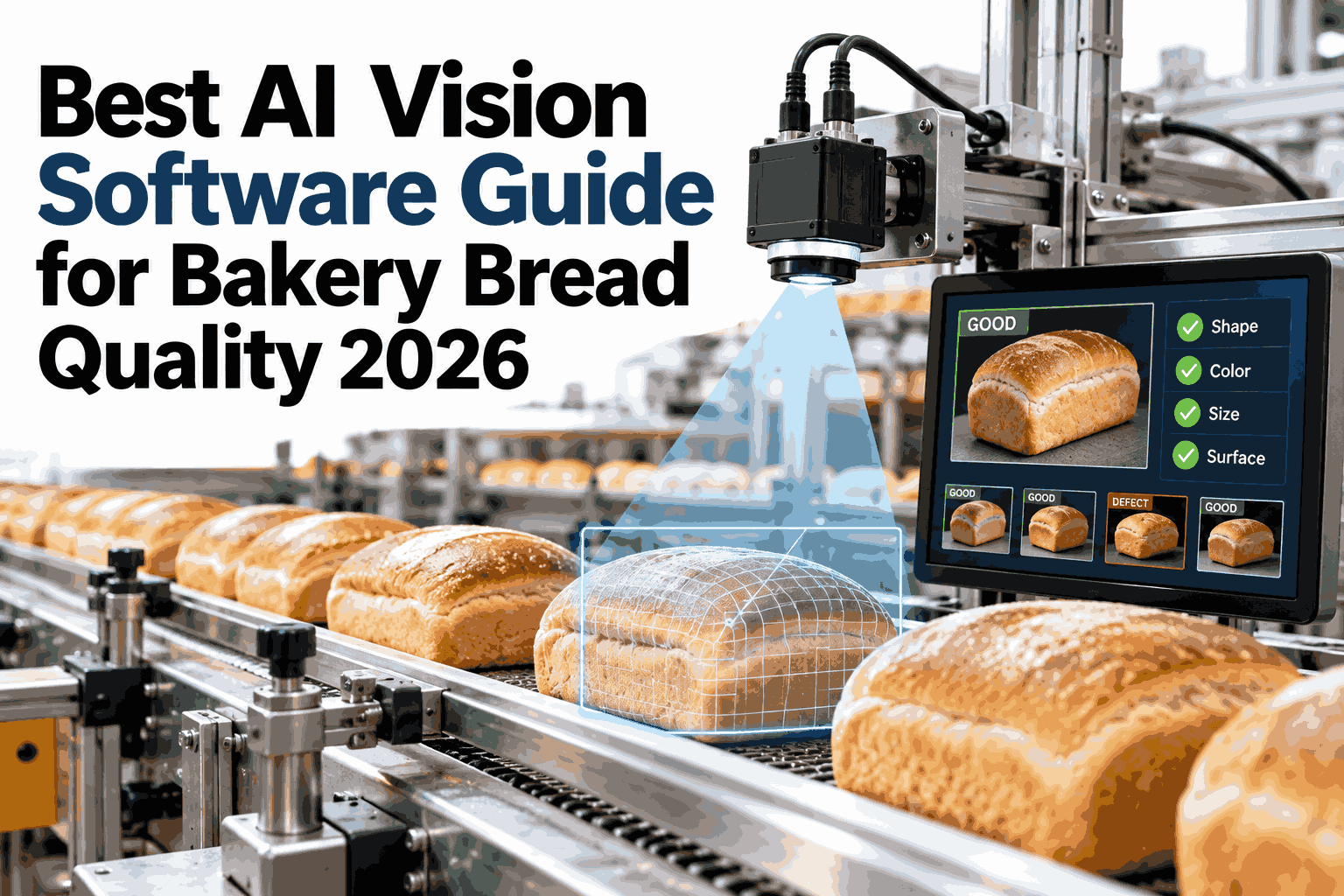
Bread lines running at 400 loaves a minute leave no room for a visual spot check every few pans. Split length, crust color, and crumb set all drift together as oven zones heat unevenly, and by the time a quality tech notices a pattern on the rack, hundreds of loaves have already left the oven. Bakeries comparing vision systems need to know which platform actually attributes a defect to the zone that caused it, not just which one flags a bad loaf. Compare bakery vision requirements with the iFactory AI team before shortlisting a system.
The Best AI Vision Software for Split, Crust, and Bake Consistency
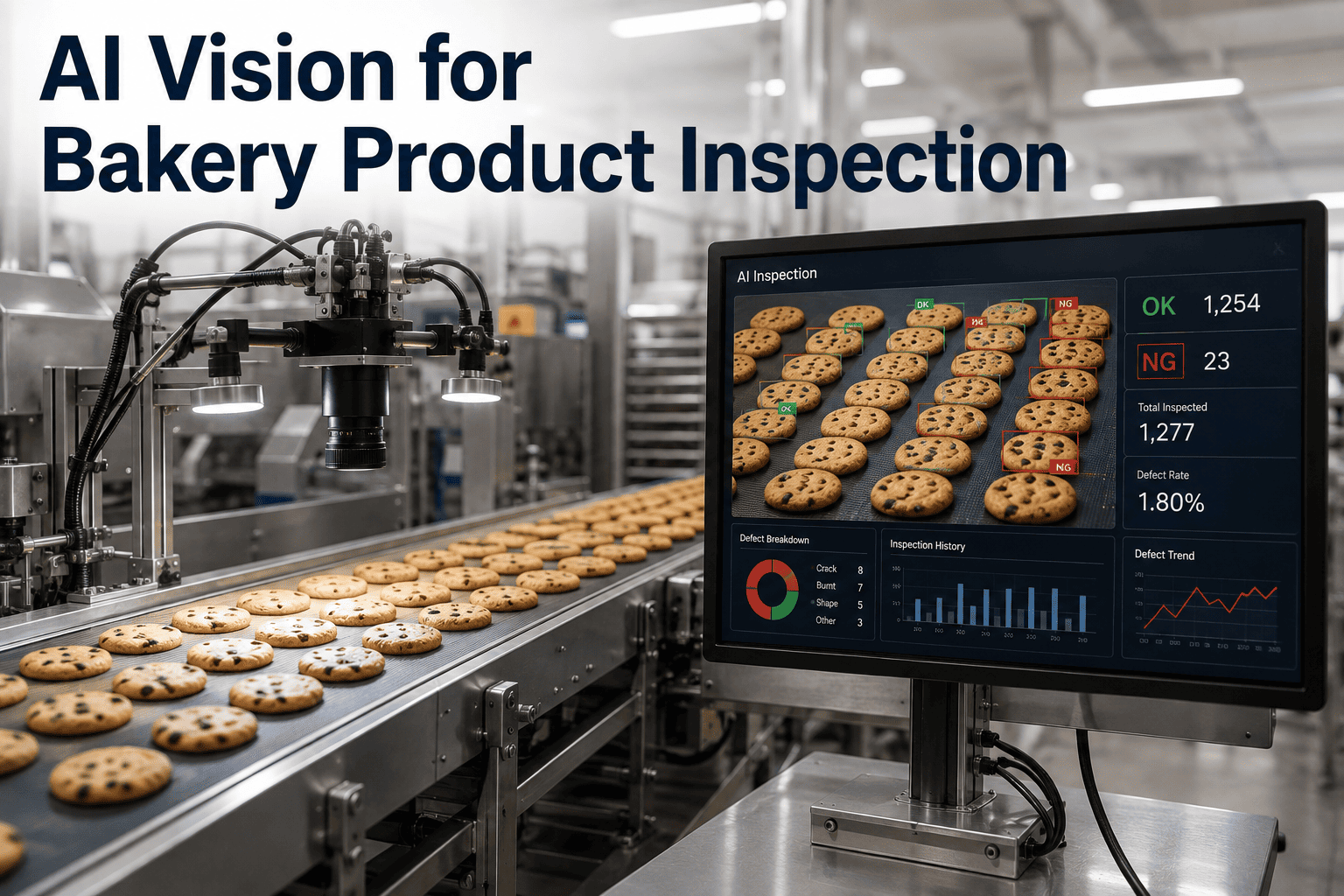
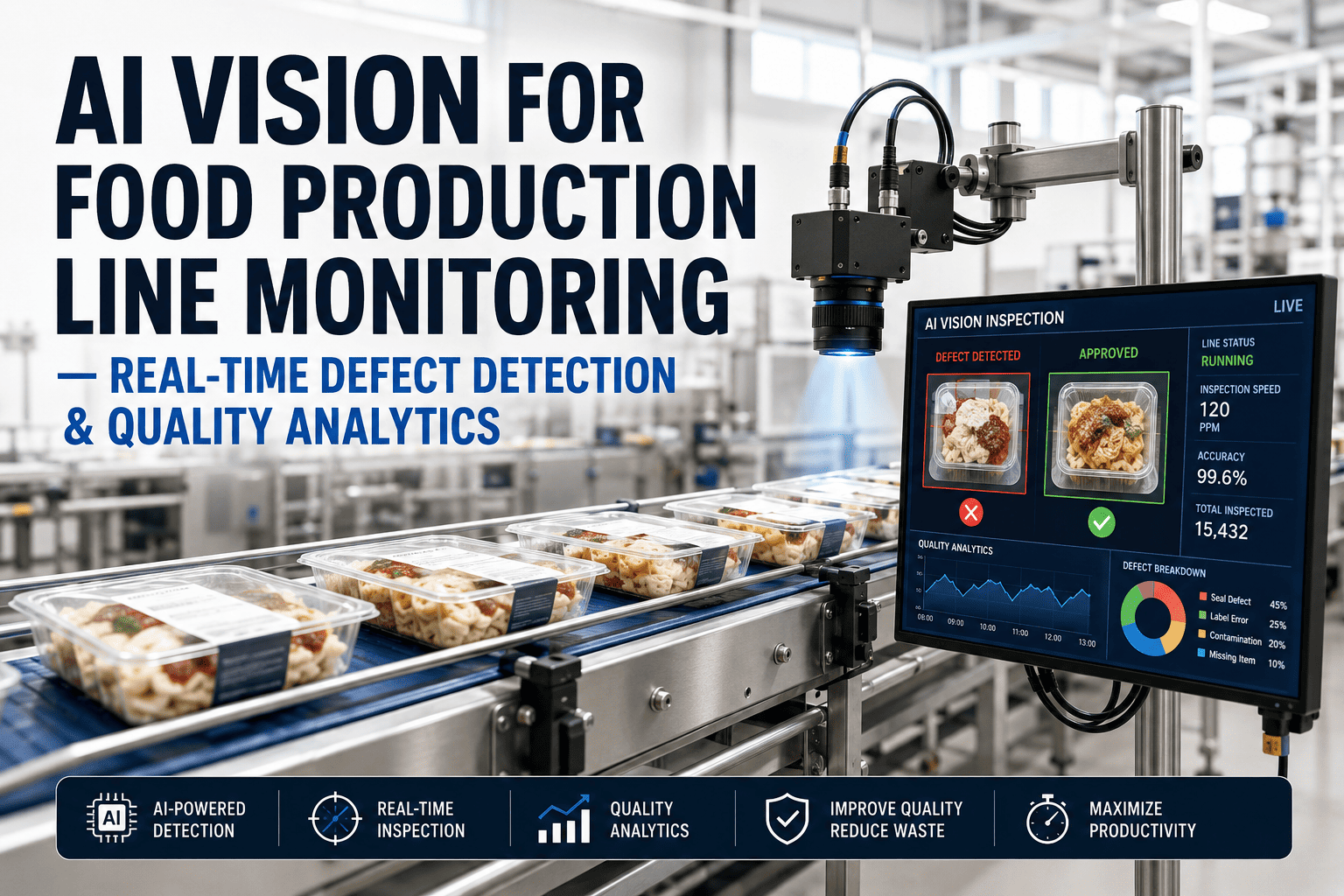
iFactory AI reads split length, crust color, and bake uniformity on every loaf at full line speed, and ties each miss back to the oven zone that caused it.
Why Bread Quality Drifts Faster Than Inspectors Can Catch It
A bread line does not fail all at once. It drifts, loaf by loaf, as burner zones heat unevenly and proof times shift, and three defects carry most of the complaint and rework cost.
Split Length Variation
Scoring depth and oven spring combine to open the top split. Too short looks dense on the shelf, too long and the loaf reads as torn rather than scored.
Crust Color Drift
Burner zones that run hot or cool push crust color outside the approved range, and the shift is gradual enough that a single glance never catches the trend.
Bake Consistency
Loaves from the same batch can leave the oven with different internal set and surface texture when heat distribution across the deck is not even.
At 400 loaves a minute, a defect that starts in one zone has already repeated hundreds of times before a manual check on the packing line would ever see it.
What Separates a Good System From the Best One
Most vision platforms can flag an obviously bad loaf. The difference between an average system and the best one shows up in four areas that matter once the line is running at full speed.
Full-Speed Frame Capture
Cameras and lighting must resolve every loaf at 400 per minute without motion blur, not a sampled subset that misses loaves between frames.
Per-Zone Attribution
A defect reading should map back to the oven zone, burner, and pan position that produced it, not just report a generic failed loaf count.
Measured Values, Not Just Pass or Fail
Split length in millimeters and crust color on a defined scale give a trend line, while a bare pass or fail tells you nothing until the line is already out of spec.
Closed-Loop Alerting
The best platforms push a zone-specific alert to the oven operator in seconds, so a burner adjustment happens before the drift becomes a batch of rework.
Per-Zone Attribution: Finding the Burner Behind the Defect
An industrial deck oven has multiple heating zones along its length, and each one can run slightly hot, cool, or uneven without anyone noticing until the pattern repeats on the rack.
In this illustrative read, zone four is the source of a crust color drift that would otherwise have looked like a random scatter of bad loaves across the whole batch. Attribution turns a vague complaint into a single burner to check.
Watch a Live Loaf Get Attributed to Its Oven Zone
Book a 30-minute session and see split length, crust color, and zone attribution running on a bread line at full speed.
Split Length: Reading the Top Score in Millimeters
Split length is measured against a target window rather than a single ideal number, since ovens, proof humidity, and scoring blades all introduce some natural variation.
A loaf that lands outside the target window still bakes and still ships unless someone catches it, and the cost of a torn or closed split shows up later as a shelf return rather than a line rejection.
Crust Color: Mapping the Approved Range
Crust color is read on a defined scale rather than judged by eye, which removes the inconsistency that comes from different inspectors on different shifts calling the same loaf differently.
Two shades sit inside the approved range, and anything outside it gets logged to the zone and burner that produced it, not just added to a rejection pile.
Manual Checks vs AI Vision at Full Line Speed
| Capability | Manual Spot Check | AI Vision Inspection |
|---|---|---|
| Loaves Checked | A sampled few per shift | Every loaf, every pass |
| Split Length | Judged by eye | Measured in millimeters |
| Crust Color | Compared to memory | Read against a fixed scale |
| Defect Source | Rarely traced to a zone | Attributed to zone and burner |
| Alert Speed | After the next shelf walk | Within seconds of the pass |
Manual checks still matter for taste, texture, and judgment calls. Vision inspection exists to catch the repeatable drift that a sample can never see in time.
A Composite Scenario: One Zone, One Week
A mid-size bakery running two bread lines noticed a rise in shelf complaints about dark crust on one product. The figures below are an illustrative composite, shown as a relative index with the starting point set at 100.
Without attribution, the team rotated through recipe and proof theories for days. With zone-level readings, the cause traced back to one burner in zone four within the first shift of monitoring.
What iFactory AI Adds to Bread Line Inspection
iFactory AI is smart manufacturing and industrial software that reads split length, crust color, and bake consistency on every loaf and ties results back to the oven zone that produced them.
iFactory AI arrives pre-configured on an NVIDIA server that ships racked and ready with software pre-loaded. Rack it, connect power and Ethernet, and the bread line camera begins attributing defects by zone. Scope covers cabling, network, ERP and MES integration, team training, and 24x7 remote monitoring.
Bakery Vision Self-Check
Use these checks to see where your current inspection process depends on a sample rather than the full line.
Frequently Asked Questions
Can vision software keep up with 400 loaves a minute?
Yes, when the camera and lighting are specified for that line speed. Frame capture resolves every loaf rather than a sampled set. See full-speed capture running on a real line in a short walkthrough.
How does zone attribution actually work?
Each loaf is tracked back to its pan position and the oven zone it passed through, so an out-of-range reading links to a burner rather than a generic failed count. Ask how zone mapping is set up on your oven with the iFactory AI team.
Does this replace manual quality checks?
No. Vision inspection catches repeatable drift across every loaf, while manual checks still cover taste, texture, and judgment calls that a camera cannot make. The two work together rather than replacing each other.
What counts as the approved crust color range?
The range is configured per product against your own specification, not a fixed universal scale. Once set, every loaf is read against that same range regardless of shift or inspector. Walk through setting a crust color range for your product.
How long does implementation take?
iFactory AI is delivered turnkey and is typically live in 6 to 12 weeks. The server arrives pre-configured, and scope covers cabling, network, ERP and MES integration, training, and remote monitoring. Plan a rollout timeline for your bread line in a 30-minute call.
See the Best Bakery Vision Software on Your Own Line
iFactory AI reads split length, crust color, and bake consistency on every loaf at full speed and attributes defects to the zone that caused them. Book a walkthrough built around your line.