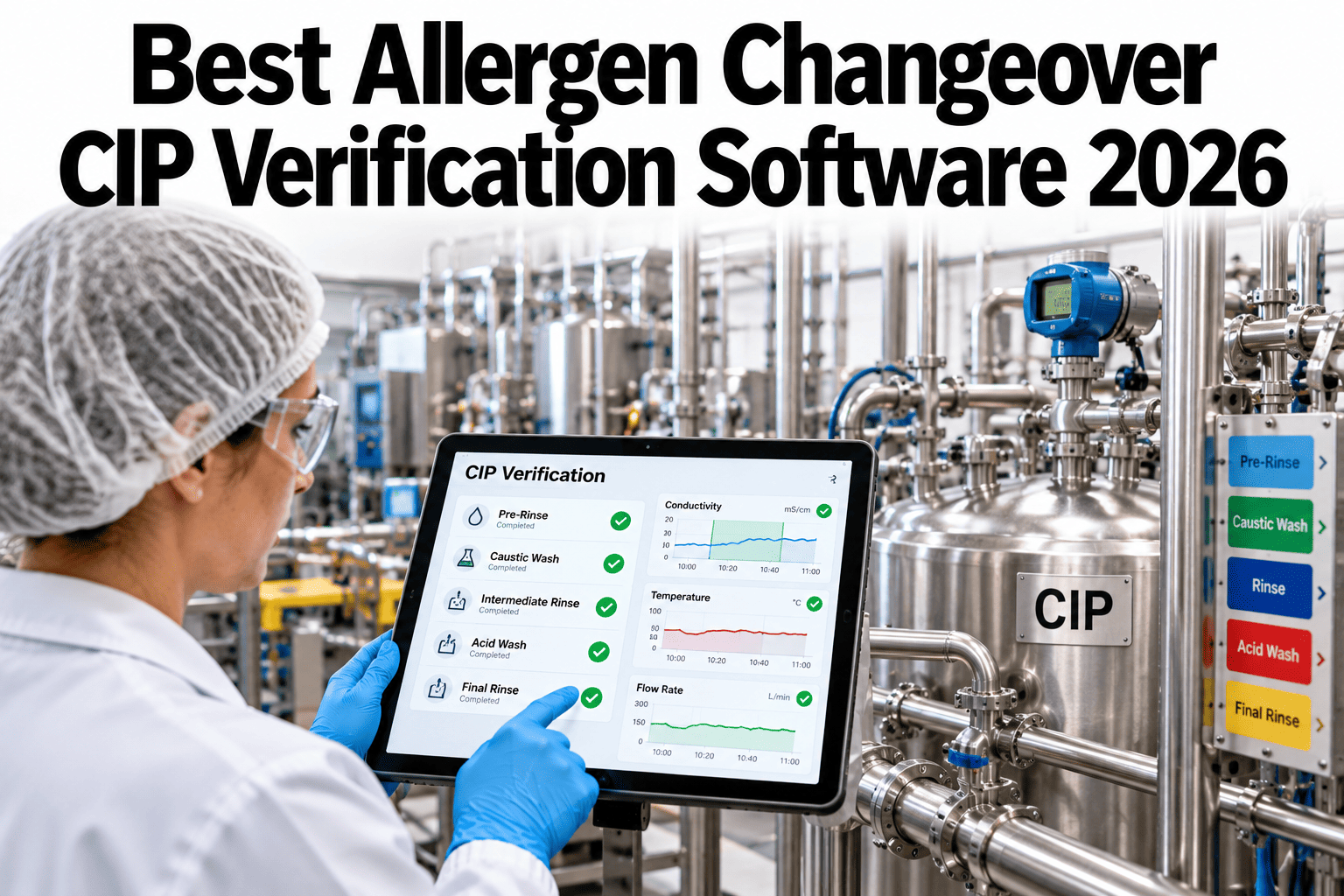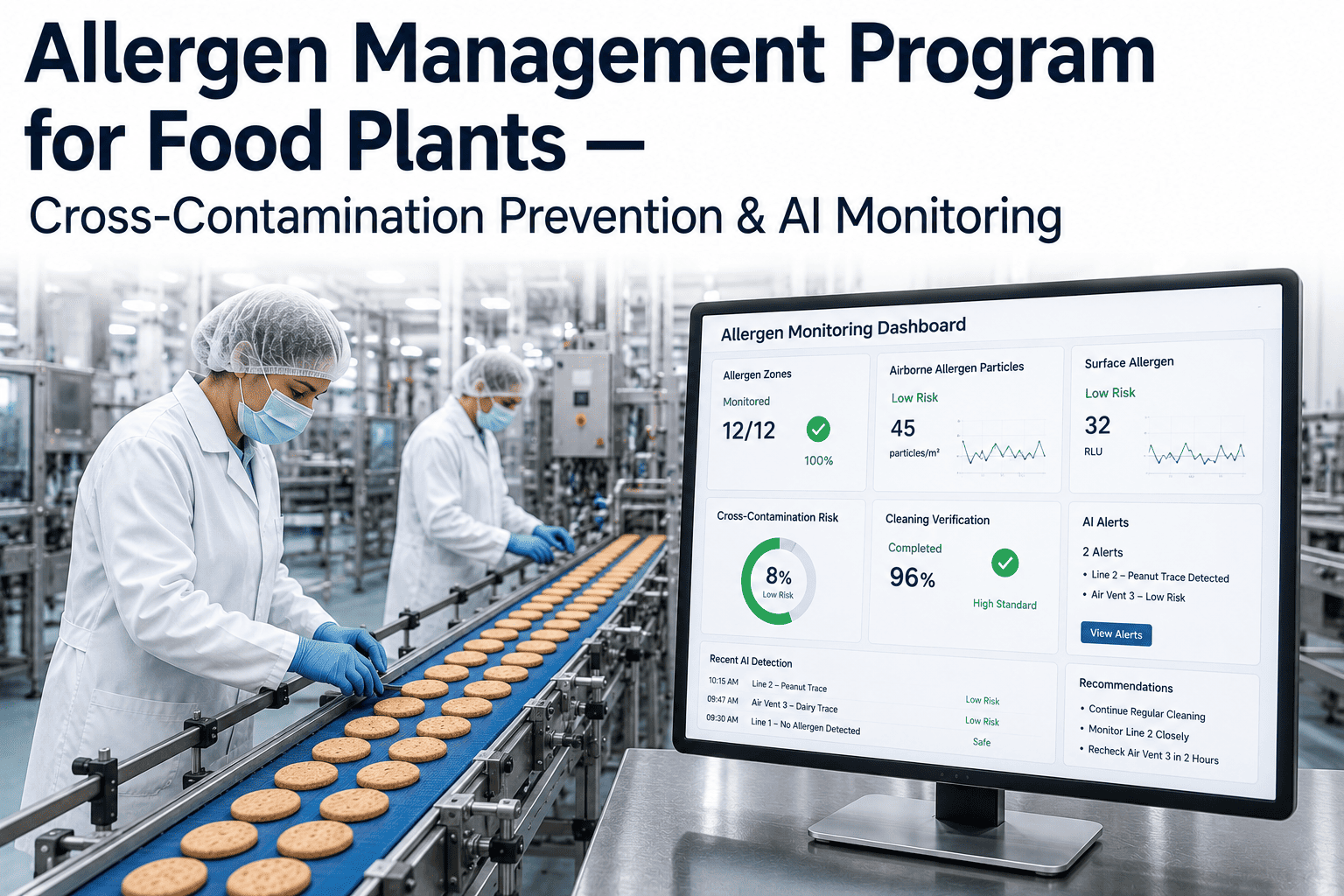
A line that ran peanut butter cups at 6 a.m. and switches to an allergen-free granola bar at 10 a.m. is only as safe as the weakest step between those two runs, and most plants still verify that step with a paper log and a supervisor's signature. Allergen cross-contamination software closes that gap by tying changeover tracking, ATP and ELISA swab results and the final release decision into one evidence trail that holds up when FDA or a customer auditor asks for it. iFactory AI, an on-premise AI platform for manufacturing, builds that trail directly from the swabs and timers a plant already uses, and food safety teams can review their own changeover and swab records against an allergen release model with our team.
One Allergen-Clean Release Record, Not Three Separate Logs
The best allergen cross-contamination software for food plants combines changeover tracking, ATP and ELISA testing, and a defensible release gate into a single, FDA-ready record.
Where Cross-Contamination Actually Gets Through
Most undeclared allergen incidents do not come from a missing control, they come from a control that existed on paper but was not verified before the line restarted. A changeover gets rushed near the end of a shift, a swab result comes back after the next batch has already started, or a visual check is marked done by habit rather than observation. Software cannot replace good sanitation practice, but it can make sure every one of those checks is actually completed and recorded before the line is allowed to run the next SKU.
What a Fragmented Allergen Log Actually Costs
When cleaning, swab results and the release sign-off live in three separate places, a plant pays for that fragmentation twice. The first cost is operational: a supervisor has to hunt down a lab result from a different system before approving a restart, which either slows the line down or tempts someone to approve from memory instead of waiting. The second cost only shows up later, during an audit or an incident investigation, when reconstructing the actual sequence of events means pulling three logs and manually lining up timestamps that were never designed to be compared.
A single connected record removes both costs at once. The supervisor sees everything required for release in one place, and the audit trail already exists in the order the events actually happened, rather than needing to be rebuilt after the fact.
ATP, ELISA and Visual Inspection: What Each One Actually Confirms
| Method | What it confirms | Typical turnaround |
|---|---|---|
| Visual inspection | Gross soil and visible residue removed | Immediate |
| ATP swab | General organic residue below a set threshold | Seconds to minutes |
| ELISA allergen swab | Specific allergen protein below a defined limit | Minutes to send-out lab turnaround |
None of the three methods alone tells the full story. A clean ATP reading does not confirm the absence of a specific allergen protein, and a visual check cannot detect residue at the microscopic level ELISA is built to catch, which is why a release decision built on only one of them is weaker than it looks.
From Changeover Start to a Defensible Release Decision
See Your Own Changeover Mapped to a Release Gate
Share your current allergen SOP and swab protocol, and iFactory AI will show how it would convert into one evidence-backed release record.
Setting the Right Threshold for Each Allergen
Not every allergen needs the same test or the same threshold, and treating them all identically is one of the quieter ways a control program weakens itself. A plant running peanut, milk and gluten on the same line needs a separate ELISA threshold for each, set with input from quality and, where relevant, the specific customer's own specification, since retailer requirements sometimes set a tighter limit than the regulatory minimum.
Getting this matrix right once, at the start of a rollout, saves a great deal of rework later. A threshold that is too loose risks a real miss; one set too tight without reason generates false failures that slow the line down for no food-safety benefit and teaches the floor to see the testing step as a nuisance rather than a safeguard.
What Changes When the Three Logs Become One
The Same Record, Read by Three Different People
What a History of Allergen Records Makes Possible
A single allergen-clean release record proves one changeover was handled correctly. A history of them, built up over months, starts answering a different and more useful question: which changeovers, SKUs or shifts carry the most risk of a failed swab, and whether that risk is trending up or down as training and equipment age change.
That trend view is what turns an allergen control program from a compliance exercise into something that actually prevents incidents before they happen, by pointing a food safety team at the specific changeover pattern most likely to produce the next failure rather than treating every changeover as equally risky.
Mistakes That Weaken an Allergen Control Program
What a Plant Needs Before the First Release Gate Goes Live
Standing up a connected allergen record does not require replacing existing sanitation or lab processes. It requires three things already present in most plants: a documented allergen changeover SOP for each affected line, a defined swab and threshold protocol per allergen, and agreement on who holds authority to override a hold if one is ever truly needed for a documented exception.
Most of the early work is simply writing down what already happens in practice, in a form the system can check against, rather than designing a new sanitation program from scratch.
What a Food Safety Auditor Checks First
What Food Plants Ask About Allergen Cross-Contamination Software
Make Your Next Audit a Five-Minute Review
Book a session with iFactory AI to see allergen cross-contamination control built around your own changeover and swab protocol.