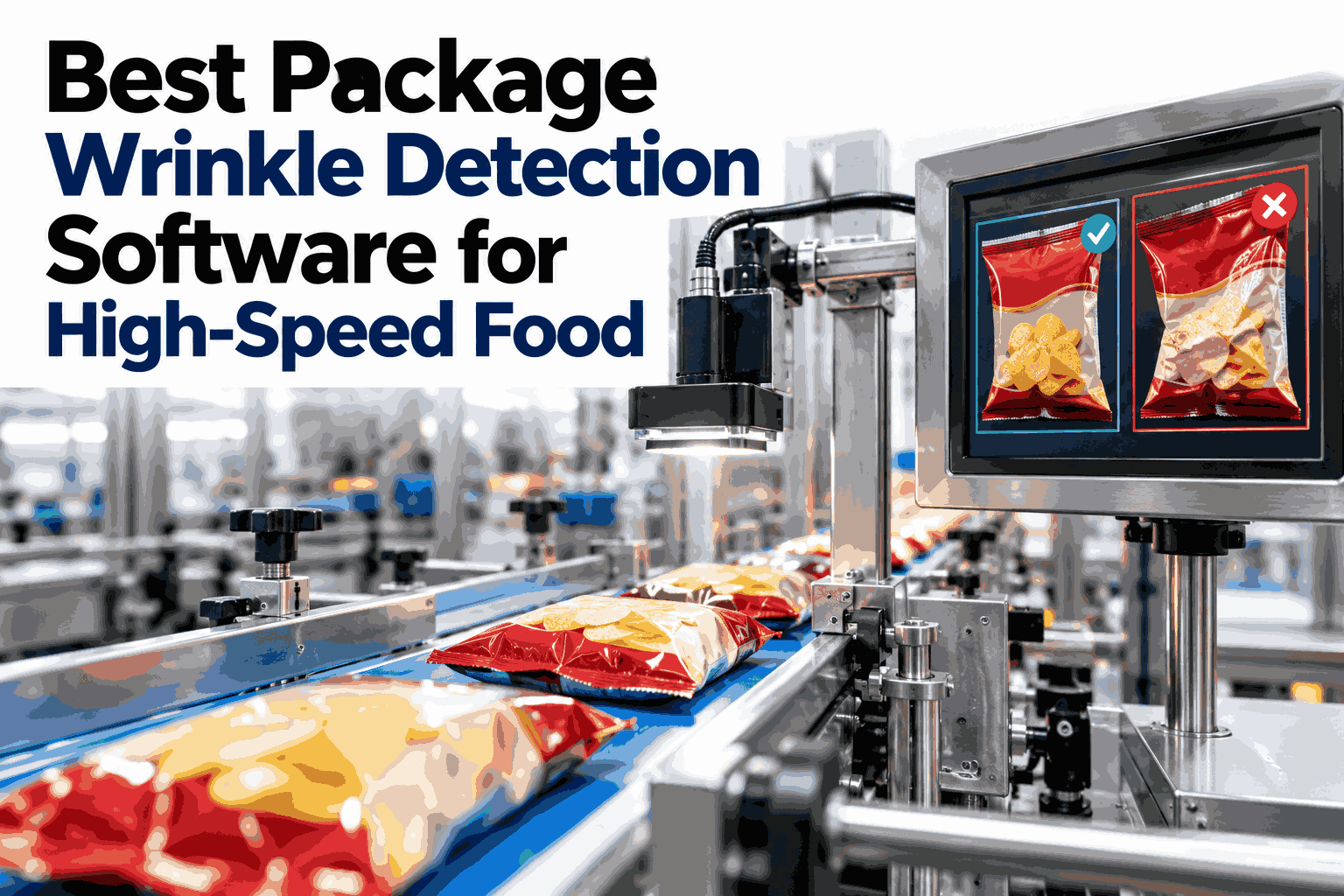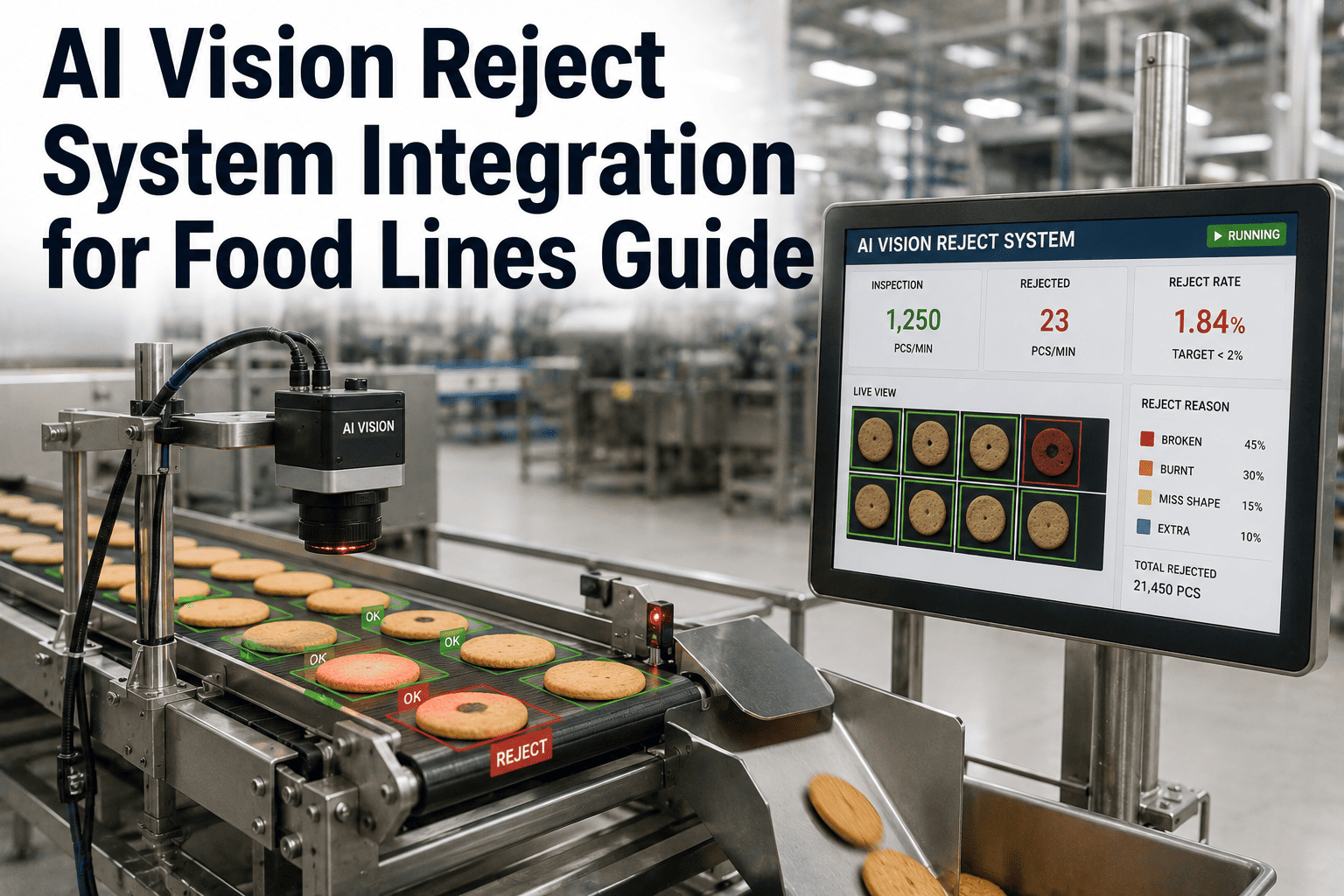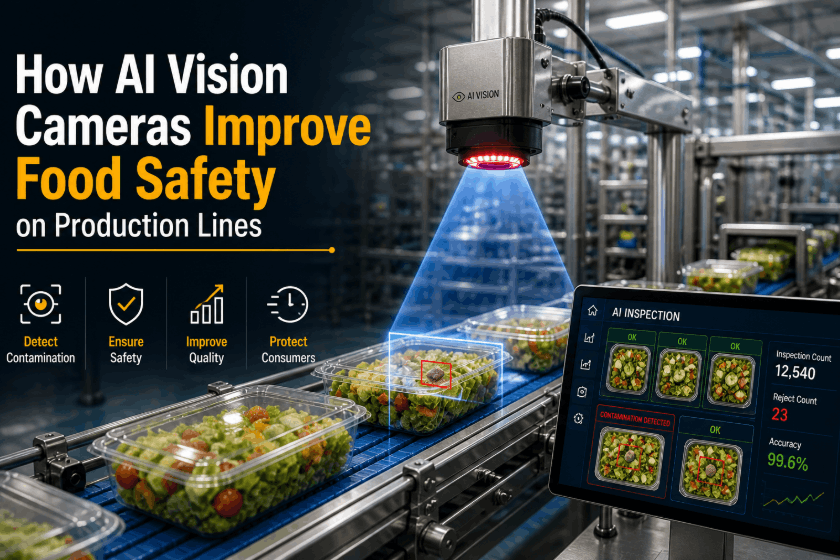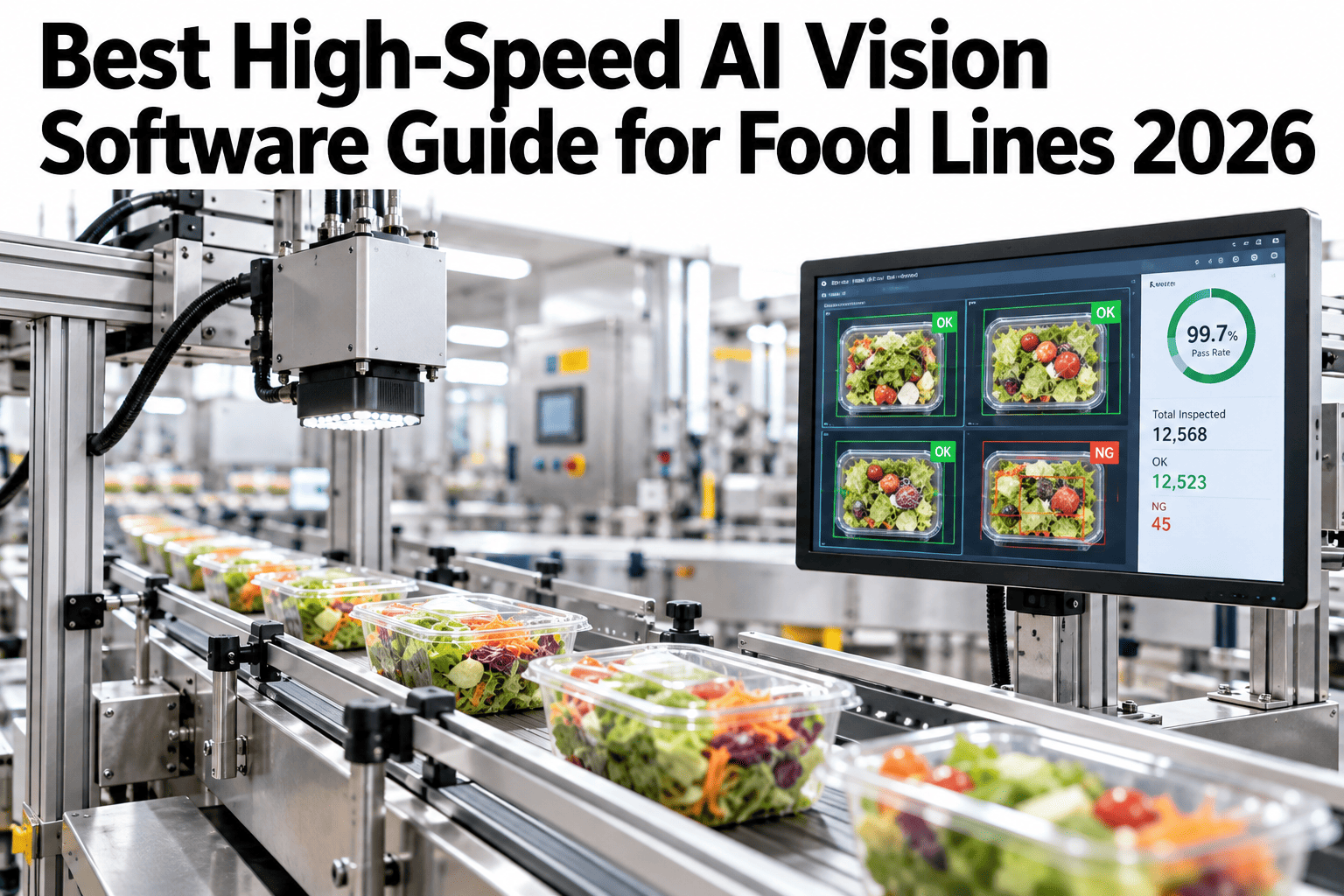
A food line running above 600 units per minute gives a vision system roughly 100 milliseconds to capture an image, classify it, and trigger a reject before the product physically moves past the point where rejection is still possible. That budget has to cover camera capture, model inference and actuator response, with no room left for a system that was designed for a line running a tenth of that speed. Most "AI vision" software marketed broadly was never built against this constraint, and the gap only shows up once it's running on a real high-speed line. Plants can review their own line speed against this latency budget in a short session.
100 Milliseconds Is the Entire Budget Above 600 UPM
iFactory runs capture, classification and reject actuation within the latency budget your line speed actually demands.
Why Line Speed Changes What "Fast Enough" Means
A vision system that performs well at 100 units per minute can fail outright at 600, not because the model got worse, but because the physical window to act on a detection shrank to a fraction of what it was.
| Stage | Typical Latency Budget | Risk if Exceeded |
|---|---|---|
| Image capture | Encoder-triggered, synchronized to product position | Blurred or mistimed image, unusable for classification |
| Classification | Edge inference, no round trip to the cloud | A cloud round trip alone can exceed the entire budget |
| Reject actuation | Physical actuator response time | A correct detection arrives too late to divert the product |
Find Out If Your Current System Fits the Budget
Book a 30-minute session and iFactory will measure your current system's latency against your actual line speed.
What a High-Speed Line Actually Requires
Encoder-Triggered Capture
Capture must be synchronized precisely to product position on the line, not timed loosely, to avoid blur and mistimed frames.
Edge Inference
Classification has to run locally on dedicated hardware. A round trip to a remote server alone can exceed the full 100ms budget.
Sufficient GPU Throughput
The inference hardware needs to sustain classification speed continuously at line rate, not just in a short benchmark test.
Fast Reject Actuation
The physical mechanism diverting a flagged unit needs response time fast enough to act within the remaining window after classification.
Signals Your Current System Isn't Built for This Speed
Where iFactory Fits
iFactory is built around the full latency chain, from encoder-triggered capture through local inference to actuator response, validated at your actual line speed.
Encoder-Synchronized Capture
Image capture is precisely timed to product position, eliminating blur and mistimed frames at full speed.
Edge-Deployed Inference
Classification runs on local GPU hardware, with no network round trip in the critical path.
Sustained-Speed Validation
Performance is validated under sustained production conditions at your actual line speed, not a short benchmark.
Integrated Actuator Timing
Reject actuator response is measured and tuned as part of the full latency chain, not treated as a separate system.
Reviewed by iFactory's Vision Systems team for alignment with current high-speed machine vision practice. The latency budget shown is illustrative; actual timing depends on your specific line speed, product size and actuator mechanism, and should be measured directly on your line.
Frequently Asked Questions
What line speed actually requires edge inference instead of cloud?
The threshold depends on your specific latency budget, but once network round-trip time alone threatens to consume a meaningful share of the available window, edge inference becomes necessary rather than optional. Support can calculate your specific threshold.
How is the latency budget actually measured on a real line?
It's measured end to end under sustained production conditions, from the encoder trigger through capture, classification and actuator response, rather than estimated from individual component specs.
Does higher line speed always require more expensive hardware?
Generally yes, since sustaining lower latency at higher throughput requires more capable inference hardware, though the right sizing depends on your specific model complexity and line speed rather than a blanket rule. See hardware sizing calculated for your own line speed in a short session.
What happens if the reject actuator is the slowest part of the chain?
The actuator's response time sets a hard physical limit regardless of how fast capture and classification run, so it needs to be assessed and potentially upgraded alongside the vision system rather than treated as a separate, unrelated component.
Can an existing vision system be upgraded for higher speed, or does it need replacement?
It depends on which part of the chain is the bottleneck. Sometimes an edge inference upgrade alone solves the problem, while other times the camera or actuator hardware also needs replacing. Ask support for an assessment of your current setup.
Build Vision Speed Around Your Actual Line Speed
iFactory validates the full capture-to-reject latency chain for lines running above 600 UPM. Book a walkthrough on your own line.