Every AI vision inspection project succeeds or fails on the hardware layer before a single algorithm ever runs, and food manufacturing environments make that hardware selection harder than most industrial settings. Wash-down cycles, condensation, variable ambient light near ovens and freezers, and product surfaces that range from wet and reflective to matte and irregular all push camera, lens, and lighting choices in different directions at once. Teams that skip this selection process and default to generic industrial vision hardware typically discover the problem only after deployment, when detection accuracy is inconsistent across shifts because ambient light changed, or when a camera housing fails an IP rating requirement during a sanitation audit. Getting the hardware layer right first is what makes every downstream inspection model actually reliable.
Selecting Lighting, Cameras, and Lenses for Food Inspection Applications
A practical hardware selection guide covering illumination technique, resolution requirements, lens selection, and food-safe enclosure design for AI vision deployments on food manufacturing lines.
Illumination Technique Is the First Decision, Not an Afterthought
Lighting determines what a camera can actually see before resolution or lens quality matter at all, and food products present a wider range of surface behavior than most vision applications need to account for. A wet fish fillet, a matte baked good, a reflective foil wrapper, and a translucent sauce all scatter and reflect light differently, which means a single generic lighting setup rarely performs consistently across a food manufacturer's full product range. The right illumination technique is chosen based on the surface property being inspected and the specific defect category the system needs to detect, not simply whatever fits in the available space above the line.
Diffuse Dome Lighting
Even, shadow-free illumination for reflective or curved surfaces such as canned goods, foil packaging, and glossy coatings where direct lighting would create glare that obscures surface defects.
Backlighting
Silhouette and transillumination imaging used for shape verification, fill-level checks, and detecting embedded foreign material or parasites inside translucent or semi-translucent product.
Structured and Polarized Lighting
Reduces surface glare on wet or oily products and enhances texture contrast for surface defect detection on matte or semi-matte food surfaces such as baked goods and produce.
Multispectral and UV Illumination
Reveals contamination, mold, and discoloration signatures that are invisible under standard visible-spectrum lighting, commonly used in grain, spice, and produce inspection.
Camera and Lens Selection: Matching Resolution to the Defect Size
Camera and lens selection should be worked backward from the smallest defect the system needs to reliably detect, expressed as a physical size on the product surface, rather than starting from a preferred camera model and working forward. A system that needs to catch a two-millimeter foreign material fragment on a fast-moving line requires a meaningfully different resolution and lens combination than a system verifying overall package shape or fill level, and undersizing this specification is one of the most common reasons a vision deployment underperforms after installation. Book a Demo to work through the resolution and lens specification for your specific defect detection requirement.
| Inspection Task | Typical Minimum Resolution | Recommended Lens Type |
|---|---|---|
| Foreign material fragment detection | High-resolution line-scan, sub-mm pixel resolution | Fixed focal length, macro or telecentric |
| Surface defect and coating inspection | Standard area-scan, 2–5 MP | Fixed focal length, moderate working distance |
| Package shape and fill-level verification | Standard area-scan, 1–2 MP | Wide-angle or standard fixed focal length |
| Color grading and colorimetric analysis | Color-calibrated area-scan, 2–5 MP | Fixed focal length with controlled aperture |
| Label and print verification | High-resolution area-scan, 5 MP+ | Fixed focal length, short working distance |
Food-Safe Enclosure Design and Wash-Down Requirements
Vision hardware installed directly on a food production line has to survive the same sanitation cycle as every other piece of line equipment, which means enclosure rating is not optional even for a camera positioned above the direct product zone. IP69K-rated enclosures are the standard for equipment exposed to high-pressure, high-temperature wash-down, and camera housings, cabling, and mounting hardware all need to meet that rating consistently rather than only the primary camera body. Condensation is a frequently overlooked failure point, since a camera moving between a cold processing room and a warmer packaging area can fog internally even inside a properly rated enclosure if thermal management is not addressed during installation.
Specify the Right Hardware Before You Build the Detection Model
iFactory's platform team works through lighting, camera, lens, and enclosure specification with your engineering team before any model development begins, so the vision system is built on hardware that actually matches your product and environment.
A Practical Hardware Selection Checklist
Before finalizing a hardware specification for a food inspection deployment, most engineering teams work through the same core set of questions regardless of the specific product line involved. Answering these clearly up front prevents the most common and costly hardware mismatches that surface only after installation.
What is the smallest physical defect size the system needs to reliably detect, and what pixel resolution does that require at the actual working distance on the line?
What is the dominant surface property of the product being inspected, and which illumination technique matches that surface behavior?
What wash-down and sanitation cycle will the hardware be exposed to, and does the specified enclosure rating actually cover cabling and mounts, not just the camera body?
What ambient light variation exists near the inspection point across different times of day or adjacent equipment cycles, and does the lighting setup need to actively suppress that variation?
What line speed does the camera and lighting combination need to support without introducing motion blur or exposure timing gaps?
Machine Vision Hardware — Frequently Asked Questions
In some cases yes, particularly if the existing cameras already meet the resolution and enclosure rating requirements for the specific inspection task being added, but this needs to be evaluated against the actual defect detection requirement rather than assumed based on general specifications. A camera that was adequate for a basic presence-or-absence check may not have sufficient resolution for fine foreign material detection, and an enclosure rated for a dry packaging area may not be suitable if the new inspection point is closer to a wash-down zone. A hardware assessment against the specific new use case is the fastest way to determine what can be reused versus what needs upgrading.
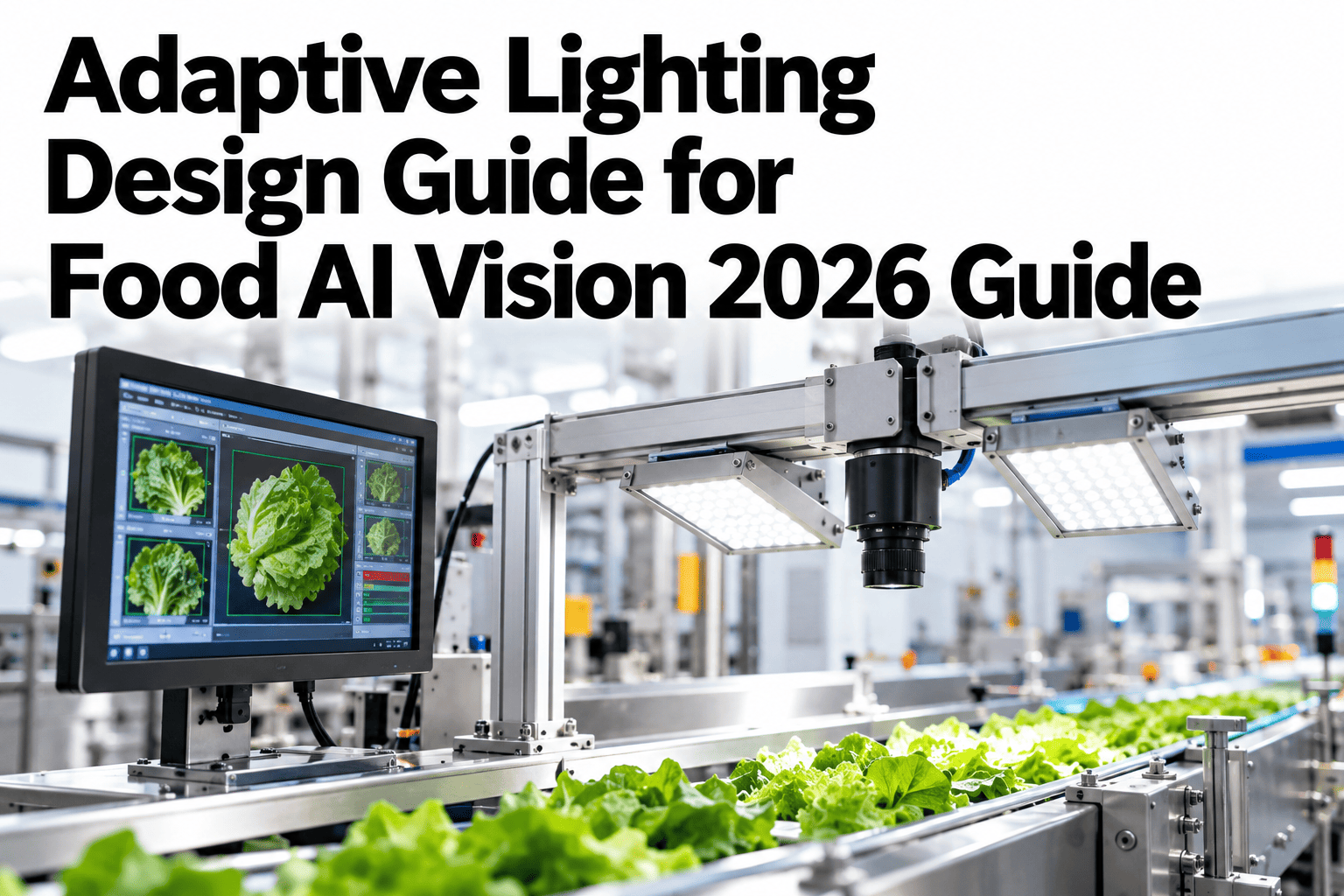
Ambient lighting variation is one of the most common causes of inconsistent detection accuracy in food vision deployments, particularly on lines positioned near windows, overhead skylights, or areas where lighting changes between shifts. A properly designed inspection station uses controlled, shielded illumination specifically to suppress ambient light influence, so that the same product looks visually consistent to the camera regardless of what time of day or what the surrounding light conditions happen to be. Deployments that skip this shielding step frequently see detection accuracy that appears to degrade over time when in reality it is ambient light drift rather than model performance causing the inconsistency.
IP69K is the standard rating specified for equipment exposed to high-pressure, high-temperature wash-down cycles common in food processing sanitation procedures, and this rating needs to apply to the full hardware assembly including cabling, connectors, and mounting brackets rather than only the primary camera housing. Equipment positioned further from direct wash-down spray but still within a wet processing environment may be adequately covered by a lower IP rating, but this should be confirmed against the facility's actual sanitation procedure rather than assumed based on general industry practice.
Not necessarily, since resolution needs to be matched to the actual defect size and working distance rather than maximized indiscriminately, and unnecessarily high resolution can introduce processing latency that becomes a problem at high line speeds without providing any additional detection benefit. The correct approach is to calculate the required pixel resolution based on the smallest defect that needs to be reliably detected at the actual camera-to-product distance, then select a camera and lens combination that meets that requirement with reasonable margin, rather than defaulting to the highest resolution sensor available.
Hardware specification, procurement, and installation timelines vary significantly based on the complexity of the inspection requirement and whether custom enclosure or mounting work is needed for the specific line configuration, but most single inspection point deployments move from initial assessment to installed hardware within several weeks once specifications are finalized. Multi-point deployments across several lines or a full facility typically follow a phased installation schedule. Book a demo to get a realistic timeline estimate for your specific facility and inspection scope.
Build Your Vision System on the Right Hardware Foundation
iFactory works through lighting, camera, lens, and enclosure specification alongside your engineering team, so every AI vision deployment starts with hardware matched to your actual product and environment.