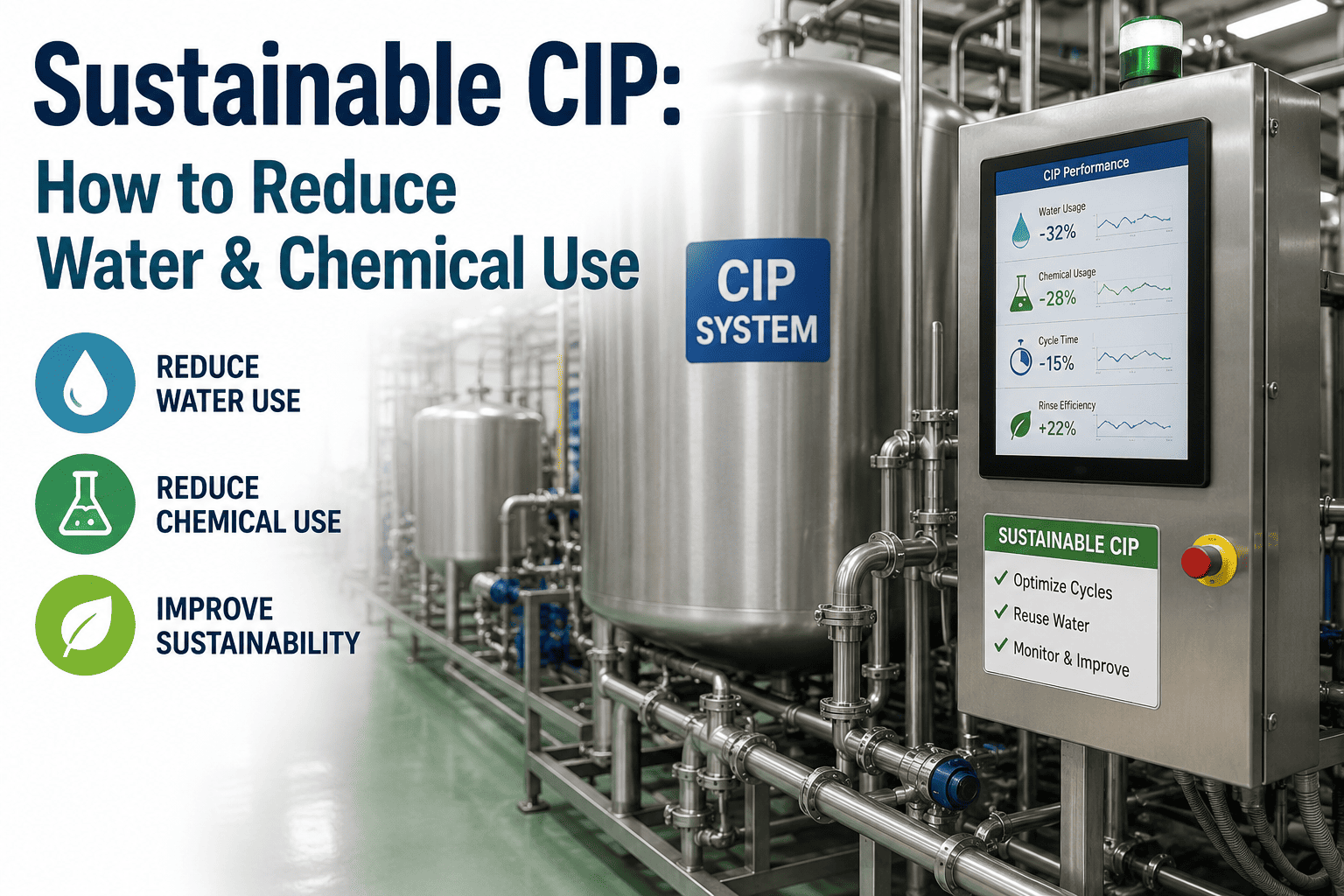
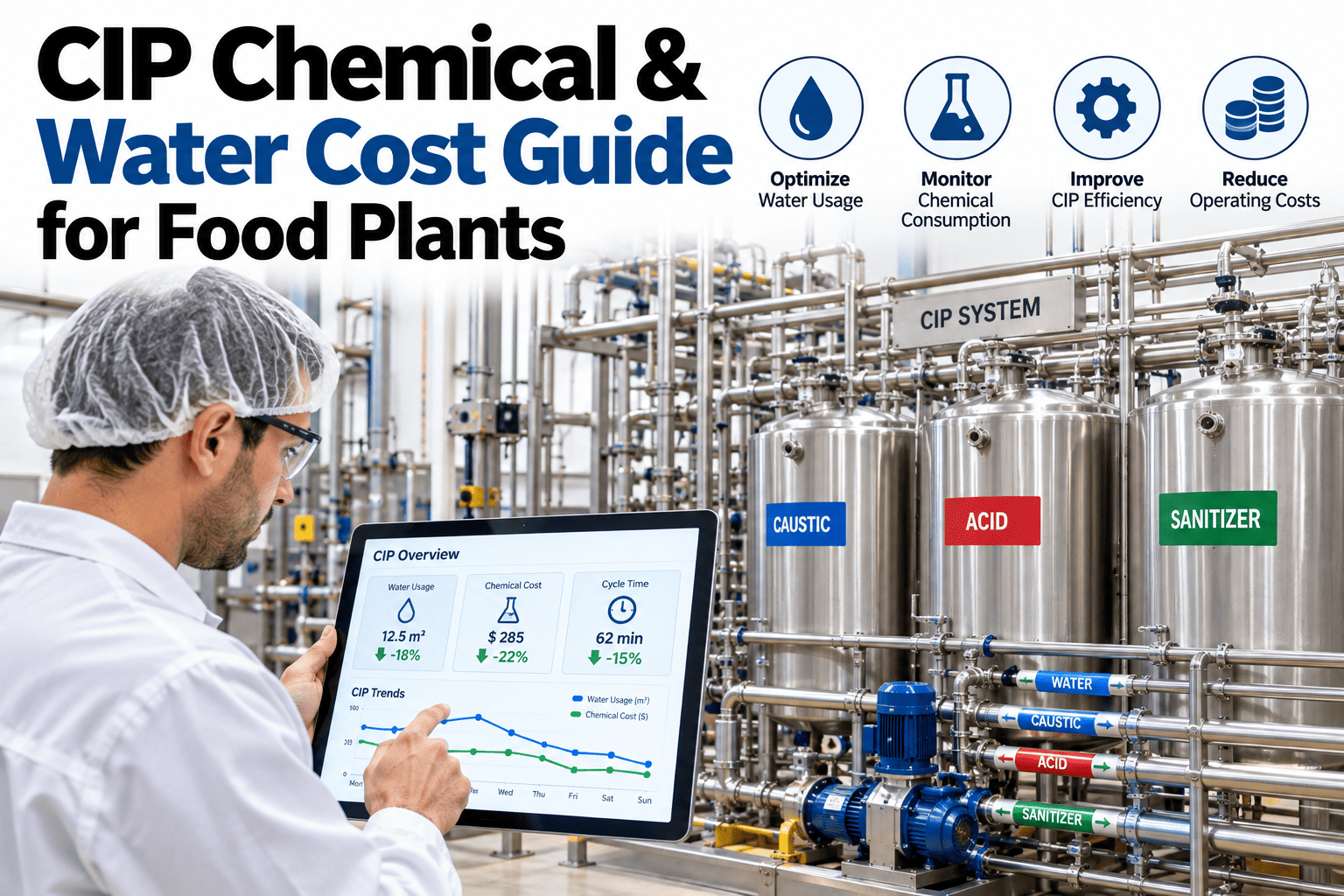
Sustainability and food safety are usually framed as a trade-off in CIP conversations, as if using less water or chemical automatically means cleaning less effectively — but the plants actually cutting resource use aren't cleaning less, they're cleaning smarter, recovering rinse water that used to go straight to drain and tightening cycle parameters that were padded well beyond what the soil load actually required. iFactory helps food and beverage plants find that resource reduction without touching cleaning validation standards, with the full methodology at iFactory support.
Sustainable Sanitation · Water, Energy & Chemical Reduction
Sustainable CIP: Cleaning Smarter, Not Cleaning Less
iFactory identifies where CIP cycles are using more water, energy, and chemical than actual soil load requires, cutting resource use while holding cleaning validation standards constant.
What's Actually Achievable
Typical Resource Reduction Ranges Across a CIP Program
Where the Reduction Comes From
Four Levers That Cut Resource Use Without Cutting Cleaning Quality
Rinse Water Recovery
Final rinse water, often still clean enough for reuse, can be captured and redirected to an initial pre-rinse stage on the next cycle rather than going straight to drain.
Right-Sized Cycle Duration
Cycles set years ago with generous safety margins often run longer than current soil load and equipment condition actually require, once validated against real data.
Conductivity-Based Endpoint Control
Ending a rinse stage based on actual conductivity readings rather than a fixed timer avoids over-rinsing once the target is already achieved.
Heat Recovery From Final Rinse
Residual heat in a final rinse discharge can preheat the next cycle's incoming water, reducing the energy needed to bring wash solutions to temperature.
Validated Cleaning Standards Don't Have to Compete With Resource Efficiency
Every reduction is tested against the same conductivity, flow, and verification standards that confirm cleaning effectiveness — nothing is cut blind.
How the Reduction Process Works
From Baseline to Validated Savings — Five Stages
1
Baseline Resource Use Measured
2
Cycle Parameters Reviewed Against Soil Load
3
Adjustments Piloted on One Line
4
Cleaning Effectiveness Verified
5
Rolled Out Facility-Wide
Field Case
Cutting Water Use by 22% Without a Single Failed Verification Check
A beverage bottling plant running fixed-duration CIP cycles across six filling lines had never revisited water usage per cycle since the lines were installed. Installing conductivity-based rinse endpoint control on a pilot line showed the final rinse stage was running roughly 40 percent longer than needed to reach target conductivity on most cycles. Rolling the change out across all six lines, combined with capturing final rinse water for reuse in pre-rinse stages, cut total CIP water use by 22 percent over the following quarter with zero failed post-cleaning verification checks recorded during the transition.
22%Reduction in total CIP water use
6Filling lines converted
0Failed verification checks during rollout
Frequently Asked Questions
Sustainable CIP — Common Questions
Will reducing resource use put our food safety certifications at risk?
Every adjustment is piloted and verified against the same cleaning validation standards already required by your current certifications before being rolled out further, so nothing changes about what "clean" means or how it's confirmed. The goal is removing excess margin that was never actually required to achieve validated cleaning, not lowering the bar for what counts as clean.
Book a Demo to review how pilots are validated for your certification requirements.
How is rinse water recovery kept food-safe?
Recovered rinse water is only redirected to pre-rinse stages, which don't require the same purity as final rinse or product contact water, and recovery systems include conductivity and quality checks to ensure recovered water meets the standard needed for its intended reuse point before it's ever reintroduced to a cycle.
Does this require new CIP equipment or capital investment?
Many of the reductions come from reconfiguring existing CIP skid parameters and adding conductivity or flow sensors rather than replacing core equipment. Water recovery and heat recovery systems typically do require some capital investment, though many facilities see that investment pay back within the first one to two years through combined water and energy savings.
Contact support for a cost-benefit review specific to your facility.
Can this help with sustainability reporting commitments?
Yes — documented reductions in water, energy, and chemical use tied to specific, verified process changes give sustainability teams concrete, auditable figures for internal or public reporting, rather than estimates or industry averages that don't reflect your facility's actual performance.
How long does a pilot program take before facility-wide rollout?
A single-line pilot, including baseline measurement, adjustment, and verification testing, typically takes three to five weeks. Facility-wide rollout timing depends on how many lines are involved, but most plants complete the full transition within two to four months of a successful pilot.
Book a Demo for a rollout plan specific to your CIP system.
Find the Resource Savings Your CIP Program Has Been Overlooking
Verified water, energy, and chemical reduction without changing cleaning validation standards, live in as little as three weeks.