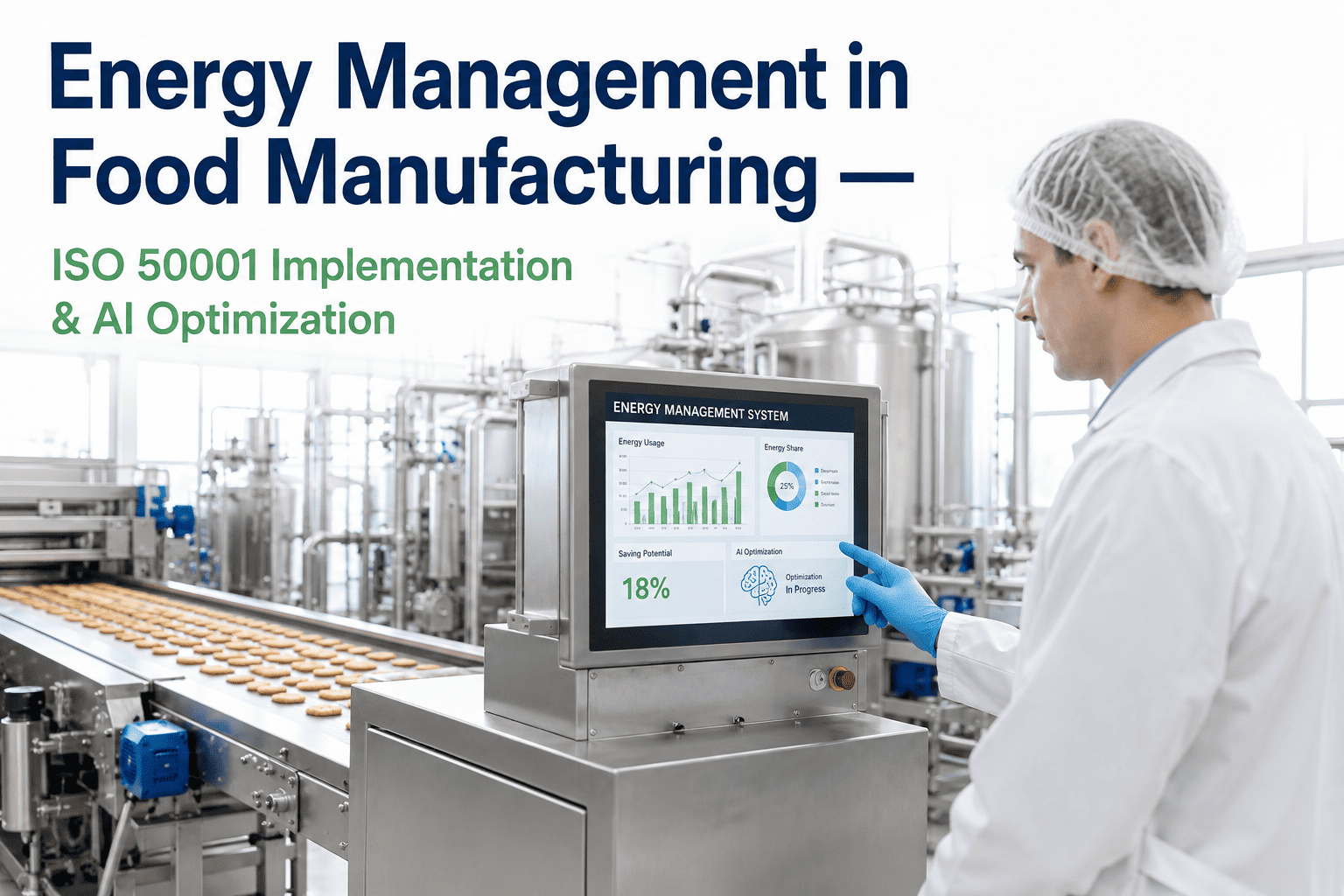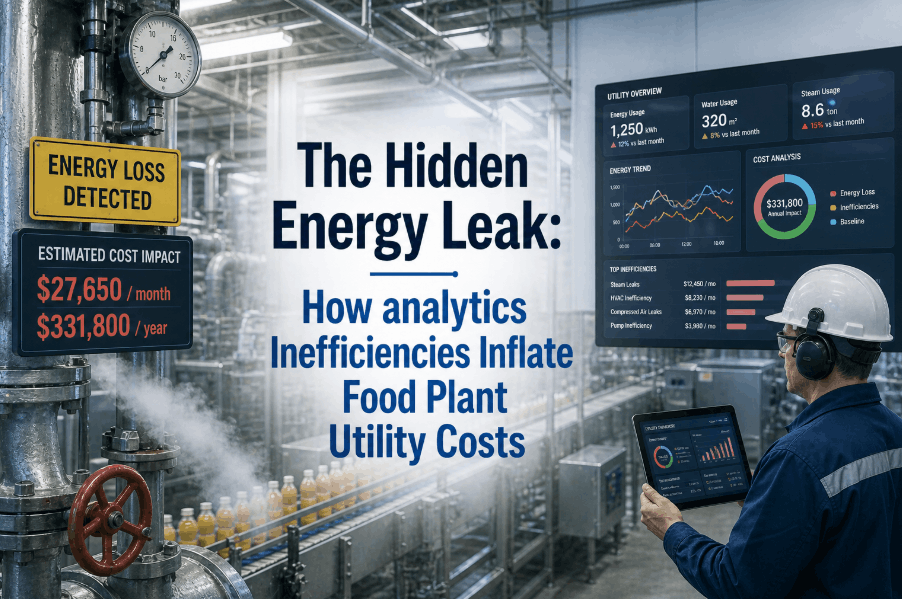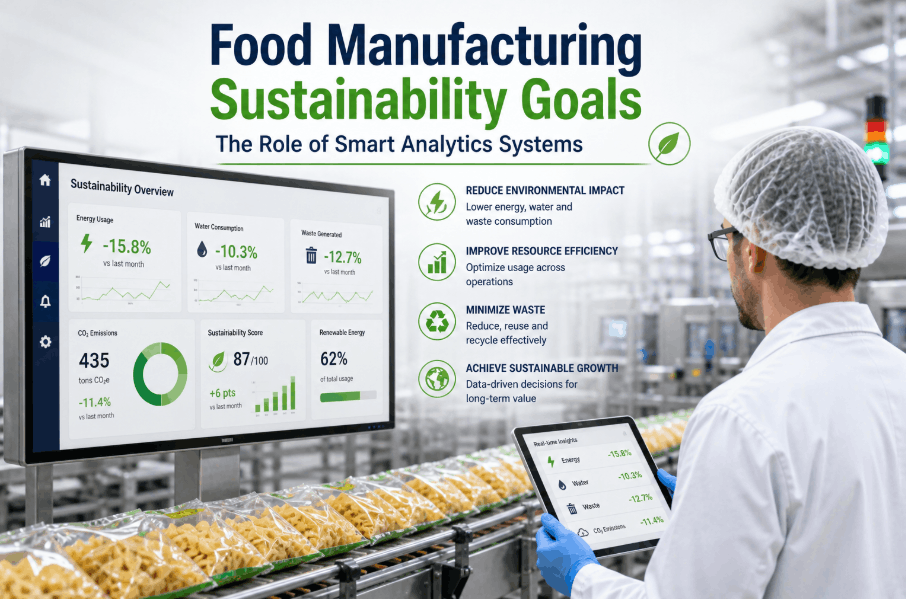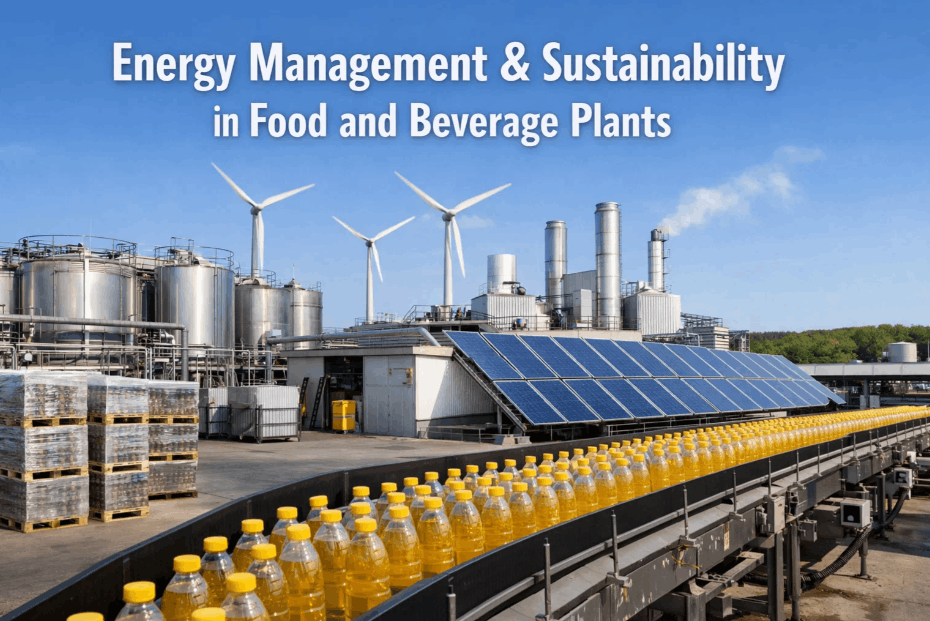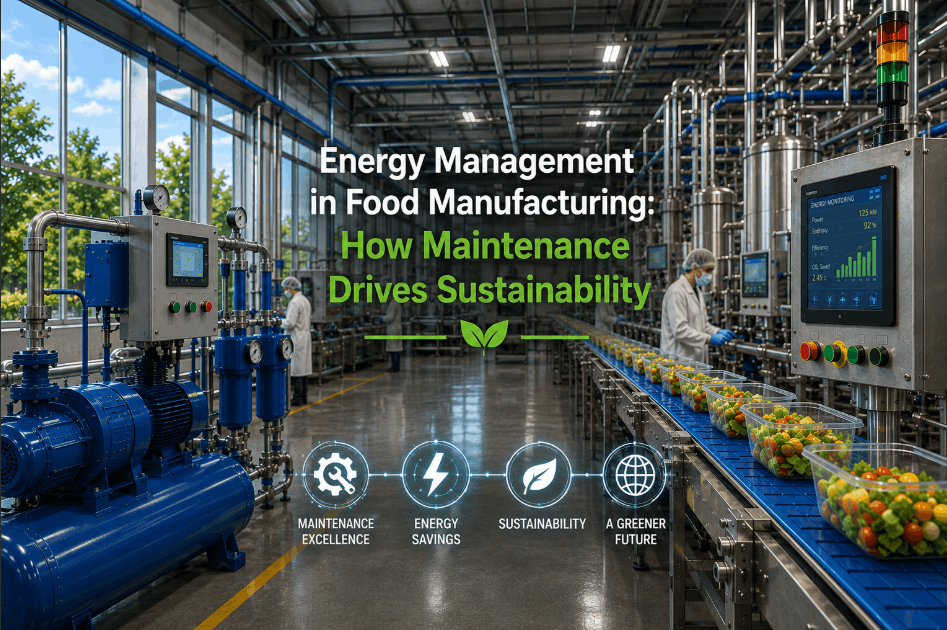
Implementing a robust energy management strategy in food manufacturing is no longer just a corporate social responsibility initiative—it is a critical driver of operational profitability and carbon reduction. In the energy-intensive world of food processing, utility costs for refrigeration, steam, and HVAC systems represent a massive portion of total OpEx, making sustainable food manufacturing a direct result of precision maintenance. Facilities managers who integrate energy reduction strategies with their proactive maintenance models gain a significant competitive edge: lower greenhouse gas emissions, reduced utility spend, and a resilient infrastructure that meets strict ESG requirements. For plants still operating with unoptimized boiler cycles or aging refrigeration units, the gap between their costs and those of data-driven competitors grows every quarter. If your facility is looking to achieve its green food manufacturing goals, book an energy management audit to see how an intelligent maintenance platform can transform your plant's sustainability performance.
Is Your Food Plant's Energy Strategy Ready for the Sustainability Mandate?
Deploy AI-driven refrigeration optimization, steam trap monitoring, and peak-shaving analytics. Seamlessly integrated with your utility health dashboards.
The Strategic Value of Data-Driven Energy Logistics
Energy management in food manufacturing is more than a simple conservation problem; it is a complex logistics and thermal management challenge. A single malfunctioning steam trap or an unoptimized refrigeration compressor can lead to thousands in energy waste, while unpredicted HVAC failure can compromise food safety and worker productivity. Utility analytics replaces manual meter reading with condition-based deployment. By integrating power quality monitoring and thermal sensors with AI, iFactory tracks the energy efficiency of every boiler, chiller, and motor in the facility. This allows operators to run high-load systems closer to their peak efficiency without risking an unplanned outage. Furthermore, the platform optimizes the energy cycle—calculating the ideal peak-shaving strategy to ensure the lowest possible utility tariff. Organizations that schedule a technical demo can see how iFactory's thermal decay models have helped plants recover up to 15% of their energy capacity, significantly reducing carbon footprints and utility costs.
Refrigeration Efficiency AI
Advanced digital twin modeling for ammonia and freon systems. Our AI continuously correlates ambient temperature and humidity with plant-wide cooling loads to predict compressor failure and optimize evaporator defrost cycles, reducing energy spikes by 12% during peak production periods.
Steam System Intelligence
Continuous tracking of steam trap health and boiler combustion efficiency. iFactory's AI models identify thermal leaks and scale buildup through non-invasive sensors, quantifying the fuel loss in real-time and automating the maintenance work order process for immediate thermal recovery.
HVAC Load Balancing
High-precision vibration and airflow sensors monitor air handling units across high-care zones. The system detects early-stage motor fatigue or filter clogging, preventing excessive power draw and ensuring that airflow remains compliant with food safety standards without wasting utility capacity.
Boiler Scale Detection
Physics-based AI and acoustic sensors identify the digital signature of hard water scaling in boiler tubes. By predicting the rate of thermal transfer loss, the platform automates the cleaning schedule to prevent excessive fuel consumption and extend the operational life of the pressure vessel.
Power Quality Analytics
Continuous monitoring of harmonics, voltage sags, and transient surges on critical production motors. iFactory prevents "Heat Accumulation" in motor windings by ensuring electricity quality is optimized, reducing the risk of premature insulation failure and improving overall equipment effectiveness (OEE).
Peak Demand Shaving
Real-time mapping of plant-wide energy demand using predictive algorithms. iFactory minimizes "Dead Load" during expensive peak utility hours and optimizes the buffer between utility supply and production needs, potentially saving thousands in demand-charge penalties every month.
"Before iFactory, our energy management was reactive—we only noticed efficiency losses when the monthly bill arrived. By implementing their steam system AI and refrigeration tracking, we've reduced our utility OpEx by 18% and, more importantly, hit our corporate carbon reduction targets two years early. The platform is now our single point of truth for sustainable manufacturing."
Solving the Blind Spots in Thermal Energy Logistics
Utility management is notoriously difficult to digitize because traditional electronics often fail in the radiant heat of a boiler room or the extreme cold of a blast freezer. iFactory solves this through non-contact sensing and physics-informed AI. We don't just "monitor" the meter; we model the system's thermal and mechanical state using remote sensors and digital twins. If you are struggling with rising utility costs or sustainability targets, you can book a site-specific energy audit to see our specialized hardware and software in action.
Problem 1 — Inefficient Refrigeration Cycling
Standard thermostats often trigger false cycles due to transient door openings or defrost spikes, leading to excessive wear on compressors. iFactory's AI filters this environmental "noise," identifying the specific digital signatures of mechanical wear. By correlating these signatures with ambient load history, the platform provides a 48-hour warning of a potential cooling failure, preventing product spoilage and massive energy waste.
Problem 2 — Undetected Steam Leaks
Steam leaks in food plants often occur in inaccessible overhead piping where visual inspection is impossible. Traditional methods cannot see internal trap failure or minor flange leaks that bleed BTUs for weeks. iFactory's "Thermal Intelligence" module tracks every unit of steam travel under load, calculating cumulative energy loss in dollars and predicting the optimal maintenance window to maximize energy retention.
Problem 3 — Logistics Bottlenecks & Peak Surges
When high-load machines like blast freezers and ovens start simultaneously, they trigger expensive peak-demand penalties from the utility provider. iFactory's energy dashboard visualizes the entire fleet in real-time, predicting when the next production run will hit the grid and ensuring the right load-sequencing is in position to smooth the demand curve and avoid surge charges.
Increase lining and tube life by 15-20% through precise erosion tracking, optimized fuel-air cycles, and automated scale detection algorithms that prevent thermal shock.
Achieve 100% predictive reliability for ammonia cooling loops, eliminating unplanned temperature-controlled downtime and the risk of refrigerant leaks in high-occupancy areas.
Recover 10-15% of steam energy by minimizing transit bottlenecks, identifying failed insulation jackets, and optimizing distribution pressure based on real-time line demand.
Reduce chiller, pump, and compressor maintenance labor costs by 22% through early bearing failure detection and acoustic twinning that replaces manual grease inspections.
The ROI of Intelligence: KPI Gains from iFactory Energy AI
Optimizing utility handling is a direct booster for your plant's bottom line. The benchmark chart below shows the average gains achieved by sustainable food manufacturers within 12 months of adopting iFactory's logistics intelligence platform. These are the results of physics-based AI. Energy managers who book a demo today are securing these stability gains for the next production campaign.
Manual Handling vs. iFactory Intelligent Energy Logistics
The transition from manual utility management to a digital thermal twin is the hallmark of a world-class food facility. The table below outlines the operational shifts that occur when iFactory's energy suite is deployed. To calculate your specific ROI on sustainability and utility analytics, book an energy audit.
| Energy System Metric | Reactive Approach (Manual) | iFactory Intelligent Suite | Operational Gain |
|---|---|---|---|
| Asset Life Tracking | Manual hour-counts on paper | Digital Component Twin AI | +18% System life extension |
| Refrigeration Fatigue | Periodic visual check | Cumulative Stress Modeling | Zero unpredicted cooling failures |
| Boiler Shell Health | Periodic thermal scans | Continuous Tube-Spot AI | 100% tube-leak prevention record |
| Thermal Transit Time | Operator-dependent | Autonomous Demand Mapping | -12% BTU loss in transit |
| Pump Brake Health | Post-failure report | Predictive Thermal Monitoring | Eliminates hoist "Slipping" risk |
| Steam Pre-heating | Time-based burners | Remaining Heat Analytics AI | -15% Burner fuel consumption |
Protect Your Profits. Optimize Your Energy Yield.
iFactory's energy management analytics is the only purpose-built platform designed to survive and thrive in the extreme environments of the modern food plant.
Frequently Asked Questions: Energy & Utility Analytics
How does the platform predict refrigeration wear without physical sensors inside?
We use a Physics-Informed Digital Twin. By tracking the power profile, refrigerant pressure, and ambient load, iFactory's AI models the cumulative erosion of the internal components. This is periodically calibrated with non-contact vibration analysis, ensuring the model remains accurate to within 5% of actual mechanical state.
Can iFactory detect internal scaling in steam boilers?
While we don't "see" inside the tubes, we track the Thermal Transfer Spectrum. By integrating with the boiler's PLC and flow meters, we record exactly how much fuel is burned to achieve a specific steam volume. Our AI applies the laws of thermodynamics to identify the onset of scaling before it becomes a hazard.
How does "Utility Logistics" reduce thermal energy loss?
Temperature loss is a function of time and distribution efficiency. iFactory's logistics module acts as a "Utility Air Traffic Control." It synchronizes the boiler generation with the production demand window, ensuring that steam doesn't sit idle in pipes. By cutting just 15 minutes from the cycle, we can save up to 10°C of critical heat.
Is the hardware rugged enough for 24/7 exposure to ammonia or steam?
Yes. iFactory utilizes industrial-grade thermal enclosures and chemical-resistant sensor housings specifically designed for food plant environments. Our monitoring nodes are rated for extreme high-temperature and corrosive areas, ensuring 100% data availability even during peak operations.
Does the platform integrate with our existing building management system (BMS)?
Absolutely. iFactory is platform-agnostic. We can pull data from your existing BMS, chiller PLCs (Johnson Controls, Daikin, etc.), and Level-2 automation systems to provide a unified analytical layer without needing to replace your foundational hardware.
How does AI-driven motor monitoring improve sustainability?
Inefficient motors are a primary source of carbon intensity. iFactory monitors the harmonics and temperature of critical drives. If it detects "Phase Unbalance" or "Heat Accumulation," it triggers a mandatory maintenance check before an energy-intensive failure can occur, keeping your carbon footprint low.
Can the platform detect steam trap failure?
Yes. Using acoustic AI at the trap-station, the platform automatically measures the ultrasound profile of the steam flow. If the trap is "Blowing Through" or "Stuck Closed," a work order is automatically generated, preventing massive BTU waste and ensuring system balance.
What is the typical ROI for a sustainability and energy analytics deployment?
Most facilities see a full ROI within 6–12 months. This is driven by three primary factors: an 18% reduction in utility energy cost, a 20% reduction in unplanned equipment maintenance, and carbon credits from improved heat retention. Request an ROI calculation for your plant here.
Start Your Journey to Sustainable Manufacturing
Join the global food leaders who are using iFactory to hit their ESG targets while maximizing utility ROI. Secure your campaign stability today.