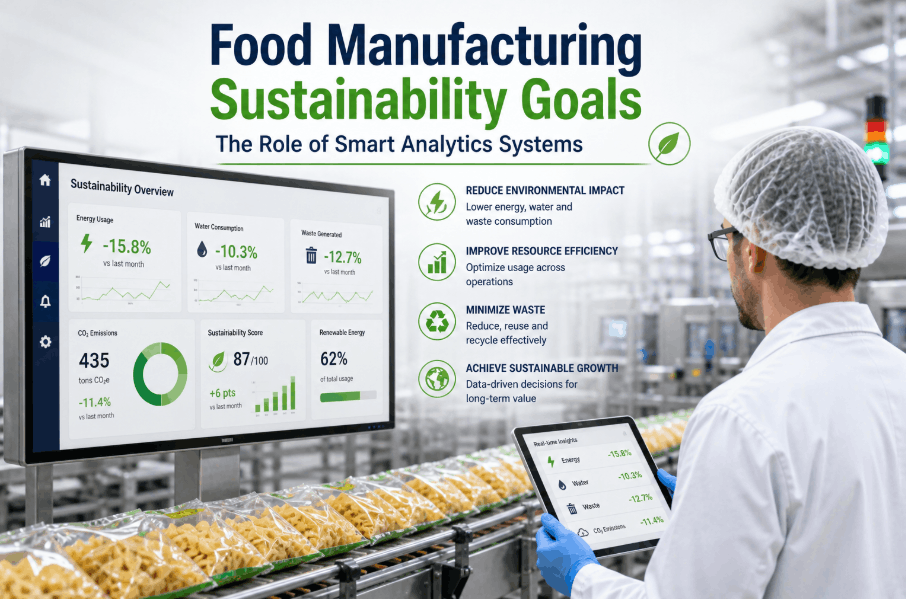
Sustainability in food manufacturing is no longer a voluntary initiative — it has become a strategic imperative driven by regulatory pressure, retailer mandates, and investor ESG expectations. Smart analytics systems are transforming how food and beverage manufacturers measure, manage, and report on energy consumption, waste generation, water usage, and carbon emissions across every production line and facility. Manufacturers that deploy sustainable manufacturing software with real-time operational intelligence are achieving double-digit reductions in energy costs while meeting GFSI, SQF, and corporate sustainability targets that define competitive advantage in the modern food industry. Book a Demo to see how iFactory's sustainability analytics platform delivers measurable environmental performance improvements across connected food manufacturing operations.
AI-Powered Sustainability Analytics for Food Manufacturers
iFactory delivers real-time energy management, carbon footprint tracking, waste reduction analytics, and ESG reporting software built specifically for food and beverage manufacturers navigating complex environmental compliance requirements.
Why Smart Analytics Systems Are Central to Food Manufacturing Sustainability
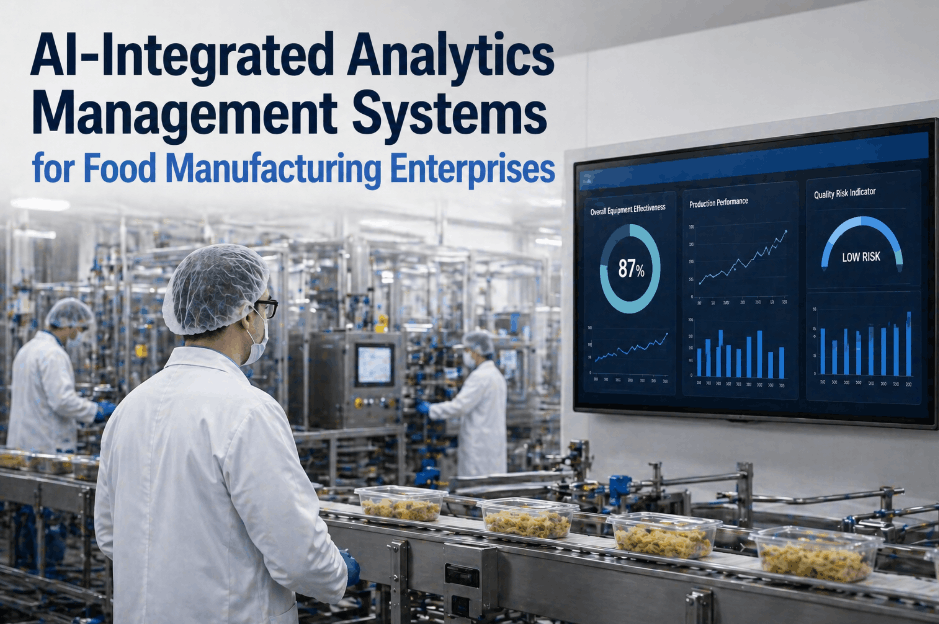
The gap between sustainability commitments and measurable operational outcomes in food manufacturing is almost always a data problem. Plants set ambitious energy reduction targets and zero-waste goals, but without granular, real-time visibility into where energy is consumed, where materials are lost, and where processes deviate from efficiency baselines, sustainability programs remain reactive and disconnected from production decisions. Industrial energy analytics embedded directly in production workflows — monitoring compressed air consumption, refrigeration cycles, boiler efficiency, and line changeover waste in real time — convert sustainability from a reporting exercise into an operational discipline that drives both environmental improvement and cost reduction simultaneously. The manufacturers achieving the most significant sustainability gains are those treating environmental performance monitoring as an extension of their core production intelligence infrastructure.
The Five Sustainability Challenges Smart Analytics Systems Solve in Food Production
Understanding where sustainability performance breaks down in food manufacturing facilities is the foundation of any effective resource optimization software deployment. The challenges that consistently prevent food manufacturers from hitting sustainability targets share a common root cause: inadequate measurement granularity and the absence of real-time feedback loops that connect operational decisions to environmental outcomes. Food plant engineers who Book a Demo with iFactory can benchmark their current sustainability performance against industry baselines using live sensor and process data from their own production environment.
Invisible Energy Consumption Across Production Lines
Most food plants measure energy at the facility level through utility bills — a resolution too coarse to identify which production lines, equipment assets, or operational practices are driving excess consumption. Without sub-meter energy visibility at the machine and process level, energy management software cannot identify the specific inefficiencies that constitute 80% of avoidable energy waste in food manufacturing environments.
Fragmented Carbon Footprint Data Across Scope 1, 2, and 3
Carbon footprint tracking in food manufacturing spans direct emissions from boilers and refrigerants, indirect emissions from purchased electricity, and supply chain emissions from ingredients and packaging. Without an integrated carbon footprint tracking platform that aggregates data from production systems, utility meters, and supplier inputs, manufacturers cannot produce the Scope 3 disclosures that retailers and investors increasingly require.
Reactive Rather Than Predictive Waste Management
Food waste in manufacturing occurs at predictable points — line startups, changeovers, CIP transitions, and process deviations — but plants without real-time waste reduction software only quantify losses after the fact, when the opportunity to intervene has already passed. Predictive waste analytics that flag process deviations before they generate product loss are the foundational capability separating leading sustainability performers from industry average.
Manual ESG Data Collection Creating Reporting Risk
Sustainability teams at food manufacturers often compile ESG reports from spreadsheets, manual meter readings, and production logs — a process that introduces data quality risk, consumes significant analyst time, and cannot produce the reporting frequency that stakeholders now expect. Automated ESG reporting software that pulls directly from plant systems eliminates manual data collection while creating the audit trail required for third-party assurance.
Water Consumption Blind Spots in Process Operations
Water is the highest-volume input in many food and beverage manufacturing processes — CIP systems, pasteurizers, steam generation, and cooling towers consume enormous quantities that most facilities measure at aggregate levels only. Without process-level water metering integrated with production analytics, identifying reduction opportunities and demonstrating compliance with water stewardship commitments requires costly manual audits rather than continuous operational intelligence.
Regulatory and Retailer Environmental Compliance Pressure
Environmental compliance software requirements for food manufacturers are expanding rapidly — from EU deforestation regulations affecting ingredient sourcing to retailer sustainability scorecards that gate shelf access for suppliers unable to demonstrate verified environmental performance. Plants without real-time compliance monitoring and documentation capabilities face growing commercial and regulatory risk as environmental reporting obligations extend from voluntary commitment to contractual requirement.
How Energy Management Software Drives Measurable Efficiency Gains in Food Plants
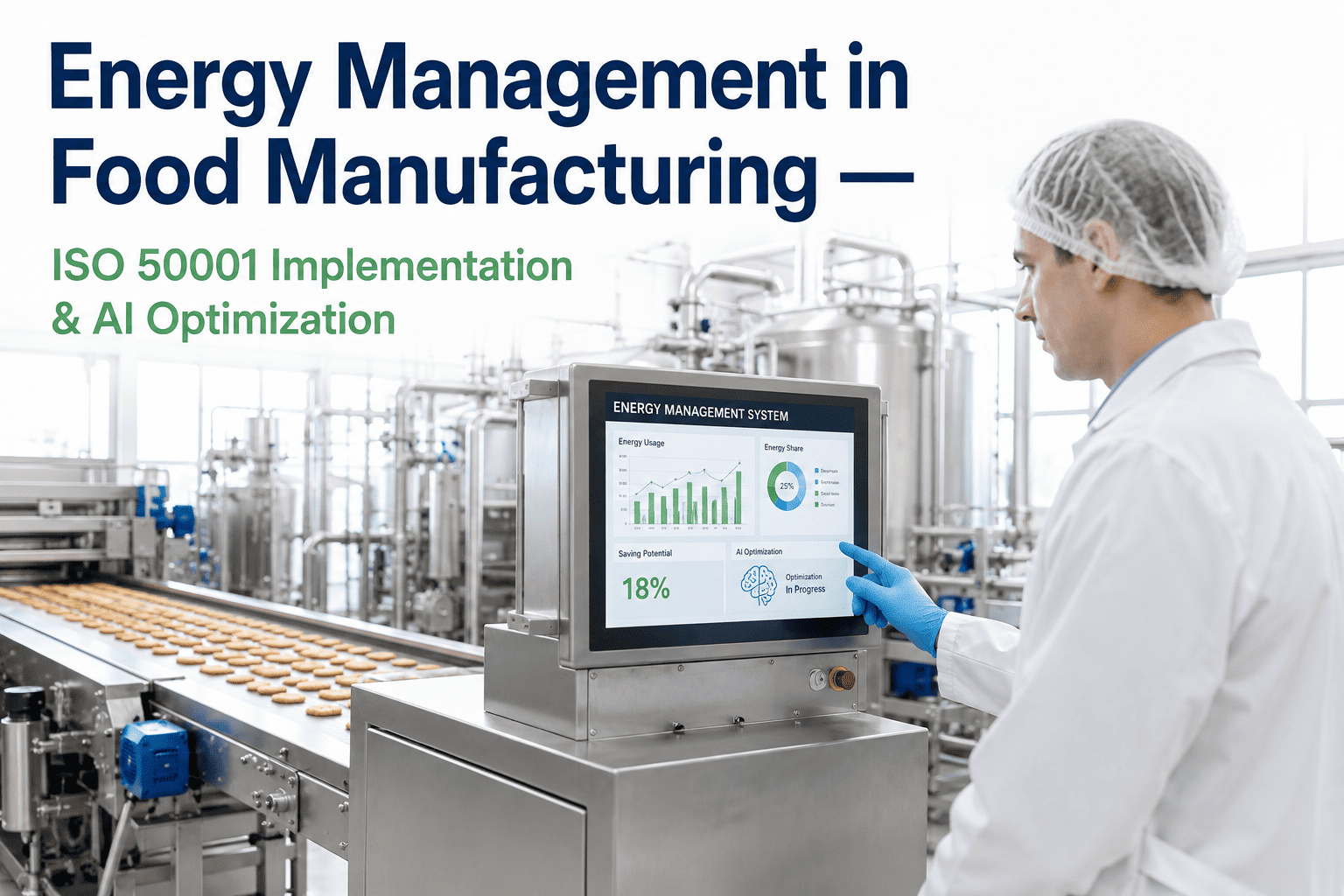
Energy costs represent 15–30% of total manufacturing cost in most food and beverage processing operations, making energy management software the highest-ROI sustainability investment available to plant operations teams. Smart industrial energy analytics platforms monitor energy consumption at the machine, line, and facility level in real time — establishing efficiency baselines, detecting anomalous consumption patterns that indicate equipment degradation, and correlating energy use with production throughput to calculate the true energy intensity of each product SKU. Food manufacturers who Book a Demo with iFactory consistently identify 10–20% in avoidable energy waste within the first 90 days of deployment, with the highest-impact opportunities concentrated in compressed air systems, refrigeration optimization, and peak demand management.
Real-Time Sub-Metering and Energy Intensity Analytics
Deploying smart sub-meters on individual production lines, HVAC systems, compressed air networks, and refrigeration circuits — integrated with a centralized energy analytics platform — delivers the granular consumption visibility required to identify and eliminate specific energy waste sources rather than applying broad reduction targets that fail to change operational behavior at the line level.
Peak Demand Optimization and Load Shifting Analytics
Demand charge management represents one of the fastest payback opportunities in food plant energy optimization. Analytics platforms that forecast production schedules and model load-shifting scenarios enable plant engineers to sequence energy-intensive processes — pasteurization cycles, freezer pull-down, CIP operations — away from utility peak pricing windows, reducing demand charges without compromising production throughput or food safety compliance.
Equipment Efficiency Degradation Detection and Maintenance Triggers
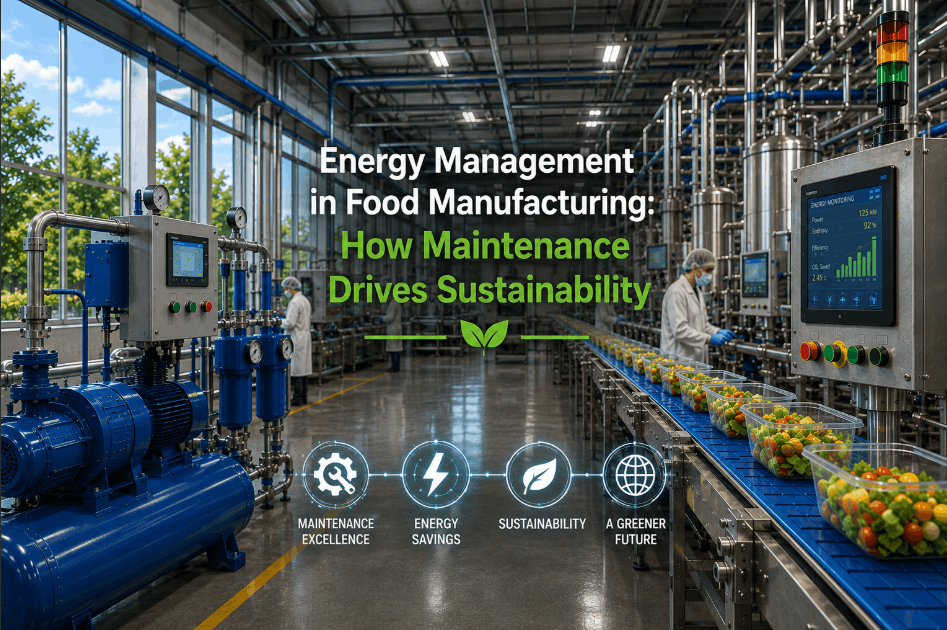
Energy consumption anomaly detection identifies equipment efficiency degradation — fouled heat exchangers, underperforming compressors, leaking steam traps — before it generates significant energy waste or mechanical failure. Integrating energy analytics with predictive maintenance workflows creates a closed-loop system where rising energy intensity automatically generates maintenance work orders, preserving both operational efficiency and sustainability performance simultaneously.
Automated Carbon Emission Calculation and Scope Allocation
Integrating energy consumption data with regional grid emission factors, fuel use records, and refrigerant tracking systems enables automated Scope 1 and Scope 2 carbon emission calculation at the production line and product level. This granularity allows food manufacturers to understand the carbon intensity of individual SKUs — a capability increasingly required for product-level environmental labeling and retailer carbon disclosure requirements.
Waste Reduction Software and Digital Transformation for Sustainable Food Manufacturing
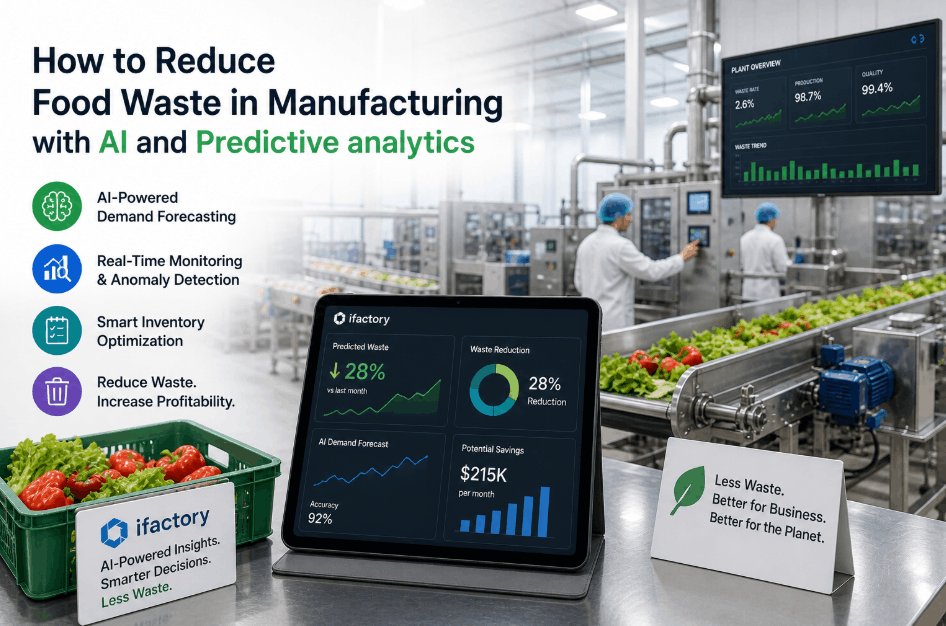
Food waste reduction at the manufacturing level requires understanding precisely when, where, and why product loss occurs — a level of operational insight that only digital transformation sustainability platforms can deliver at scale. Advanced waste reduction software integrates production sensor data, quality inspection results, line speed analytics, and recipe management systems to create a real-time waste intelligence layer that identifies both chronic efficiency losses and acute deviation events. Manufacturers deploying operational efficiency analytics purpose-built for food production environments consistently achieve 20–35% reductions in process waste within the first year, translating directly into improved yield, reduced raw material purchasing, and lower disposal costs that accelerate ROI from the sustainability investment. For facilities where food waste carries regulatory reporting obligations under local diversion mandates, automated waste tracking with production context documentation also eliminates the manual record-keeping burden that consumes sustainability team capacity. Plant teams can Book a Demo to see how iFactory's waste analytics dashboard surfaces the highest-impact reduction opportunities in their specific production environment.
Proactive Sustainability Management vs. Reactive Reporting: A Comparison for Food Manufacturers
| Sustainability Domain | Reactive Reporting Approach | Smart Analytics-Driven Management | Business Outcome |
|---|---|---|---|
| Energy Management | Monthly utility bill review after consumption occurs | Real-time sub-meter monitoring with anomaly alerts and efficiency benchmarks | 10–25% reduction in energy cost per unit of output |
| Carbon Footprint Tracking | Annual emission inventory compiled from utility records | Continuous Scope 1, 2, and 3 calculation with product-level carbon intensity | Enables science-based target setting and verified progress reporting |
| Food Waste Reduction | Waste tonnage recorded in weekly production summaries | Real-time process deviation detection with predictive waste prevention alerts | 20–35% reduction in yield loss within first 12 months |
| Water Efficiency | Aggregate water volume from monthly utility invoices | Process-level water metering with CIP and cooling consumption analytics | Identifies 15–30% water reduction opportunities across plant operations |
| ESG Reporting | Manual data compilation from spreadsheets and plant records | Automated data aggregation with audit trail and third-party verification support | 4× faster reporting cycle with reduced assurance cost |
| Regulatory Compliance | Compliance gaps identified during scheduled environmental audits | Continuous environmental performance monitoring with automated compliance alerts | Eliminates compliance surprises and reduces audit preparation cost |
| Supplier Sustainability | Annual supplier surveys with self-reported data | Integrated supply chain analytics with ingredient carbon and deforestation tracking | Enables verified Scope 3 disclosure and retailer sustainability compliance |
Industrial IoT Sustainability: Connecting Sensors to Environmental Performance
Industrial IoT sustainability platforms create the physical measurement infrastructure that makes smart analytics possible across food manufacturing facilities. Every IP-addressable sensor on the production floor — from energy transducers on motor control centers and flow meters on CIP water lines to gas analyzers on boiler stacks and temperature sensors on cold chain assets — generates the raw data that sustainability analytics platforms transform into actionable environmental performance intelligence. The manufacturers achieving the most advanced sustainability outcomes are those who have invested in connecting legacy equipment through retrofit IoT instrumentation, creating comprehensive measurement coverage across facilities that were designed before environmental performance monitoring was operationally possible. Continuous device data collection, edge processing for near-real-time analytics, and cloud aggregation for multi-site sustainability benchmarking form the three-tier architecture that converts physical production environments into the data-rich sustainability intelligence systems that food manufacturers need to meet their 2030 and 2040 environmental commitments.
ESG Reporting Software and Environmental Compliance for Food and Beverage Manufacturers
The ESG reporting landscape for food manufacturers has shifted from voluntary disclosure to structured regulatory requirement across major markets. EU Corporate Sustainability Reporting Directive requirements, SEC climate disclosure rules, and retailer Scope 3 data mandates are converging to create a reporting environment where ESG reporting software capable of producing verified, auditable environmental data is no longer optional for manufacturers serving major retail, foodservice, and industrial channels. Smart analytics platforms that integrate directly with production systems, utility meters, and supply chain data sources deliver the data quality and traceability that third-party assurance providers require — eliminating the manual compilation processes that introduce data integrity risk in traditional sustainability reporting workflows. For food manufacturers navigating multiple overlapping reporting frameworks — GHG Protocol, CDP, TCFD, and GRI — platforms that map operational data to multiple reporting standards simultaneously reduce the compliance burden while increasing the credibility of reported environmental performance metrics.
Universal Environmental Data Collection Across All Plant Systems
Building a complete, continuously updated environmental data layer across energy, water, waste, and emissions — sourced directly from production sensors, utility meters, and process control systems — is the non-negotiable foundation of any effective sustainability analytics program. Without measurement granularity at the process and equipment level, sustainability initiatives target the wrong problems and produce the wrong solutions. Automated data collection eliminates the manual survey burden while delivering measurement resolution that drives genuine performance improvement rather than headline metric compliance.
AI-Driven Resource Optimization Across Production Operations
Machine learning models trained on production sensor data, energy consumption patterns, and quality outcomes identify optimization opportunities that human analysts cannot detect in the volume and velocity of operational data that modern food plants generate. Resource optimization software that learns production-specific efficiency patterns — adjusting recommendations based on product mix, seasonal demand shifts, and equipment aging — delivers compounding environmental performance improvements that manual optimization programs cannot sustain over multi-year sustainability commitment horizons.
Automated ESG Documentation and Multi-Framework Compliance Reporting
Continuous environmental performance monitoring with automated compliance documentation converts sustainability reporting from a resource-intensive annual exercise into an always-current operational capability. Integration with FSMA, GFSI, and corporate ESG frameworks ensures that the same operational data serves both food safety compliance documentation and environmental reporting requirements — eliminating duplicative data collection and creating a unified compliance data foundation that supports any regulatory or stakeholder reporting framework that emerges as environmental disclosure requirements continue to evolve.
Frequently Asked Questions: Sustainability Analytics in Food Manufacturing
What is the ROI timeline for deploying sustainable manufacturing software in a food plant?
Most food manufacturers achieve full ROI on sustainability analytics platforms within 12 to 24 months, primarily through energy cost reduction, yield improvement from waste reduction, and compliance cost savings from automated ESG reporting. Plants with high energy intensity operations — large refrigerated facilities, high-temperature processing lines, or continuous production environments — typically see payback within 12 months driven by energy management improvements alone.
How does industrial IoT sustainability differ from standard energy management systems?
Industrial IoT sustainability platforms integrate environmental performance monitoring directly with production process data — correlating energy consumption, water use, and waste generation with specific products, line speeds, batch parameters, and equipment states. Standard energy management systems measure consumption without production context, making it impossible to optimize the trade-off between throughput, quality, and resource efficiency that food manufacturing sustainability programs require.
Can smart analytics systems help with Scope 3 carbon footprint tracking for food manufacturers?
Yes. Advanced sustainability analytics platforms can aggregate ingredient carbon data from supplier disclosures, packaging lifecycle data, and logistics emissions estimates to build Scope 3 emission models at the product and category level. While Scope 3 data quality depends heavily on supplier disclosure practices, platforms that automate data collection and flag data gaps significantly improve the completeness and verifiability of Scope 3 reporting compared to manual compilation methods.
What data sources does green manufacturing software typically integrate with in food plants?
Green manufacturing software platforms typically integrate with plant historians, MES systems, ERP platforms, utility smart meters, process control systems, quality management software, and IoT sensor networks. The breadth of integration determines the granularity and accuracy of sustainability analytics — platforms that connect to production process data alongside utility meters deliver significantly more actionable insights than those consuming only energy and utility data.
How does sustainability analytics support environmental compliance software requirements in food manufacturing?
Environmental compliance software capabilities within sustainability analytics platforms maintain continuous monitoring of emission thresholds, waste diversion requirements, water discharge permits, and refrigerant management obligations — automatically generating compliance documentation and alerting operations teams when performance approaches regulatory limits. This continuous compliance posture eliminates the reactive scramble that manual compliance programs face when permit conditions change or audit cycles approach.
Accelerate Your Food Manufacturing Sustainability Goals with Smart Analytics
iFactory's sustainability analytics platform delivers real-time energy management, carbon footprint tracking, waste reduction analytics, and ESG reporting capabilities built specifically for food and beverage manufacturers — connecting every sensor, meter, and process system into a unified environmental intelligence platform.