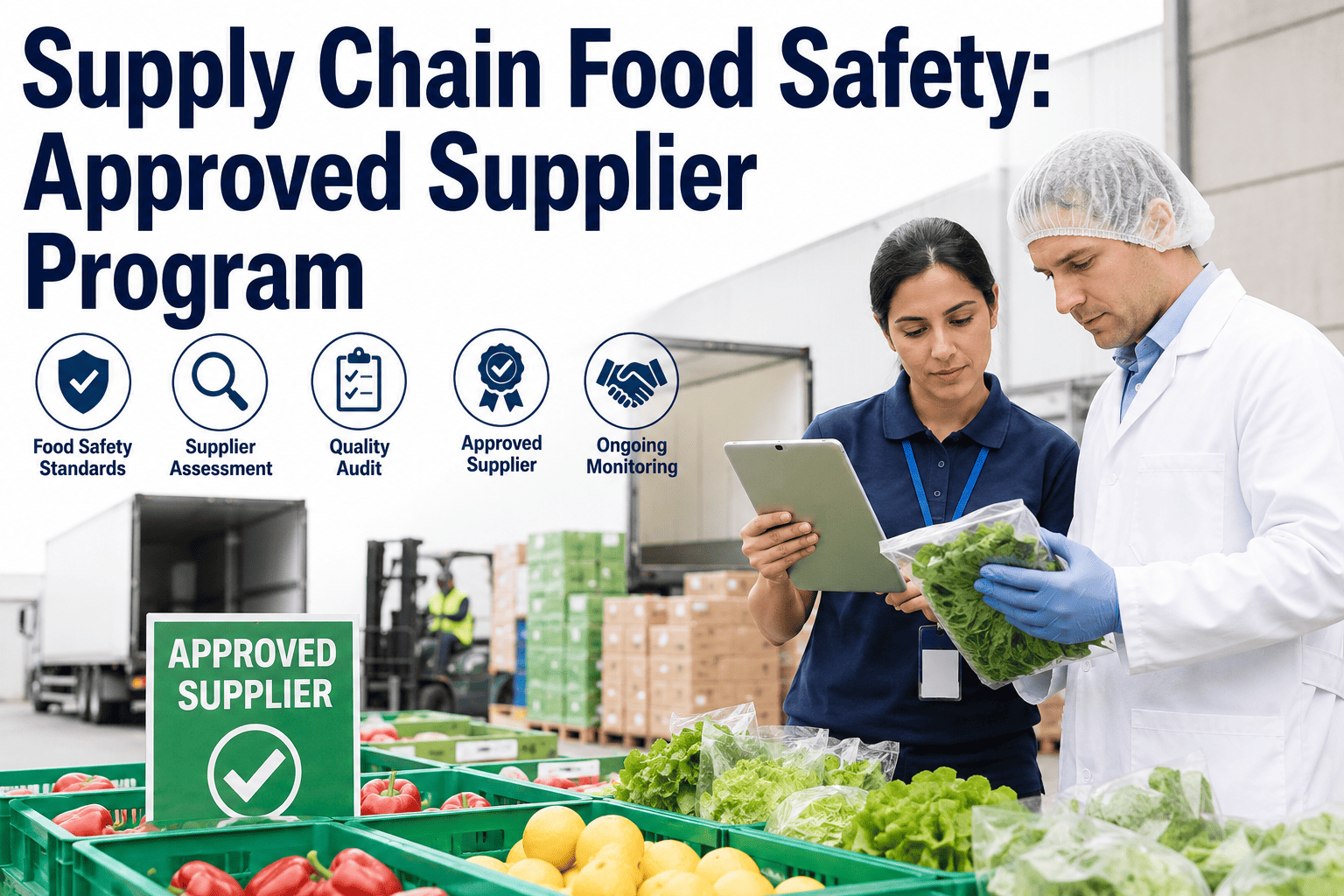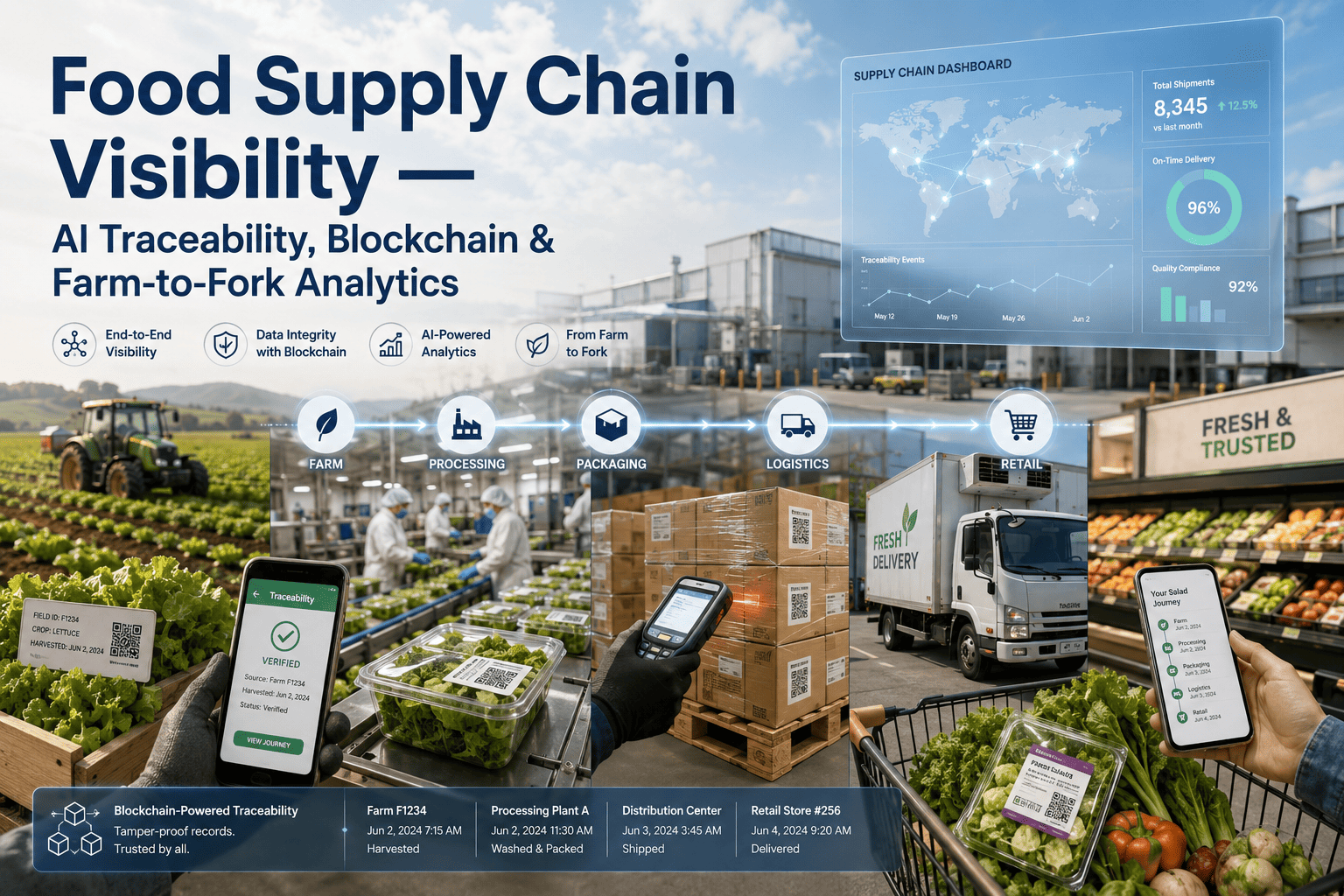
Food fraud is unlike almost any other risk a quality team manages, because it is committed by people who understand your controls and are actively trying to avoid detection, rather than an accidental process failure your HACCP plan is built to catch. Diluted olive oil, mislabeled fish species, and honey cut with cheap syrup have all triggered major recalls not because a plant's food safety system failed, but because nobody was looking for intentional, economically motivated deception in the supply chain. GFSI-benchmarked schemes now require a documented food fraud vulnerability assessment using recognized methodology, most commonly TACCP, precisely because traditional food safety planning was never designed to catch a supplier deliberately substituting ingredients. This guide walks through how to conduct a TACCP-based vulnerability assessment and build mitigation into your supply chain, with tooling support covered on our support page.
TACCP vs HACCP: Why Fraud Needs a Different Framework
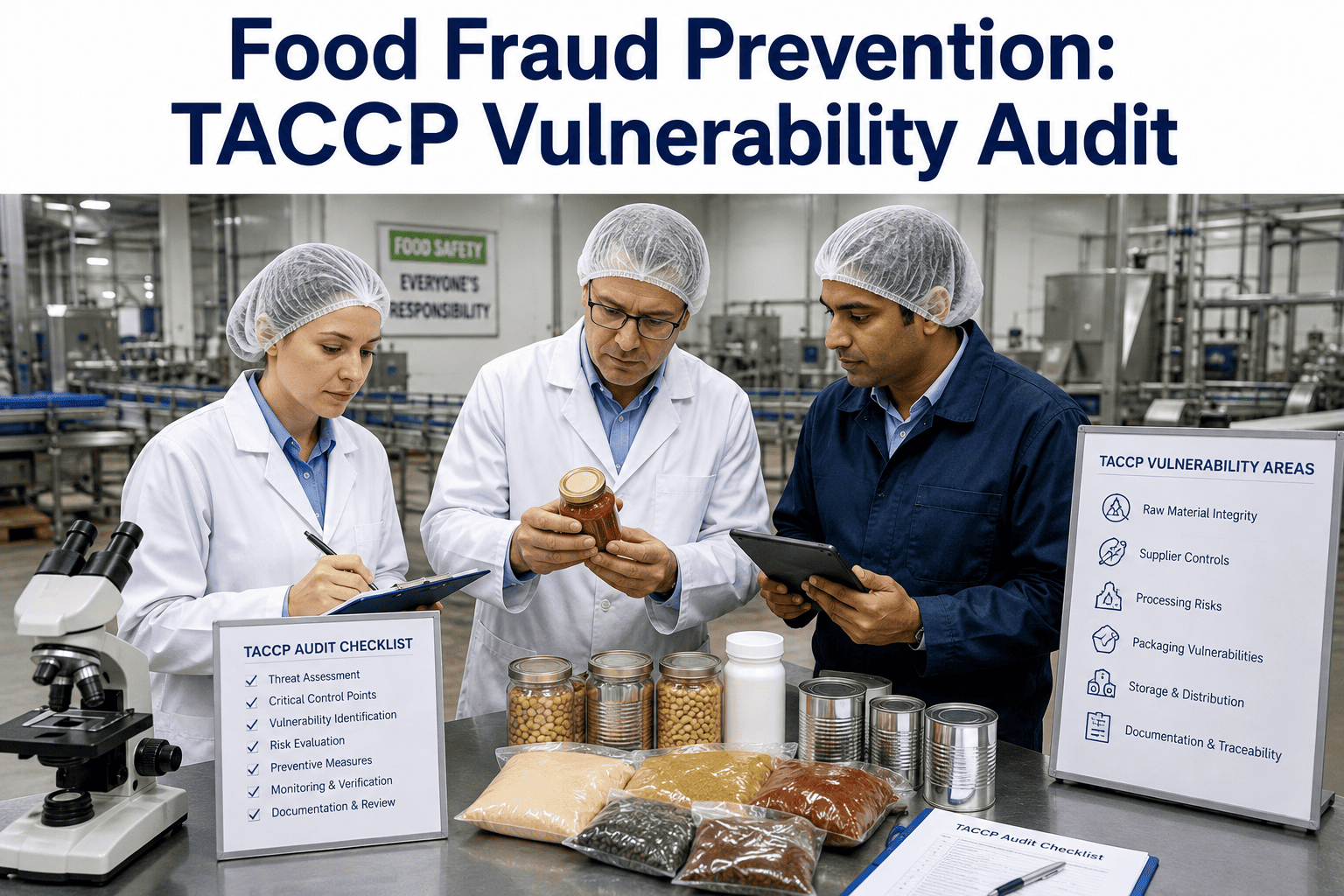
HACCP identifies hazards that occur through accidental process failure — contamination, temperature abuse, cross-contact — and builds controls to prevent them. TACCP, Threat Assessment Critical Control Points, exists specifically because food fraud is intentional and economically motivated, meaning the person committing it is actively trying to defeat your existing controls rather than triggering them accidentally. A vulnerability assessment under TACCP asks a fundamentally different question than a hazard analysis: not "what could go wrong" but "who might want to deceive us, and where in our supply chain would they have the opportunity."
Not sure which ingredients in your supply chain carry the highest fraud vulnerability? Book a demo and we'll walk through a sample TACCP scoring exercise together.
Conducting a Vulnerability Assessment Step by Step
Map the Full Supply Chain
Document every ingredient's path from origin through intermediaries to your receiving dock, including sub-suppliers.
Score Each Ingredient
Apply the four TACCP factors to every raw material, prioritizing high-value or historically fraud-prone categories first.
Identify High-Vulnerability Points
Rank ingredients by combined score to focus mitigation resources where fraud risk is genuinely highest.
Design Mitigation Controls
Match control intensity to vulnerability score — testing, certificates of analysis, supplier audits, or authentication testing.
Review Annually or on Trigger Events
Reassess whenever a new supplier is onboarded, a fraud incident is reported industry-wide, or pricing shifts significantly.
Turn Your Vulnerability Assessment Into a Living System
iFactory tracks ingredient-level fraud scores, flags pricing anomalies against market benchmarks, and manages supplier verification documentation in one place. Book a demo to see it running.
High-Risk Ingredient Categories
Certain ingredient categories appear repeatedly in global fraud incident databases due to a combination of high value, complex supply chains, and detection difficulty.
| Category | Common Fraud Type | Detection Method |
|---|---|---|
| Olive Oil | Dilution with cheaper oils, false origin labeling | Chemical fingerprinting, isotope testing |
| Honey | Sugar syrup adulteration | Carbon isotope ratio analysis |
| Seafood | Species substitution, mislabeling | DNA barcoding verification |
| Spices | Bulking agents, undisclosed coloring | Microscopy, spectroscopy testing |
| Organic-Labeled Products | Conventional product sold as organic | Certification chain verification |
Mitigation Strategies by Vulnerability Level
Not every ingredient requires the same level of scrutiny. Matching control intensity to actual vulnerability score keeps a mitigation program cost-effective without leaving genuine gaps unaddressed.
Low Vulnerability
Standard certificate of analysis review and periodic supplier requalification on the normal audit cycle.
Moderate Vulnerability
Increased incoming inspection frequency plus periodic third-party authentication testing on a sampling basis.
High Vulnerability
Mandatory authentication testing on every lot, supplier site audits, and diversified sourcing where feasible.
Ready to build a TACCP-based mitigation plan for your highest-risk ingredients? Schedule a demo or contact support for guidance.
Frequently Asked Questions
Build a Food Fraud Program That Actually Catches Deception
iFactory tracks ingredient vulnerability scores, monitors pricing anomalies, and manages authentication testing and supplier documentation in one connected system.