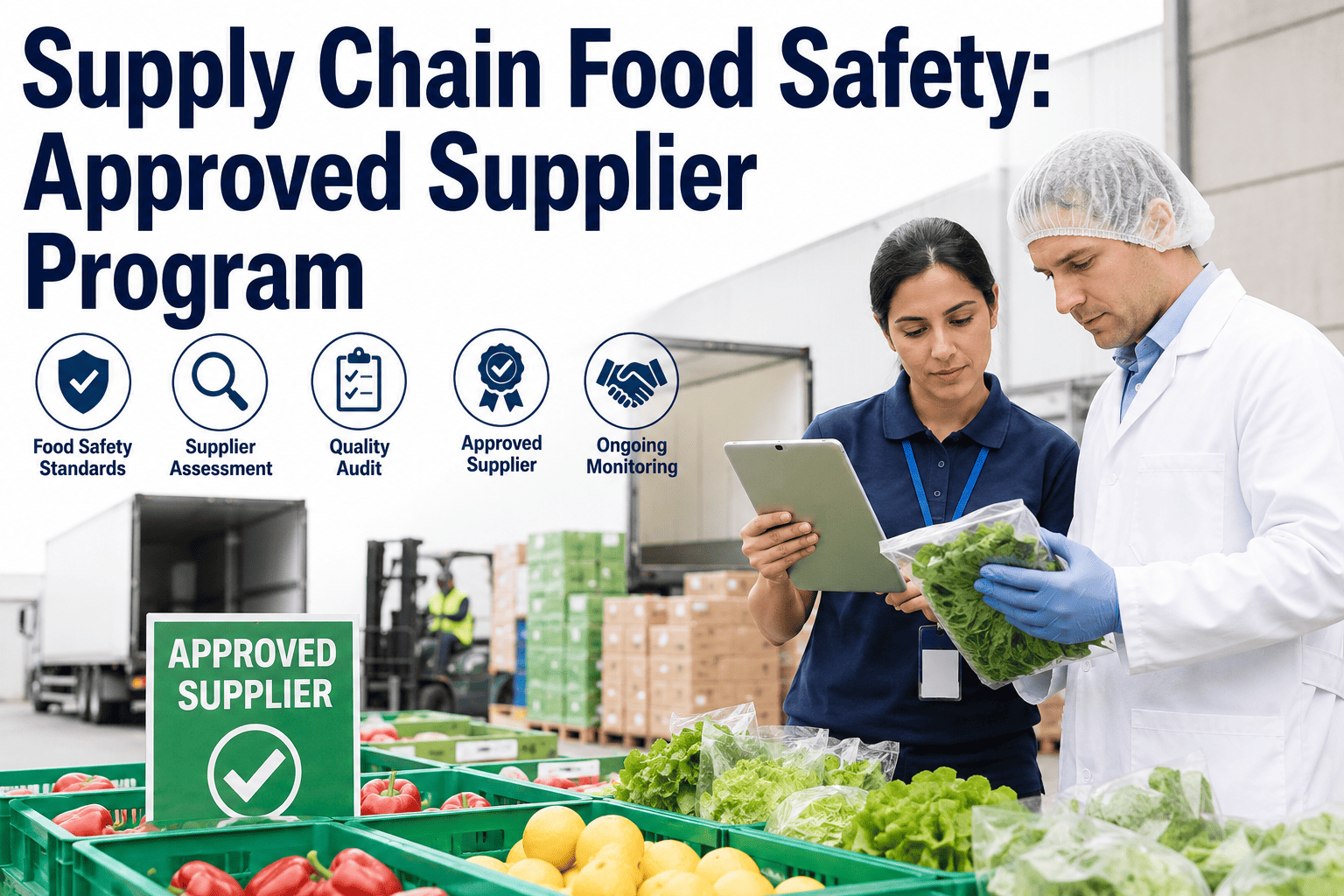
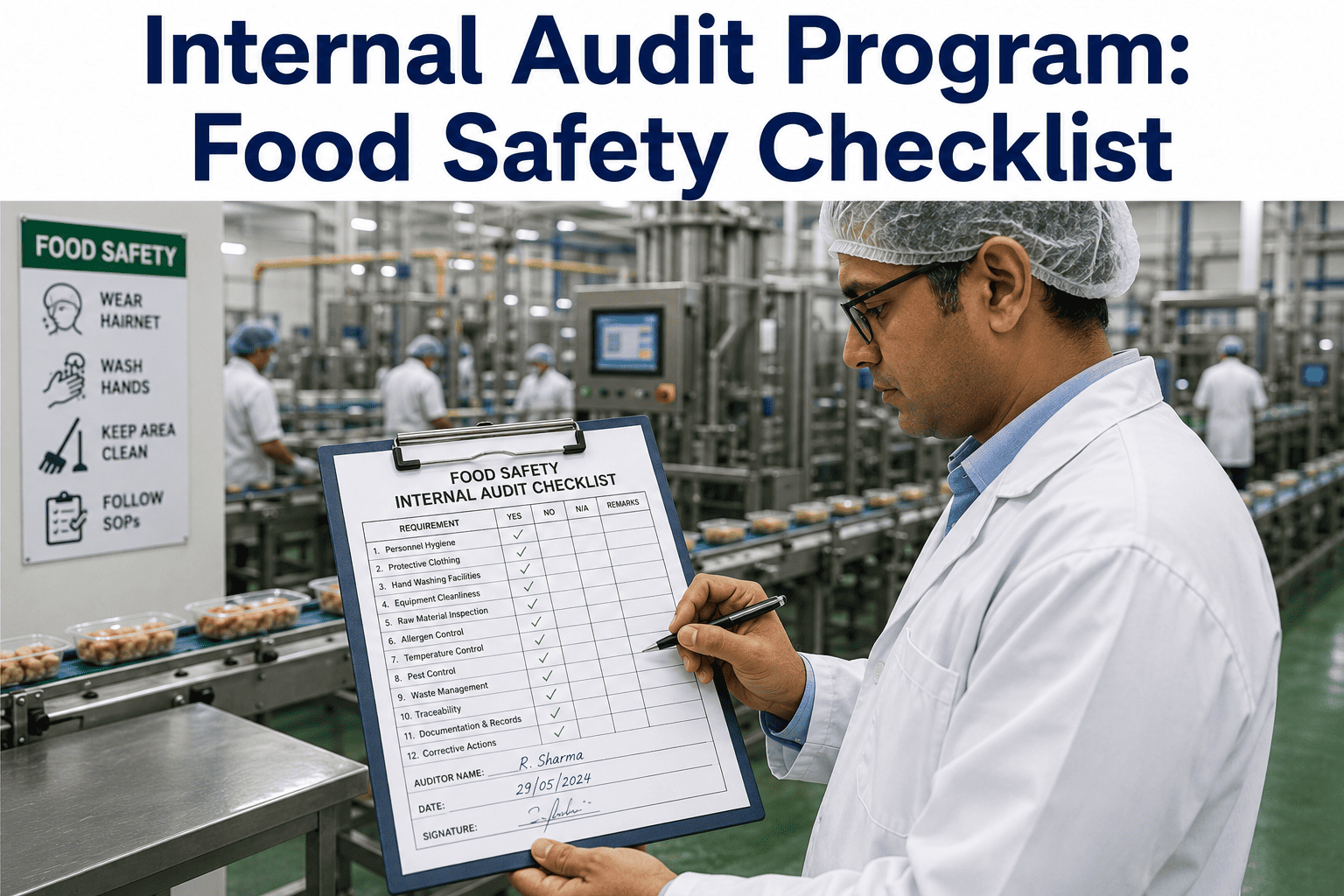
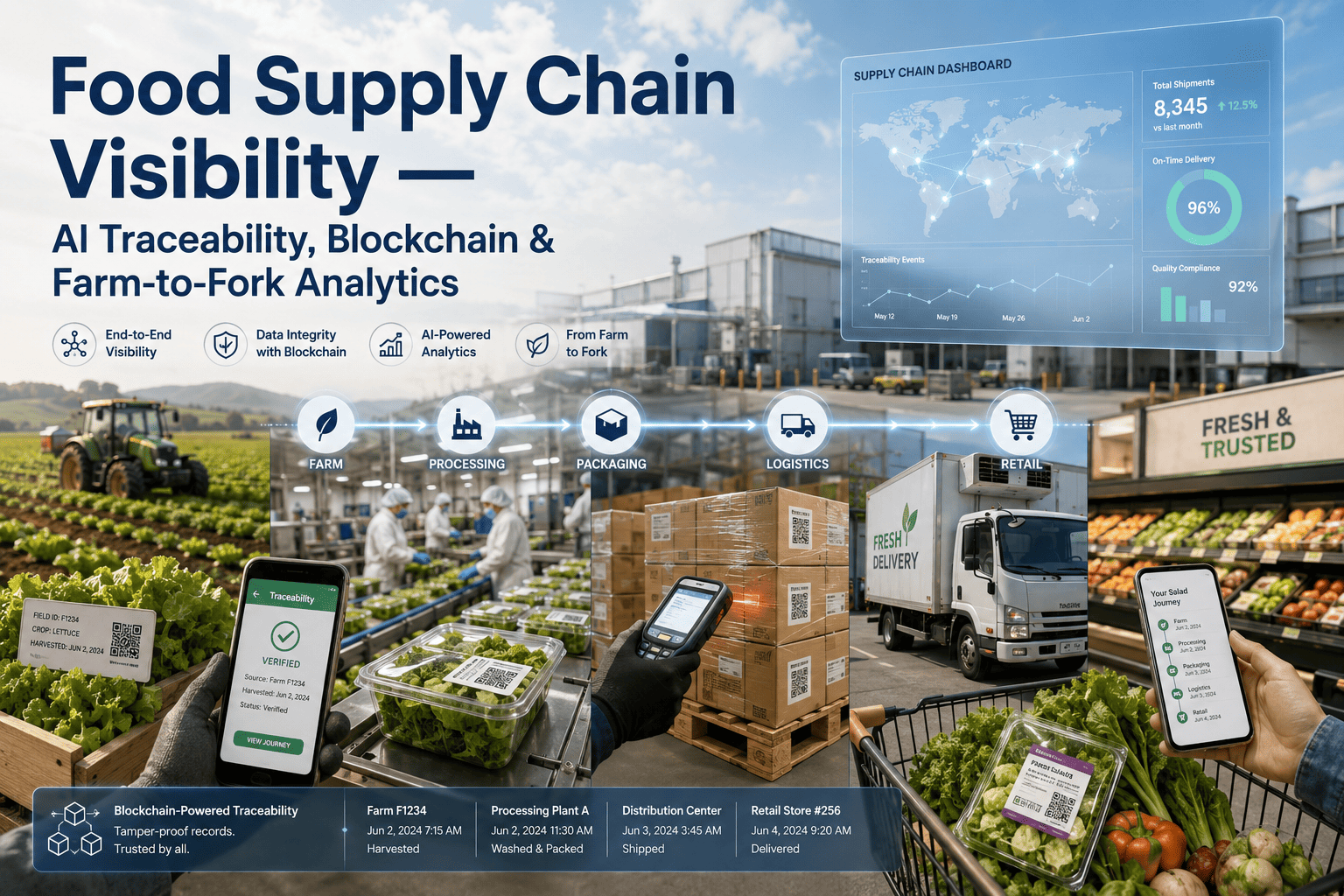
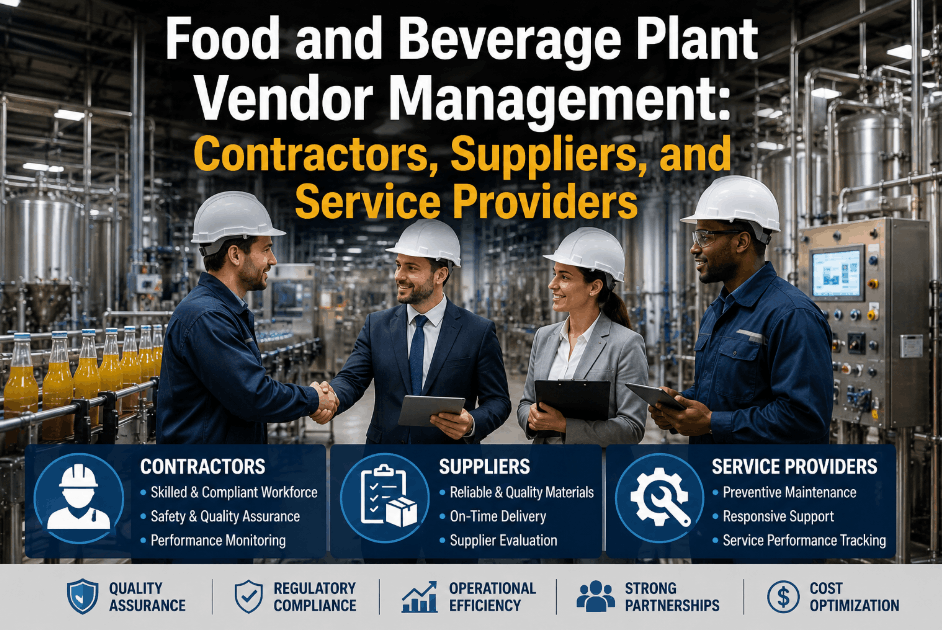
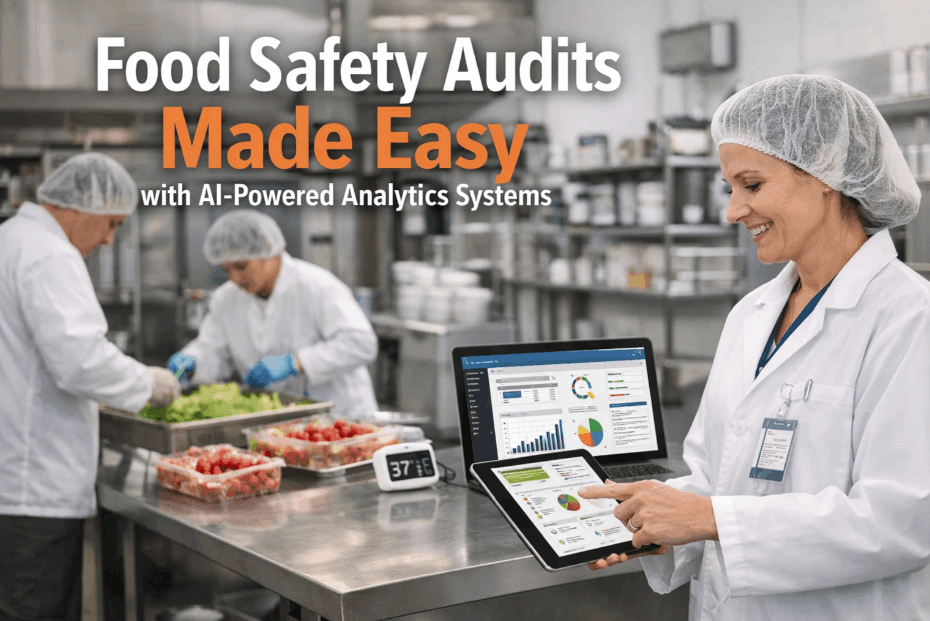
A food and beverage plant is only as safe as the ingredients, packaging, and processing aids arriving at its receiving dock, and every recall traceable to an upstream supplier is a reminder that food safety does not begin at the plant gate — it begins with a supplier qualification decision made months or years earlier. An approved supplier program is the documented framework that governs that decision: how a supplier is initially qualified, how their risk is categorized, how often they are audited, and how their ongoing performance is monitored against food safety expectations. Under FSMA Section 117 Subpart G, GFSI schemes, and USDA-FSIS regulations, the supplier program is one of the first documents an auditor asks to see. iFactory helps food processors build, structure, and continuously monitor their approved supplier program end to end, with full workflow support available at iFactory support.
Approved Supplier Program · HACCP Compliance
Building an Approved Supplier Program That Actually Controls Upstream Food Safety Risk
Risk-based supplier categorization, audit frequency logic, performance monitoring, and corrective action workflows — designed to satisfy FSMA Supply-Chain Program, GFSI schemes, and USDA-FSIS requirements.
3 Tiers
Risk categories driving audit frequency
FSMA
Subpart G Supply-Chain Program required
100%
Ingredient suppliers qualified before first receipt
Annual
Minimum performance review cycle
The Regulatory Backbone
Why an Approved Supplier Program Is a Documented Legal Requirement
The approved supplier program is not a best practice suggestion — it is a codified expectation across every food safety regulation and GFSI scheme applicable to processing facilities. What differs between regulations is scope, level of prescription, and how the corresponding hazard controls are defined, but the underlying obligation to qualify and monitor upstream suppliers is consistent.
FDA
FSMA Preventive Controls — Subpart G
Requires a documented Supply-Chain Program when a receiving facility has identified a hazard requiring a supply-chain-applied control. The program must include supplier approval, verification activities, and records of both.
USDA
FSIS HACCP & Sanitation Rules
Meat, poultry, and egg processors are expected to document that incoming materials meet HACCP hazard control requirements, with supplier verification part of the plant's hazard analysis and prerequisite programs.
GFSI
SQF, BRCGS, FSSC 22000
All GFSI-benchmarked schemes require a formal approved supplier program with risk categorization, documented approval criteria, ongoing monitoring, and corrective action for non-conforming suppliers.
EU
Regulation (EC) 178/2002
One-step-back traceability plus supplier due diligence expectations, with additional sector-specific requirements under the General Food Law and downstream regulations for allergens, additives, and contaminants.
What Counts as a Supplier
The Full Universe Your Program Needs to Cover
One of the most common gaps in supplier programs is scope. Plants routinely qualify ingredient suppliers rigorously but overlook packaging, processing aids, and outsourced services — all of which can introduce food safety hazards. A defensible program starts by listing every category that touches the product or its production environment.
Direct Contact
Raw Ingredients
Meat, dairy, produce, grains, spices, cultures, flavorings — anything becoming part of the finished product.
Direct Contact
Primary Packaging
Films, cans, bottles, closures, pouches, liners — packaging in direct product contact.
Support
Processing Aids
Enzymes, release agents, filtration media, coatings, technical proteins — used in process, may leave residues.
Support
Secondary Packaging
Cartons, cases, pallets, stretch wrap — no direct product contact but influences pest and contamination control.
Environment
Sanitation Chemicals
CIP detergents, sanitizers, hand hygiene products, foaming agents — direct residue potential on equipment.
Environment
Water & Utilities
Municipal water, well water treatment, compressed air, steam boiler chemicals contacting product zones.
Service
Outsourced Services
Co-manufacturing, contract packaging, laboratory testing, pest control, sanitation contractors, transport.
Service
Logistics & Warehousing
Cold storage 3PLs, refrigerated transport, dry warehousing — temperature abuse and cross-contact risk points.
Risk Categorization Model
The Three-Tier Framework That Drives Everything Else in the Program
Every supplier and every material is assigned to a risk tier at the point of qualification, and that tier determines audit frequency, verification method, and monitoring intensity. Risk categorization is not a one-time exercise — it is reviewed annually and whenever the supplier changes, the material changes, or a food safety event occurs. The three-tier structure below is the most widely used framework across food and beverage plants, but the specific criteria driving tier assignment are customized to product category, regulatory sensitivity, and downstream process capability. What matters for audit defensibility is that the criteria are documented, consistently applied, and traceable back to the hazard analysis.
HIGH RISK
Ready-to-eat proteins, raw dairy, allergen-containing ingredients, in-shell eggs, novel or high-hazard imports
Hazard Profile
Materials with a reasonably foreseeable pathogen, allergen, chemical, or physical hazard requiring a supply-chain-applied control.
Approval Method
On-site audit before first receipt, GFSI certificate acceptance where applicable, formal risk assessment on file.
Verification
Annual on-site audit or GFSI recertification, plus lot-level COA verification and periodic finished product testing.
MEDIUM RISK
Shelf-stable ingredients, primary packaging films, sanitation chemicals, low-moisture products with kill step
Hazard Profile
Materials with credible hazards that are controlled by downstream process steps, or by supplier prerequisite programs.
Approval Method
Documented questionnaire, GFSI or third-party certificate review, sample testing, first-article inspection.
Verification
Biennial audit or continuous certificate review, COA on every lot, periodic verification testing per risk plan.
LOW RISK
Secondary packaging, pallets, non-contact spare parts, non-food-zone services, office consumables
Hazard Profile
Materials or services with no reasonably foreseeable food safety hazard under normal handling conditions.
Approval Method
Basic supplier questionnaire, business registration verification, food contact declaration where applicable.
Verification
Triennial questionnaire refresh, ongoing receiving inspection, complaint-triggered review as needed.
The Supplier Lifecycle
Every Stage a Supplier Passes Through Under the Program
Stage 01
Sourcing & Initial Screening
Procurement identifies a candidate supplier. Food safety receives a basic pre-qualification questionnaire covering GFSI certification status, HACCP program presence, insurance, and product category alignment. Suppliers failing minimum criteria are rejected before formal qualification begins.
Stage 02
Risk Categorization
The material and the supplier are placed into the three-tier risk framework based on hazard profile, downstream kill step availability, geographic origin, and regulatory sensitivity. Categorization is documented and drives the qualification path from this point forward.
Stage 03
Formal Qualification
Full supplier questionnaire, food safety plan review, allergen program, recall procedure, and evidence of prerequisite programs. For high-risk categories, an on-site audit is scheduled and completed before first receipt is authorized.
Stage 04
Approval & Onboarding
Once qualification is complete and any corrective actions are closed, the supplier is added to the approved supplier list with the specific materials and categories authorized. Purchase orders can only be placed against approved combinations.
Stage 05
Ongoing Verification
COA review on incoming lots, receiving inspection sampling, periodic finished product testing, complaint tracking, and audit cycle adherence per the risk tier. Any signal of degradation triggers re-verification ahead of the scheduled cycle.
Stage 06
Performance Review
Annual review of every approved supplier against food safety scorecard metrics, with tier reassignment where warranted. Underperforming suppliers move to corrective action or provisional status, and suspended suppliers are removed from the approved list.
A Supplier Program Only Works If Every Purchase Order Is Blocked Against Non-Approved Combinations, and Every Audit Cycle Is Tracked Without Manual Follow-Up.
iFactory connects supplier approval, risk tier, audit calendar, and receiving verification into one continuous record — so no lot enters the plant from a supplier that has quietly slipped past its verification date.
Audit Frequency & Verification Methods
Matching the Right Verification Activity to the Right Supplier Tier
Verification Activity
High Risk
Medium Risk
Low Risk
On-Site Audit
Annual
Every 2 years
Triggered only
GFSI Certificate Review
Each recertification
Each recertification
Where applicable
Questionnaire Refresh
Annual
Every 2 years
Every 3 years
COA Verification
Every lot
Every lot
Where specified
Verification Testing
Per lot or per plan
Sampling plan basis
Not required
Receiving Inspection
Every receipt
Every receipt
Every receipt
Performance Scorecard
Quarterly review
Semi-annual review
Annual review
Supplier Performance Scorecard
The Metrics That Actually Signal Whether a Supplier Is Drifting
COA Compliance Rate
Target: 100%
Percentage of received lots arriving with a complete, correct Certificate of Analysis meeting the agreed specification. Any drop signals paperwork discipline problems that often precede specification failures.
Receiving Rejection Rate
Target: below 1%
Lots rejected at receiving for damage, temperature abuse, wrong material, missing documentation, or visible quality issues. Rising trend indicates upstream handling or logistics degradation.
Complaint Attribution
Target: zero
Consumer complaints and internal quality events traceable to the supplier's material. Even one event triggers a formal investigation and can prompt tier reassessment.
Audit Score Trend
Target: stable or rising
Score movement across successive audits. Declining scores, even when still above minimum acceptance threshold, warrant escalated verification ahead of the next cycle.
On-Time Documentation
Target: within 24 hours
Time from request to receipt of updated certificates, allergen statements, or corrective action responses. Sluggish responsiveness is often the earliest signal of internal issues at the supplier.
Recall & Withdrawal History
Target: none in period
Any recall or market withdrawal affecting the supplier's operations in the review period, regardless of whether the specific material affected your plant, is reviewed and factored into tier confirmation.
Re-Verification Triggers
Events That Force a Supplier Back Through the Approval Cycle
Ownership or Facility Change
Supplier acquisition, plant relocation, or a shift of production to a different facility invalidates the original approval basis. Re-qualification against the new facility is required before the next receipt.
GFSI Certificate Lapse or Downgrade
Loss of certification, transition to a lower-tier scheme, or a materially reduced audit score triggers immediate re-verification and, for high-risk categories, potential suspension until resolved.
Positive Pathogen or Allergen Finding
Any confirmed pathogen result, allergen cross-contact event, or foreign material incident linked to the supplier's material stops receipt of the affected material and initiates supplier corrective action review.
Regulatory Action or FDA Warning Letter
FDA Form 483 observations, warning letters, USDA Notice of Intended Enforcement, or import alerts affecting the supplier's operations trigger a full document review and possible on-site audit before continued receipt.
Recall or Withdrawal Event
Any recall by the supplier — regardless of product line — triggers a review of whether the affected supplier processes, batches, or facilities intersect with materials shipped to your plant.
Complaint Pattern or Repeat Rejection
A cluster of consumer complaints, receiving rejections, or in-process quality events traceable to the supplier triggers escalation regardless of overall scorecard score. Patterns are the leading signal, not thresholds.
FSMA Supply-Chain Program Alignment
How the Approved Supplier Program Maps to Subpart G Requirements
FSMA Section 117 Subpart G requires a documented Supply-Chain Program whenever the receiving facility's hazard analysis identifies a supply-chain-applied control. The approved supplier program is the vehicle that satisfies this obligation, and each of the four core FSMA elements below must be visible in the program documentation.
§ 117.410
Supplier Approval
Written approval based on food safety performance evidence before use of the raw material.
§ 117.415
Verification Activities
On-site audit, sampling and testing, or review of relevant food safety records at defined frequency.
§ 117.420
On-Site Audit Requirements
Annual audit required when hazard has SAHCODHA-level severity and controlled by supplier.
§ 117.475
Records Documentation
Written supply-chain program, approval records, verification records — retained for two years.
Field Example
A Beverage Manufacturer Consolidating 340 Suppliers Into a Tiered Program in Four Months
A multi-plant beverage manufacturer operating under SQF Edition 9 was carrying 340 active suppliers across ingredients, packaging, sanitation chemicals, and outsourced services, with the approved supplier list maintained across three separate spreadsheets and no consistent risk categorization applied. Audit preparation regularly consumed two weeks of the food safety team's time, and the most recent recertification audit had flagged four suppliers whose GFSI certificates had lapsed unnoticed for periods ranging from two to seven months, resulting in a major non-conformance and an accelerated re-audit timeline imposed by the certification body.
Over a sixteen-week rollout on iFactory, the manufacturer restructured its approved supplier list into a single record with each supplier and each material combination assigned to a documented risk tier, automated tracking of GFSI certificate expiry dates with escalation ninety, sixty, and thirty days before expiry, and receiving system integration that blocked purchase orders against any supplier-material pair where verification had lapsed. The subsequent audit cycle closed with zero supplier program findings, and the food safety team estimated that the reduction in manual list maintenance freed roughly one full-time-equivalent of team capacity that has since been redirected to on-site supplier audits, allowing the annual on-site audit coverage of high-risk suppliers to increase substantially compared to the previous cycle.
The certificate expiry escalation has, as of the most recent review period, caught seven lapsing certificates before receipt was affected and one supplier's transition to a different GFSI scheme that would otherwise have gone unnoticed until the next scheduled review. Performance scorecards now roll up automatically for the quarterly supplier review meeting rather than being manually compiled from four separate sources, and the food safety team has been able to introduce a formal supplier corrective action workflow that routes non-conformances directly to the assigned buyer and food safety reviewer with due-date tracking. The most substantial cultural change reported by the team has been the shift from reactive supplier management — investigating problems after a receiving rejection or complaint — to proactive tier reassessment based on trending scorecard signals, catching several suppliers whose performance was drifting before any material had actually been affected. The manufacturer is now rolling the same program structure to its two additional plants in the same corporate footprint, with a projected completion timeline of six months for full multi-site consolidation.
340 suppliers
Consolidated into a single tiered program
16 weeks
Full rollout across multi-plant footprint
Zero findings
Supplier program at next SQF audit
Frequently Asked Questions
What Food Safety Managers Ask Before Restructuring Their Supplier Program
Is a GFSI certificate on file enough to approve a supplier, or does an on-site audit still apply?
The answer depends on the risk tier and the applicable regulation. Under FSMA Section 117.410, a valid GFSI certificate can serve as an approval basis for suppliers where a supply-chain-applied control is required, provided the certificate covers the scope of the specific hazard being controlled. Under GFSI schemes themselves, acceptance of another site's certificate typically satisfies audit frequency expectations for medium and lower risk suppliers, but for the highest severity hazards — pathogens in ready-to-eat foods, undeclared allergens — many audit schemes and receiving facility policies still require an on-site audit at the initial qualification and periodically thereafter. To align your specific supplier tier structure with the certification acceptance policy that best fits your risk profile,
book a demo.
How is risk categorization actually done, and how defensible does it need to be?
Risk categorization is a documented risk assessment that combines the inherent hazard profile of the material, the availability of a downstream control step in your process, the supplier's track record, and any geographic or regulatory factors relevant to the supply chain. It is not a single number but a rationale, and auditors expect to see the reasoning behind each tier assignment, not just the assignment itself. A common practical structure is a scored matrix covering pathogen risk, allergen risk, chemical and physical hazard risk, kill step availability, and geographic risk, with the resulting tier documented in the supplier record. Reassessment happens annually and whenever a triggering event occurs. For a starter risk assessment template calibrated to your product category, contact
iFactory support.
Do packaging and secondary packaging suppliers really need to be part of the approved supplier program?
Primary packaging in direct contact with product must always be part of the approved supplier program, with a defined tier and verification method appropriate to the material and food contact application. Secondary packaging carries lower food safety risk but is not exempt — cross-contact from external contamination, pest harborage in cases and pallets, and undeclared allergens in printed cartons are all documented incident types. Most well-designed programs include secondary packaging in a low-risk tier with a documented questionnaire cycle and receiving inspection, rather than excluding it entirely. Excluding a category from the program means being able to defend that decision through your hazard analysis, and packaging is rarely a defensible exclusion.
How should co-manufacturers and contract packagers be handled — are they suppliers or something else?
Co-manufacturers and contract packagers are treated as suppliers under the approved supplier program, but with additional layers reflecting the fact that they are producing your branded product on your behalf. This typically means higher-frequency on-site audits regardless of certification status, documented review of their food safety plan against your product specifications, review of their allergen matrix against your product portfolio, and often direct verification testing of finished product from their facility. The approval scope is defined per product SKU, not just per co-manufacturer, so that a co-manufacturer approved for one product line does not automatically become approved for a new SKU without incremental qualification.
How does iFactory actually support day-to-day approved supplier program work?
iFactory maintains a single approved supplier list with each supplier and each material combination assigned to a documented risk tier, with automated tracking of every verification activity due date — GFSI recertification, on-site audit cycle, questionnaire refresh, COA compliance rate, and performance scorecard cadence. Purchase order systems can be blocked against supplier-material combinations where verification has lapsed, so lots cannot enter the plant from a supplier that has quietly slipped past its scheduled audit. Certificate expiry escalations run at ninety, sixty, and thirty days before expiry with routing to the assigned food safety reviewer and the responsible buyer, so both procurement and food safety are aware ahead of any impact on production continuity. Corrective action workflows route non-conformances directly to the supplier with due-date tracking, complaint attribution and receiving rejection data feed the performance scorecard automatically, and the whole record is queryable on demand during audits by supplier, by material, by tier, or by verification status. Multi-plant footprints share a single supplier master with per-plant scope overlays, so a supplier approved for one plant is not automatically approved for another without explicit qualification. To see it running against your actual supplier base and category mix,
book a demo.
Turn Your Approved Supplier List From a Spreadsheet Liability Into a Living, Audit-Ready Control System.
Risk tiers, audit cycles, certificate tracking, performance scorecards, and receiving verification — one continuous record across every supplier and every material.