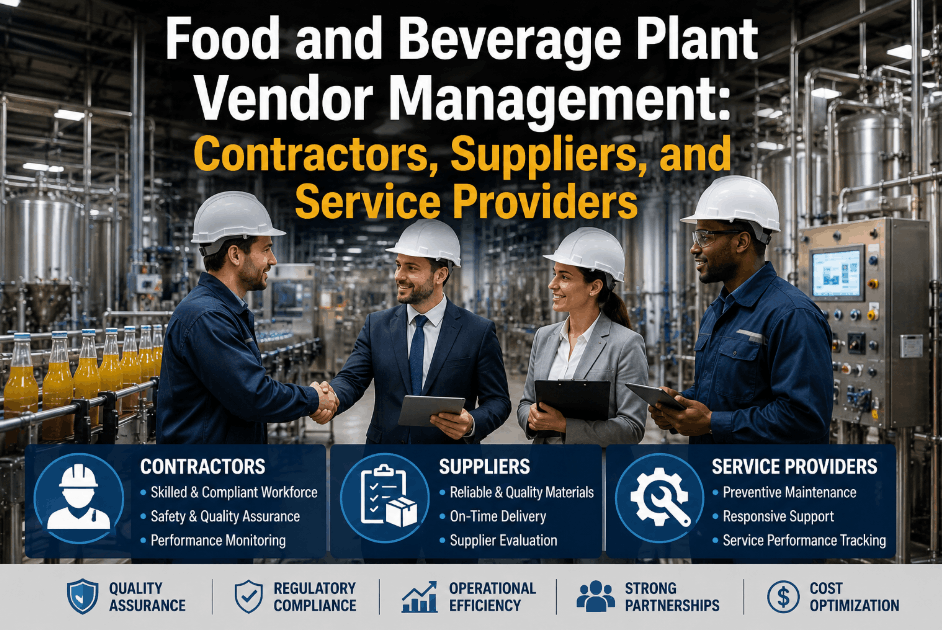
Food and beverage plant vendor management has evolved from a simple procurement checklist into a mission-critical operational discipline. With dozens of contractors, suppliers, and service providers moving through your facility every month—each carrying compliance obligations, food safety training requirements, and contractual performance standards—the margin for administrative error is essentially zero. A single lapse in contractor credential verification or a missed SLA review can expose your plant to regulatory action, product safety risk, and customer penalties that dwarf the cost of any individual vendor relationship. If your facility still manages vendors through spreadsheets and email threads, Book a Demo to see how intelligent vendor governance can be deployed across your entire contractor and supplier network in weeks.
Why Food Plant Vendor Management Is a Regulatory and Operational Priority
FSMA regulations explicitly hold food manufacturers accountable for the qualifications and actions of contractors and service providers operating within their facilities. When vendor records are fragmented across procurement, HR, and maintenance systems, critical compliance gaps—expired credentials, unverified food safety training, unreviewed SLA performance—accumulate invisibly until they surface during an audit or incident. Comprehensive food plant vendor management software eliminates these silos by creating a single, auditable record for every contractor, supplier, and service provider relationship.
Fragmented Contractor Records
Credentials, insurance certificates, food safety training records, and site access authorizations stored across disconnected systems create compliance blind spots that only surface during audits or incidents.
Risk: Regulatory non-complianceCredential Expiry Blind Spots
Without automated tracking, expired contractor qualifications, lapsed insurance policies, and outdated food hygiene certifications go undetected—exposing the facility to liability the moment an uncredentialed worker enters production.
Risk: Unqualified site accessUntracked Supplier SLA Performance
Delivery reliability, quality defect rates, and service response times are rarely tracked systematically against contracted standards, making it impossible to identify underperforming suppliers before they affect production output.
Risk: Supply chain disruptionInconsistent Safety Induction
Variable contractor safety induction processes create uneven food safety awareness with no auditable record confirming that every individual entering the facility has completed mandatory hygiene training protocols.
Risk: Food safety incident liabilityAI-Driven Food Plant Vendor Management: Key Features and Operational Functions
Leading food plant vendor management platforms combine automated credential verification, structured food safety training documentation, real-time SLA performance tracking, and data-driven vendor scorecarding into a unified operational intelligence layer. Plant directors looking to evaluate these capabilities against their current vendor governance process can Book a Demo for a live walkthrough applied to their own vendor network.
Automated Contractor Credential Management for Food Manufacturing Compliance
Vendor Onboarding and Document Collection
A structured digital onboarding workflow captures all required credentials, certifications, insurance documentation, and food safety training records from new contractors before they are granted any site access or operational authorization.
Automated Expiry Tracking and Renewal Alerts
The platform continuously monitors credential validity dates across all active vendors, issuing automated renewal requests and internal escalation alerts to compliance teams when expiry windows approach configurable thresholds.
Access Authorization Integration
Vendor credential status is synchronized with facility access control systems, ensuring contractors with expired or missing qualifications are automatically flagged and cannot receive site access until their compliance record is current.
Audit-Ready Compliance Reporting
All credential records, verification timestamps, renewal histories, and access authorization events are stored in a structured, timestamped audit log exportable on demand for regulatory inspections and customer audits.
Managing Food Safety Contractor Training Records Across Your Entire Vendor Workforce
AI-driven vendor management platforms treat food safety training as a mandatory credential attribute tied to the individual vendor contact record—not a paper form filed in an HR cabinet—ensuring training compliance is visible in real time across every active contractor regardless of workforce rotation. Facilities managing high-turnover contractor populations can Book a Demo to see how automated training record management scales across complex vendor workforces.
Mandatory Food Hygiene Induction Tracking
The platform tracks induction completion at the individual level, prevents access for personnel with incomplete inductions, and maintains a full completion history with timestamps for every audit requirement.
Compliance metric: Induction completion rateFood Safety Certification Renewal Management
Automated renewal management ensures contractor personnel with expiring HACCP, allergen, and food hygiene certifications receive renewal prompts in advance, with escalation workflows preventing uncertified individuals from continuing active assignments.
Compliance metric: Certification currency rateRegulator-Ready Food Safety Training Records
Structured training records for every contractor individual are stored in a centralized, exportable format that directly supports FSMA, BRC Global Standard, and SQF audit documentation requirements.
Compliance metric: Audit documentation completenessFood Plant SLA Tracking: Holding Suppliers and Service Providers to Contracted Standards
AI-driven food plant SLA tracking consolidates dispersed performance data—purchasing records, maintenance logs, quality inspection reports—into structured vendor performance records that enable objective, data-backed contract reviews and renegotiations. Without this visibility, SLA violations accumulate silently until they cause production disruption or a quality non-conformance event.
| Vendor Category | Key SLA Metrics Tracked | Performance Data Source | Review Frequency | Consequence if Missed |
|---|---|---|---|---|
| Ingredient Suppliers | On-time delivery, quality defect rate, CoA compliance | Goods receipt records, QC inspection logs | Monthly | Production schedule disruption, formulation non-compliance |
| Equipment Service Contractors | Response time, first-time fix rate, PM completion rate | Work order system, technician sign-off records | Quarterly | Extended equipment downtime, warranty risk |
| Sanitation Contractors | Cleaning verification pass rate, schedule adherence | Hygiene monitoring results, inspection reports | Monthly | Food safety non-conformance, audit failure risk |
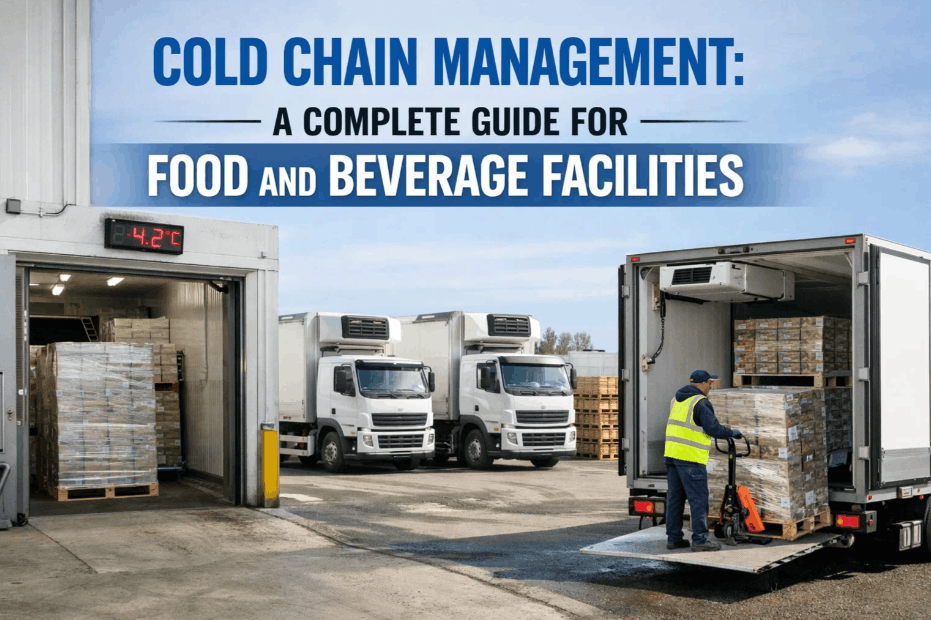
| Cold Chain Logistics Providers | Temperature compliance rate, delivery punctuality | Transport data loggers, delivery confirmation records | Monthly | Product quality loss, cold chain regulatory breach |
| Packaging Material Suppliers | Lead time adherence, defect rate, specification compliance | Goods receipt QC, line rejection records | Quarterly | Production line stoppages, product recall risk |
| Pest Control Contractors | Visit frequency, corrective action close-out rate | Site visit logs, action register, audit evidence | Quarterly | Pest incursion risk, BRC/SQF non-conformance |
Food Vendor Performance Scorecarding: Building a Data-Driven Supplier Evaluation Framework
Vendor performance scorecarding transforms subjective supplier evaluations into an objective, metrics-based governance framework by aggregating SLA compliance, quality defect records, food safety scores, and commercial reliability into a single composite vendor score. Facilities ready to build a structured vendor evaluation program can Book a Demo to see how the scorecarding framework applies to their existing supplier and contractor portfolio.
Complete performance data coverage across all active vendor relationships—eliminating evaluation gaps from informal or anecdotal assessments.
Improvement in contractor credential currency achieved by replacing manual tracking with automated expiry monitoring and structured renewal workflows.
Reduction in undetected SLA violations when continuous performance tracking replaces periodic manual reviews, enabling faster supplier accountability.
Reduction in time preparing vendor compliance documentation when records are stored in a structured, exportable, audit-ready format.
Governing Food Plant Outsourcing: Managing Contractor Risk Without Sacrificing Operational Flexibility
The most effective approach to food plant outsourcing governance combines proactive risk segmentation with differentiated oversight intensity applied automatically by AI-driven platforms—high-risk vendors like sanitation contractors and ingredient suppliers receive continuous monitoring and monthly SLA reviews, while lower-risk providers receive lightweight annual compliance checks without requiring manual effort. Plant directors can Book a Demo to map their vendor portfolio against a risk-tiered governance model.
High-Risk Vendor Category
Sanitation contractors, raw ingredient suppliers, and direct contact packaging providers require continuous credential monitoring, mandatory food safety training verification, monthly SLA reviews, and full audit trail documentation.
Oversight: Continuous · Real-timeMedium-Risk Vendor Category
Equipment maintenance contractors, pest control providers, and cold chain logistics partners require periodic credential verification, documented food hygiene induction completion, and quarterly SLA performance reviews.
Oversight: Periodic · StructuredLower-Risk Vendor Category
Indirect service providers with minimal production environment contact require basic site induction completion, annual insurance and credential confirmation, and contract performance reviews aligned to renewal cycles.
Oversight: Annual · LightweightHow Structured Vendor Management Creates Value Across the Food Manufacturing Organization
Deploying a centralized food plant vendor management system generates measurable value for every stakeholder—operations teams gain confidence that every contractor meets current food safety requirements, quality assurance teams gain auditable documentation for regulatory certifications, and finance teams gain the performance data needed to negotiate supplier contracts from a position of evidential strength.
Full Vendor Compliance Visibility
Real-time dashboards showing credential status, training compliance, and performance scores of every active contractor and supplier—giving operations leadership complete confidence that vendor governance requirements are being met at all times.
Audit-Ready Contractor Documentation
Structured, timestamped records of contractor credentials, food safety training completions, and corrective action responses that provide direct, exportable audit evidence for FSMA, BRC, SQF, and customer technical standard compliance.
Data-Driven Supplier Negotiation
Objective vendor performance scorecards replace anecdotal reviews with structured data—enabling procurement to negotiate contract renewals and pricing with the confidence of documented SLA compliance histories.
Food Plant Vendor Management — Frequently Asked Questions
What regulatory requirements drive the need for structured food plant contractor management?
FSMA Preventive Controls, BRC Global Standard, and SQF Code all include explicit obligations for managing contractor qualifications and training documentation. Structured vendor records provide the direct audit evidence required during regulatory inspections and customer certification audits.
How does AI-driven vendor management differ from a standard procurement system?
Traditional procurement systems manage commercial data—purchase orders and invoices. AI-driven vendor platforms add automated compliance monitoring, expiry alerting, and performance scoring that proactively identifies gaps before they create regulatory or operational problems.
Can the platform manage both regular suppliers and occasional service contractors?
Yes. Configurable vendor profiles apply different credential requirements, training obligations, and SLA metrics to each vendor category, with oversight intensity automatically scaled to each relationship's risk level and engagement frequency.
How does food safety training documentation integrate with CMMS or HR systems?
Modern platforms offer bidirectional integration with CMMS and HR systems, keeping contractor compliance data current across all systems of record and eliminating the manual reconciliation that creates compliance gaps in fragmented environments.
What is the typical implementation timeline for deploying vendor management software?
Most food and beverage facilities are operationally live within two to four weeks. Full AI-driven scorecarding accuracy typically reaches steady state within 60 to 90 days as performance data accumulates across the active vendor portfolio.
How does the platform handle contractors working across multiple food manufacturing sites?
Multi-site vendor management shares credential records across facilities while maintaining site-specific induction requirements and access records—preventing documentation duplication without compromising each site's individual compliance audit trail.