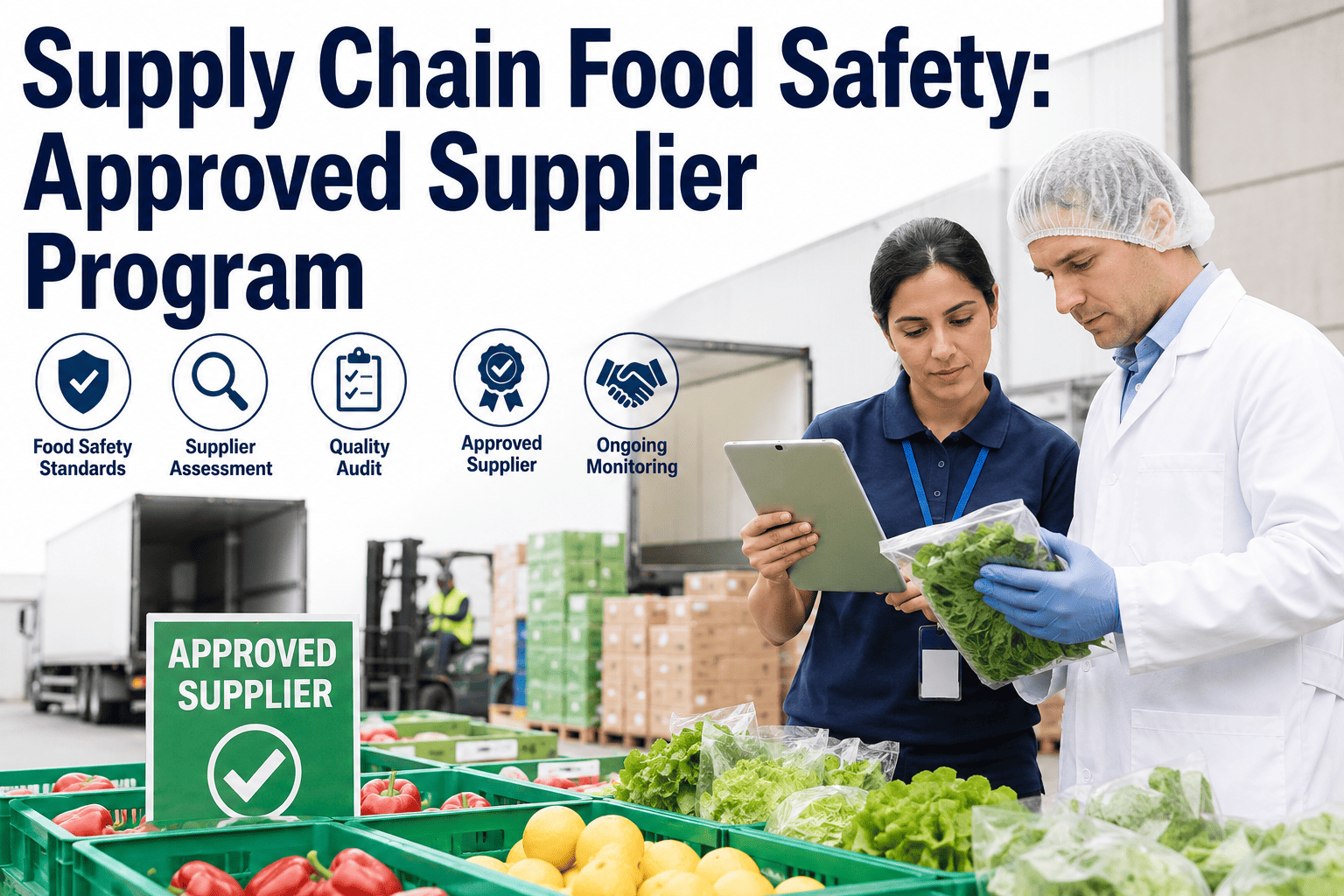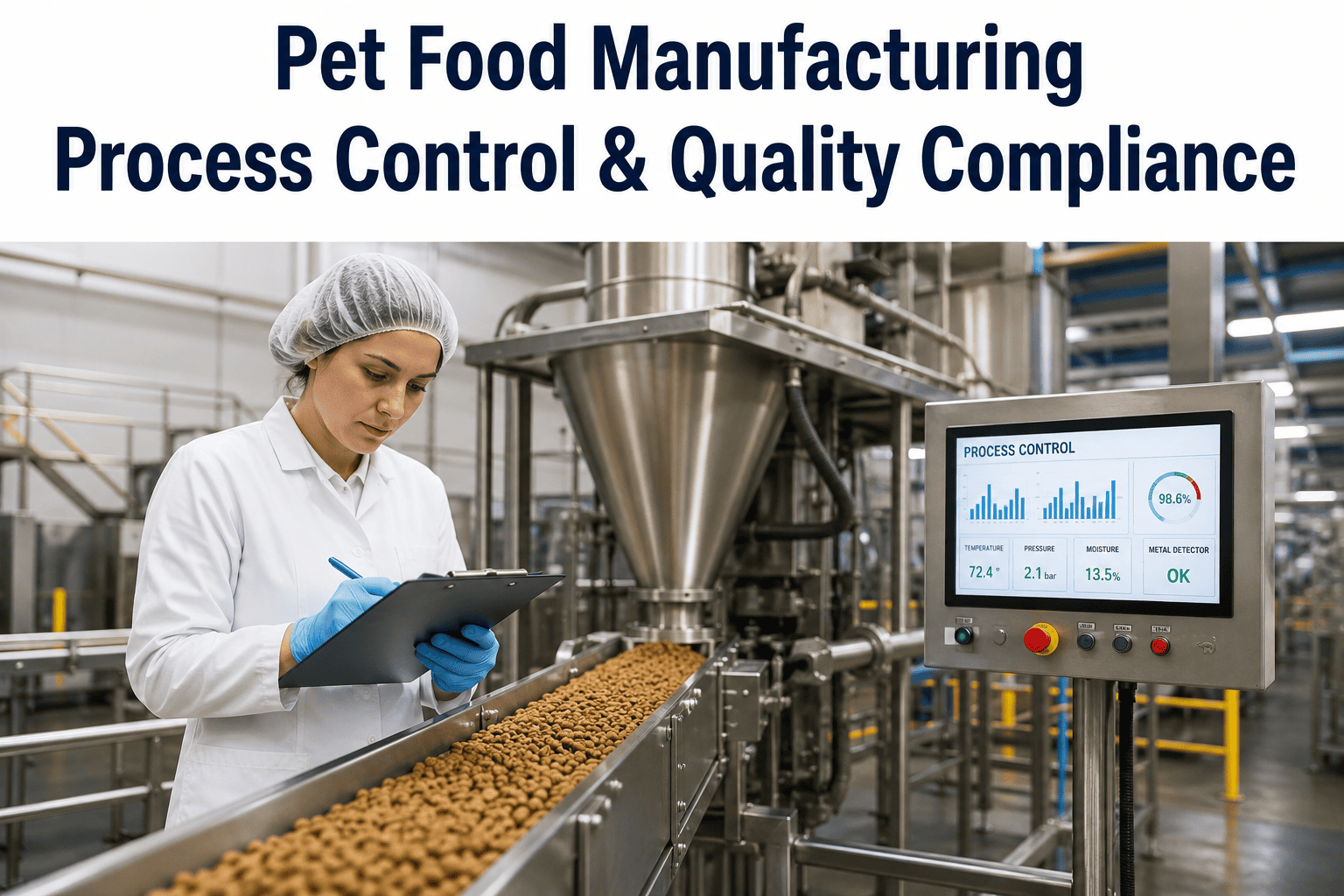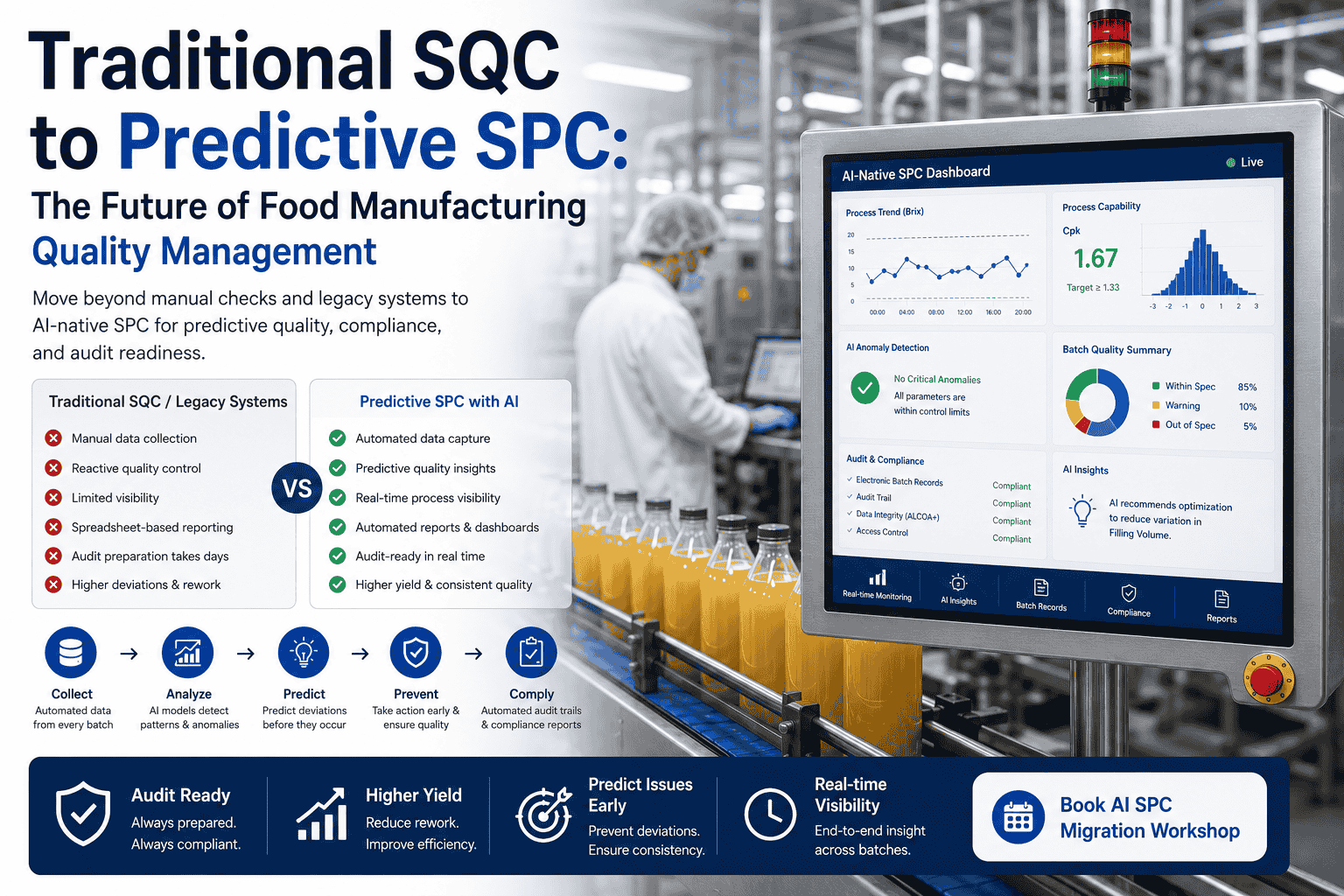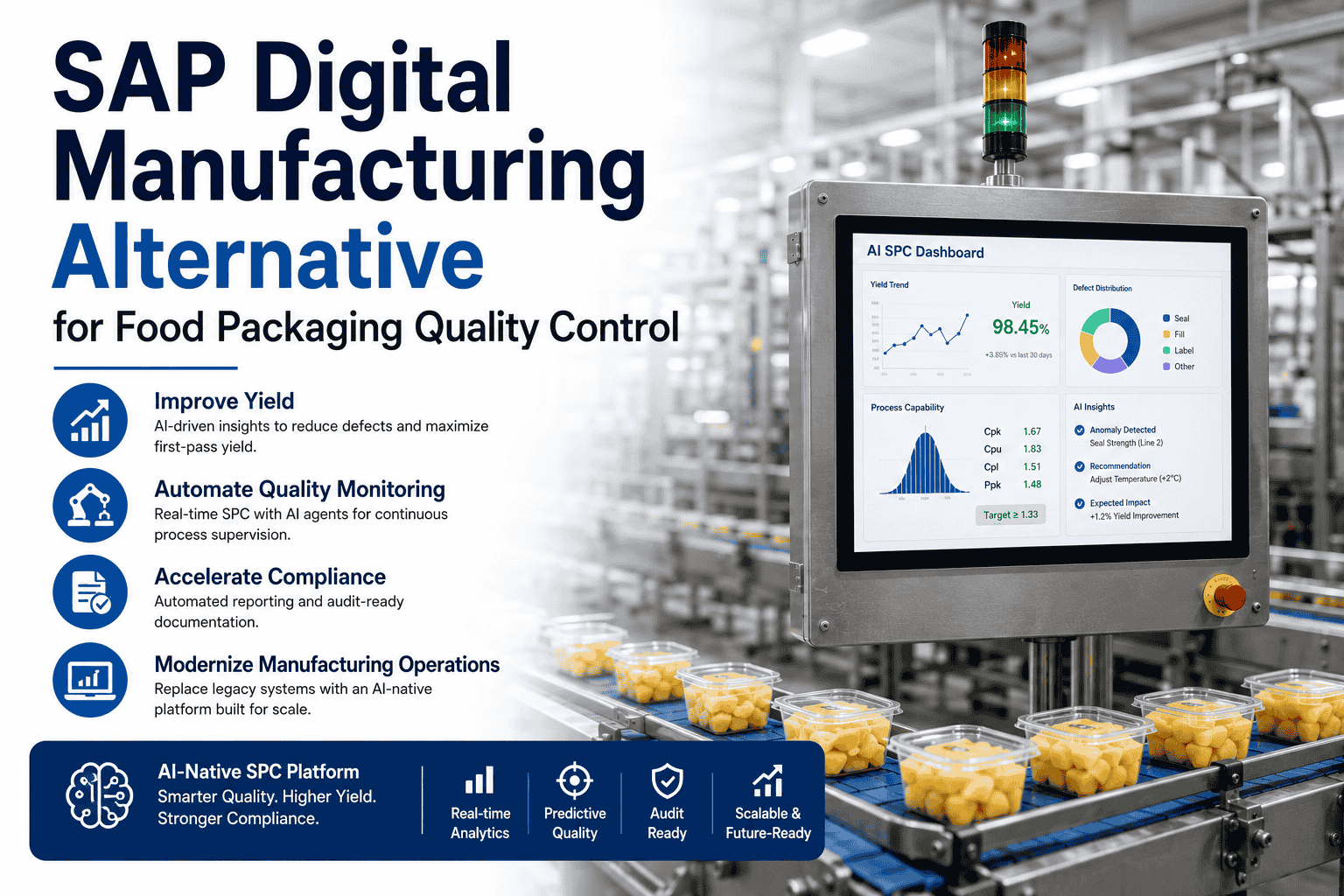
Food safety failures cost the global food industry over $110 billion annually in recalls, lawsuits, brand damage, and lost consumer trust. In 2026, AI-powered food safety systems are transforming how manufacturers detect contamination, predict spoilage, monitor supply chain integrity, and ensure regulatory compliance—from farm gate to consumer plate. Facilities deploying AI-driven quality control report 90% faster contamination detection, 60% fewer product recalls, and 40% reduction in food waste through predictive shelf-life analytics. With the FDA's New Era of Smarter Food Safety, EU General Food Law updates, and retailer-mandated traceability requirements tightening simultaneously, AI is no longer a competitive advantage—it's the new food safety baseline. This guide explores how food manufacturers are deploying AI across the supply chain to build the quality control infrastructure that protects consumers, brands, and bottom lines in 2026 and beyond.
The Food Safety Crisis: Why AI Intervention Is Urgent
Traditional food safety systems—built around periodic manual inspections, paper-based HACCP logs, and reactive recall processes—are failing to keep pace with the speed, scale, and complexity of modern food supply chains. Three converging pressures are making AI-powered food safety an operational imperative.
Foodborne Illness Scale
An estimated 600 million people worldwide suffer from foodborne illness annually, with 420,000 deaths. Contamination events that slip through traditional quality gates create public health emergencies and catastrophic brand damage.
Annual Industry Cost
Product recalls, lawsuits, regulatory penalties, destroyed inventory, and brand recovery campaigns cost the global food industry over $110 billion per year. A single major recall can cost an individual company $10–100M+ in direct and indirect losses.
Supply Chain Blind Spots
78% of food manufacturers report limited visibility beyond their Tier 1 suppliers. Temperature excursions, cross-contamination events, and fraudulent ingredient substitution in upstream supply chains remain largely undetected until products reach consumers.
Concerned about food safety gaps in your supply chain? Book a consultation with iFactory's food safety AI specialists.
How AI Transforms Food Safety: 6 Critical Capabilities
AI-powered food safety isn't a single technology—it's an integrated suite of capabilities that work together to prevent, detect, predict, and respond to food safety risks across every stage of production and distribution.
Computer Vision Inspection
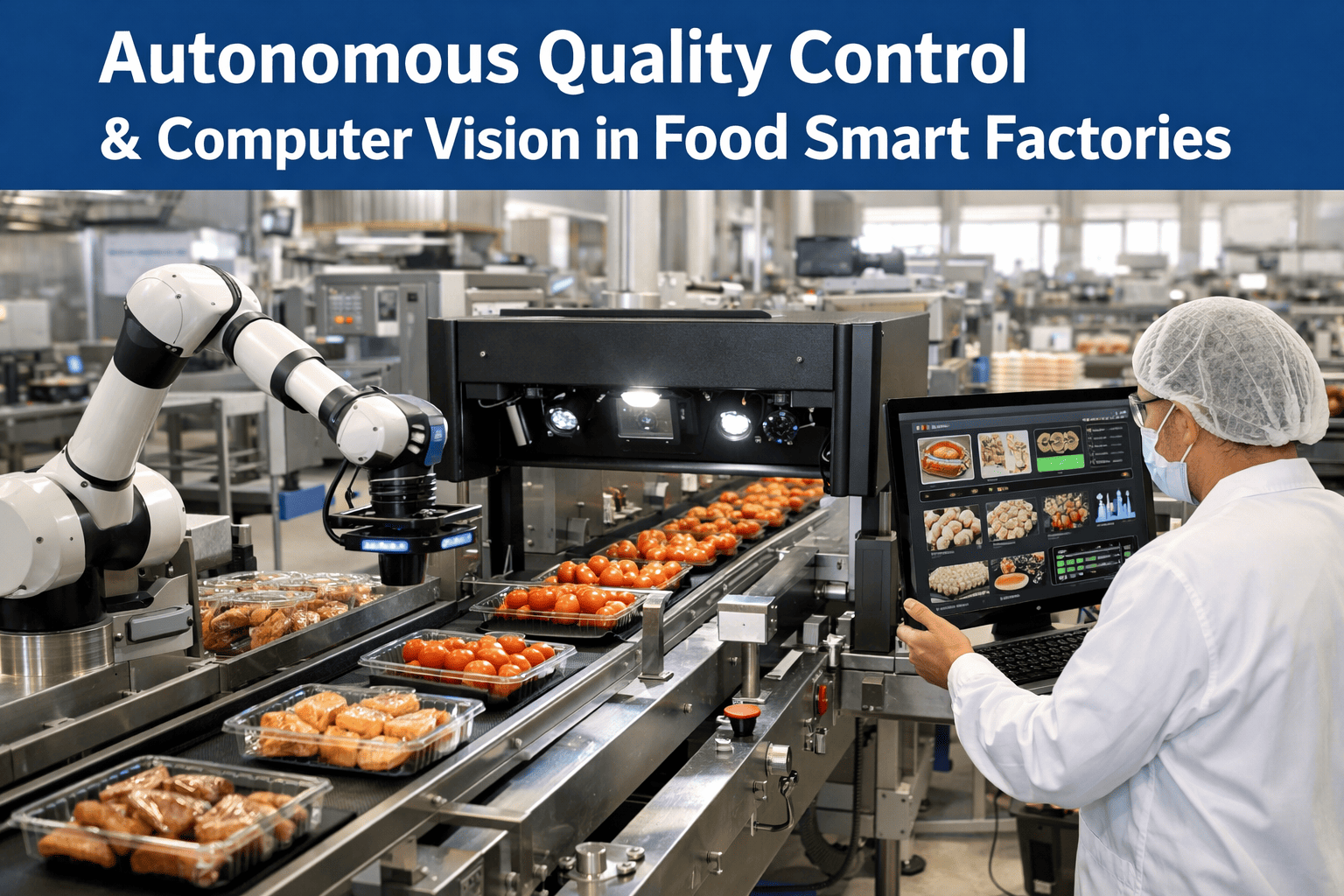
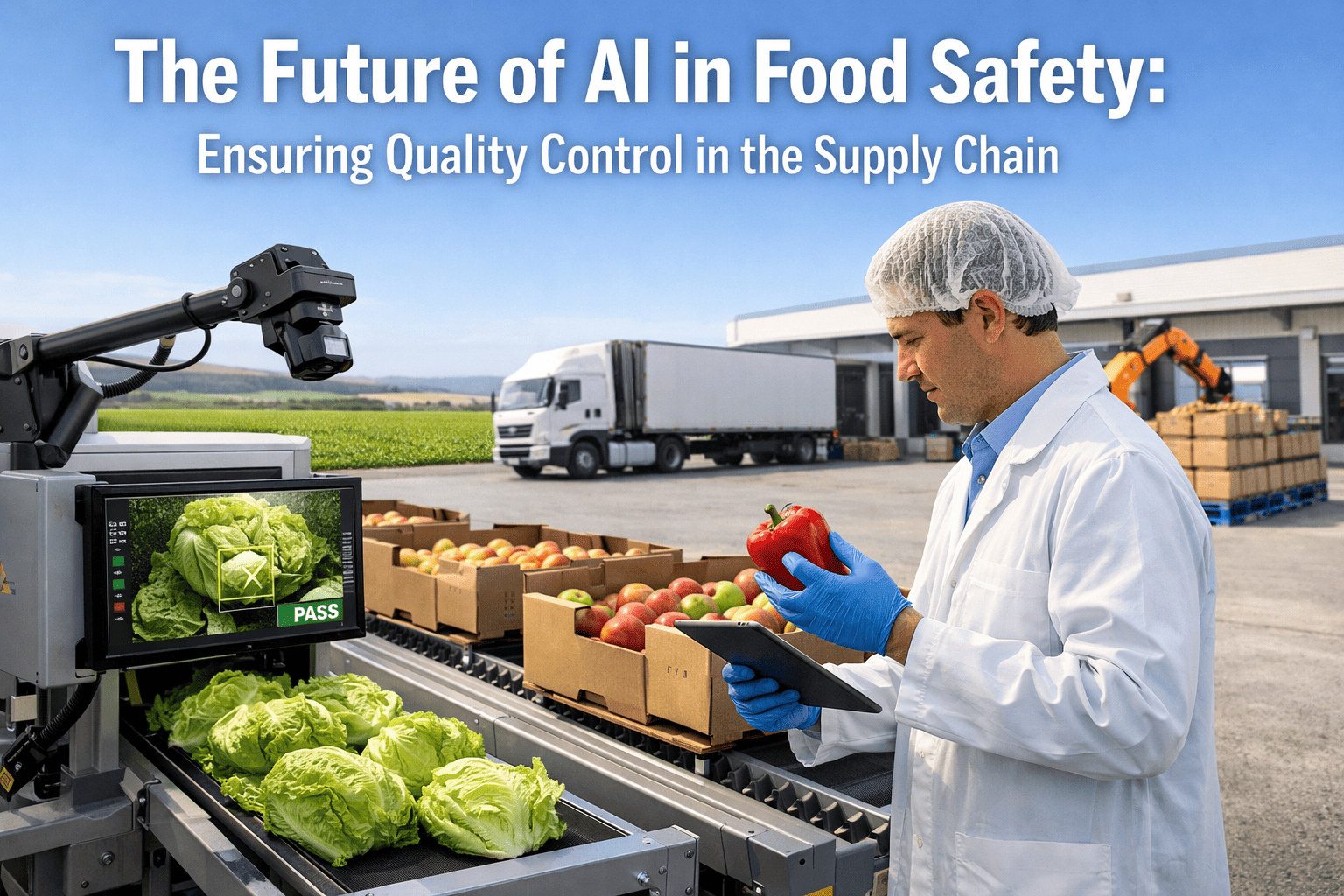
High-speed cameras paired with deep learning models inspect every product on the line—detecting foreign objects (metal, plastic, glass, bone), surface defects, color anomalies, shape irregularities, and packaging integrity failures at rates exceeding 1,000 items per minute.
Predictive Spoilage & Shelf-Life Analytics
Machine learning models analyze environmental sensor data—temperature, humidity, gas composition, microbial growth curves—to predict product shelf life in real-time. Dynamic expiration dating replaces conservative static estimates, reducing food waste by 30–40% while ensuring safety margins are never compromised.
Pathogen Risk Prediction
AI models trained on historical contamination data, environmental swab results, seasonal patterns, and ingredient risk profiles predict where and when pathogen contamination is most likely to occur—enabling targeted preventive interventions rather than reactive testing after contamination events.
Supply Chain Traceability & Provenance
AI-powered traceability platforms track every ingredient from source to shelf using IoT sensors, blockchain verification, and digital lot tracking. When a safety event occurs, AI identifies affected products across the entire distribution network in minutes instead of days—enabling surgical recalls that protect consumers while minimizing commercial damage.
IoT Cold Chain Monitoring
Wireless temperature, humidity, and shock sensors continuously monitor storage and transport conditions across the entire cold chain. AI algorithms detect temperature excursions in real-time, predict their impact on product safety and quality, and trigger automated alerts and corrective actions before compromised products reach consumers.
Automated Compliance & HACCP Documentation
AI systems automatically capture, validate, and archive every critical control point (CCP) measurement, corrective action, and verification record required by HACCP, FSMA, BRCGS, SQF, and FSSC 22000. Digital compliance eliminates paper-based record-keeping errors and ensures audit readiness 365 days a year.
AI Across the Food Supply Chain: Stage-by-Stage Applications
AI food safety technologies deploy across every link of the supply chain—each addressing the specific contamination risks, quality challenges, and traceability requirements unique to that stage.
Pre-Harvest & Raw Material Intake
Satellite and drone imagery analyzed by AI monitors crop health, pesticide application patterns, and soil contamination indicators. At receiving docks, hyperspectral cameras and electronic noses screen incoming raw materials for chemical residues, mycotoxins, and microbial contamination—rejecting non-conforming shipments before they enter the production facility.
In-Line Production Quality Control
Computer vision systems inspect every item for foreign objects, surface defects, fill level accuracy, and label correctness at production speed. AI monitors CCP data streams (cooking temperatures, metal detector signals, X-ray images) continuously—automatically flagging deviations and triggering hold actions before non-conforming product advances downstream.
Pack Integrity & Label Verification
Vision systems verify seal integrity, detect micro-leaks in modified atmosphere packaging (MAP), confirm correct allergen declarations, validate barcode/QR readability, and check date coding accuracy. AI cross-references product formulation databases to catch allergen labeling errors that could trigger anaphylactic reactions and mandatory recalls.
Cold Chain Integrity & Predictive Quality
IoT sensors throughout warehouses, transport vehicles, and distribution centers feed continuous temperature and humidity data to AI models that predict remaining shelf life and flag cold chain breaches in real-time. Predictive algorithms calculate cumulative thermal exposure impact—preventing products with degraded safety margins from reaching retail shelves.
Consumer-Facing Traceability & Rapid Recall
QR-coded products enable consumers to verify origin, production date, safety certifications, and allergen information instantly. When safety events occur, AI-powered recall systems identify affected lot numbers across every distribution point in minutes—enabling targeted product withdrawal that protects consumers while minimizing unnecessary destruction of safe inventory.
Want to map AI food safety applications across your supply chain? Talk to our food safety specialists for a comprehensive risk and opportunity assessment.
2026 Food Safety Regulatory Landscape
Regulatory frameworks are evolving rapidly to mandate the digital traceability, preventive controls, and data-driven food safety systems that AI enables. This regulatory map shows the key compliance frameworks food manufacturers must navigate in 2026.
FSMA Section 204 — Food Traceability Rule
Mandatory electronic traceability records for high-risk foods on the Food Traceability List. Key Data Elements (KDEs) must be captured at each Critical Tracking Event (CTE) and provided to FDA within 24 hours of request.
FDA New Era of Smarter Food Safety
Blueprint for technology-driven food safety emphasizing AI/ML predictive analytics, IoT-enabled traceability, digital record-keeping, and data-driven preventive controls across the food supply chain.
EU General Food Law (Reg. 178/2002) + Digital Updates
Enhanced traceability requirements with mandatory digital record-keeping. One-step-forward, one-step-back traceability must be digitally documented and available to authorities within hours.
EU Farm to Fork — Digital Food Safety Framework
Comprehensive sustainability and safety framework requiring digital traceability, reduced pesticide use verification, and transparent labeling backed by auditable supply chain data systems.
GFSI-Benchmarked Schemes (BRCGS, SQF, FSSC 22000)
Major retailers require GFSI certification from all suppliers. 2026 scheme updates emphasize food safety culture metrics, environmental monitoring programs, and digital record-keeping as audit criteria.
Codex Alimentarius — AI & Digital Food Safety Guidelines
International food standards body developing guidance on AI applications in food safety, data integrity requirements for digital HACCP systems, and cross-border digital traceability interoperability.
Stay ahead of every food safety regulation. Book a regulatory readiness assessment with our compliance team.
Real-World Impact: AI Food Safety by the Numbers
The business case for AI in food safety is compelling and measurable. These benchmarks represent verified results from food manufacturers with mature AI-powered quality control and traceability systems deployed in 2026.
Faster Contamination Detection
AI vision and sensor systems detect contamination events in seconds vs. hours or days for traditional testing. Real-time detection prevents contaminated product from entering distribution, eliminating the need for post-market recalls.
Fewer Product Recalls
Preventive AI systems catch quality and safety issues before products ship. When recalls do occur, AI-powered traceability enables targeted withdrawals affecting 80% fewer SKUs than traditional broad-scope recalls.
Reduction in Food Waste
Predictive shelf-life analytics replace conservative static expiration dates with dynamic, data-driven estimates. Products with remaining safety margin are routed to discount channels or food banks instead of landfills.
Faster Audit Completion
Digital HACCP records, automated CCP monitoring logs, and AI-generated compliance reports reduce audit preparation from weeks to hours. Auditors access complete digital records instantly, eliminating paper chase delays.
Automate Food Safety Monitoring & Compliance
iFactory's food safety AI module connects vision inspection, sensor monitoring, traceability, and compliance reporting into a unified platform—with real-time dashboards and automated HACCP documentation.
5 Technologies Powering AI Food Safety Systems
Modern AI food safety platforms combine multiple sensing, processing, and integration technologies into a cohesive system. These five technology pillars form the backbone of production-grade food safety AI.
Multi-Modal Vision Systems
Combining RGB cameras, X-ray imaging, hyperspectral sensors, and near-infrared spectroscopy in unified inspection stations that detect foreign objects down to 0.5mm, measure chemical composition without destroying samples, and verify product authenticity—all at full production speed on the same conveyor line.
IoT Sensor Networks & Edge Computing
Wireless sensor meshes monitoring temperature, humidity, air quality, water activity, and gas composition across production environments, cold storage, and transport vehicles. Edge processors analyze data locally for sub-second response times—triggering equipment shutdowns, diversion gates, and operator alerts without waiting for cloud connectivity.
Blockchain-Backed Traceability
Immutable distributed ledger records create tamper-proof chains of custody from farm to fork. Every ownership transfer, processing step, and quality checkpoint is cryptographically verified—giving regulators, retailers, and consumers auditable proof of food safety compliance that cannot be retroactively altered or fabricated.
Predictive Analytics & Machine Learning
ML models trained on years of production data, environmental conditions, supplier quality histories, and contamination event records predict food safety risks before they materialize. Predictive models guide resource allocation for environmental monitoring, supplier audits, and testing programs—maximizing safety impact per dollar spent.
Rapid Pathogen Detection Platforms
AI-enhanced biosensors and molecular testing platforms deliver pathogen detection results in 2–4 hours instead of the 24–72 hours required by traditional culture-based methods. Machine learning interprets biosensor signals to identify Salmonella, Listeria, E. coli, and other pathogens with sensitivity matching gold-standard laboratory methods at a fraction of the time and cost.
Implementation Roadmap: Deploying AI Food Safety in Your Facility
Implementing AI-powered food safety follows a proven phased approach—starting with the highest-risk applications and expanding across the full supply chain as the system matures and ROI is validated.
Risk Assessment & Digital Foundation
- Audit current HACCP plan, CCP monitoring, and traceability gaps
- Prioritize AI deployment targets based on recall risk, contamination history, and ROI potential
- Deploy IoT sensor infrastructure for environmental and cold chain monitoring
- Establish digital data architecture connecting production, quality, and supply chain systems
Core AI Deployment — Vision & Monitoring
- Deploy computer vision inspection at critical quality gates (foreign objects, fill levels, labels)
- Activate AI-powered CCP monitoring with automated deviation alerts
- Implement digital HACCP record-keeping and automated compliance documentation
- Train quality and food safety teams on AI system operation and exception handling
Advanced Analytics & Traceability
- Deploy predictive shelf-life and spoilage analytics across product portfolio
- Activate end-to-end digital traceability for FSMA Section 204 compliance
- Implement pathogen risk prediction models using historical and environmental data
- Launch supplier quality AI scoring and risk-based audit scheduling
Supply Chain Intelligence & Continuous Improvement
- Extend AI monitoring to Tier 2–3 suppliers and contract manufacturers
- Deploy consumer-facing traceability (QR-code product provenance)
- Build predictive models for food fraud detection and ingredient authenticity
- Integrate food safety AI with sustainability and waste reduction analytics
Ready to start your AI food safety journey? Schedule a roadmap planning session with our food safety engineering team.
Expert Perspective
"The food industry is experiencing the same AI quality revolution that transformed automotive and pharmaceutical manufacturing—but with even higher stakes. When a car part fails, it's a warranty claim. When a food product fails, people get sick or die. That urgency is driving the fastest AI adoption cycle in any manufacturing sector. The companies deploying AI food safety today aren't just reducing recalls—they're building the digital trust infrastructure that consumers, retailers, and regulators will demand as table stakes within three years. The question isn't whether AI will become the standard for food safety—it's whether your organization will be a leader or a laggard in that transition."
Conclusion
AI is fundamentally transforming food safety from a reactive, inspection-based discipline into a predictive, prevention-first system. With FDA's FSMA traceability rule live, GFSI scheme updates emphasizing digital readiness, and retailers demanding end-to-end supply chain transparency, AI-powered food safety is no longer optional for manufacturers who want to protect consumers, avoid catastrophic recalls, and maintain market access. Facilities deploying AI vision inspection, predictive spoilage analytics, IoT cold chain monitoring, and digital HACCP automation are achieving 90% faster contamination detection, 60% fewer recalls, and 40% waste reduction—with positive ROI in 8–14 months. From farm-gate raw material screening to consumer-facing product traceability, the technology is mature, the regulatory drivers are clear, and the implementation roadmap is proven. For food safety leaders and plant managers, the imperative is clear: deploy AI food safety systems now or risk being left behind as the industry's digital transformation accelerates.
Schedule your iFactory demo to see AI food safety monitoring in action, or connect with our food safety specialists to discuss your quality control strategy.
Detect. Predict. Prevent. Prove.
Join leading food manufacturers using iFactory's AI platform to automate contamination detection, predictive quality analytics, digital traceability, and compliance reporting across every production line and every supply chain tier.