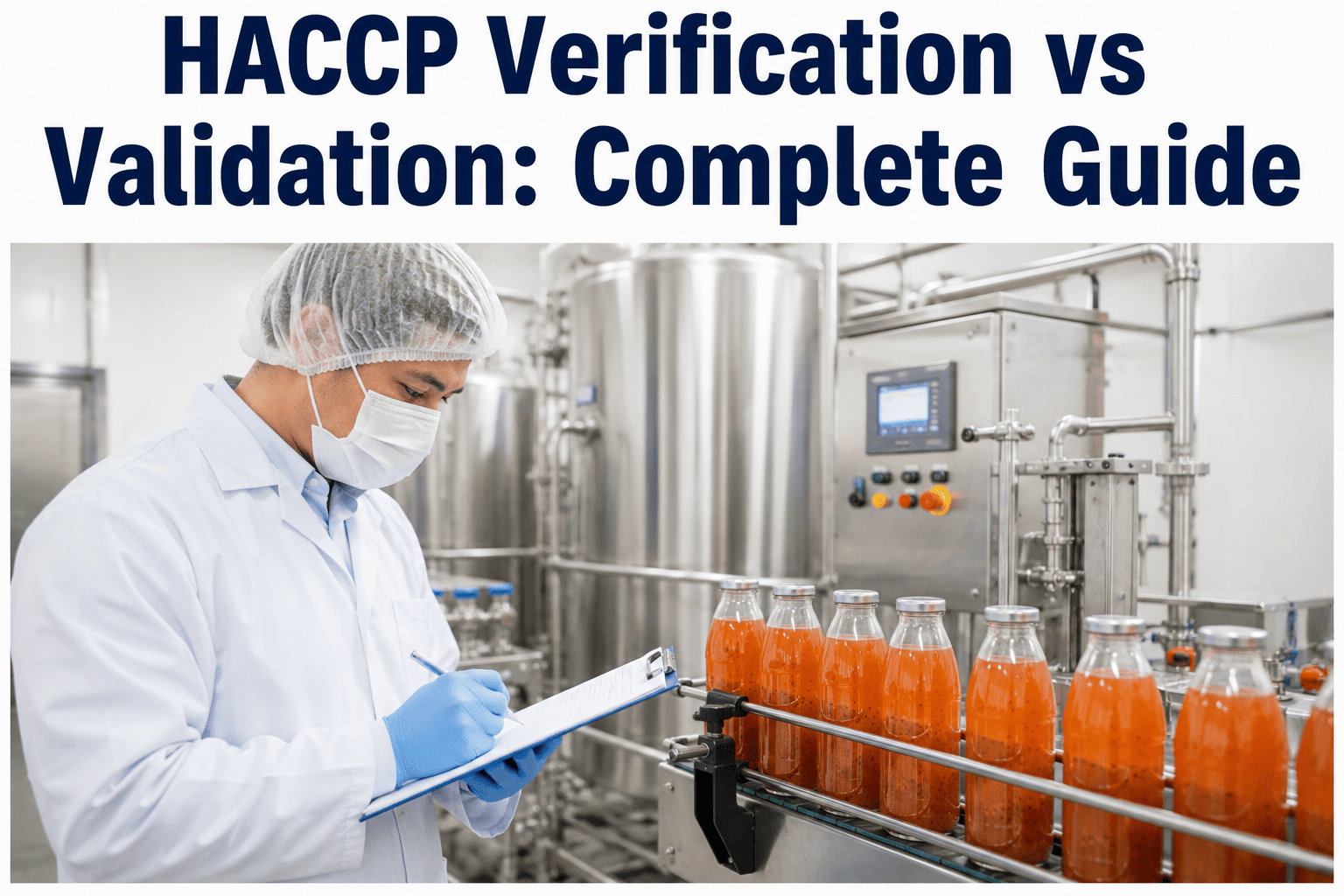
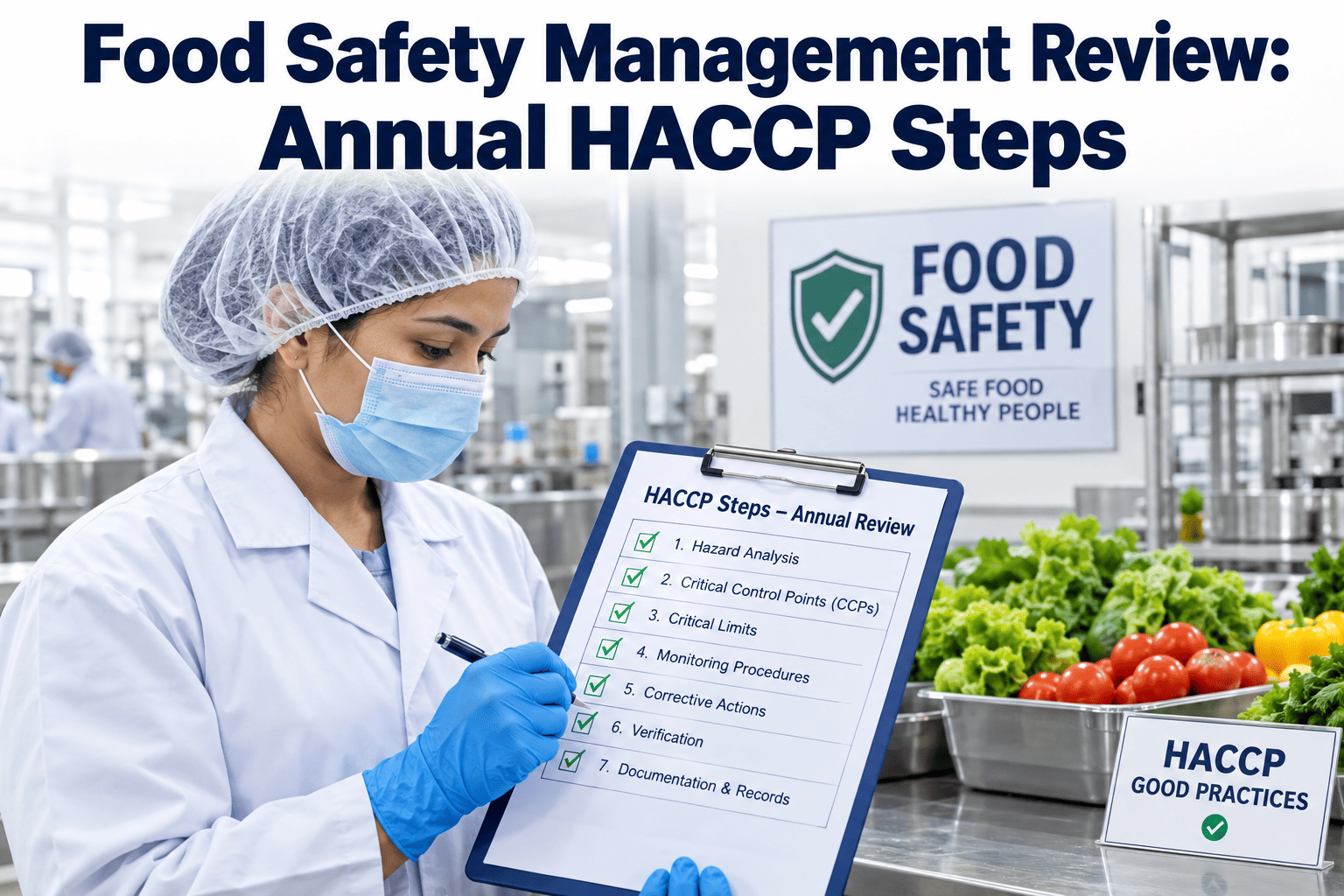
Ask five plant quality managers to define the difference between HACCP verification and validation, and it's common to get five slightly different answers, because the two terms sound similar and often get used interchangeably in casual conversation despite meaning fundamentally different things to an auditor. Validation asks whether your process, if followed exactly, is scientifically capable of controlling the hazard. Verification asks whether the process is actually being followed as designed, day after day. Confusing the two is one of the more common findings in third-party food safety audits. iFactory helps HACCP teams keep both activities clearly separated and properly scheduled, with the complete framework at iFactory support.
HACCP Program Design · Verification & Validation
HACCP Verification vs. Validation: Two Different Questions, Often Confused
iFactory helps HACCP teams distinguish validation studies from ongoing verification activities and keeps both on a defensible, auditable schedule.
The Core Distinction
One Confirms the Plan Works. The Other Confirms You're Following It.
Validation
Scientific and technical evidence, gathered before and periodically after implementation, confirming that a CCP's critical limits are actually capable of controlling the identified hazard.
Verification
Ongoing activities — record review, calibration checks, direct observation — confirming the HACCP plan is being implemented as written on a routine, day-to-day basis.
Typical Activity Schedule
How Often Each Activity Should Actually Happen
Activity
Type
Typical Frequency
Initial Scientific Study
Validation
Before implementation
CCP Record Review
Verification
Weekly to daily
Instrument Calibration Check
Verification
Per manufacturer or risk-based schedule
Direct Observation of CCP Monitoring
Verification
Periodic, unannounced
Full Plan Reassessment
Validation
Annually or after significant change
Confusing Verification With Validation Is One of the Most Common Audit Findings
Keeping the two activities clearly scheduled and documented separately closes a gap auditors are specifically trained to look for.
When Revalidation Is Required
Four Triggers That Should Prompt a New Validation Study
Formulation Change
A new ingredient or recipe adjustment can change the hazard profile enough that the original critical limits no longer apply without confirmation.
Equipment Change
New processing equipment, even performing the same basic function, may not achieve the same lethality or control as the equipment originally validated.
Deviation Pattern
Recurring deviations at a CCP, even when corrected each time, can signal that the original critical limits weren't achievable under real production conditions.
New Scientific Information
Updated regulatory guidance or published research on a hazard can invalidate assumptions the original plan was built on.
Frequently Asked Questions
HACCP Verification & Validation — Common Questions
Can the same person perform both verification and validation activities?
Verification is typically performed by trained plant personnel as part of routine quality operations, while validation often requires deeper technical or scientific expertise, sometimes involving external resources like a process authority for thermal processing or a lab study for a specific hazard. The two can be handled by overlapping teams, but they should remain clearly documented as separate activities with separate records, since an auditor will look for that distinction specifically.
Book a Demo to review roles and responsibilities for your current plan.
How do we document verification activities correctly?
Each verification activity should record what was checked, when, by whom, and the outcome, tied clearly back to the specific CCP or program element being verified. Records should be distinguishable from routine monitoring records, since monitoring confirms a CCP was within limits at a point in time, while verification confirms the monitoring itself is happening correctly and consistently.
What counts as adequate validation evidence for a CCP?
Adequate evidence typically includes scientific literature, regulatory guidance documents, in-plant observational data, or expert opinion establishing that the critical limits, if met, will control the hazard to the intended level. The specific evidence required varies significantly by hazard type and process, which is why validation for thermal processes, chemical hazards, and physical hazards often draws on different types of supporting documentation.
Contact support to review validation evidence appropriate to your specific CCPs.
How does this fit with our current internal audit schedule?
Verification activities generally happen more frequently than a full internal audit cycle and should be built into routine quality operations rather than treated as a periodic audit event. Validation activities align more naturally with annual plan reviews or triggered reassessments, and can be scheduled alongside your broader internal audit calendar without duplicating effort.
How long does a typical validation study take?
Timeline varies significantly by hazard and process complexity, from a few weeks for a well-established process type with existing scientific literature to several months for a novel process requiring original data collection.
Book a Demo for a timeline specific to your CCPs.
Keep Verification and Validation Clearly Separated, Scheduled, and Audit-Ready
HACCP program design and documentation support built around a defensible verification and validation schedule.