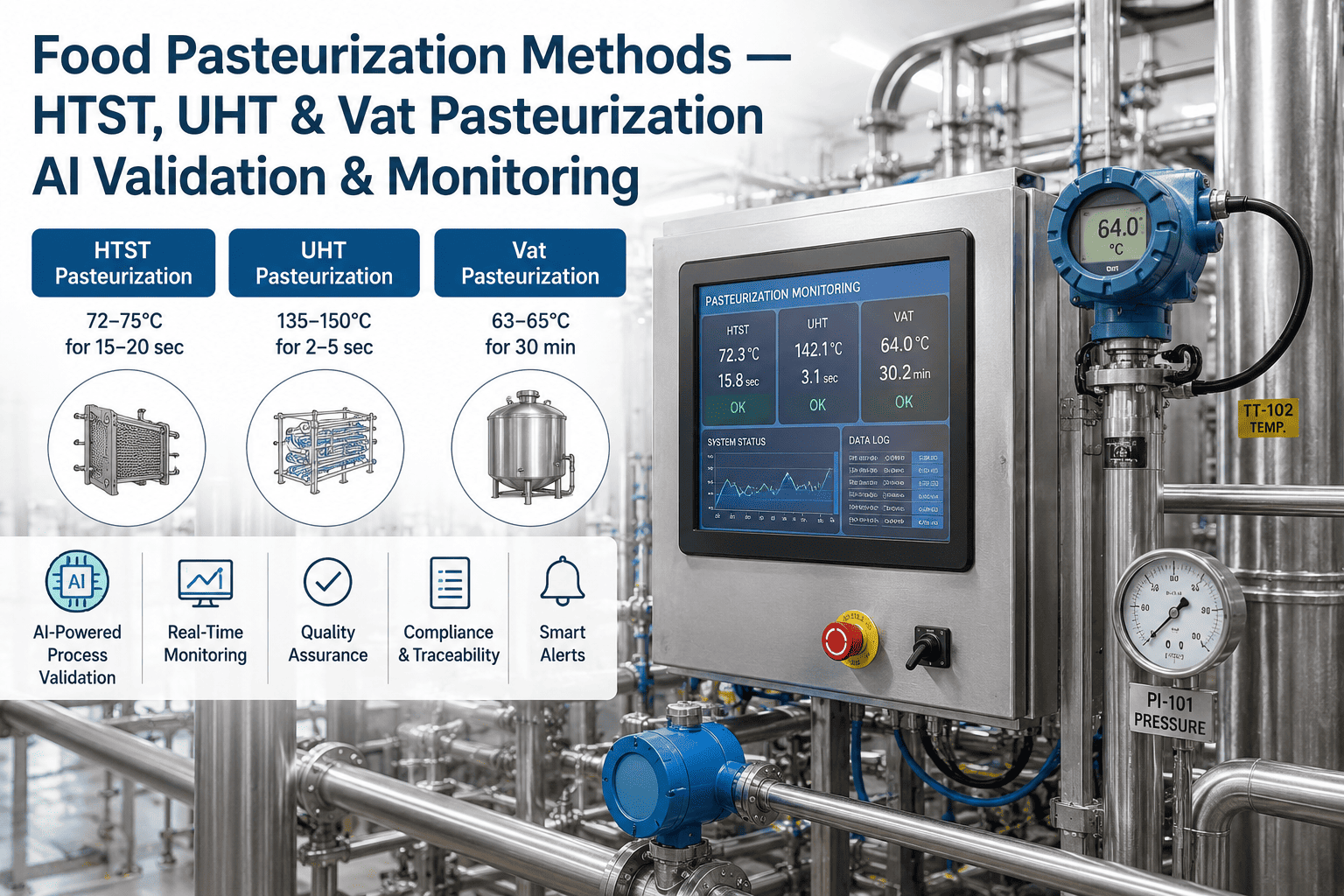
In the competitive landscape of food manufacturing, the precision and reliability of thermal processing directly dictate product safety, shelf life, and regulatory compliance. Process engineers face the constant challenge of validating and monitoring pasteurization methods such as HTST, UHT, and vat pasteurization to ensure microbial lethality while preserving nutritional and sensory qualities. Traditional approaches often rely on manual data logging, periodic sampling, and reactive adjustments, leading to inefficiencies and compliance risks. However, the integration of artificial intelligence into pasteurization control systems is revolutionizing how these critical processes are managed. AI-driven monitoring platforms now enable real-time analysis of temperature profiles, flow rates, and hold times, providing unprecedented visibility into thermal process documentation. This article delivers a deep technical comparison of the three primary pasteurization methods, explores how AI validation enhances each, and offers a strategic roadmap for implementation. For a demo of how iFactory can transform your thermal processing line, Book a Demo today.
Mastering Thermal Processing with AI-Driven Precision
Achieve unmatched pasteurization validation and monitoring across HTST, UHT, and vat methods, ensuring full compliance and product quality.
HTST Pasteurization
High-Temperature Short-Time (HTST) processing typically operates at 72°C for 15 seconds, widely used for milk and liquid eggs. AI monitoring tracks every temperature fluctuation and flow disruption, enabling immediate corrective actions.
UHT Pasteurization
Ultra-High Temperature (UHT) processing uses 135-150°C for 2-5 seconds, essential for shelf-stable products. AI validation ensures that every batch meets the precise thermal death time for target pathogens.
Vat Pasteurization
Batch vat pasteurization (63°C for 30 minutes) is common for specialty cheeses and craft beverages. AI control systems optimize heating and cooling cycles, reducing energy consumption while maintaining safety.
AI-Driven Thermal Process Documentation
Modern pasteurization validation requires more than just temperature logs. AI systems automatically capture and correlate data from multiple sensors, including flow rates, pressure differentials, and product viscosity. This comprehensive thermal process documentation is continuously compared against regulatory standards such as PMO, FDA, and EU directives. When deviations occur, the AI instantly generates corrective action recommendations and updates the documentation trail, ensuring that every batch has a complete, auditable record. This eliminates manual paperwork and reduces the risk of human error.
| Parameter | HTST | UHT | Vat |
|---|---|---|---|
| Temperature Range | 72°C | 135-150°C | 63°C |
| Hold Time | 15 sec | 2-5 sec | 30 min |
| AI Monitoring Points | 8 | 12 | 6 |
| Documentation Automation | Full | Full | Partial |
Ready to Optimize Your Pasteurization Line?
Unlock real-time AI validation, reduce compliance risks, and boost efficiency across all your thermal processes.
Step-by-Step AI Integration for Pasteurization Validation
Sensor Deployment
Install high-precision temperature, flow, and pressure sensors at critical control points on your pasteurizers. AI systems calibrate and validate sensor accuracy within 0.1%.
Data Ingestion & Baseline
The AI ingests historical and real-time data to establish baseline profiles for each product and pasteurization method. Anomaly detection models are trained to identify deviations.
Real-Time Monitoring & Alerts
Dashboards display live performance metrics. The AI triggers alerts for any parameter outside specification, with root cause analysis and recommended corrective actions.
Automated Documentation
Every batch generates a complete thermal process report with timestamps, sensor data, and compliance annotations, ready for audit review without manual effort.
Pasteurization Compliance Checklist
- Verify HTST hold tube length and flow rate match design specifications
- Calibrate UHT temperature sensors against NIST-traceable standards
- Validate vat pasteurization time-temperature curves with AI pattern recognition
- Ensure all pasteurizers have redundant flow diversion valves tested daily
- Generate automated thermal process documentation for each production run
- Review AI anomaly reports weekly to identify systemic issues
- Conduct quarterly validation of AI models against physical challenge studies
Frequently Asked Questions
How does AI improve HTST pasteurization monitoring?
AI enhances HTST monitoring by continuously analyzing temperature and flow data at millisecond intervals, detecting subtle deviations that manual checks miss. The system can predict potential failures in heating sections or hold tubes before they cause product loss. For example, if the temperature drops by 0.5°C, the AI instantly recalculates the required hold time or triggers a divert valve. This proactive approach ensures consistent pathogen reduction and reduces waste. For a complete overview, visit our support page for detailed technical documentation.
What are the key differences between UHT and HTST validation?
UHT validation focuses on extremely high temperatures for very short times, requiring sensors with faster response times and higher accuracy. HTST validation, while also time-sensitive, involves lower temperatures and longer hold times, making flow rate measurement critical. AI systems can handle both by adapting their monitoring algorithms. For UHT, the AI tracks the thermal death time curve for spores like Bacillus stearothermophilus, while for HTST it targets vegetative pathogens like Salmonella. To see how iFactory handles both, Book a Demo for a live walkthrough.
Can AI help with vat pasteurization for small batch production?
Absolutely. Vat pasteurization is ideal for artisanal products where batch size and product characteristics vary. AI systems learn the unique thermal profile of each vat and product, adjusting heating and cooling rates to maintain consistency. The AI also automates the documentation of time-temperature logs, which is especially valuable for small producers who lack dedicated quality assurance staff. This ensures compliance with local health regulations without increasing overhead. For more insights, check our support resources on batch processing.
What regulatory standards does AI-based pasteurization validation satisfy?
AI validation systems are designed to meet or exceed the requirements of the Pasteurized Milk Ordinance (PMO), FDA 21 CFR Part 120, and EU Regulation 853/2004. The AI generates documentation that includes all critical process parameters, deviation records, and corrective actions, which directly aligns with HACCP principles. Additionally, the system can be configured to comply with specific customer audit requirements. For a compliance checklist tailored to your facility, schedule a demo today.
How does iFactory handle sensor calibration and data integrity?
iFactory's AI platform includes automated sensor calibration reminders and drift detection. The system logs all calibration events and compares sensor readings against redundant reference sensors. If a sensor shows drift beyond 0.1°C, the AI flags it for recalibration and temporarily uses backup sensor data to ensure uninterrupted monitoring. All data is stored in an immutable blockchain-based ledger to prevent tampering, satisfying the most stringent audit trails. For technical specifications, visit our support page.
Transform Your Thermal Processing Today
Leverage AI for flawless pasteurization validation, reduced downtime, and full regulatory confidence. Your next audit will be seamless.