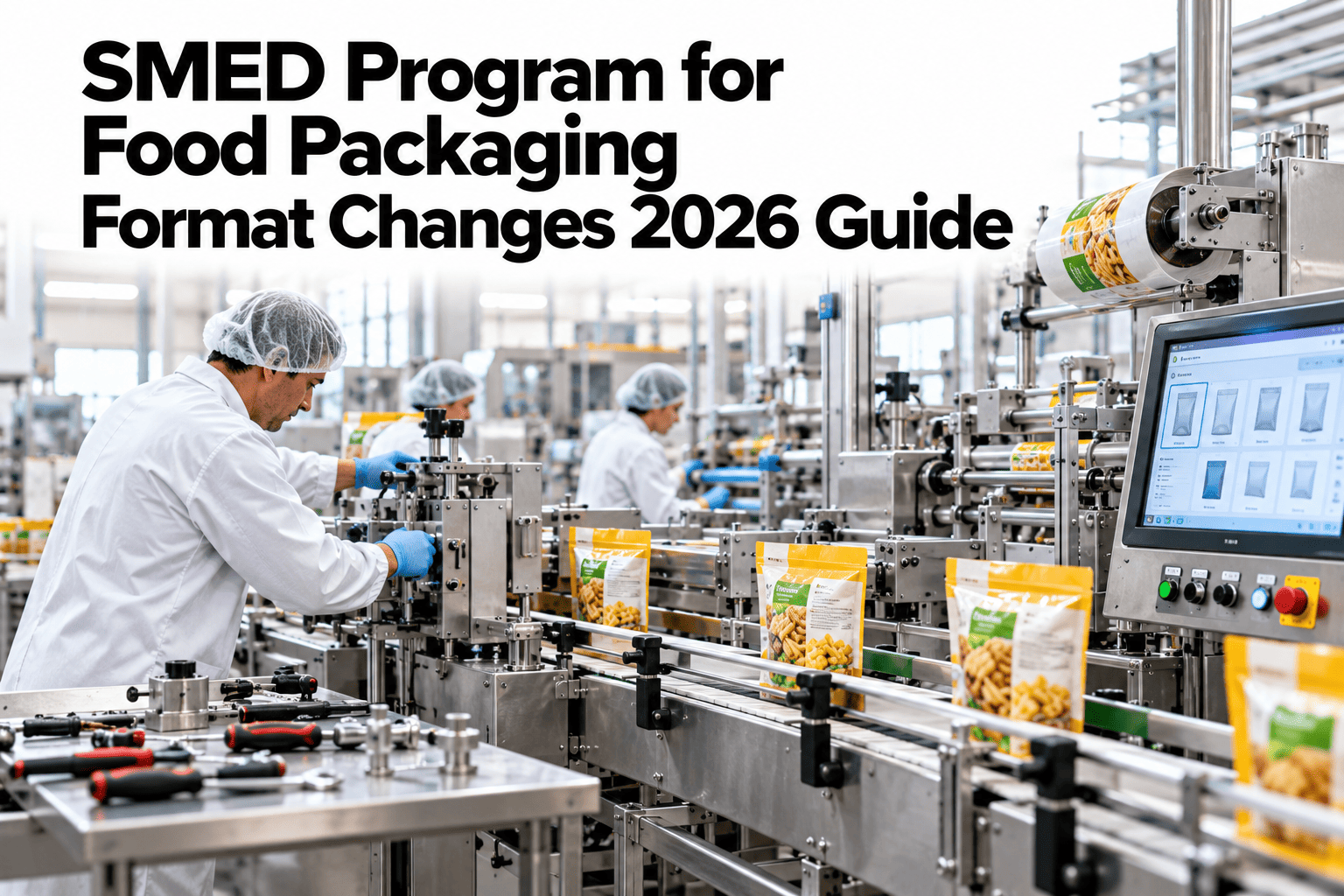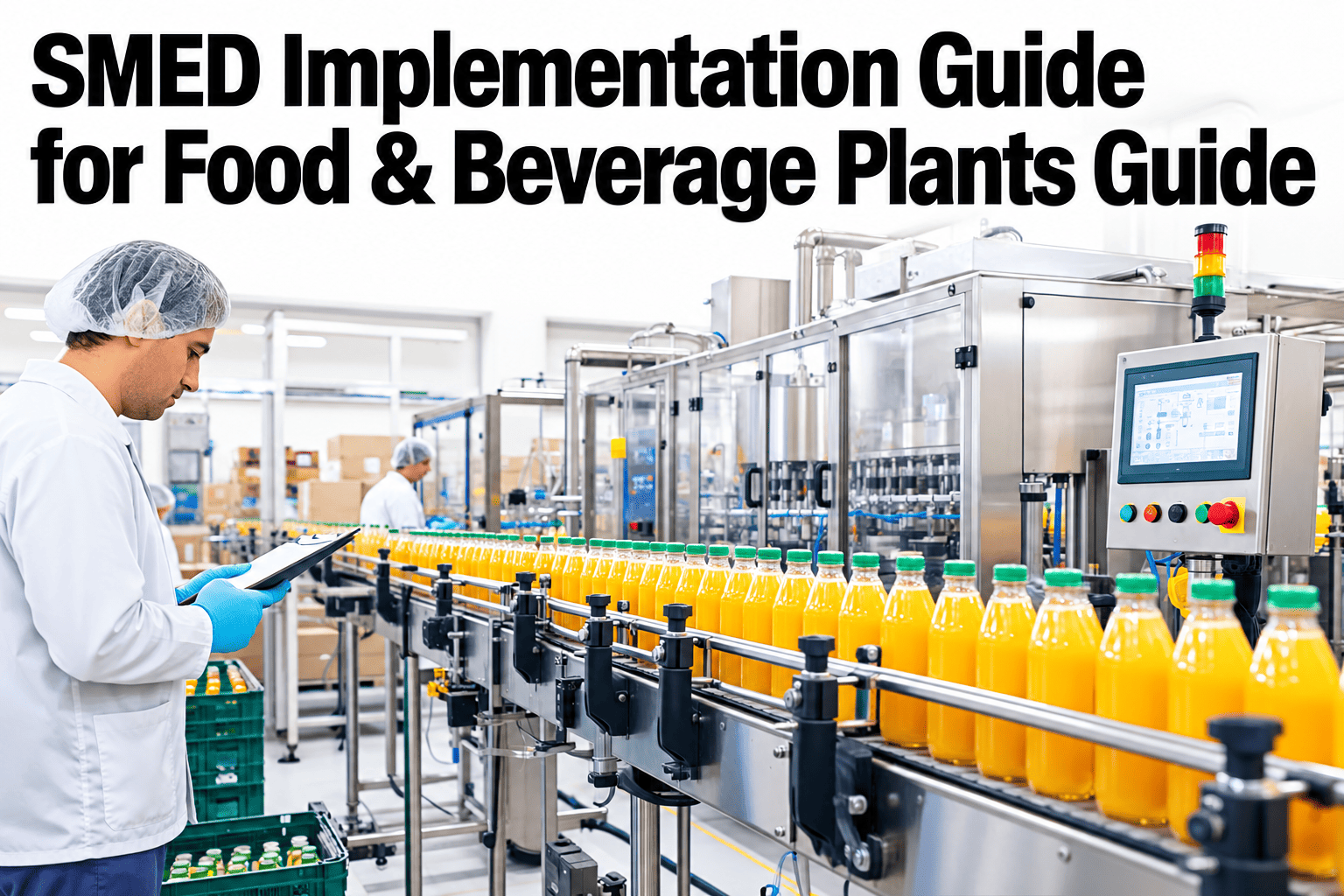
Shigeo Shingo developed single-minute exchange of die on automotive stamping presses, not fillers, cappers, labelers or cartoners, so most of the SMED material a food plant engineer finds was never written with their equipment in mind. The underlying method, splitting internal from external setup time, still applies directly, but translating it into format-tooling steps for a filling line takes real adaptation work most plants end up doing from scratch. Teams who want that translation already done for their specific equipment can walk through a SMED pass on their own changeover steps.
Shingo's Method, Translated for Filler, Capper, Labeler and Cartoner
iFactory AI applies classic SMED, splitting internal from external setup time, directly to food and beverage format-tooling changeovers, line by line and station by station.
Why Automotive SMED Material Doesn't Translate Directly
Most published SMED case studies describe die changes on a stamping press, a single mechanical exchange with a clear clamp-off, crane-move, clamp-on sequence. A food line changeover usually involves several format-tooling stations in sequence, filler nozzles, capper chucks, labeler guides, cartoner formers, each with its own internal and external split, which means a single automotive-style SMED worksheet does not map cleanly onto the actual sequence a food plant runs.
The Core SMED Method, Unchanged
Despite the translation work needed, the underlying three-step SMED method is exactly as Shingo described it decades ago, and still holds for food and beverage equipment without modification to the core logic.
Translate SMED to Your Own Format-Tooling Sequence
Book a 30-minute session and bring your current changeover steps. iFactory AI will show the internal-versus-external split for filler, capper, labeler and cartoner.
Why Food Safety Review Has to Come Before Conversion
An automotive die change has no equivalent to an allergen cross-contact risk or a sanitation requirement tied to a specific product transition, which is exactly why food plant SMED work needs a food safety review step that classic SMED material never addresses. A step that looks like a clean candidate for external conversion on a time-and-motion chart can still require the line stopped if it involves an allergen-adjacent surface or a required verification check.
Building that review into the SMED process from the start, rather than discovering the conflict after a conversion is already implemented, avoids the credibility damage of having to walk back a change that quality later flags as unsafe.
Station-by-Station: Where the Split Actually Lands
Each format-tooling station has a different mix of internal and external steps, and the opportunity to convert internal to external varies significantly between them. A filler nozzle change often has more external-conversion potential than a capper chuck swap, simply because of how the tooling is physically mounted.
| Station | Typical Internal Step | Conversion Opportunity |
|---|---|---|
| Filler | Swapping nozzle set for new fill volume | Pre-stage the next nozzle set on a quick-change fixture |
| Capper | Changing chuck size for new cap diameter | Pre-adjust torque settings externally before the swap |
| Labeler | Reloading label roll and resetting web tension | Pre-load the next roll on a secondary spindle while running |
| Cartoner | Changing former size for new carton dimension | Pre-set former guides to the next size before the stop |
A Composite Changeover: Before and After SMED
The timeline below reflects an illustrative full-line changeover, filler through cartoner, before and after applying the three-step SMED method to each station.
Why Changeover Sequence Order Matters as Much as Timing
Most SMED analysis focuses on how long each step takes, but the order stations run in can matter just as much. If the labeler and cartoner changeovers happen sequentially when they could run in parallel with a second technician, the total changeover time reflects a scheduling choice as much as any individual step's duration.
Mapping which steps genuinely must happen in sequence versus which could run in parallel, given available staffing, is a second layer of SMED analysis that sits on top of the internal-external split. Plants that only address the internal-external question often leave this parallel-execution opportunity on the table entirely.
Common Mistakes When Applying SMED to Food Lines
Plants new to SMED on food and beverage equipment tend to make a few predictable mistakes that limit how much the method actually recovers, usually because the automotive-origin material does not warn against them explicitly.
Treating the Whole Changeover as One Block
Skipping the station-by-station breakdown hides where the biggest conversion opportunities actually sit.
Converting Steps Without Verifying Food Safety Impact
Some steps that look convertible to external time still require the line stopped for sanitation or safety reasons.
Stopping After the First Pass
SMED is iterative. A single pass rarely captures every streamlining opportunity in the remaining internal steps.
Not Involving the Operators Doing the Changeover
Operators often know undocumented shortcuts and friction points a time-and-motion study alone would miss.
Fixture Investment: What Pays Back Fastest
Converting an internal step to external often requires some physical fixture change, a secondary spindle, a quick-release mount, a pre-adjustment jig, and not every conversion is worth the capital outlay it requires. Ranking fixture investments by payback period, rather than implementing every identified conversion at once, keeps the SMED program focused on the changes that recover their cost fastest.
A secondary labeler spindle is frequently near the top of that ranking, since it is relatively inexpensive to add and directly removes one of the longest internal steps in a typical sequence. A full cartoner former redesign, by contrast, often costs more and delivers a smaller time reduction, making it a lower priority despite looking impressive on paper.
Building the Case Across Production, Quality and Engineering
A SMED program touches more than production scheduling. Quality has to sign off on any step that moves from internal to external, and engineering often needs to design or modify fixtures to make the conversion physically possible.
Why Product-Pair Variation Changes the Conversion Math
Not every product-to-product transition requires the same changeover steps. Switching between two bottle sizes on the same cap diameter might skip the capper entirely, while switching flavors within the same format might only touch the filler and require a full allergen changeover sequence. Treating all changeovers as equivalent hides which product pairs actually benefit most from SMED conversion work.
Tracking changeover time by specific product pair, rather than by a single line-wide average, reveals where the SMED investment pays back fastest, usually the highest-frequency transitions rather than the rare ones that happen only a few times a year.
Where iFactory AI Fits
Applying SMED consistently across every format-tooling station on every changeover requires timing each step precisely and tracking the internal-to-external ratio over time as conversions are implemented, which is difficult to sustain with a manual stopwatch study beyond the initial rollout. iFactory AI times and classifies each step automatically, so the SMED program stays active rather than fading after the first workshop.
Automated Step Timing
Each changeover step is timestamped per station, splitting internal and external time without a manual stopwatch.
Station-by-Station Breakdown
Filler, capper, labeler and cartoner each get their own internal-external split, not one blended line-level number.
Conversion Tracking
As steps move from internal to external, the ratio shift is tracked over time to confirm the gain is holding.
Changeover History by Product Pair
Changeover time is tracked by the specific product-to-product transition, since some pairs require more steps than others.
What a Second SMED Pass Usually Finds
A first SMED pass tends to find the obvious conversions, the steps everyone on the floor already suspected could happen while the line kept running. A second pass, done after the first round of changes has settled in, often surfaces a different kind of opportunity: internal steps that only became streamlineable once the earlier conversions removed the steps that used to happen alongside them.
This is part of why SMED works best as a recurring practice rather than a single workshop. Plants that revisit the analysis every few months after initial implementation tend to keep finding incremental gains well past the point where a one-time effort would have declared the work finished.
Expert Review
Changeover specialists who have run SMED programs on food and beverage lines tend to flag the same failure pattern repeatedly: the method works, but gains erode within months once nobody is tracking the internal-external ratio after the initial workshop ends. Continuous tracking, not a one-time event, is what keeps a SMED program's gains from quietly reverting to baseline. Bring your own changeover sequence to a working session and see where the conversion opportunities actually sit.
Frequently Asked Questions
Does SMED apply the same way to CIP-heavy changeovers?
Clean-in-place steps required for allergen or sanitation reasons generally stay internal regardless of SMED analysis, but the steps surrounding the CIP cycle, staging and preparation, often still have real conversion potential. Ask support how CIP-heavy changeovers are typically handled.
How long does a full SMED pass take for a multi-station line?
Initial mapping and classification across filler, capper, labeler and cartoner typically takes a few weeks, with conversion implementation continuing over a longer period depending on how much fixture redesign is involved.
Can operators suggest conversions directly, or is this engineering-led?
Operator input is often essential, since the people performing changeovers daily frequently know friction points that a time study alone would miss. Ask how operator feedback is incorporated into the SMED process.
Does this work for lines with frequent SKU changes versus occasional ones?
Yes, though the payback period differs, a high-frequency changeover line recovers the fixture investment faster than a line that changes over occasionally, which is worth factoring into which lines get SMED attention first.
How do you prevent gains from eroding after the first few months?
Continuous tracking of the internal-external ratio, rather than a one-time workshop measurement, is what catches erosion early, before a reverted step becomes the new normal practice on the floor. Ask how ongoing tracking is structured.
Give Shingo's Method a Food Plant Translation
iFactory AI applies SMED station by station across filler, capper, labeler and cartoner. Book a walkthrough using your own changeover sequence.