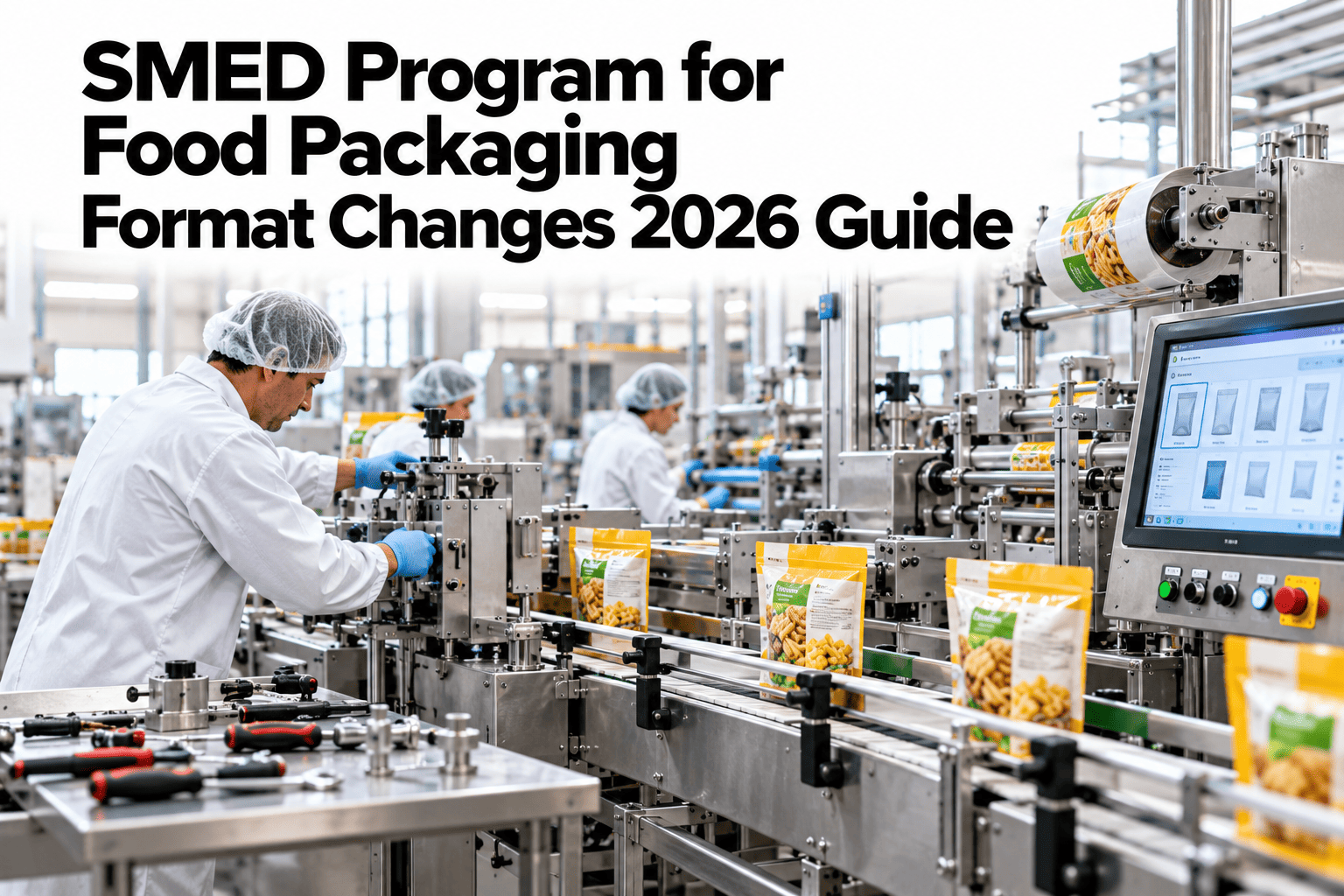
A packaging format change that takes two and a half hours with bolt-in tooling is not a fixed cost of running multiple SKUs, it is almost always a process that has never been systematically shortened. SMED, single-minute exchange of die, is a structured method for separating what has to happen while the line is stopped from what could happen while it's still running, then converting as much of the first into the second as possible. Plants that apply it seriously to packaging format changes routinely turn multi-hour changeovers into fifteen-minute, tool-less swaps. Teams can walk through their own changeover against this method in a short session.
Five Steps From Bolt-In Tooling to a 15-Minute Swap
iFactory runs structured SMED workshops that turn format changeovers into tool-less, photo-guided swaps.
Internal vs External: The Core SMED Distinction
Internal steps can only happen while the line is stopped. External steps can happen while it's still running. Most of the time saved in a SMED program comes from correctly sorting steps into these two categories and moving as many as possible into the second one.
| SMED Step | What Happens | Typical Gain |
|---|---|---|
| Observe current process | Time and film the existing changeover step by step | Reveals the real sequence, not the assumed one |
| Separate internal/external | Sort every step by whether the line must be stopped for it | Often the single largest time-saving insight |
| Convert internal to external | Pre-stage tooling and settings before the line stops | Removes setup time from the stopped-line window |
| Streamline remaining steps | Replace bolts with quick-release, standardize settings | Cuts the time each remaining internal step takes |
| Standardize | Photo aids, labeled format kits, a documented procedure | Makes the gain repeatable across operators and shifts |
Film and Time Your Own Changeover Step by Step
Book a 30-minute session and iFactory will walk through observing and classifying your actual format change steps.
Before and After a SMED Pass
One packaging line's format change timeline before and after a structured SMED workshop, tool-less fixtures and photo aids.
What Makes a Swap Tool-Less
Quick-Release Fixtures
Replacing bolted connections with quick-release clamps or cam locks removes the time spent fetching and using tools.
Pre-Staged Format Kits
Format-specific parts are kitted and labeled in advance, so the right pieces are already at hand when the line stops.
Photo-Guided Procedures
Step-by-step photo aids at the line remove guesswork and reduce variation between operators and shifts.
Signals a Line Is Ready for a SMED Workshop
Where iFactory Fits
iFactory runs the full SMED workshop process and builds the standards that make the gain stick.
Structured SMED Workshops
Trained facilitators run the observe, separate, convert and streamline steps directly on your line.
Tool-Less Fixture Design
Quick-release fixtures are designed and sourced to replace bolt-in tooling where it's the main time sink.
Photo Aid Documentation
Step-by-step photo procedures are built and posted at the line for consistent execution across shifts.
Changeover Time Tracking
Format change duration is tracked automatically after the workshop, confirming the gain holds over time.
Reviewed by iFactory's Lean Manufacturing team for alignment with standard SMED methodology. The timeline figures shown are illustrative; actual achievable duration depends on your specific equipment, format complexity and how much tooling can realistically be converted to tool-less.
Frequently Asked Questions
Does every changeover reach a 15-minute target?
Not every line or format combination will hit that specific number, since achievable duration depends on equipment design and format complexity. The method consistently produces significant reduction, even when the absolute target differs by line. Support can set a realistic target for your specific changeover.
How long does a SMED workshop itself take?
The observation and workshop phase typically runs a few days per changeover type, though fixture redesign and fabrication can extend the full project timeline depending on what needs to be built.
Does this require capital investment in new fixtures?
Often some investment in quick-release hardware is involved, but it's typically modest compared to the ongoing labor and downtime cost of the current changeover process. See a cost estimate built for your own fixtures in a short session.
How do we keep the gain from eroding after the workshop?
Photo-guided standard work and ongoing changeover time tracking are what keep a SMED gain from quietly drifting back toward the old duration as habits relax over time.
Can this be applied to more than one format or SKU change?
Yes, the method applies to any changeover, though each distinct format change is typically its own workshop since the specific steps and fixtures involved differ. Ask support how to prioritize across multiple format types.
Turn Hours of Tooling Into a 15-Minute Swap
iFactory runs the full SMED process to standardize fast, tool-less format changes. Book a walkthrough on your own line.