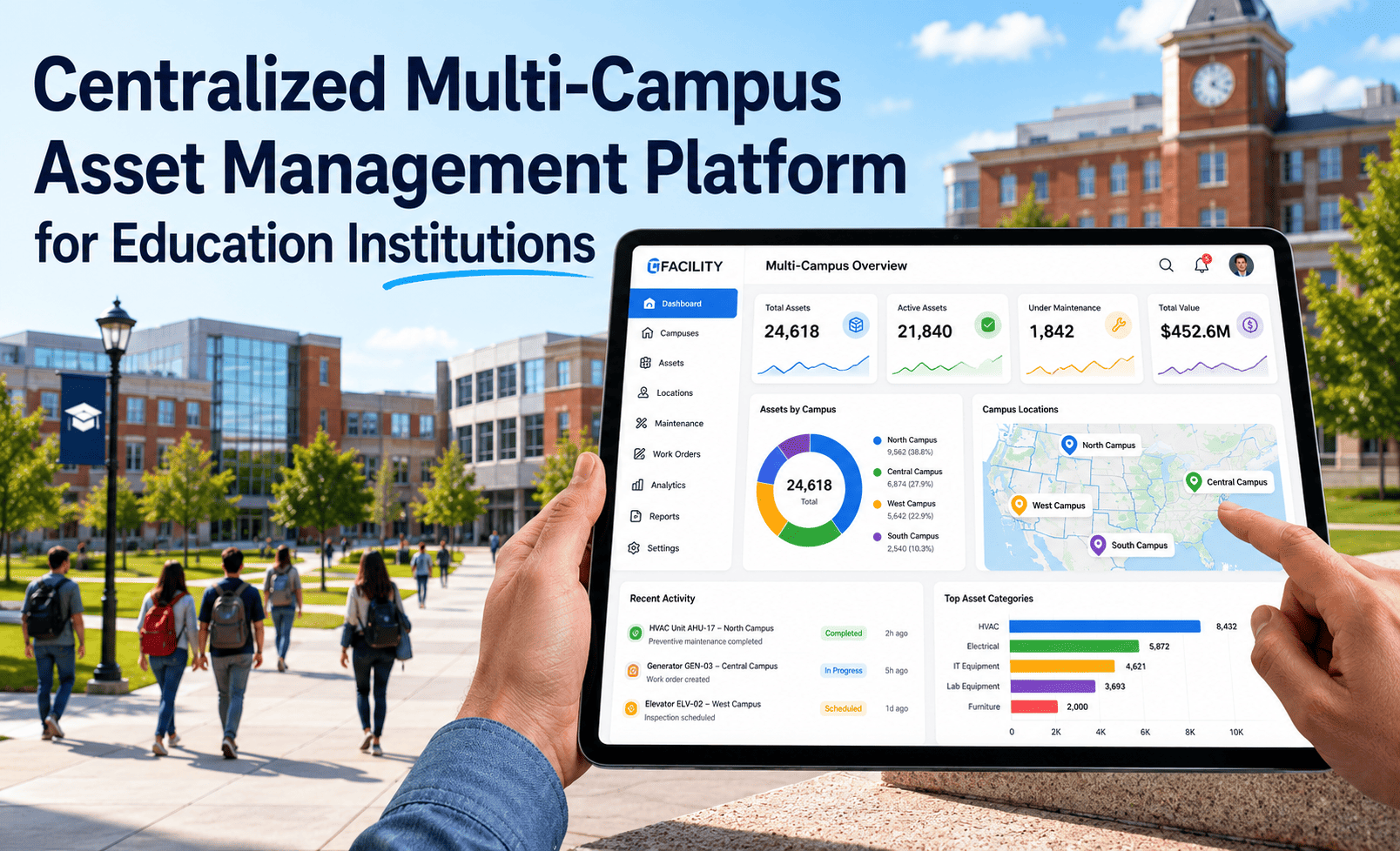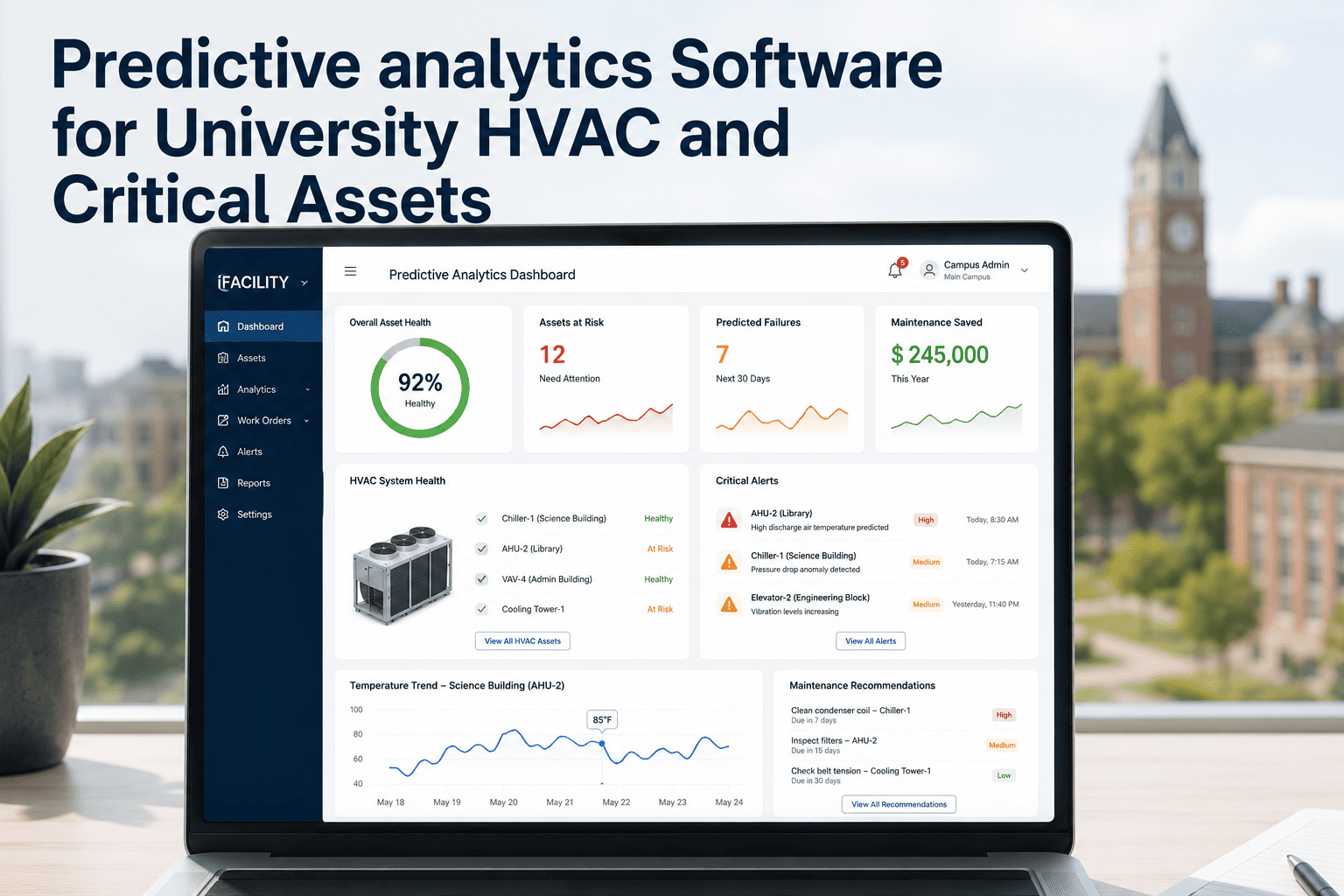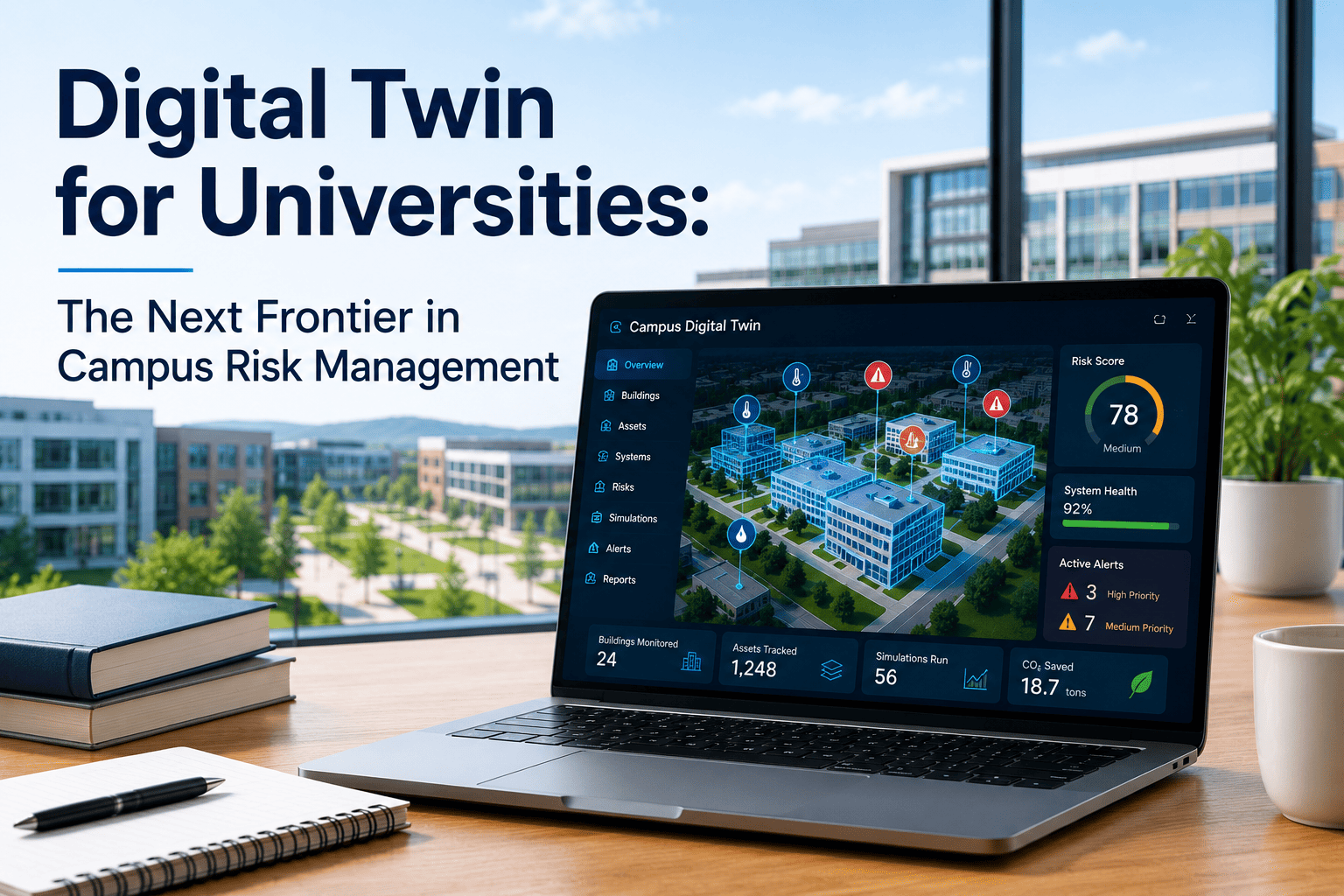
AI is no longer a future investment — it is the operational gap between universities managing rising costs and aging infrastructure with confidence, and those that are not. The institutions pulling ahead use the same budgets and staff — just better data and faster decisions. See what this looks like for your institution — Book a Demo.
The 2026 Smart Campus Inflection Point
Three shifts have converged: enrollment volatility compressing per-student revenue, deferred maintenance backlogs exceeding $100 billion nationally, and 2026 compliance requirements demanding continuous documentation that manual systems cannot produce.
The institutions responding most effectively replaced periodic manual inspections with continuous AI-driven monitoring and disconnected spreadsheets with unified cross-system intelligence. See how this maps to your institution's operational baseline — Book a Demo.
- Digital twins replacing periodic FCI assessments
- IoT data updated daily vs. 26-month cycles
- AI compliance ending manual audit assembly
- Predictive maintenance converting reactive to planned
- Board capital approvals from live FCI in single sessions
Five AI Trends Reshaping University Campuses
AI monitors asset condition continuously and generates work orders before failure — not after complaint. Institutions document 85% reductions in unplanned failures and 60-75% fewer emergency events within 18 months.
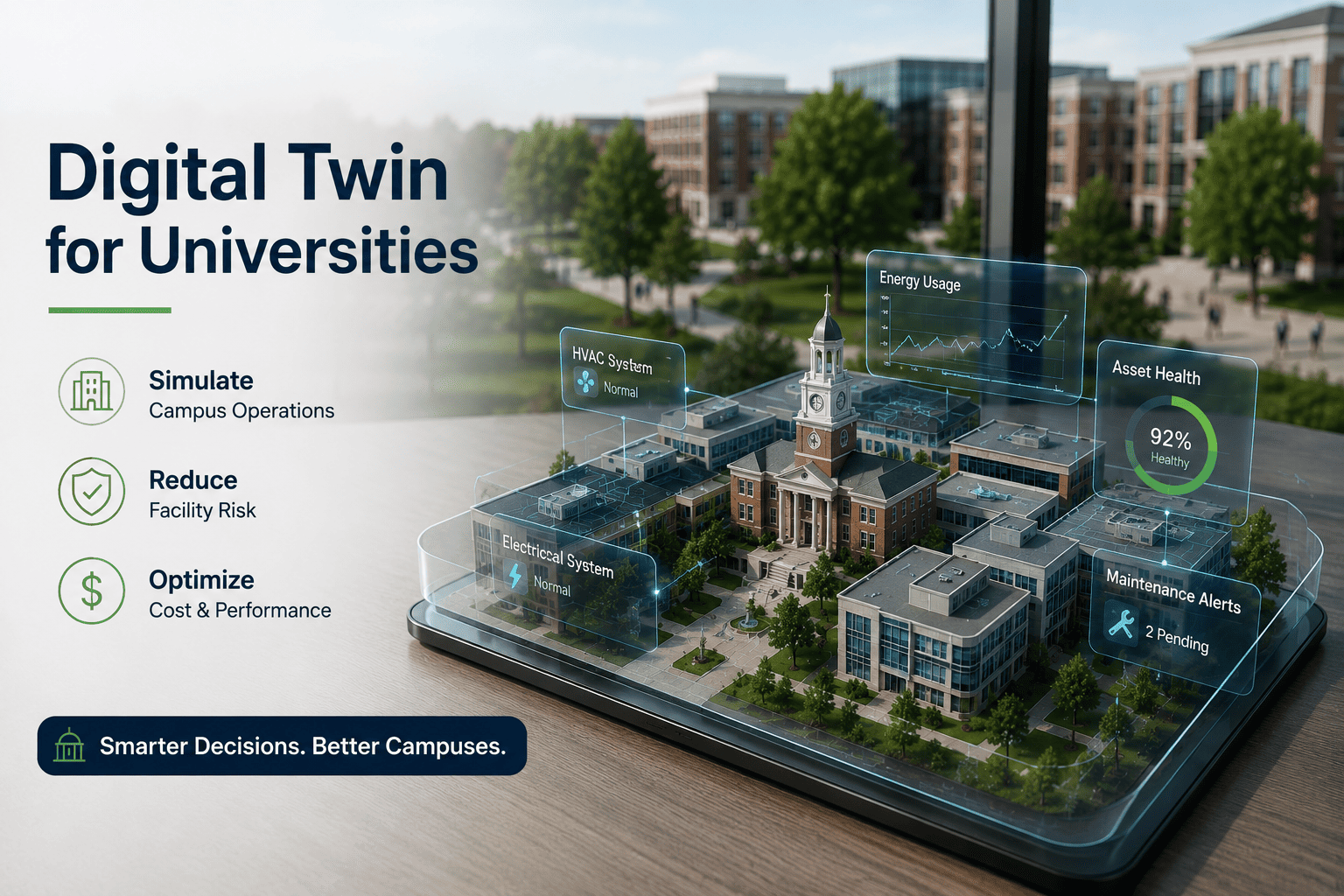
Digital twin platforms sync with IoT sensors continuously, keeping FCI scores current within 30 days across all buildings. Capital cost variance drops from 22% to 6% when scoping uses current data rather than stale estimates.
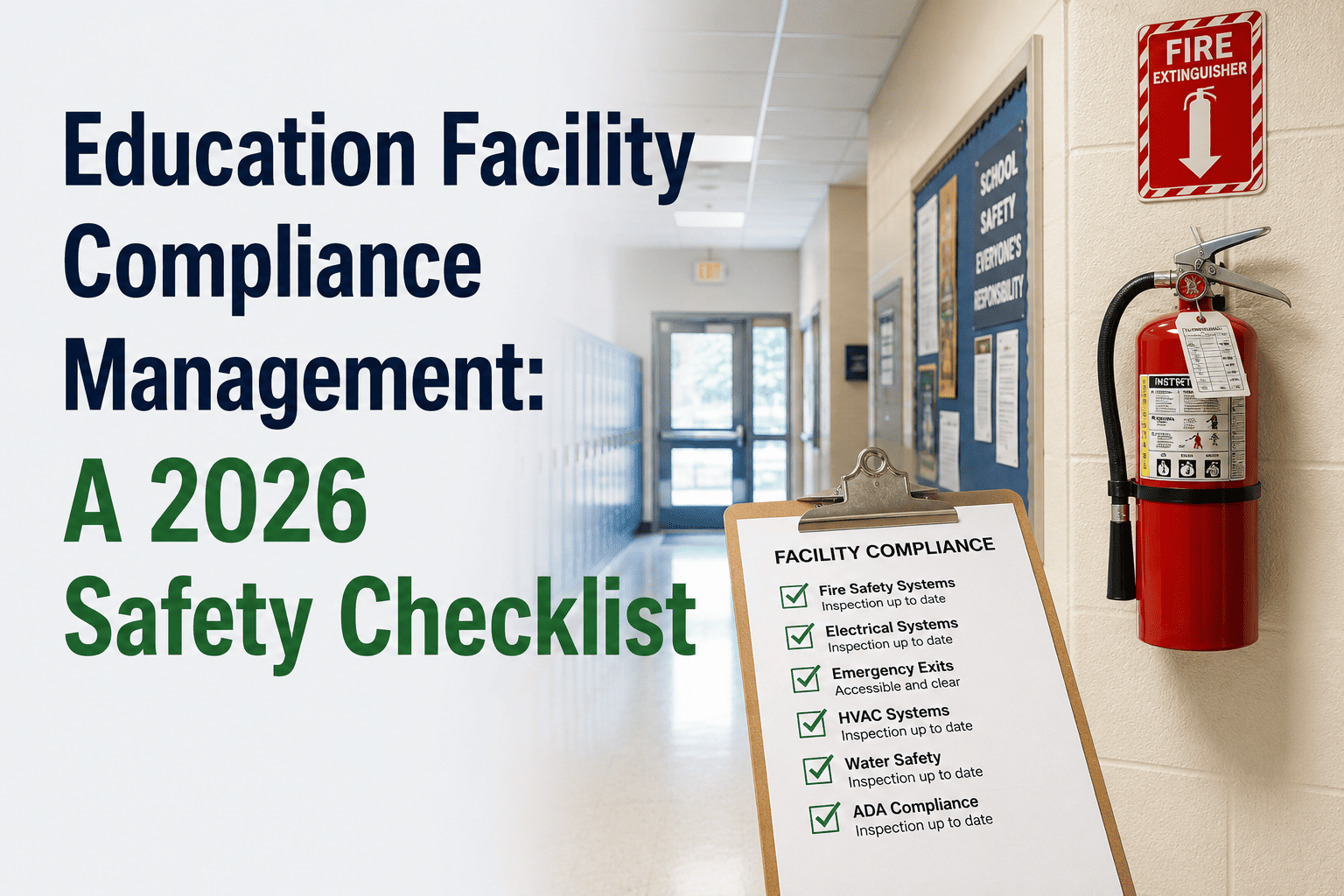
Documentation generated manually consumes 140 staff hours per quarterly cycle; from live operational data it takes 18 hours. Institutions deploying AI compliance automation document zero deficiencies across all frameworks in their first post-deployment audit.
Without per-building monitoring, teams cannot identify buildings consuming 30-40% above baseline. AI energy platforms document 15-20% cost reductions by resolving these invisible inefficiencies building by building.
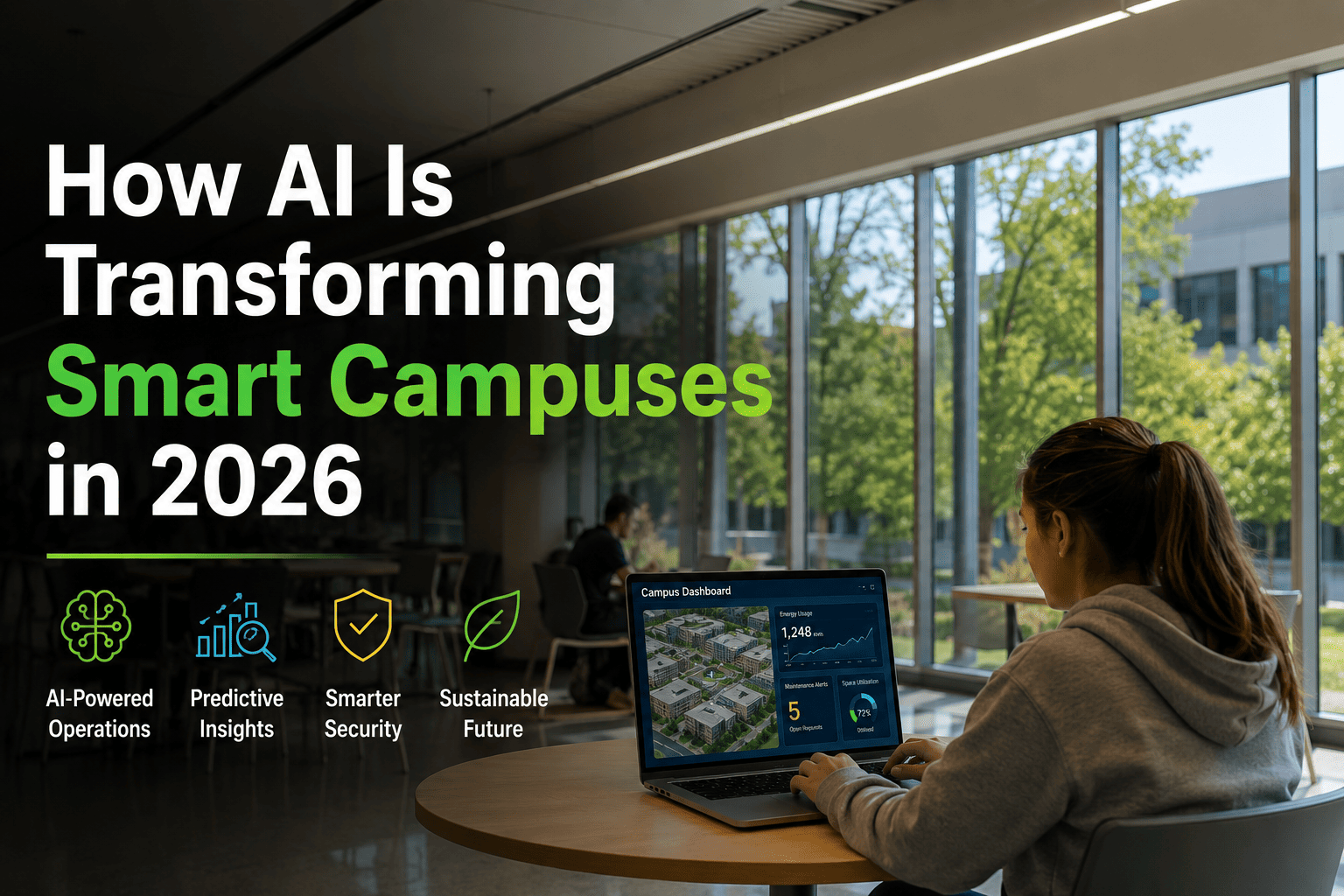
The most advanced deployments integrate student systems, facility platforms, financial data, and safety infrastructure into a single AI layer. Single-system AI produces incremental gains. Cross-system AI produces transformation.
What Smart Campus AI Delivers: Documented Outcomes
From university deployments on existing budgets. Calculate what these mean for your institution — Book a Demo.
How Leading Universities Are Implementing Smart Campus AI
Open API connections to existing CMMS, BMS, ERP, and sensors. Digital twin baseline established. No replacement, no disruption.
Predictive maintenance alerts active. Compliance documentation automated. Emergency work order volume declining.
Digital twin capital scenarios live for board presentations. Five-year deferral cost modeling per building. AI model at peak accuracy from 18 months of campus-specific data.