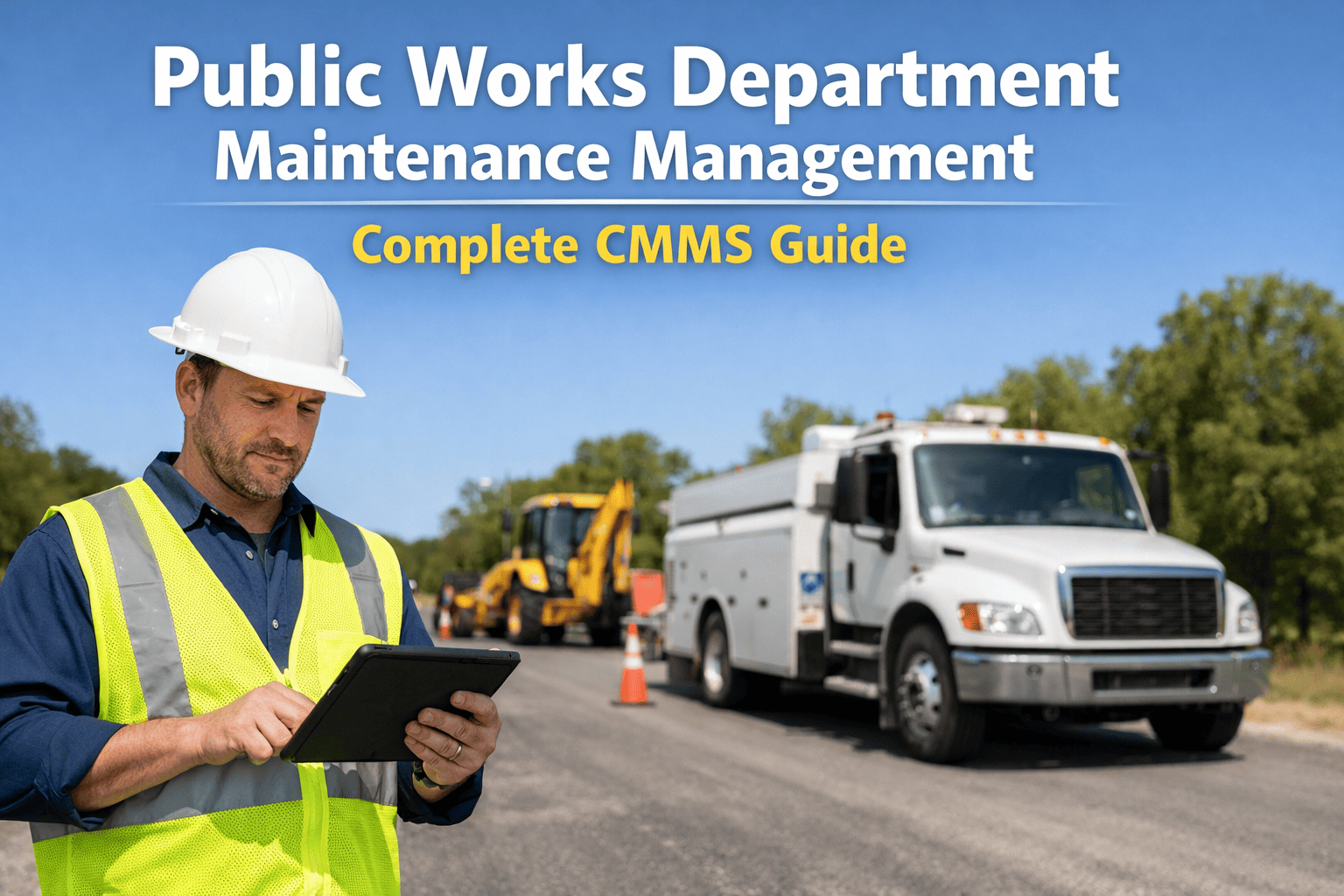
Public works directors sit at the intersection of community infrastructure, fiscal stewardship, and operational leadership — a combination that demands expertise across engineering, finance, human resources, and emerging technology. Whether you are stepping into the role for the first time or refining a decades-long career in municipal operations management, this complete public works director handbook delivers the strategic frameworks, compliance essentials, and leadership principles that define high-performing departments in 2026. From budget planning and staff development to technology adoption and regulatory accountability, every section of this guide is designed to strengthen your capacity as a public works leader. Book a Demo to see how iFactory supports public works directors with AI-driven infrastructure management tools built for municipal environments.
AI-Powered Operations for Public Works Directors
iFactory helps public works departments automate maintenance scheduling, asset tracking, compliance documentation, and budget reporting — all from a single platform built for municipal infrastructure leadership.
What Does a Public Works Director Actually Manage?
The scope of a public works director's responsibilities is broader than most municipal roles. Understanding each domain is the foundation of effective public works administration.
Infrastructure Asset Management
Roads, bridges, stormwater systems, and public buildings — asset condition tracking and lifecycle planning are core daily responsibilities.
Capital Project Oversight
Design, bidding, contracting, and construction oversight for capital projects — coordinated across elected officials, engineers, and community stakeholders.
Budget and Financial Stewardship
Operating budgets, capital improvement plans, grant management, and utility rate structures demand direct financial leadership and council presentation skills.
Regulatory and Environmental Compliance
NPDES permits, EPA compliance requirements, and state infrastructure regulations must be continuously monitored, documented, and reported.
Public Works Operations Management: Building a High-Performing Department
Effective public works operations management requires structured systems for work order management, preventive maintenance, crew scheduling, and performance measurement. Directors who rely on informal workflows consistently face higher costs, lower service levels, and greater regulatory exposure.
Every maintenance activity must flow through a documented work order process. Digital systems capture labor hours, equipment usage, and completion status — the data backbone for performance reporting and cost recovery.
iFactory: Digital work order capture with crew and asset linkageReactive maintenance costs three to five times more than planned work. A structured PM program defines inspection intervals and resource requirements for every asset class — and enforces adherence through automated alerts.
iFactory: AI-scheduled PM intervals with mobile completion captureOptimal crew deployment matches labor to work based on skill requirements, certification status, and equipment availability. Manual scheduling consistently results in overstaffing in low-priority areas and understaffing during peak demand.
iFactory: Crew scheduling with certification and availability trackingTrack KPIs monthly: cost per lane mile, work order backlog size, preventive-to-reactive ratio, and citizen request response times. These metrics drive council reporting, budget justification, and operational improvement.
iFactory: Automated KPI dashboards aligned to municipal reporting cyclesIntegrating citizen request platforms with work order systems eliminates duplicate data entry, improves response tracking, and reduces repeat calls. Book a Demo to see iFactory connect citizen requests to field crew dispatch in real time.
iFactory: Citizen request intake with real-time work order conversionPublic Works Budget Planning: A Strategic Framework for Municipal Directors
Budget planning is among the most visible and consequential responsibilities in public works leadership. Councils, residents, and auditors all scrutinize public works budgets — making accuracy, justification, and transparency essential.
Operating Budget Development
Build operating budgets from bottom-up work order data — not flat prior-year increases. This accurately captures growing asset maintenance demands and produces defensible council requests.
Capital Improvement Plan Construction
A strong CIP projects infrastructure investment needs across five to ten years. Asset condition assessments and risk-based prioritization — not political pressure — determine project sequencing.
Federal and State Grant Capture
ARPA, RAISE, BRIC, and STBG programs offer significant funding. Directors with current asset data and project-ready documentation consistently win more competitive grant awards.
Cost Recovery and Fee Structure Review
Utility rates, impact fees, and permit fees should be reviewed annually. Outdated fee structures create structural deficits that compound over time and erode departmental financial health.
Public Works Management: Manual Operations vs. Integrated Digital Platform
The operational and compliance gap between traditional public works management approaches and AI-driven digital platforms grows wider every budget cycle as infrastructure demands increase and staffing constraints tighten.
| Management Area | Spreadsheet / Paper-Based | Basic CMMS | iFactory AI-Driven Platform |
|---|---|---|---|
| Asset Condition Tracking | Manual field forms only | Static asset registry | AI-graded condition with lifecycle forecasting |
| Work Order Management | Paper work orders, retrospective entry | Digital entry, limited mobile | Mobile-first capture with photo and GPS |
| Preventive Maintenance Scheduling | Calendar reminders only | Static schedule with email alerts | AI-optimized intervals with pre-shift alerts |
| Budget vs. Actual Reporting | Month-end manual reconciliation | Basic export by cost center | Real-time spend tracking by asset and crew |
| Regulatory Compliance Documentation | Binder assembly before inspections | Partial export capability | Instant audit-ready report generation |
| Fleet Management Integration | Separate spreadsheet tracking | Separate fleet module required | Unified asset and fleet management platform |
| Council and Stakeholder Reporting | Manual report compilation | Static canned reports only | Custom dashboards with one-click export |
| Citizen Service Request Tracking | Phone log and email only | Manual intake to work order | Integrated request portal with status updates |
Public Works Staff Development: Building the Department Workforce for Long-Term Success
Workforce development is one of the highest-leverage investments a public works director can make. Skilled, certified, and engaged staff reduce costs, improve safety outcomes, and build the institutional knowledge that sustains service delivery through leadership transitions. Book a Demo to see how iFactory supports staff certification tracking and training management for public works departments.
Succession Planning
Identify high-potential staff early. Map knowledge transfer timelines so expertise isn't concentrated in one or two individuals who may leave.
Certification Management
Track CDL holders, operator licenses, and engineer credentials digitally. Automated renewal alerts prevent lapsed certifications before they create compliance gaps.
Safety Training Administration
OSHA, confined space, and traffic control training must be documented with completion records and expiration alerts — not tracked in binders or spreadsheets.
Performance Management
Crew-level data — work orders completed, response times, rework rates — provides the objective foundation for meaningful reviews and fair promotional decisions.
Technology Adoption in Public Works: A Director's Strategic Roadmap
Technology adoption in municipal public works has accelerated significantly since 2023. Directors who lead digital transformation thoughtfully — sequencing investments, managing change, and measuring outcomes — deliver measurable returns on public investment while positioning their departments for long-term operational resilience.
GIS integration lets directors visualize asset condition, maintenance history, and capital investment needs spatially — essential for council presentations and increasingly required for federal grant applications.
iFactory: GIS-linked asset registry with condition visualizationMobile apps eliminate the paper-to-digital bottleneck — putting work orders, inspection checklists, and completion capture in field crews' hands. Adoption above 90% is achievable within two weeks. Book a Demo to explore iFactory's field-ready mobile platform.
iFactory: Large-format mobile interface optimized for outdoor and field useSmart sensors in bridges, stormwater systems, and treatment facilities provide continuous condition data — enabling predictive decisions and early anomaly detection before catastrophic infrastructure failures occur.
iFactory: IoT sensor integration with AI-driven anomaly detectionAI models trained on maintenance history and sensor telemetry generate failure probability forecasts — shifting budget from reactive emergency repair to planned work. Most programs achieve a 30–45% reduction in unplanned downtime within the first year.
iFactory: Predictive failure modeling with budget impact projectionMeasurable Returns from Digital Transformation in Public Works Management
Municipal departments that deploy integrated public works management platforms consistently report measurable performance improvements across compliance, operations, and financial management within the first twelve months of full deployment.
Reduction in Reactive Maintenance Costs
Predictive and preventive maintenance programs enabled by digital scheduling reduce emergency repair expenditures significantly across fleet, roads, and facility assets.
Faster Compliance Report Generation
Automatically maintained digital records eliminate the pre-audit scramble, converting days of manual record assembly into minutes of report generation.
Asset and Work Order Traceability
Every maintenance activity is linked to a verified asset record, assigned crew member, completed materials, and production timeline — fully traceable for audit and cost recovery.
Improvement in Grant Award Rate
Departments with current, documented asset condition data and digital project readiness consistently outperform peers in competitive federal and state infrastructure grant applications.
Building a Modern Public Works Department: A 4-Phase Implementation Roadmap
A structured implementation sequence delivers rapid value without disrupting active operations or overwhelming staff. This roadmap applies whether you are digitizing a single-department operation or leading a multi-division municipal transformation. Book a Demo to get a deployment timeline built for your department's specific size, asset portfolio, and certification requirements.
Asset Inventory and Condition Assessment
Catalog every infrastructure asset. Assign condition grades on a standardized scale, record age and replacement cost, and establish the data foundation for all budget planning and grant applications.
Maintenance Program Digitization
Convert paper PM schedules into digital workflows. Activate mobile work order capture for field crews with photo documentation, labor time entry, and materials tracking built in from day one.
Budget Integration and KPI Dashboard Activation
Connect work order cost data to budget categories. Configure KPI dashboards aligned to council reporting cycles and train supervisors on real-time data interpretation and exception management.
AI Optimization and Compliance Automation
Layer AI predictive models over asset and maintenance data. Activate regulatory compliance report generation and deliver your first automated council infrastructure report within 90 days of go-live.
Public Works Director Best Practices for 2026: Leadership Principles That Drive Results
The highest-performing public works directors share a consistent set of operating principles that apply regardless of department size, geographic region, or municipal budget level.
Lead with Data, Not Anecdote
Present infrastructure requests with condition data and cost-consequence analysis. Evidence-backed requests consistently secure higher budget allocations.
Build Cross-Department Relationships
Public works intersects with planning, finance, IT, and emergency management. Strong relationships resolve conflicts faster and unlock shared cost recovery opportunities.
Communicate Infrastructure Risk
Translate asset condition data into plain risk language for non-technical leaders — before failure occurs, not after. Proactive communication prevents reactive budget crises.
Document Deferred Decisions
When maintenance is deferred due to budget constraints, document the recommendation, decision, and risk accepted. This record protects the department during audits. Book a Demo to see iFactory's audit trail in action.
Review Regulations Quarterly
EPA deadlines and permit conditions change regularly. A quarterly compliance calendar with assigned ownership prevents the missed deadline that becomes a consent order.
Invest in Technology Literacy
Directors who understand AI, IoT, and digital twin technology evaluate vendors more accurately and lead adoption programs that deliver real returns — not expensive experiments.
Ready to Modernize Your Public Works Department's Operations?
iFactory's AI-driven platform covers asset management, preventive maintenance scheduling, compliance documentation, staff certification tracking, and council reporting — deployable in 8–12 weeks with no operational downtime.
Public Works Director Handbook: Common Questions Answered
Your Public Works Department Deserves a Management Platform Built for Municipal Infrastructure.
From asset condition tracking and preventive maintenance scheduling to staff certification management, budget reporting, and regulatory compliance documentation — iFactory gives public works directors the operational visibility and documentation discipline that modern municipal leadership demands.