Municipal governments across the country are under intense fiscal pressure, and reducing municipal analytics costs has become a top priority for public works departments, city administrators, and budget planners. The average municipality spends between 18% and 27% of its operational budget on reactive maintenance, redundant data systems, and manual analytics processes — costs that can be significantly reduced with proven, modern strategies. According to infrastructure planning data, cities that implement structured municipal cost reduction programs > consistently achieve 25% to 30% savings within 12 to 18 months. This guide breaks down exactly how your department can reduce government costs, improve capital efficiency, and protect essential services without cutting programs. Book a Demo to see how AI-driven analytics platforms are helping municipalities reach these savings goals today.
Cut Your Municipal Analytics Costs by 30% — Starting Now
See how top-performing municipalities are eliminating inefficiencies, modernizing data workflows, and protecting their budgets with AI-powered asset intelligence.
Why Municipal Analytics Costs Are Spiraling — And How to Stop It
The root cause of rising municipal analytics costs is not a lack of data — it's a lack of connected, actionable data. Most public works departments operate across three to five disconnected software platforms, generating siloed reports that require manual reconciliation. This fragmented approach adds hours of staff time per week and inflates the true cost of government analytics well beyond what appears in any single line item.
A 2024 government technology survey found that municipalities waste an average of 34% of their analytics budget on duplicate data entry, redundant software subscriptions, and manual reporting workflows. The shift to unified, AI-driven platforms is the single most effective way to reduce government costs at the analytics layer while simultaneously improving decision quality.
Strategy 1: Consolidate Redundant Analytics Platforms
The fastest path to municipal savings strategies is platform consolidation. Most city departments pay for asset management software, GIS tools, inspection apps, and capital planning spreadsheets — all separately. These tools rarely talk to each other, which means staff spend significant time manually exporting, reformatting, and re-entering data across systems.
Consolidating onto an integrated platform reduces per-seat software licensing costs by an average of 22%, eliminates manual data transfer labor, and provides a single source of truth for all asset condition data. Departments that have completed platform consolidation report reclaiming 6 to 10 staff hours per week — hours that are redirected to higher-value planning and fieldwork. This is one of the most direct forms of public works cost savings available without reducing service output.
When evaluating consolidation targets, prioritize platforms that support GIS integration, mobile field capture, and automated report generation. These three capabilities together eliminate the largest manual workflow bottlenecks in most public works departments. Book a Demo to see a live example of what consolidated municipal analytics looks like in practice.
Audit all active software subscriptions across every department
Map every analytics tool, license, and subscription — including shadow IT and department-level purchases — to identify redundancy and overlap.
Score each platform on integration capability and data output quality
Evaluate which tools produce the highest-value outputs and which require the most manual effort to maintain — the gap between these two is your consolidation opportunity.
Negotiate multi-year contracts with vendors that replace multiple tools
Integrated platform vendors typically offer significant volume discounts when replacing three or more point solutions — this is where the 20–30% savings target becomes achievable.
Establish a data governance policy to prevent future tool sprawl
Without a formal policy, departments will independently adopt new tools over time. A clear software acquisition process protects the consolidation savings long-term.
Strategy 2: Shift from Reactive to Predictive Maintenance Analytics
Reactive maintenance — responding to failures after they occur — is consistently the most expensive form of asset management. Emergency repairs typically cost three to five times more than planned preventive maintenance for the same work scope. The municipal analytics cost of reactive programs includes not just the repair premium, but the overtime labor, emergency contractor rates, expedited materials sourcing, and service disruption costs that accompany unplanned failures.
Transitioning to predictive maintenance analytics means using condition assessment data, decay modeling, and facility condition indices (FCI) to identify assets before they reach failure thresholds. Cities that have adopted predictive maintenance frameworks report reducing emergency repair expenditures by 28% to 35% within the first year. This transition is the cornerstone of any serious government analytics cost reduction initiative.
| Cost Category | Reactive Approach | Predictive Approach | Savings Potential |
|---|---|---|---|
| Emergency Repairs | Very High | Low | Up to 35% |
| Labor Overtime | Frequent | Rare | Up to 28% |
| Contractor Premiums | High | Minimal | Up to 40% |
| Asset Lifespan | Shortened | Extended | 15+ yr gain |
| Capital Planning Accuracy | Poor | Excellent | +25% ROI |
The data is clear: public works savings at scale require moving beyond calendar-based maintenance schedules and adopting condition-based intervention triggers. This shift also dramatically improves grant eligibility, as federal and state funding agencies increasingly require data-backed maintenance plans as part of application requirements. Book a Demo to explore how predictive analytics integrates with your existing asset management workflow.
Strategy 3: Optimize Vendor Contracts and Service Level Agreements
Vendor management is a frequently overlooked source of municipal efficiency savings. Many municipalities operate under legacy service agreements that were negotiated five to ten years ago, before competitive alternatives emerged and before AI-enabled platforms made legacy pricing models obsolete. A systematic vendor contract review can uncover savings of 12% to 20% on analytics software, inspection services, and data management without reducing any deliverable quality.
Key areas to target in vendor optimization include: analytics software licensing (particularly for underutilized modules), annual inspection service contracts (especially those with manual reporting components), and data storage and hosting agreements (which have dropped significantly in cost as cloud infrastructure has matured). When negotiating renewals, leverage competitive alternatives and request multi-year pricing in exchange for contract extension commitments.
Service Level Agreements (SLAs) also deserve scrutiny. Departments frequently pay for response-time guarantees and support tiers that don't align with their actual operational patterns. Downgrading to an appropriate SLA tier — while maintaining critical coverage for high-impact systems — is a simple line-item saving that many departments miss. Book a Demo to understand how modern platforms structure their contracts to maximize value for municipal clients.
Strategy 4: Automate Manual Reporting and Data Collection Workflows
Manual data collection is one of the most significant hidden contributors to government cost reduction opportunities. Field inspection data captured on paper forms, transferred to spreadsheets, reviewed by supervisors, and then re-entered into capital planning systems represents dozens of labor hours per asset class per year — hours that automation can eliminate entirely.
Modern mobile inspection platforms with offline capability allow field crews to capture condition data, photographs, and GPS coordinates in a single workflow that automatically synchronizes with central asset databases. This eliminates the transcription step, reduces data entry errors, and accelerates the time from field inspection to budget-ready reporting from weeks to hours.
Departments that automate their inspection-to-reporting pipeline report staff time savings equivalent to 1.5 to 2 full-time positions annually — savings that can be reinvested into additional inspection coverage or redeployed to capital planning analysis. This is the most operationally transformative of all municipal cost reduction strategies because it simultaneously reduces labor costs and improves data quality.
1.5–2 FTE
Annual staff time saved through inspection workflow automation in a mid-size municipality
Strategy 5: Leverage Energy Management Analytics for Facility Cost Reduction
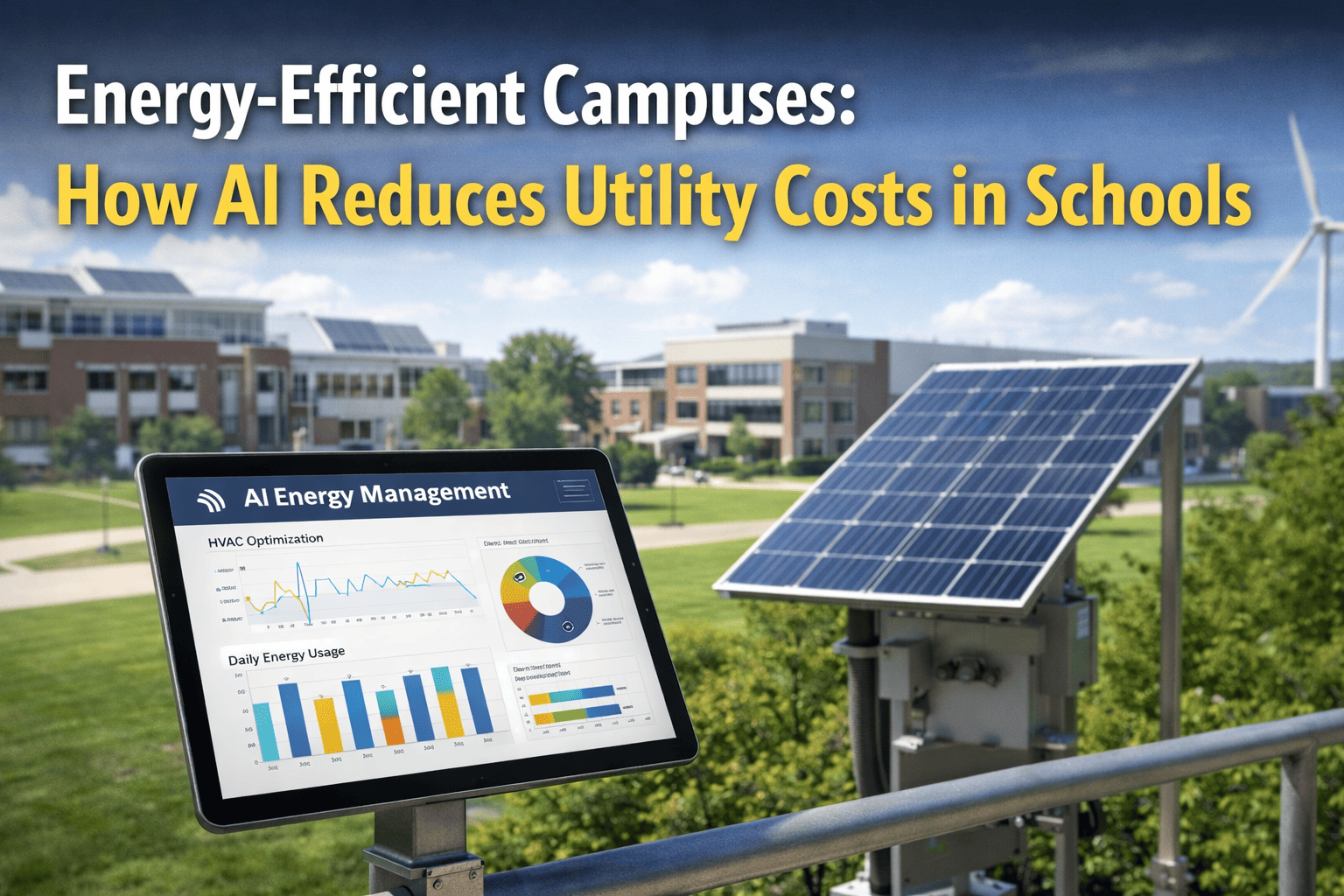
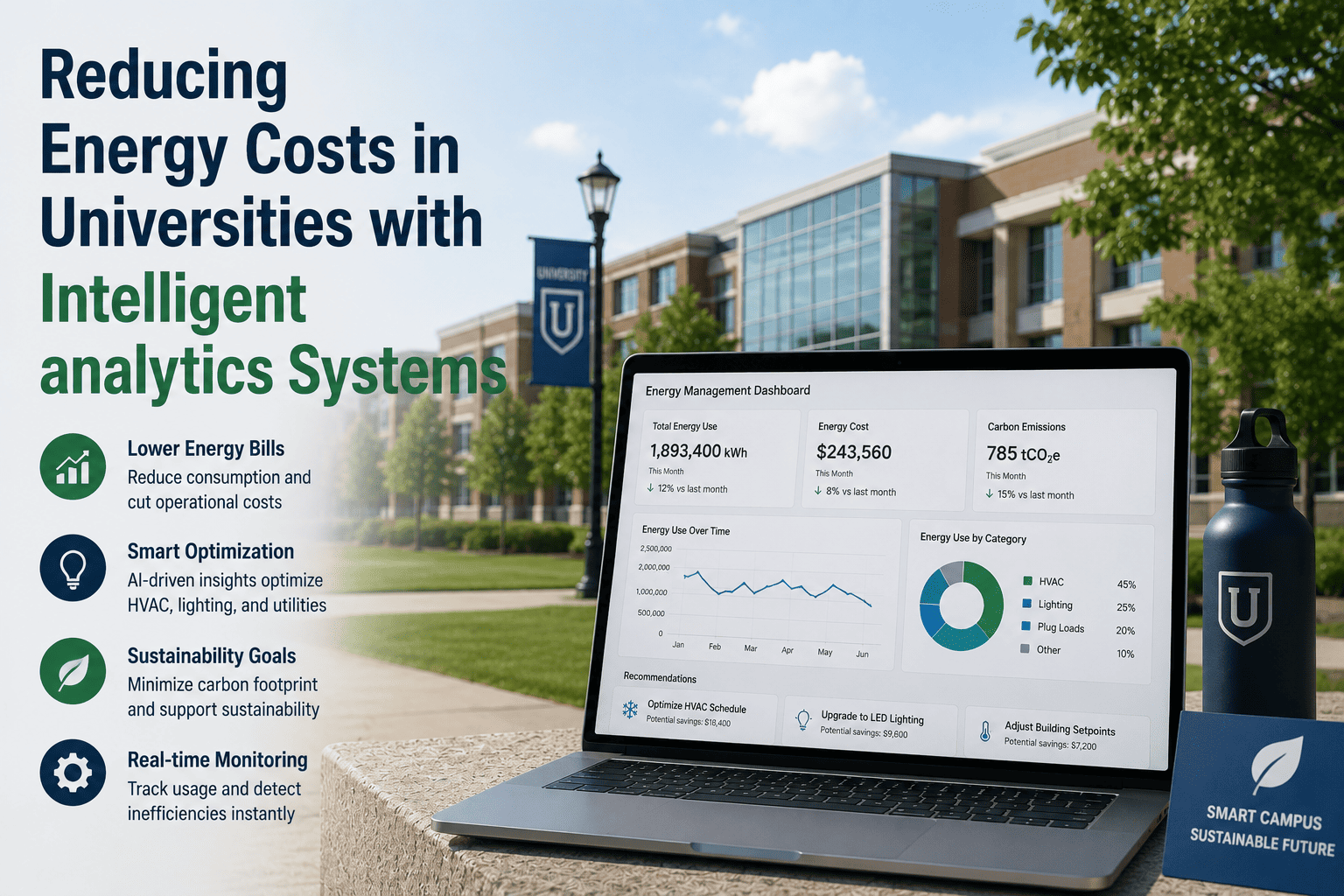
Energy consumption represents 15% to 25% of total facility operating costs for most municipal assets, including water treatment plants, public safety facilities, administrative buildings, and recreational centers. Government analytics savings in energy management come from applying consumption monitoring and anomaly detection tools to identify inefficient equipment, optimize scheduling, and benchmark performance across the facility portfolio.
Municipalities that deploy energy analytics alongside their asset condition assessment programs report an average reduction of 18% in facility energy costs within 24 months. These savings are particularly significant for energy-intensive assets like wastewater treatment facilities, where pump efficiency and aeration system performance directly translate to monthly utility expenditures in the hundreds of thousands of dollars.
Energy analytics also creates a documented efficiency baseline that supports utility rebate applications, green bond financing, and federal sustainability grant programs — additional revenue streams that many municipalities have not yet fully explored as part of their broader public works cost savings strategy.
Strategy 6: Implement Data-Driven Capital Planning to Eliminate Budget Waste
Perhaps the most impactful long-term municipal savings strategy is transitioning capital planning from experience-based estimates to condition-data-driven forecasts. When capital budgets are built on gut instinct, historical averages, or politically influenced priorities rather than verified asset condition data, the result is predictable: over-investment in low-risk assets, under-investment in high-risk ones, and emergency expenditures that consume contingency reserves year after year.
Data-driven capital planning uses Facility Condition Index (FCI) scores, decay curve modeling, and lifecycle cost analysis to rank every capital need by risk, impact, and cost-efficiency. This allows finance directors and public works managers to present budget requests that are defensible, prioritized, and aligned with actual infrastructure risk — exactly the kind of documentation that state and federal grant programs reward.
Municipalities that adopt data-driven capital planning report a 25% improvement in capital fund efficiency, meaning they achieve the same infrastructure outcomes with significantly less total expenditure through better timing of interventions and elimination of low-value emergency spending. This is the strategic foundation of any sustainable government cost reduction program.
Frequently Asked Questions: Reducing Municipal Analytics Costs
How quickly can a municipality realistically reduce analytics costs by 30%?
Most departments achieve the bulk of their savings within 12 to 18 months of implementing platform consolidation, workflow automation, and predictive maintenance programs. Quick wins from vendor contract renegotiation and platform consolidation often deliver 10–15% savings within the first 90 days.
What is the first step for a municipality that wants to reduce government costs through analytics?
The highest-value starting point is a comprehensive software and workflow audit. Understanding exactly where your current analytics budget is being spent — and what value each tool or process is delivering — creates the prioritization map for your cost reduction roadmap.
Does transitioning to AI-driven analytics require large upfront capital investment?
Modern SaaS-based municipal analytics platforms are typically structured as subscription services with no large upfront capital requirements. Implementation costs are generally recovered within 6 to 12 months through labor savings and emergency cost reductions alone.
Can these cost reduction strategies help with federal grant applications?
Yes. Data-driven condition assessments, FCI documentation, and multi-year capital plans are increasingly required by federal infrastructure grant programs. Municipalities with these capabilities in place report significantly higher grant approval rates and faster processing times.
How do you measure success in a municipal cost reduction program?
Key performance indicators include: reduction in emergency repair expenditures as a percentage of total maintenance spend, staff hours saved through automation, capital budget variance (planned vs actual), and total cost of ownership per asset class over a rolling 3-year period.
Ready to Reduce Your Municipal Analytics Costs by 30%?
Join forward-thinking municipalities using AI-driven asset intelligence to eliminate waste, modernize capital planning, and protect community services — all within budget.