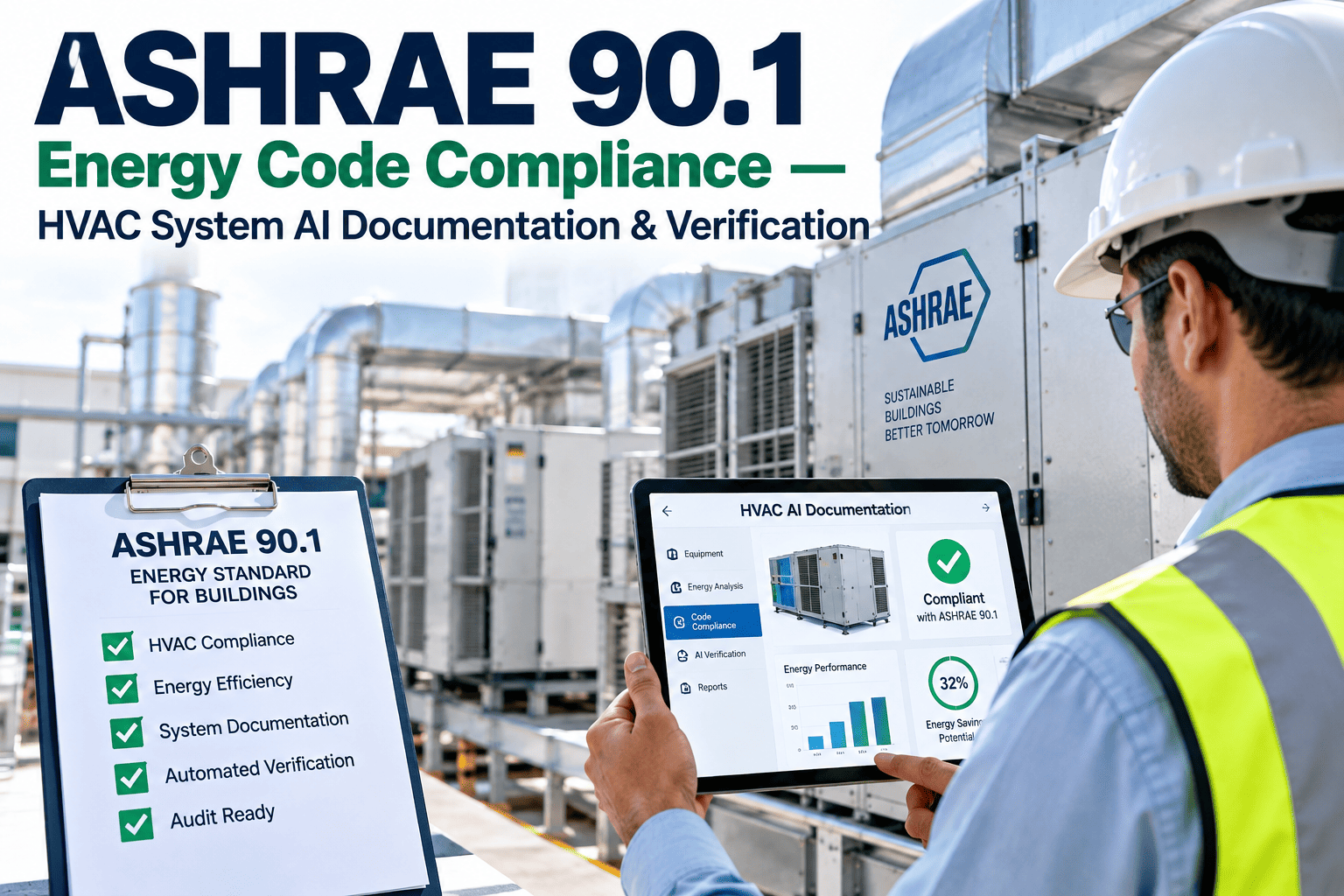
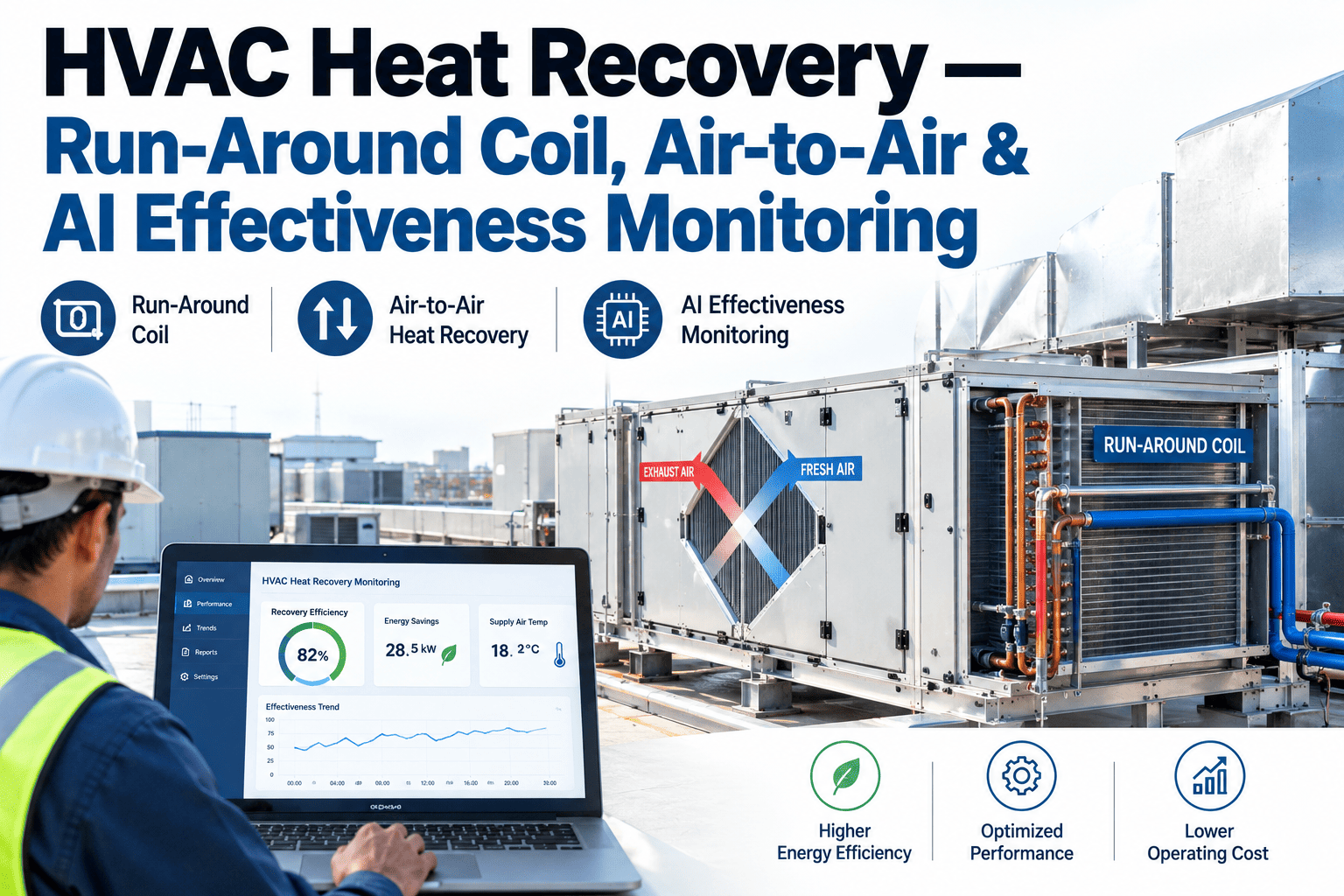
Passing an ASHRAE 90.1 energy code review at the design stage is the easy part, the drawings show an economizer, a heat recovery system, and VFD-controlled fans exactly where the standard requires them. The harder, less visible obligation comes after occupancy, when Section 8 of the standard requires those same systems to actually keep performing at their design efficiency for the life of the building, backed by documented preventive maintenance and, in the versions enforcing it, interval-based performance monitoring that most facilities have no real process for capturing. An economizer that's been mechanically locked out for two years because a damper actuator failed and was never repaired is still, on paper, an economizer. Whether it's still contributing to code compliance is a completely different question, and it's the one an auditor actually asks. If your compliance documentation stops at commissioning and never gets updated again, book a demo to see what a continuously compliant record actually looks like.
COMPLIANCE & CODE · ASHRAE 90.1 ENERGY CODE
Design-Stage Compliance Doesn't Maintain Itself
iFactory turns your ASHRAE 90.1 Section 8 obligations, documented PM, interval monitoring, and fault detection, into a continuous, audit-ready record instead of a scramble every time an inspector asks for evidence.
✓Economizer function verified, not just installed
✓Heat recovery performance logged against design spec
✓VFD fan control confirmed active below 50% load
✓Interval data logged continuously, no manual gaps
FOUR PILLARS OF SECTION 8
What Ongoing Compliance Actually Requires
ASHRAE 90.1's energy management provisions in Section 8 don't stop at the point of construction sign-off. They establish an ongoing operational obligation, and most facilities discover the gap between what they assume they're doing and what they can actually document only when an audit forces the question.
01
Documented Functional PM
Preventive maintenance schedules for chillers, boilers, air handlers, and heat-rejection equipment need to be executed and recorded, not just written into a plan that sits unused.
02
Interval Performance Monitoring
Covered equipment needs performance data logged at defined intervals, close enough together that a gap doesn't leave months of unverified operation.
03
Fault Detection & Diagnostics
Automated detection of conditions that indicate equipment is operating outside its designed efficiency, an economizer stuck closed, a heat recovery loop bypassed.
04
Building Envelope & Controls Records
Documentation extends beyond HVAC to lighting controls and envelope performance, all of which need a traceable record showing continued compliance.
THREE ROADS TO THE SAME DESTINATION
The Compliance Paths ASHRAE 90.1 Allows
Prescriptive Path
A defined checklist of required equipment and control features, economizers, VFDs, heat recovery thresholds, that a project simply confirms it meets item by item.
Simplified Approach
Available for smaller, single-zone buildings meeting specific criteria, trading some flexibility for a shorter compliance checklist.
Energy Cost Budget Method
A performance-based path using whole-building energy modeling to demonstrate equivalent or better performance than the prescriptive baseline.
Whichever path a building used to achieve initial compliance, Section 8's ongoing maintenance and monitoring obligations apply the same way afterward, which is the part of the standard most operational teams have the least visibility into.
Find out where your compliance record actually has gaps
iFactory can audit your current documentation against Section 8's ongoing requirements and show you exactly what's missing.
WHAT NON-COMPLIANCE ACTUALLY COSTS
The Numbers Behind an Undocumented Gap
$30K-$80K
estimated annual cost to a mid-sized facility from energy waste and non-compliance exposure combined
15 min
maximum interval gap typically allowed for energy monitoring data under enforcing jurisdictions
Weeks
of manual document assembly a compliance team can lose scrambling to prove compliance during an audit
Silent
equipment degradation, since a locked-out economizer produces no alarm on its own
MANUAL AUDIT PREP VS CONTINUOUS COMPLIANCE
What Changes When Evidence Is Always Current
| Factor |
Manual Audit Prep |
Continuous Compliance Tracking |
| Documentation state |
Assembled reactively when an audit is announced |
Current at all times, exportable on demand |
| Interval monitoring gaps |
Common, especially across older equipment |
Flagged and closed as they occur |
| Equipment underperformance |
Often discovered only during the audit itself |
Detected via automated fault diagnostics in real time |
| PM completion evidence |
Paper logs or scattered spreadsheets |
Structured, timestamped work order history |
| Audit preparation time |
Days to weeks of manual assembly |
A single export, ready in minutes |
TURNKEY DEPLOYMENT
How iFactory Builds Your Compliance Record
What Gets Built
Interval monitoring configured to your enforcing jurisdiction's requirements
Automated fault detection on economizers, heat recovery, and VFD fan control
Structured PM scheduling and completion tracking for all covered equipment
One-click audit export covering any date range and equipment class
Ongoing gap alerts before a monitoring lapse becomes an audit finding
Rollout Timeline
Weeks 1-2: Compliance gap audit against your current documentation
Weeks 3-4: Monitoring integration and fault detection configuration
Week 5: Compliance dashboard go-live and team training
FREQUENTLY ASKED QUESTIONS
What Compliance Officers Ask About Section 8
Does ASHRAE 90.1 compliance end once a building passes its initial code review?
No, this is one of the most common misconceptions among facility teams, since the initial code review at design and commissioning only confirms the building was built to meet the standard, not that it continues operating that way indefinitely afterward. Section 8's energy management provisions establish an ongoing obligation, requiring documented preventive maintenance and, where locally enforced, interval-based performance monitoring for the life of the building's covered equipment. A facility that treats compliance as a one-time checkbox at occupancy is very likely operating with a documentation gap it doesn't yet know about.
Book a demo to see how your current documentation compares against ongoing Section 8 obligations.
What actually counts as adequate documentation for an audit?
Adequate documentation generally needs to demonstrate both that required equipment exists and functions as designed, and that it's been maintained on a documented schedule with completion records, not simply a maintenance plan that describes intended activity without evidence it actually happened. Interval performance data, where required by your enforcing jurisdiction, needs to show continuous coverage without long unexplained gaps, since a gap in the record reads to an auditor as unverified operation during that period rather than assumed compliance.
Contact our support team to review what documentation standard applies in your specific jurisdiction.
How would we even know if our economizer or heat recovery system stopped functioning correctly?
Without automated fault detection, the honest answer for most facilities is that they wouldn't know until either an energy bill anomaly prompts an investigation or an auditor specifically tests the equipment during a site visit, since a locked-out or bypassed system typically produces no alarm on its own and the building often continues operating comfortably regardless. Automated fault detection and diagnostics specifically close this gap by continuously comparing actual equipment behavior against its expected performance signature, flagging a stuck damper, a bypassed heat recovery loop, or a fan that isn't actually modulating below 50% load the way VFD control requires.
Book a demo to see fault detection running against equipment types comparable to yours.
Which compliance path our building originally used, does that change our ongoing obligations?
The ongoing Section 8 maintenance and monitoring requirements apply regardless of whether your building achieved initial compliance through the prescriptive path, the simplified approach, or the energy cost budget method, since Section 8 addresses operational upkeep rather than the design compliance path itself. What does vary by your original compliance path is which specific equipment and control features were the basis for that initial compliance determination, and therefore which systems carry the most direct scrutiny if an auditor is verifying that the building still performs consistent with its original compliance claim.
Contact our support team to review which equipment your original compliance path puts under closest scrutiny.
How quickly can we close an existing compliance gap once it's identified?
This depends heavily on what the specific gap is, a missing interval monitoring configuration can often be resolved within weeks once the right sensors and data logging are in place, while a mechanical fault like a stuck damper or a failed VFD requires the underlying repair to happen before the compliance record can genuinely reflect proper operation again. The compliance gap audit is specifically designed to separate these two categories, documentation and monitoring gaps that can close quickly versus underlying equipment issues that need physical remediation first, so your team can prioritize the work in the right order rather than treating every finding as equally urgent.
Book a demo to get a realistic remediation timeline for your specific findings.
COMPLIANCE THAT HOLDS UP AFTER COMMISSIONING
Turn Section 8 Into a Record You Can Produce on Demand
iFactory continuously tracks PM completion, interval monitoring, and fault detection across your covered equipment, so ASHRAE 90.1 compliance is documented as it happens, not reconstructed under audit pressure.