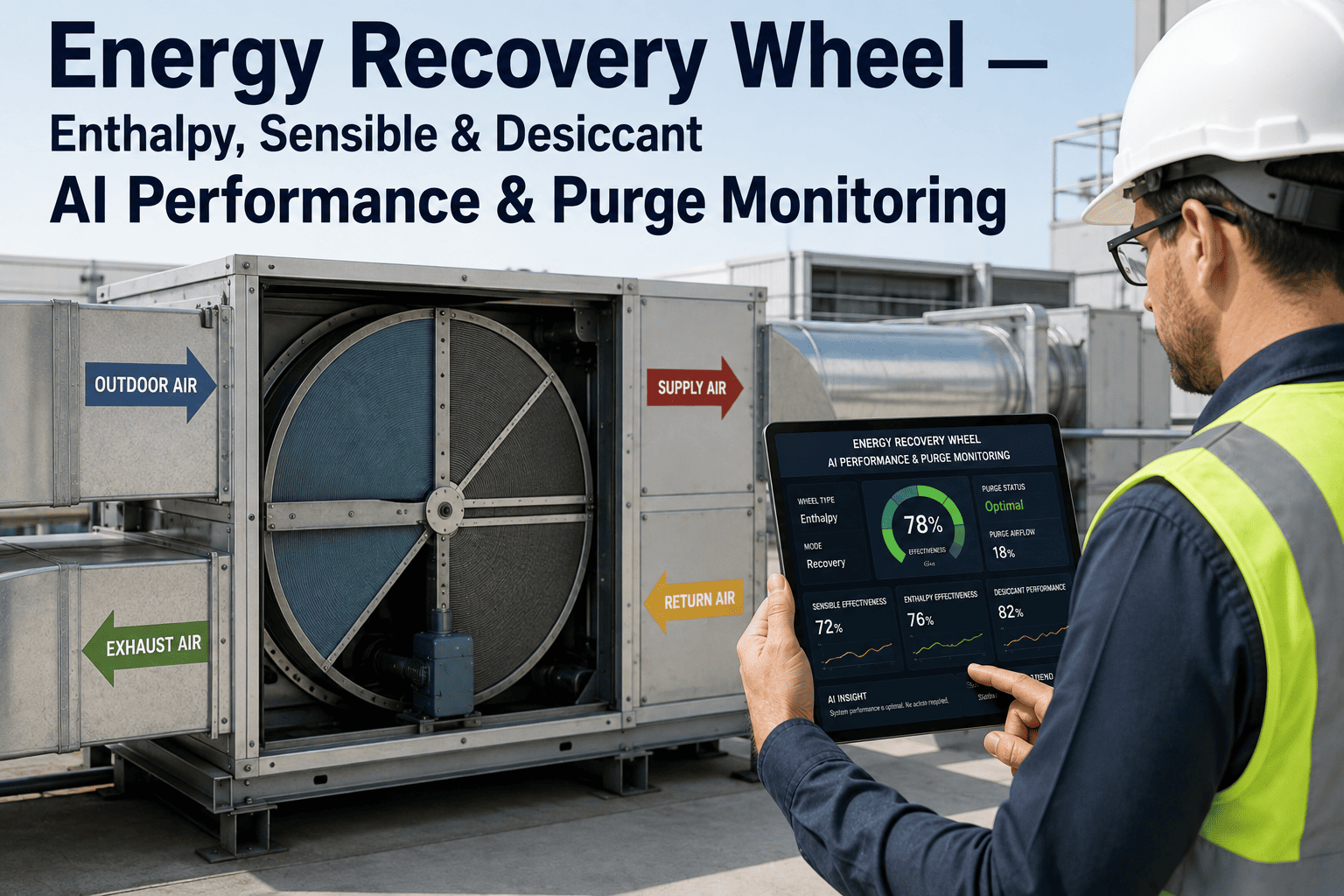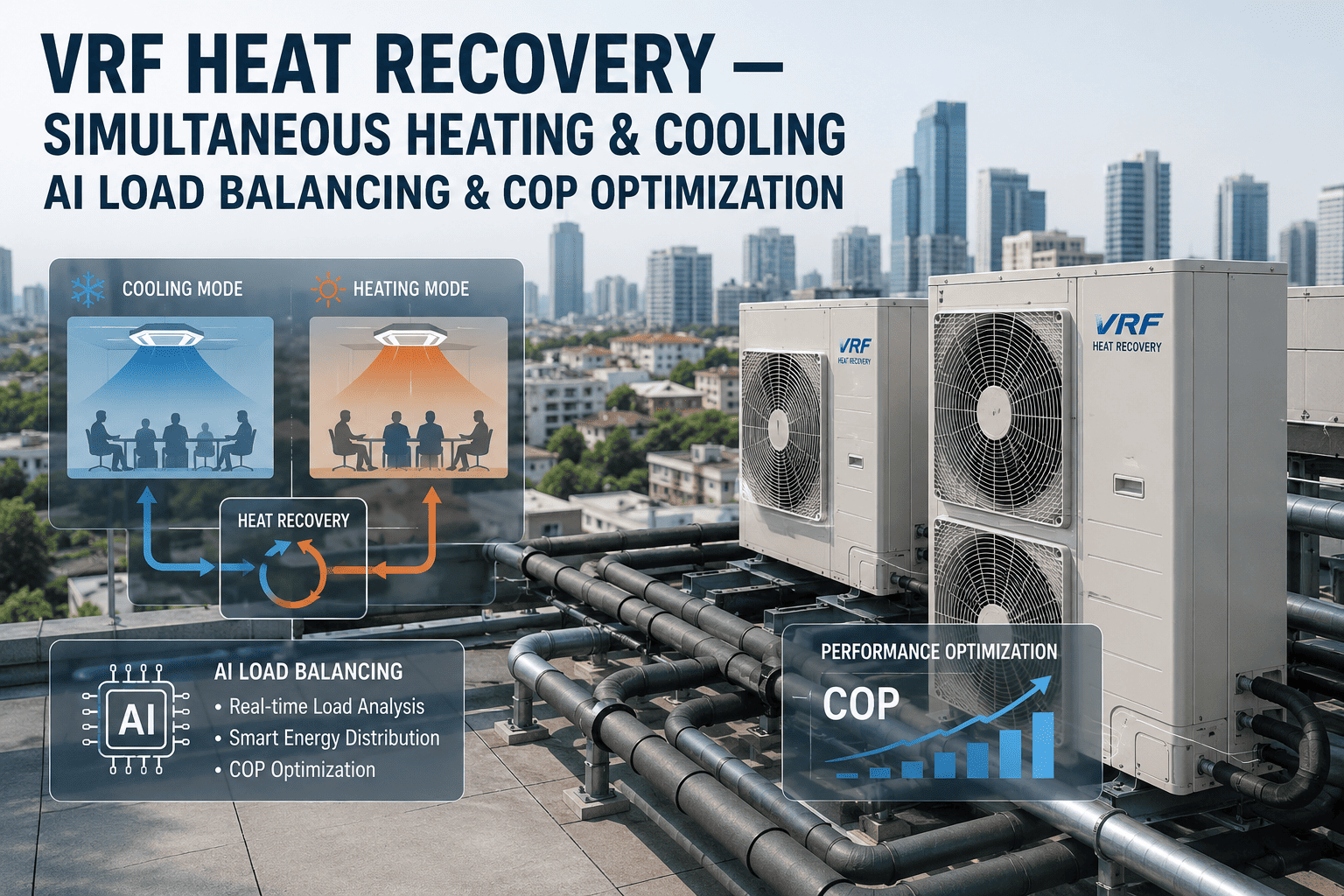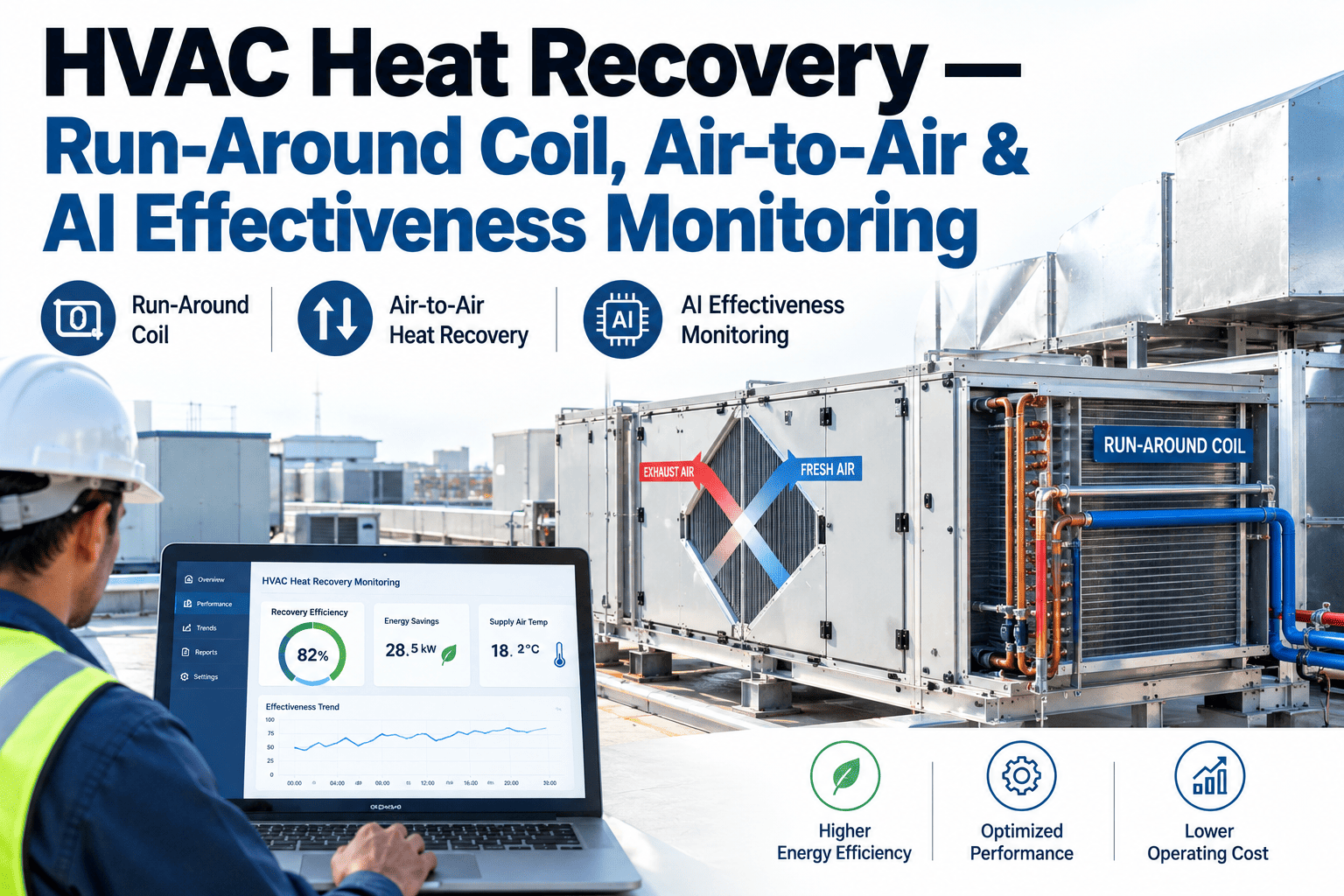
A heat recovery system is sized and commissioned to hit a specific effectiveness number — the percentage of available energy actually transferred between the exhaust and supply airstreams. That number is almost never checked again after commissioning, even though effectiveness degrades steadily as coils foul, wheels lose seal integrity, and control dampers drift out of calibration. A run-around coil losing five points of effectiveness over two years doesn't trip an alarm or show up on a utility bill in any obvious way; it just quietly means the plant is paying to recover less energy than the system was designed and paid for. AI-based effectiveness monitoring tracks that number continuously against the original commissioning baseline, catching degradation while it's still a maintenance item instead of a permanent loss. See whether your heat recovery system is still hitting its design effectiveness.
Designed Effectiveness and Actual Effectiveness Are Rarely the Same Number
Heat recovery systems degrade quietly as coils foul and wheels lose seal integrity. Continuous effectiveness monitoring catches the drift before it becomes a permanent, invisible energy loss.
typical effectiveness loss found in heat recovery systems that haven't been re-tested since original commissioning
common interval before most facilities re-verify heat recovery performance against the original design specification
of the energy savings a degraded heat recovery system still gets credited for in most facility energy models
Recovery Technologies and Their Design Effectiveness
Each recovery technology has a different design effectiveness ceiling, and each one degrades through a different mechanical failure mode over time.
Run-Around Coil
A closed glycol loop links separate exhaust and supply coils, degrading mainly through fouling and pump or valve drift.
Plate Heat Exchanger
Fixed plates transfer heat directly between airstreams, with effectiveness loss driven almost entirely by plate fouling and frost buildup.
Enthalpy Heat Wheel
A rotating wheel transfers both sensible and latent heat, with effectiveness dropping mainly from seal wear and reduced rotation speed.
Fixed-Plate Air-to-Air
A static counterflow design with no moving parts, though effectiveness still declines gradually from surface fouling over time.
Why Effectiveness Drifts Even When Nothing Obviously Breaks
Heat recovery equipment rarely fails outright, which is exactly why its performance decline goes unnoticed for so long. A run-around coil accumulates a thin layer of fouling on its fins that reduces heat transfer surface area without ever restricting airflow enough to trip a pressure alarm. A heat wheel's seals wear gradually, letting more air bypass the transfer matrix each month without any single point where the wheel would be judged as failed. A plate exchanger's effectiveness drops as dust and grease build up on the plate surfaces, a process that happens slowly enough that nobody notices until a completely unrelated energy audit finally re-tests the unit against its original commissioning report and finds a number well below design. None of these failure modes announce themselves, which is exactly the gap continuous monitoring is built to close.
Check Your System's Effectiveness Against Its Design Number
iFactory compares your heat recovery system's current performance against its original commissioning baseline to show exactly how much effectiveness has drifted.
Recovery Type, Degradation Cause, and Monitoring Signal
Each recovery technology needs a different signal tracked to catch its specific degradation mode before it becomes significant.
Building a Continuous Effectiveness Monitoring Program
Verifying heat recovery performance continuously is mostly a matter of trending the right temperature and flow points against the original commissioning data.
Recover the original commissioning baseline
The design effectiveness and the specific test conditions it was measured under get pulled from commissioning records, establishing the number current performance actually needs to be compared against.
Instrument the key temperature and flow points
Supply and exhaust air temperatures on both sides of the recovery device are trended continuously, calculating real-time effectiveness rather than relying on a single annual spot check.
Flag degradation before it compounds
An alert triggers when effectiveness drifts a defined margin below the commissioning baseline, giving maintenance a scheduled cleaning or seal replacement task instead of a discovery years later.
What Changes When Effectiveness Is Verified Continuously
Figures reflect typical outcomes within the first year of deploying continuous effectiveness monitoring across a facility's heat recovery equipment.
A Process Engineer's View on Recovery Effectiveness
Our heat wheels were commissioned at close to 80 percent effectiveness a decade ago, and nobody had re-tested them since because there was never an obvious reason to. Once we started trending the actual temperature split continuously, two of the four wheels had drifted down into the low 60s from worn seals, which we never would have caught from a utility bill review alone. Getting those back to spec was a straightforward seal replacement, not a capital project.
The Bottom Line on Heat Recovery Effectiveness
A heat recovery system's design effectiveness is a commissioning-day number, and without continuous verification there's no way to know how far actual performance has drifted from it. The degradation mechanisms behind that drift — fouling, seal wear, control drift — rarely announce themselves through an alarm or a sudden utility bill spike. Continuous effectiveness monitoring against the original baseline is the only way to catch the loss while it's still a scheduled maintenance fix rather than a permanent, invisible energy cost.
Frequently Asked Questions
How is heat recovery effectiveness actually calculated?
Effectiveness is calculated from the temperature change achieved across the recovery device relative to the maximum theoretically possible temperature change between the two airstreams, using temperature sensors on both the supply and exhaust sides. Continuous monitoring calculates this ratio in real time rather than relying on a single test performed during commissioning or an occasional manual spot check. Book a review to see how this applies to your specific recovery equipment.
What's the difference between sensible and enthalpy (total energy) recovery?
Sensible recovery transfers only temperature-based heat energy, while enthalpy recovery also transfers moisture, capturing both sensible and latent energy between airstreams. Enthalpy wheels typically achieve higher overall effectiveness ratings than sensible-only technologies but introduce an additional degradation pathway through humidity transfer seal wear that sensible-only systems don't have.
How quickly does heat wheel or coil fouling actually reduce performance?
The rate of fouling-driven effectiveness loss depends heavily on the air quality the system handles, with facilities near heavy dust, grease, or particulate sources typically seeing faster degradation than a clean office environment. Continuous trending is what reveals the actual rate for a specific installation rather than relying on a generic industry assumption.
Can effectiveness monitoring data be used to schedule maintenance instead of a fixed calendar?
Yes — a defined effectiveness threshold below the commissioning baseline can trigger a cleaning or seal replacement work order automatically, replacing a fixed annual or semi-annual cleaning schedule with one driven by actual measured performance, which typically catches degradation earlier while also avoiding unnecessary maintenance on units still performing at spec.
Does this data support LEED or energy code compliance documentation?
Continuous effectiveness verification provides stronger evidence of ongoing energy recovery performance than a one-time commissioning report, which is increasingly relevant as green building certifications and energy codes place more emphasis on measured operational performance rather than design-stage projections alone. Talk to a specialist about structuring this data for your specific compliance or certification needs.
Find Out What Your Recovery System Is Actually Recovering
Book a 30-minute assessment. iFactory checks your heat recovery equipment against its original design effectiveness and shows exactly where performance has drifted.