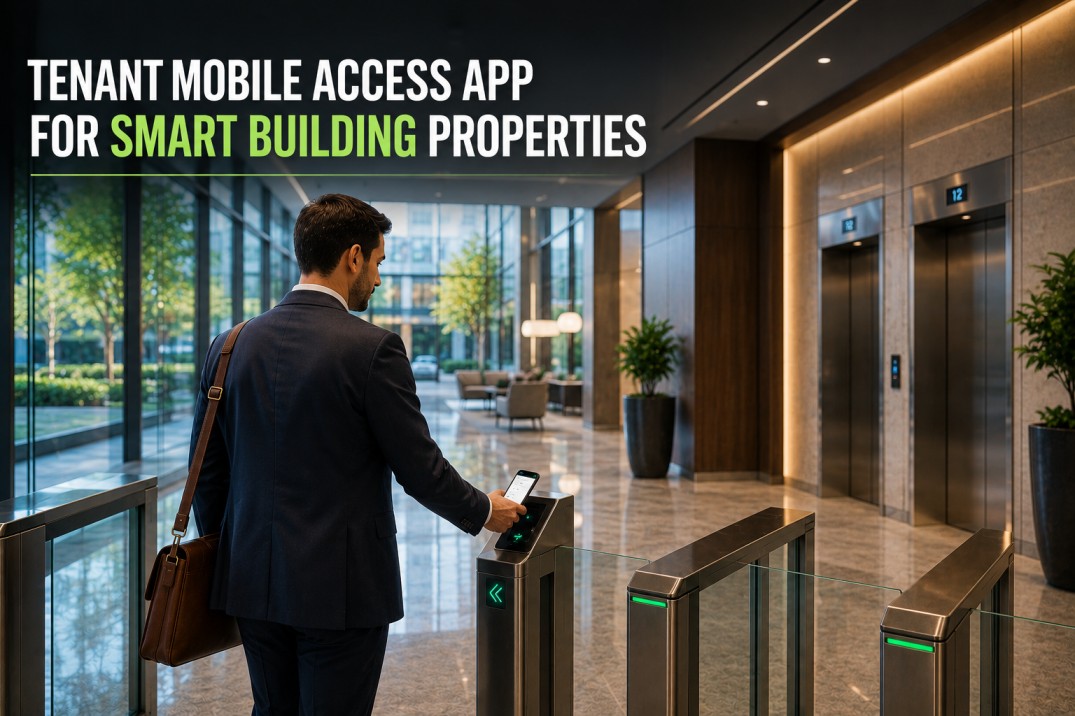
Mobile access apps are transforming how tenants interact with commercial buildings by replacing plastic fobs, proximity cards, and PIN codes with smartphone-based credentials that unlock doors, call elevators, book amenities, manage visitors, and provide real-time building analytics from a single intuitive interface — a shift driven by the fact that 94% of office tenants already carry a smartphone and prefer using it for building access over physical credentials, while property owners benefit from 62% lower credential management costs, 73% faster visitor processing, and granular access audit trails that improve security compliance across multi-tenant properties. Modern smart building platforms integrate mobile access with property management systems for automated rent and lease sync, HVAC controls for personalized zone comfort, elevator destination dispatch for reduced wait times, and security analytics for anomaly detection and occupancy tracking, creating a unified tenant experience that drives 89% satisfaction rates and 40% higher lease renewal intentions among tenants who use the app regularly. This article explores five core capabilities of tenant mobile access apps — digital keys with multi-factor authentication, elevator integration with floor authorization, amenity booking with calendar sync, visitor management with temporary credentials, and analytics dashboards with occupancy insights — along with the mobile credential technology stack powering these features, integration considerations for existing building systems, real-world adoption metrics, and phased implementation best practices for commercial property owners.
Deploy a Tenant Mobile Access App for Your Smart Building
iFactory's platform includes mobile credential management, digital key distribution, elevator integration, amenity booking, visitor management, and analytics dashboards for commercial properties. Book a demo to see how a tenant mobile app improves occupancy experience and operational efficiency.
Mobile App Feature Overview — Five Core Capabilities
Tenant mobile access apps consolidate building interactions into a single platform, eliminating the need for separate systems for door entry, elevator calling, room booking, visitor management, and building announcements. Each feature is designed for intuitive smartphone interaction with role-based permissions that ensure tenants access only the areas and services authorized for their lease agreement.
Tenant Building Journey — End-to-End Mobile App Flow
The tenant's daily building journey using a mobile access app spans arrival, entry, vertical transport, office access, amenity use, and departure, with each step authenticated through the smartphone credential and logged for security and analytics purposes. The flow diagram below maps the six key interactions a tenant performs during a typical building visit, from approaching the entrance to leaving at the end of the day.
Streamline the Tenant Journey From Arrival to Departure
iFactory's tenant mobile access app covers digital keys, elevator integration, amenity booking, visitor management, and analytics dashboards in a single platform. Book a demo to see how end-to-end mobile access transforms the tenant building experience.
Mobile Credential Technology — Protocol Comparison
Different mobile credential technologies offer varying trade-offs between read range, security level, power consumption, and smartphone compatibility. The comparison below evaluates four primary protocols used in tenant mobile access apps — Bluetooth Low Energy, Near Field Communication, QR Code, and Ultra-Wideband — across key performance and security parameters to help property owners select the right technology mix for their building.
Integration Ecosystem — Smart Building System Connectivity
A tenant mobile access app delivers maximum value when integrated with the building's existing systems, creating a unified platform where each subsystem shares data and triggers actions based on tenant interactions. The ecosystem diagram below maps the six primary integration points connecting the mobile app to building infrastructure, property management, and tenant services.
Adoption & ROI Metrics — Real-World Performance Data
Property owners who have deployed tenant mobile access apps report measurable improvements across tenant satisfaction, operational efficiency, security compliance, and building utilization metrics. The dashboard-style metric cards below present benchmark data from commercial buildings that have implemented mobile access platforms over the past three years.
Frequently Asked Questions About Tenant Mobile Access Apps for Smart Buildings
How does a mobile access app work for tenant building entry?
A tenant mobile access app works by storing encrypted digital credentials on the tenant's smartphone that communicate with Bluetooth Low Energy, NFC, or QR readers installed at building entry points, elevator lobbies, and suite doors. When the tenant approaches a reader, the app transmits the credential over the selected protocol, and the reader validates it against the access control system which checks permissions against the tenant's lease profile before releasing the door lock or elevator authorization. The credential is never stored in plain text on the phone and can be remotely deactivated at any time by the property manager. For BLE-based systems, the app can auto-unlock doors when the phone comes within a configurable range without requiring the tenant to remove the phone from a pocket or bag. NFC-based access requires a deliberate tap of the phone near the reader icon, providing a higher security bar that prevents accidental unlocks. The app also supports multiple building entry methods including QR code scanning at turnstiles, PIN code fallback for phones with dead batteries or damaged screens, and voice-activated access via integration with building voice assistant systems in premium properties. All entry events are logged with tenant identity, timestamp, door identifier, access method, and credential type, creating a detailed audit trail that satisfies security compliance requirements for commercial properties.
What mobile credential technologies are most secure for commercial buildings?
NFC is currently the most secure mobile credential technology for commercial building access because its sub-4-centimeter read range requires deliberate physical contact with the reader, making it practically immune to relay attacks and unauthorized interception. Ultra-Wideband is emerging as the strongest security standard for high-end buildings due to its centimeter-level distance measurement that prevents relay attacks through precise time-of-flight authentication, though it requires newer smartphone hardware and is not yet universally supported across all tenant devices. BLE offers good security with AES-128 encryption and is suitable for most building applications, but its 10-to-30-meter range creates theoretical risk of signal interception or relay attacks even though these are extremely difficult to execute in practice. For maximum security, many smart buildings implement a multi-protocol approach using BLE for proximity detection and hands-free convenience at main entrances, NFC as the primary authentication method at suite doors and high-security areas, and UWB for seamless premium tenant experiences in executive zones. All mobile credential platforms should implement additional security layers including biometric phone unlock requirement before credential release, device attestation to verify the phone has not been jailbroken or compromised, and server-side session management with real-time revocation capability that immediately invalidates credentials when a phone is reported lost or stolen.
Can a tenant mobile app integrate with existing access control hardware?
Yes, most tenant mobile access platforms are designed to integrate with existing access control hardware from major manufacturers including Lenel, Genetec, HID, Assa Abloy, Allegion, Schneider Electric, and Mercury Security through open API connections, software development kits, and hardware upgrade paths that allow property owners to add mobile read capability to existing door controllers without replacing the entire access control infrastructure. For older access control systems without native mobile support, retrofit solutions are available including Bluetooth-to-Wiegand bridge modules that sit between the door controller and the reader, allowing the existing panel to process mobile credentials as if they were standard card reads. Mobile credential reader add-ons can be installed at existing door positions and connected to the current controller via standard Wiegand or OSDP wiring protocols, preserving investment in the existing system while adding mobile access capability. The mobile platform provider typically supplies middleware software that runs on the property's access control server or in the cloud, synchronizing credential data between the tenant app and the access control database through a secure API connection. Integration planning should include an audit of all existing door controllers, reader types, wiring infrastructure, network connectivity at each door location, and compatibility assessment of the current access control software version before selecting a mobile solution.
How do mobile access apps handle visitor management and temporary credentials?
Mobile access apps handle visitor management through a self-service model where tenants invite visitors directly from the app by entering the visitor's name, expected arrival time, contact information, and purpose of visit, which generates a time-limited credential such as a QR code, PIN, or virtual visitor badge that is delivered to the visitor via SMS or email before their scheduled arrival. The credential is configured with specific access permissions including which entrance to use, what floors the visitor may access, what time window the credential is valid for, and whether the visitor requires an escort or has independent building access. When the visitor arrives, they present the QR code at the lobby reader or enter the PIN at a kiosk to receive a printed visitor badge and proceed to the authorized areas without requiring front desk staff interaction. The tenant receives a notification when the visitor checks in and can optionally receive another notification when the visitor departs. Emergency visitor credentials can be issued on-demand by tenants for unexpected guests through the app with instant activation and a shorter validity window, typically four to eight hours. All visitor activity is logged with tenant attribution, providing a complete audit trail of who visited which tenant on which date and time. For buildings with higher security requirements, visitor credentials can require tenant approval at the door through a one-time push notification where the tenant must tap Approve or Deny before the door unlocks for the visitor.
What is the typical ROI and adoption rate for tenant mobile access apps?
Commercial properties deploying tenant mobile access apps typically achieve payback within 12 to 18 months through reduced physical credential costs averaging 62% savings on card procurement and replacement, lower front desk staffing requirements with visitor self-service reducing check-in labor by 73%, and decreased maintenance calls for physical reader issues since mobile credential readers have fewer mechanical failure points than card swipe or fob readers. Tenant adoption rates consistently reach 94% activation within 30 days of offering the app, with 78% of tenants using it as their primary access method within 60 days, driven by the convenience of not carrying a separate credential and the value-added features of elevator integration, amenity booking, and visitor management. Properties also report 40% higher lease renewal intent among active app users compared to non-users, suggesting that mobile access positively influences tenant retention. Additional returns come from amenity utilization optimization with booking data revealing underused spaces that can be repurposed, energy savings from HVAC integration that adjusts zone temperatures based on occupancy detection from mobile credential use, and enhanced security audit capabilities that reduce liability exposure and may qualify for insurance premium reductions. The total annual operating cost for a mobile credential per tenant averages 40 to 60 cents compared to 6 to 10 dollars for physical card credentials including replacement costs, producing significant long-term savings for properties with hundreds or thousands of tenants.
Launch a Tenant Mobile Access App for Your Smart Building
iFactory's platform provides mobile credential management, digital key distribution, elevator integration, amenity booking, visitor management, and analytics dashboards in a single tenant app experience. Book a demo to see how mobile access improves tenant satisfaction, operational efficiency, and property value.



.png)