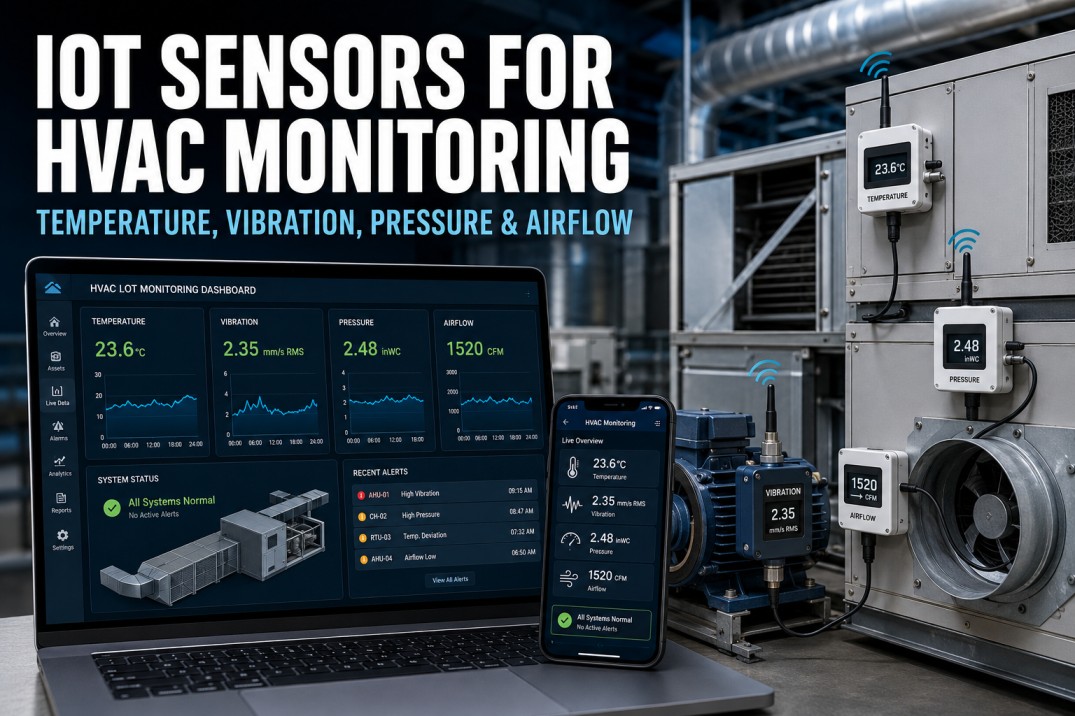
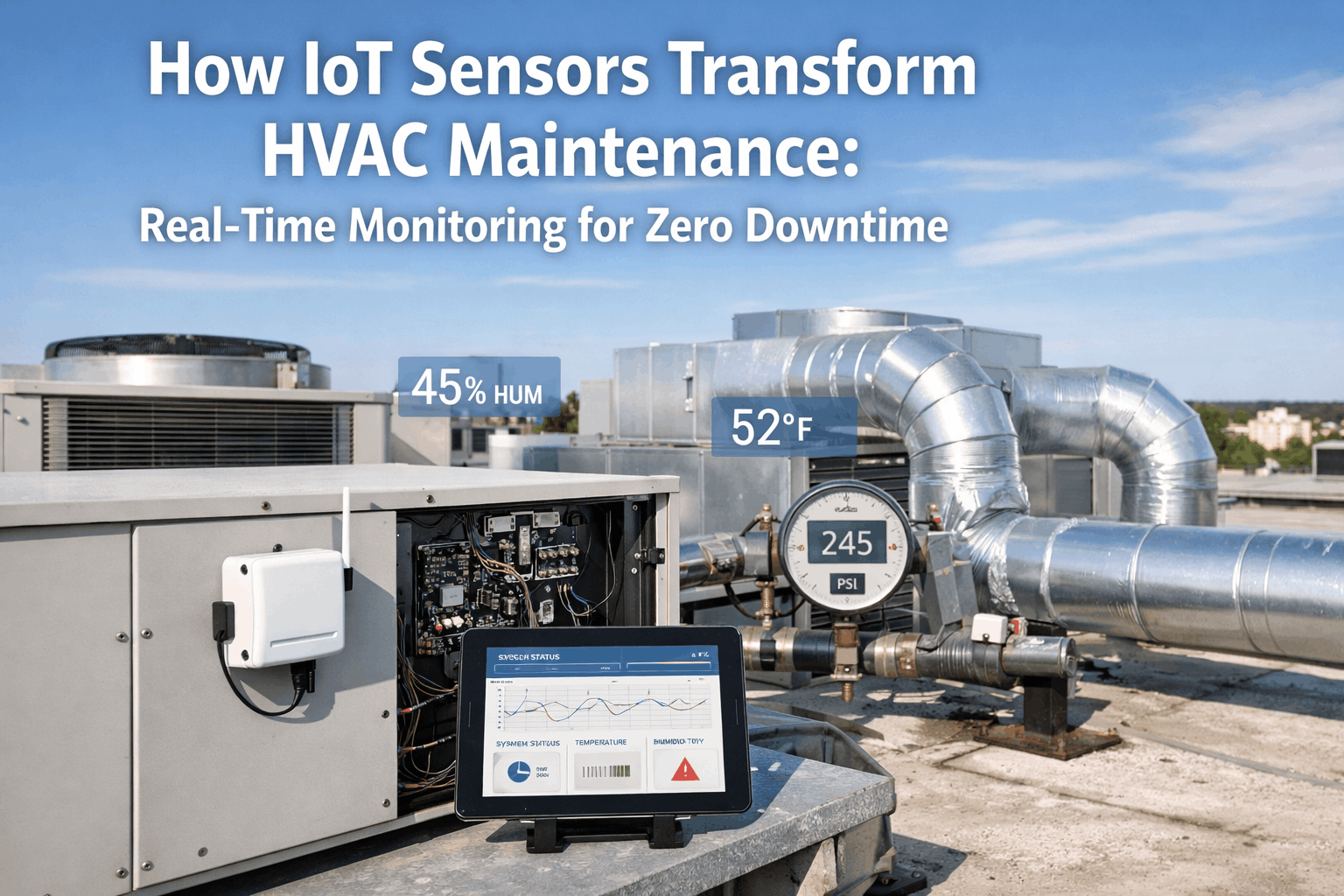
A VAV box doesn't fail the way a chiller or an air handler fails. There's no compressor to seize, no bearing to overheat, no dramatic alarm that lands on the BAS. It fails quietly — a damper sticks a few degrees off its commanded position, an actuator starts drifting, an airflow sensor slowly reads wrong — and none of that trips anything until a zone runs consistently too hot, too cold, or wastes energy heating and cooling the same air simultaneously. On a large portfolio with hundreds or thousands of boxes, that quiet failure mode is exactly why VAV degradation is one of the most under-diagnosed sources of comfort complaints and energy waste in commercial buildings. iFactory's HVAC PdM watches the three signatures that actually predict a VAV box going bad — damper stick, actuator drift, and sensor decay — before the zone ever notices so you can see it running against your own building.
The VAV Box Never Alarms. The Zone Just Slowly Gets Worse.
iFactory's AI watches damper position, actuator behavior, and airflow sensor readings against expected performance across every VAV box in the portfolio, catching the degradation signature weeks before it becomes an occupant complaint.
The Fault That Never Trips an Alarm
Most building automation systems log VAV box setpoints and supply air temperature, but they don't compare actual performance against what the box should be doing. That gap is precisely why a degrading VAV box can run for weeks before anyone notices — the BAS has nothing to alarm on, because from its perspective the box is simply following commands, even when it isn't.
A moderate stuck damper is the clearest example. If a zone is partially served — the damper is stuck somewhere between fully open and fully closed rather than at either extreme — the temperature drift is often small enough that it never crosses the threshold that would trigger a BAS alarm. The fault persists silently, wasting energy and degrading comfort the entire time, discovered only when it finally worsens enough to generate a complaint or when someone happens to be reviewing trend data.
The cost of that silence compounds fast on a large portfolio. A single stuck-open damper can significantly increase that zone's energy consumption on its own, and when the same class of fault develops across dozens of boxes at similar rates — as it tends to, since actuators and sensors of the same age and duty cycle degrade on similar timelines — the aggregate cost adds up long before anyone connects the dots.
The lag between fault and detection is what makes this pattern so expensive. Under a manual inspection regime, a VAV fault is typically discovered because degraded comfort finally gets reported by an occupant, not because a sensor flagged it, which means the fault has usually been running for weeks by the time anyone investigates. That gap is time the zone spent wasting energy and time the occupant spent uncomfortable, and neither is recoverable once the fault is finally found.
Damper Stick, Actuator Drift, and Sensor Decay
Not every VAV fault looks the same, and lumping them together is why generic monitoring misses most of what actually degrades a large fleet of boxes. Three distinct signatures account for the majority of undetected VAV performance loss.
Each of these signatures produces a different pattern in the underlying data, which is why detecting all three reliably requires watching commanded position, actual airflow, and zone temperature together rather than any single data point in isolation.
It's worth noting that these three signatures don't always arrive independently. A damper that's been sticking for months puts uneven mechanical stress on the actuator trying to move it, which can accelerate actuator wear beyond its normal timeline. Treating the three signatures as connected rather than isolated is part of what makes early detection valuable — catching the damper stick early also protects the actuator from the compounding wear a longer-running fault would have caused.
Find out how many boxes in your portfolio are already drifting
iFactory can run a signature assessment against your existing VAV data and show you where degradation is developing, before you commit to anything.
One Box Is a Repair. Two Hundred Boxes Is a Pattern.
A single VAV fault is a minor maintenance item. The same fault class developing across a large portfolio at a similar rate is a structural cost that's easy to miss precisely because each individual box looks like an isolated, unremarkable issue.
| Zone Type | Typical Fault Pattern | Consequence at Scale |
|---|---|---|
| Perimeter Offices | Reheat valve wear, actuator degradation | Occupant discomfort concentrated by season, escalating complaint volume |
| Interior Core Zones | Sensor drift, gradual damper sticking | Overcooling and steady energy waste that rarely triggers a complaint |
| Conference & Meeting Rooms | Occupancy mismatch, damper response lag | Intermittent comfort complaints tied to meeting schedules |
| Server & Equipment Rooms | Control board faults, damper failure | Elevated equipment risk if cooling airflow silently degrades |
None of these individual patterns is alarming on its own. What makes portfolio-scale monitoring worth the investment is being able to see all of them together — spotting that interior core zones across three buildings are drifting in the same direction, for instance, points to a common cause worth investigating structurally rather than chasing symptoms building by building.
This is also where a portfolio-scale program starts paying for itself in a way a single-building view never can. If the same actuator model, installed across a particular renovation cohort of buildings, is drifting at a similar rate, that's a maintenance planning insight — a proactive replacement schedule — not just a queue of individual repair tickets to work through as each one eventually fails.
How iFactory Watches Every Box, Continuously
Detecting these signatures reliably means comparing what the controller commands, what the actuator actually does, and what the airflow sensor reports — continuously, across every box, rather than relying on a periodic manual check that only catches whatever fault happens to be visible that day.
Because the comparison runs continuously rather than as a periodic inspection, a signature that's just beginning to develop gets caught while it's still a minor adjustment — not weeks later, once it's worsened into a comfort complaint that pulls a technician off other work to chase down a fault that could have been a quick fix.
Baselining against similar boxes elsewhere in the portfolio, not just each box's own history, is part of what makes the detection reliable rather than noisy. A box that's always run slightly outside the textbook ideal but consistently so isn't a new fault, it's simply that unit's normal behavior — the system needs to distinguish a genuine developing deviation from a box's established, harmless quirk, and comparing against the fleet is what makes that distinction possible.
What Consistent Zone Comfort Actually Requires at Scale
Occupant comfort across a large portfolio isn't something one well-run building can guarantee for the rest — it's the product of every VAV box across every floor, in every building, performing within a tight enough tolerance that no single zone stands out as chronically too hot or too cold.
Holding comfort at scale is fundamentally a detection problem before it's a repair problem — the repairs themselves are usually straightforward once the specific box and the specific signature are known, which is exactly the part continuous monitoring is built to solve.
That reframing matters for how a facilities team should think about resourcing. The technical skill required to fix a stuck damper or replace a drifted sensor hasn't changed — what changes is how much of a technician's time gets spent finding the problem versus fixing it once continuous detection is doing the finding.
Delivered Ready to Watch Your Entire VAV Fleet
iFactory doesn't require a separate monitoring project for each building in the portfolio. The signature detection is deployed once and scales across every VAV box your BAS already reports on.
Scope covers the cabling, network configuration, BAS integration across sites, and operator training, so what your team inherits is a working fleet-wide detection system rather than a pilot scoped to a single building. Trusted by 1000+ clients with 99.9% uptime, the deployment is built to fit around a live, occupied portfolio.
What Facility Teams Ask Before Deploying VAV Signature Detection
Watch Every Box, Not Just the Ones That Alarm
iFactory's HVAC PdM tracks damper stick, actuator drift, and sensor decay across your entire VAV fleet, so zone comfort holds and energy waste gets caught before an occupant ever files a complaint.