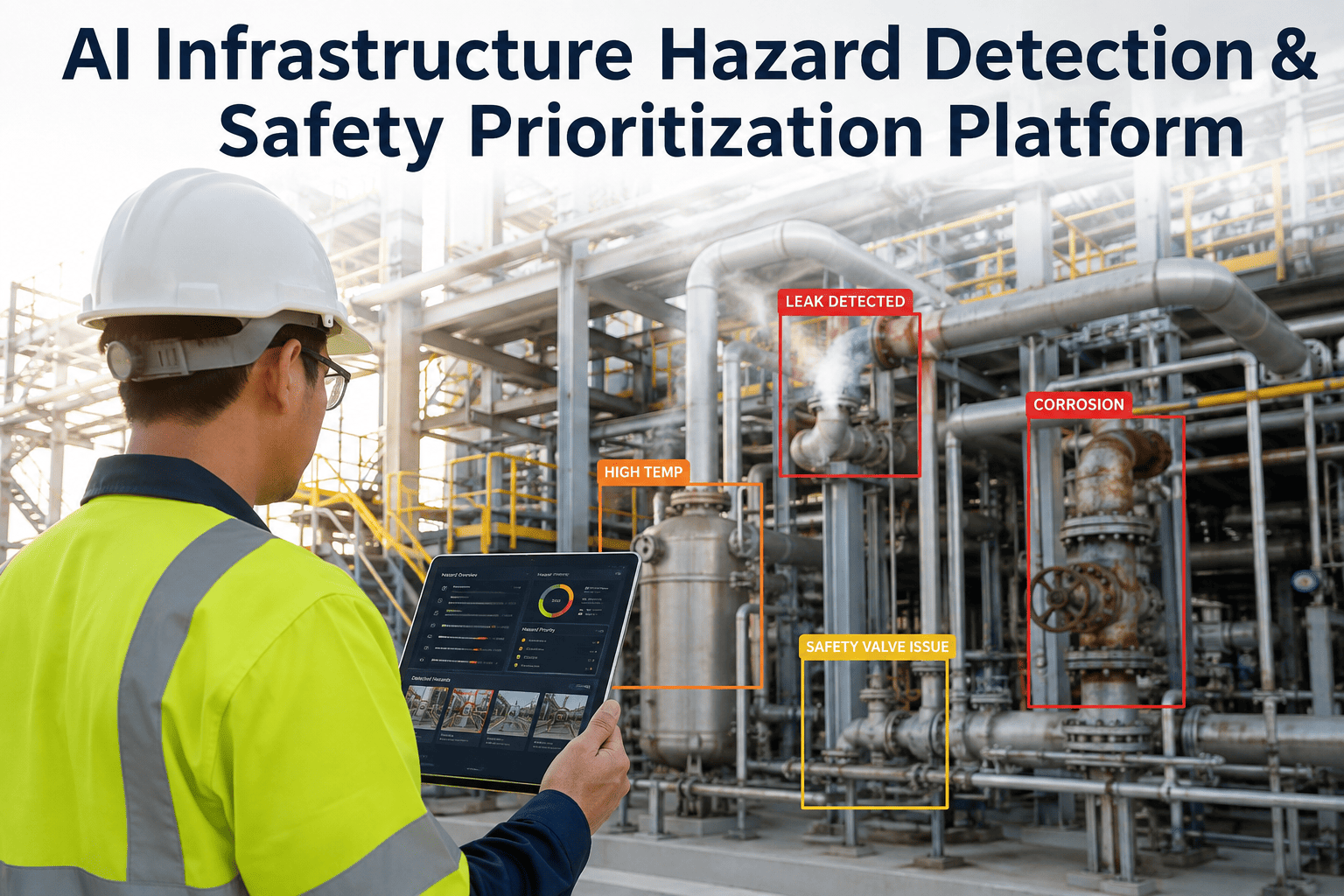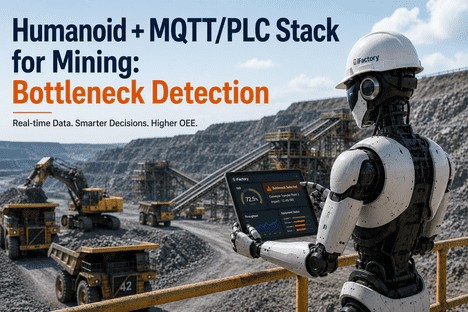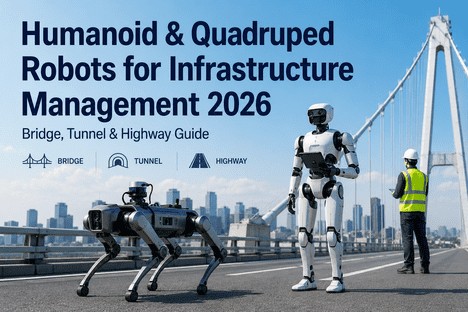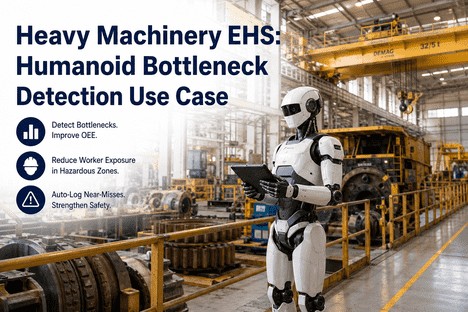
A 300-ton hydraulic press cycles in a heavy machinery plant, and within a 12-metre radius of it, no human should stand during operation. The press generates 85 dB of continuous noise, radiates surface heat above 50 degrees Celsius, and in the event of a die misalignment — which happens once every 1,200 cycles on average — ejects fragmented metal at speeds that breach standard PPE. For years, the only way to inspect that press, check for die wear, measure alignment tolerances, and detect developing bottlenecks was to send a human into that exclusion zone during a production pause. Every inspection carried an inherent risk assessment that had become invisible through repetition. Now humanoid robots enter that zone instead. They walk the same floor, read the same gauges, and capture the same thermal and vibration data — but they do it without the risk assessment, without the PPE donning delay, and without the accumulated fatigue that drives injury rates in heavy machinery manufacturing above 5.2 recordable incidents per 100 workers. The safety case for humanoids in heavy machinery is not a future projection. It is a present-tense operational decision that combines EHS improvement with bottleneck detection and OEE visibility in a single integrated deployment. iFactory provides the platform that connects humanoid safety patrol data, near-miss auto-logging, and EHS reporting into the same closed loop that drives production optimisation.
The Convergence of EHS and Bottleneck Detection
The insight that transforms the business case for humanoid deployment in heavy machinery is that EHS improvement and bottleneck detection are not separate initiatives requiring separate robots. They are two outputs of the same patrol. When a humanoid walks a thermal patrol through the press bay to eliminate human exposure to radiant heat zones, it simultaneously captures the bearing temperature trends, hydraulic pressure readings, and cycle-time variances that reveal developing bottlenecks. When it performs a confined-space gas inspection, it also records the equipment state data that feeds the OEE model. The iFactory platform ingests every patrol reading once and routes it to two destinations: the EHS dashboard for near-miss logging and compliance reporting, and the production analytics engine for bottleneck identification and OEE calculation. One patrol. Two outcomes. Zero additional data collection cost.
Every thermal anomaly, gas reading above threshold, and unauthorised zone entry detected by the humanoid is auto-logged as an EHS event in iFactory. Near-misses that previously went unreported because no human witnessed them are now captured continuously. OSHA 300 logs are populated automatically with timestamps, location data, sensor readings, and photographic evidence. Safety audit preparation shifts from a paper reconstruction exercise to a dashboard data extract. The EHS team gains documented proof of hazard exposure elimination for workers' compensation and ESG reporting.
The same sensor data that flags an EHS event — a bearing running three degrees above baseline, a hydraulic line showing pressure drop, a die alignment drifting out of spec — is simultaneously analysed by iFactory's bottleneck detection engine. The platform correlates the finding against production schedule data from the MES, historical trend data from the CMMS, and quality data from the QMS. If the anomaly indicates a developing bottleneck, iFactory generates a risk-ranked alert with the projected OEE impact and recommends the optimal intervention window that minimises production disruption.
From Detection to Documentation — The EHS Automation Pipeline
The difference between a humanoid EHS deployment and a traditional safety programme is not the quality of the sensor data. It is the speed at which detection becomes documentation and drives corrective action. In a conventional programme, a near-miss observed by a human worker requires a form, a supervisor review, a data entry step, and a safety meeting before it influences operations. By that time, the production bottleneck that the near-miss signalled has already caused downtime. iFactory compresses this pipeline from days to seconds.